 Sarasota Siding
 Why Decks in Bee Ridge Wear Out Faster Than You'd Think
Bee Ridge sits inland from the coast, but "inland" in Sarasota County still means salt-laden air, brutal UV exposure nearly every day of the year, and the kind of wind-driven rain that comes with our summer storm pattern. A deck built the same way you'd build one in Ohio or Georgia simply doesn't hold up here. The combination of constant moisture cycling, UV breakdown of wood fibers and finishes, and the structural stress hurricane-force winds put on ledger boards and post connections means decks in this area age differently — and often faster — than homeowners expect.
We see the same failure pattern over and over: a deck that looks fine from the yard but has soft, punky framing underneath, corroded fasteners holding critical connections together, or a ledger board pulling away from the house because it was never properly flashed. Replacement isn't just about swapping old boards for new ones. It's about correcting whatever let the old deck fail in the first place, so the new one doesn't repeat history.
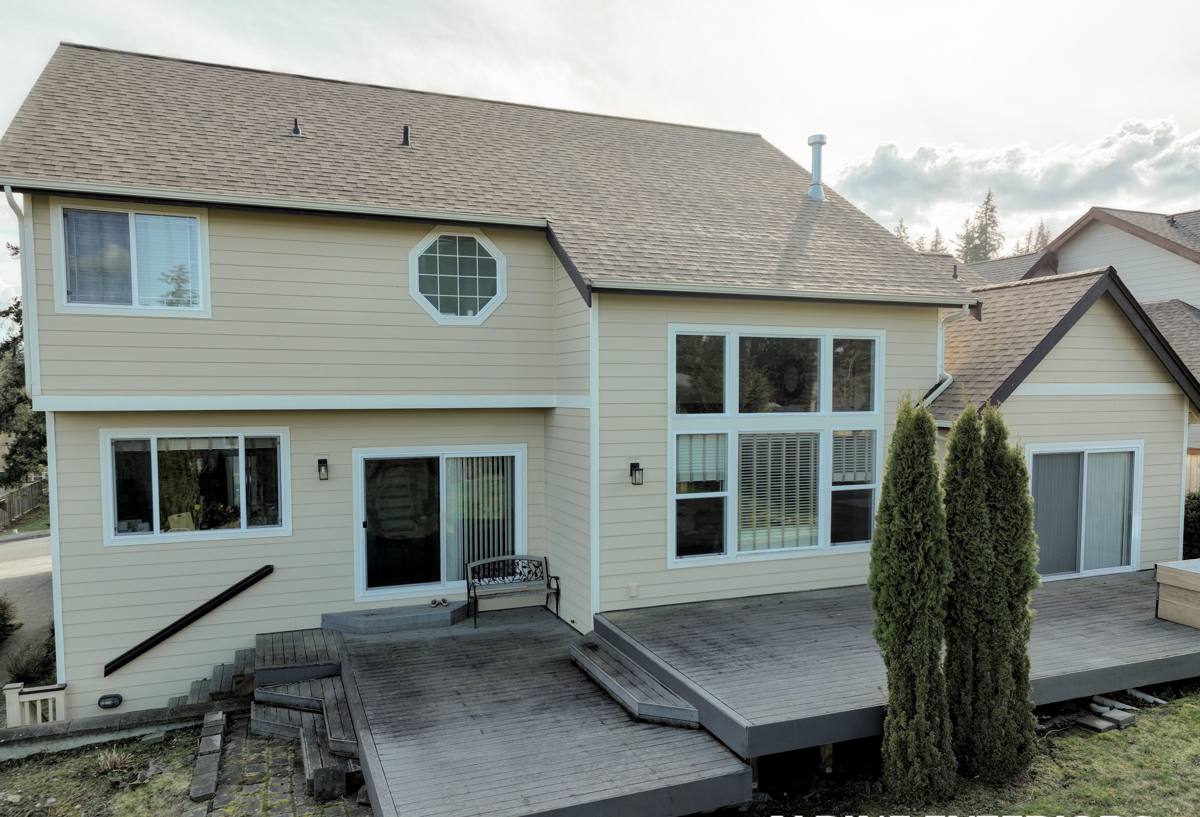
Signs a Deck Needs Replacement, Not Repair
Not every tired-looking deck needs a full replacement, but in Sarasota's climate, certain warning signs mean the structure itself is compromised and patching won't fix it.
- Soft or spongy spots in decking boards, especially near the house or stair landings
- Visible rot, mold staining, or a musty smell coming from framing you can see underneath
- Rust streaks around fastener heads or visible corrosion on joist hangers and brackets
- A ledger board that's separating from the house, or gaps where flashing should be
- Wobble or movement in railings and posts when you lean on them
- Boards that have cupped, split, or silvered badly despite regular maintenance
- A deck older than 15-20 years that was built before current wind-load and connection standards
If you're only seeing surface graying or a few loose boards, that may be a repair. If you're seeing structural movement or rot in the framing, repair is usually a short-term patch on a problem that will come back.
Choosing the Right Decking Material for This Climate
Material choice matters more here than in most parts of the country, because Sarasota's UV intensity and humidity punish weak spots quickly. We'll walk through honest trade-offs rather than push whatever's cheapest to install.
| Material | How It Handles Our Climate | Maintenance | Typical Lifespan Here |
|---|---|---|---|
| Pressure-treated wood | Affordable but prone to warping, splitting, and rot if not sealed regularly; UV fades and dries the surface fast | Annual sealing/staining recommended | 10-15 years |
| Capped composite | Resists moisture and UV fading far better than wood; the cap layer protects the core from our humidity | Occasional washing, no sealing | 25-30 years |
| PVC decking | Fully synthetic, doesn't absorb moisture at all — a strong choice for humid, salt-air conditions | Low, occasional washing | 25-30+ years |
| Tropical hardwoods (e.g., ipe) | Naturally dense and rot-resistant, but requires diligent oiling to prevent UV graying and surface checking | Regular oiling, higher labor cost | 20-25 years with upkeep |
We don't push one material on every homeowner. A shaded, low-traffic deck might do fine in well-maintained wood. A deck that bakes in full sun most of the day is usually better served by composite or PVC, simply because the maintenance burden of wood in that exposure gets old fast. We'll talk through your budget, how the deck gets used, and how much upkeep you actually want to do — then recommend accordingly.
What About Fasteners and Hardware?
This is where a lot of deck failures actually start, and it's easy to overlook. Standard galvanized fasteners corrode faster in our humid, salt-influenced air than they would inland in a drier climate. We use stainless steel or coated fasteners rated for coastal exposure on structural connections, along with corrosion-resistant joist hangers and brackets. It costs more up front than using whatever's on the shelf, but it's the difference between hardware that lasts the life of the deck and hardware that's rusting through in five years, hidden under the boards where you can't see it.
What a Correct Deck Replacement Actually Involves
A deck replacement done right is a structural project, not a cosmetic one. Here's what we look at beyond the decking boards themselves:
- Footings and posts — checked for proper depth, size, and condition; undersized or shifted footings get corrected, not built around
- Ledger board attachment and flashing — properly flashed and through-bolted to the house structure, which is one of the most common failure points in older Sarasota decks
- Joist spacing and sizing — matched to current span tables for your decking material and expected loads
- Hardware — corrosion-resistant connectors and fasteners throughout, not just where they're visible
- Railings and stairs — built to current code height and baluster spacing requirements
- Wind resistance — post-to-beam and beam-to-joist connections detailed to hold up under our seasonal wind events, not just static load
Skipping any of these to save time is exactly how you end up with a deck that looks good for a couple of years and then starts failing from the inside out.
Permits and Local Code Requirements
Deck replacement in unincorporated Sarasota County — which includes Bee Ridge — typically requires a permit, and for good reason: it's a structural addition to your home that has to meet wind-load and connection standards specific to our region. Permitted work also gets inspected, which is a second set of eyes confirming the framing, footings, and railings meet code before everything gets closed up under decking boards.
We handle the permitting and inspection process as part of the job. It's an extra step compared to a handshake deal with an unlicensed crew, but it protects you — both for safety and for resale, since an unpermitted deck can become a real problem when you go to sell the house.
How Our Deck Replacement Process Works
- On-site assessment — we inspect the existing deck's framing, footings, and ledger connection to understand why it failed and what the replacement needs to address
- Material and design conversation — we walk through decking material options, layout, and budget honestly, based on how you actually use the space
- Permitting — we prepare and submit the permit package with Sarasota County before work begins
- Demolition and disposal — the old deck comes out, including any compromised framing, with the debris hauled off
- Structural rebuild — footings, posts, ledger, and framing are built or corrected to current code and wind-resistance standards
- Decking, railing, and finish work — boards, railings, and stairs are installed with corrosion-resistant hardware throughout
- Final inspection and walkthrough — we pass inspection and walk the finished deck with you before calling the job done
Why Local Experience in Bee Ridge Matters
A crew that regularly works in Bee Ridge and the surrounding Sarasota area already knows how the county's permitting process runs, what inspectors look for, and how local soil and drainage conditions affect footing work. That familiarity saves time and avoids the back-and-forth delays that come from a contractor learning the local process on your project. It also means we've seen firsthand how decks in this specific area age — which framing details hold up and which ones don't — rather than working off generic national building guidance that doesn't account for Gulf Coast humidity and storm exposure.
Hiring local also matters for accountability. A contractor based in the area has a reputation here to protect and is easy to reach if a question comes up after the job is finished — not a crew that drove in from out of the region and is hard to track down later.
What to Ask Before Hiring Anyone
- Are you licensed and insured to do structural deck work in Sarasota County?
- Will you pull the permit, and is that included in your quote?
- What fastener and hardware grade do you use for framing connections?
- How do you handle the ledger board attachment and flashing?
- What's your plan if you find rot or an undersized footing once demo starts?
Caring for Your New Deck Long-Term
Whatever material you choose, a little seasonal attention goes a long way in this climate. Wood decks need regular sealing to fight UV and moisture; composite and PVC need far less upkeep but still benefit from periodic cleaning to prevent mildew staining in our humidity. Checking railings and fastener heads once or twice a year for early signs of corrosion or movement can catch a small issue before it becomes a structural one.
A deck replacement is a real investment, and the goal is a structure that holds up to Sarasota's sun, storms, and salt air for decades, not just a few seasons. If your current deck is showing its age, we're happy to take a look and give you a straightforward assessment of what it actually needs — no pressure, no upsell. Reach out for a free estimate using the form below.