 Sarasota Siding
 Palmer Ranch Homes Face a Specific Set of Exterior Stresses
Palmer Ranch sits in Sarasota County, close enough to the Gulf that salt-laden air reaches every block, and far enough inland in places that afternoon heat and UV exposure build up on west- and south-facing walls all day. The neighborhood's mix of established single-family homes and newer construction means we see a wide range of exterior conditions here — some houses with siding that's held up reasonably well, others where the original product was never a great match for this climate to begin with. Whatever the age of the home, the same environmental factors are at work on every exterior surface: intense year-round sun, wind-driven rain during storms, high ambient humidity most months, and salt air that doesn't stay confined to the immediate coastline.
None of this is unique to Palmer Ranch specifically, but it's worth saying plainly because it shapes every recommendation we make. A siding product that performs fine in a dry, temperate climate can behave very differently after a few Florida summers and a couple of tropical systems. That's the lens we bring to every estimate in this area.
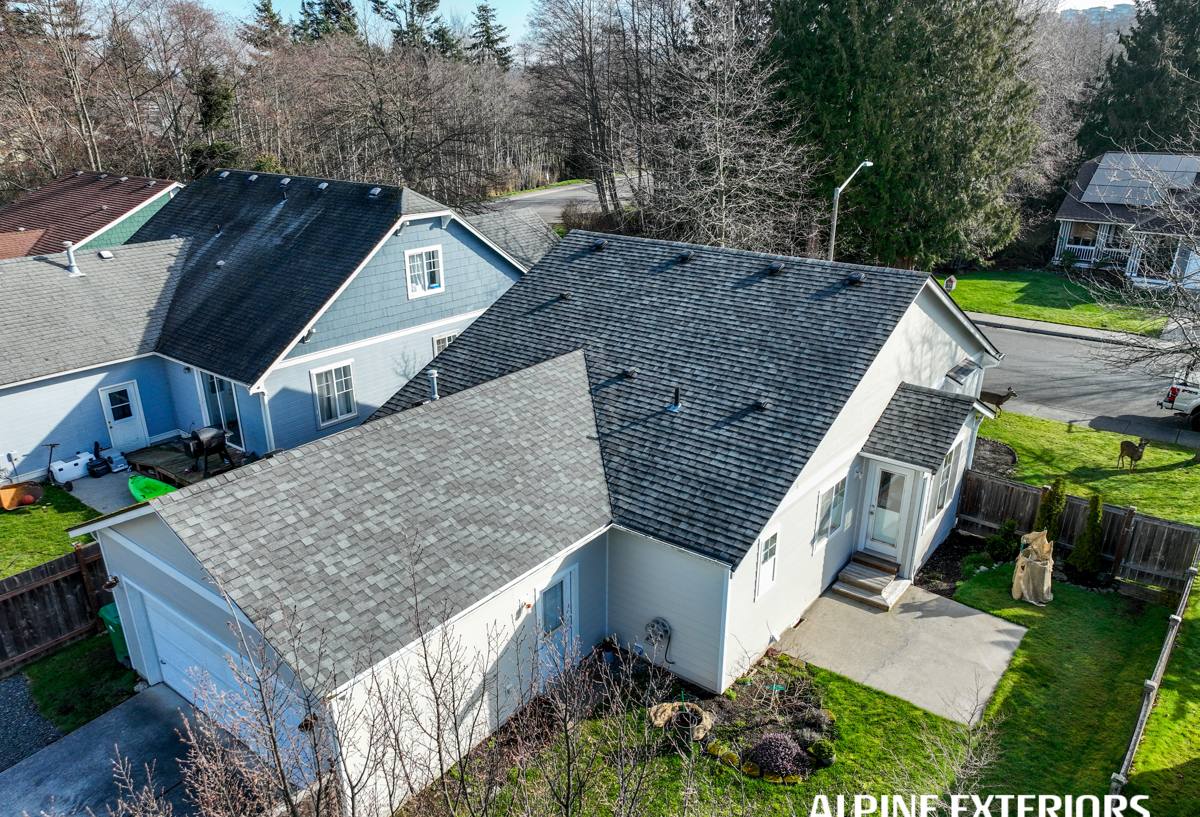
What the Climate Actually Does to Siding, Roofs, and Trim
Hurricane-Force Wind and Wind-Driven Rain
Sarasota County sees tropical systems most years, and even storms that don't make direct landfall nearby can push sustained winds and horizontal rain against a home for hours. Wind-driven rain doesn't just fall — it gets forced sideways and upward, finding its way behind loose siding laps, under poorly sealed trim, and into any gap where flashing or caulking has failed. Once water gets behind a wall system, the damage is often invisible until it's serious: rotted sheathing, stained interior walls, or siding that bows and separates from the framing.
Year-Round UV
Florida's sun angle and day length mean exterior surfaces here absorb far more UV over a year than most of the country. Paint fades and chalks faster, caulk joints dry out and crack sooner, and any material with a painted-on finish (rather than a factory-cured finish) tends to show its age within a handful of years rather than a decade or more.
Salt Air
Salt in the air corrodes fasteners, accelerates the breakdown of certain coatings, and can leave a fine residue on exterior surfaces that holds moisture against the wall longer than it would otherwise sit. Homes don't need to be beachfront to be affected — salt air travels well inland on prevailing winds, and Palmer Ranch gets its share of it.
Humidity and Moisture Cycling
High humidity for most of the year means siding materials are constantly absorbing and releasing moisture, expanding and contracting with temperature and humidity swings. Materials that don't handle that cycling well can warp, cup, or open up at the seams over time.
Why We Install Only James Hardie Fiber Cement Siding
Sarasota Siding Co made a deliberate decision to install James Hardie fiber cement exclusively — not vinyl, not LP SmartSide, not Cemplank or Allura, not primed wood. That's not a marketing position; it's a practical one built around what actually holds up in this specific climate.
Non-Combustible
Fiber cement is made primarily from cement, sand, and cellulose fibers, and it does not burn or contribute fuel to a fire the way wood-based or engineered-wood products can. In a region where homes sit close together in many neighborhoods, that's a real, tangible advantage, not a marketing footnote.
Built for Heat, Humidity, and Salt Air
James Hardie engineers specific product lines (HZ5 and similar designations) for high-humidity, high-UV climates like Florida's. The material itself doesn't rot, and it resists the swelling and moisture absorption that wood-based sidings are prone to in this environment.
ColorPlus Factory Finish
Rather than relying on job-site paint that starts degrading under UV almost immediately, Hardie's ColorPlus finish is baked on in a controlled factory process, giving it much stronger fade and wear resistance than field-applied paint — a meaningful difference under Sarasota's sun exposure.
Warranty Backing
James Hardie backs its siding with a substantial, transferable limited warranty when installed to manufacturer specification. That warranty is only as good as the installation behind it, which is why correct installation practice matters as much as the product choice itself.
Product Comparison: Why We Draw the Line Where We Do
| Material | Moisture/Rot Behavior | UV/Finish Durability | Combustibility | Why We Don't Install It |
|---|---|---|---|---|
| Vinyl | Doesn't rot, but can warp and buckle in heat | Color fades and becomes brittle under sun over time | Melts/deforms under heat exposure | Poor long-term dimensional stability in Florida heat cycles |
| LP SmartSide (engineered wood) | Wood-based core is vulnerable to moisture intrusion at cut edges/seams | Relies on field or factory paint that needs maintenance | Combustible, wood-based product | Moisture sensitivity is a poor match for our humidity and storm exposure |
| Primed spruce/cedar | Natural wood, prone to rot and insect damage without diligent upkeep | Requires repainting on a recurring cycle | Combustible | High maintenance burden and shorter service life in this climate |
| Cemplank/Allura (other fiber cement) | Similar base material to Hardie | Finish and QC processes vary by manufacturer | Non-combustible | We standardized on Hardie's specific product engineering, finish process, and warranty structure |
| James Hardie fiber cement | Engineered for humid, high-moisture climates | Factory-baked ColorPlus finish | Non-combustible | Our standard install |
How We Approach a Siding Project in Palmer Ranch
Every project starts with an honest look at what's actually happening behind the existing siding, not just what's visible from the curb. That means checking for moisture intrusion at trim, corners, and penetrations, evaluating whether the underlying sheathing and framing are sound, and confirming what flashing and water management is (or isn't) currently in place. Skipping this step is one of the most common ways siding jobs fail early — a beautiful new exterior installed over a compromised wall system is still a compromised wall system.
From there, we plan the installation around correct Hardie fastening patterns, proper clearances above rooflines and grade, and sealed, flashed penetrations at every window, door, and utility fixture. We also factor in Sarasota County's wind zone and permitting requirements, since correct fastening schedules and code compliance both matter for wind performance and for any future insurance or resale considerations.
What a Thorough Siding Estimate Should Include
- A visual and, where warranted, probe inspection of siding, trim, and any accessible sheathing
- An honest assessment of moisture damage, not just a quote for new material over old problems
- A written scope covering flashing, trim, and water management details — not just square footage of siding
- Product specification (Hardie plank type, exposure, and ColorPlus color) in writing
- Clarity on permitting and code requirements specific to Sarasota County
- A realistic timeline that accounts for weather and material lead times
Roofing, Windows, and Decks: The Rest of the Exterior System
Siding doesn't work in isolation. A roof that's shedding water improperly onto a wall, windows that aren't flashed correctly, or a deck ledger board that's trapping moisture against the house structure can all undermine even a well-installed siding job. Because we handle roofing, windows, and decks in addition to siding, we look at the exterior as one connected system rather than four separate trades that happen not to talk to each other. That matters especially in a climate where wind-driven rain will find any weak transition point between systems.
When we're on-site for a siding estimate in Palmer Ranch, we'll flag anything we see on the roof, around window openings, or on deck structures that could compromise the work — even if it's outside the immediate scope of the siding job. It costs nothing to point it out, and it can save a homeowner from a much bigger repair down the road.
Why a Local Crew Matters Here
Working in Sarasota County day in and day out means we're familiar with the local permitting process, the wind zone requirements that apply to exterior work here, and the specific ways homes in this area tend to age under sun, humidity, and storm exposure. That's different from a crew that installs siding occasionally as one of several regions they cover. We're not guessing at how a product will hold up in this climate — we've seen how different materials perform on homes throughout the area over time, and that experience directly shapes why we standardized on James Hardie rather than offering a menu of lower-cost alternatives.
Being local also means accountability. If a question comes up after the job is done, we're not a phone number in another region — we're a crew that works in this county regularly and stands behind the work we do here.
Maintenance: What Palmer Ranch Homeowners Should Expect
One of the practical benefits of Hardie fiber cement with a ColorPlus finish is a lower maintenance burden compared to wood-based or vinyl alternatives, but "lower maintenance" isn't "no maintenance." A simple annual visual check — looking for caulk that's cracked at trim joints, any staining that suggests water intrusion, and general condition of paint or finish — catches small issues before they become expensive ones. Homeowners in this area should also keep an eye on anything that changed after a major storm: even siding that looks fine from the ground can have loosened panels or damaged flashing that's only visible on closer inspection.
Get a Straightforward Estimate
If you're weighing a siding, roofing, window, or deck project in Palmer Ranch, we're happy to come take an honest look and walk you through what we see — no pressure, no inflated scare tactics, just a clear picture of your home's exterior and what it would take to get it right. Reach out using the form below to schedule a free estimate.