 Sarasota Siding
 Bee Ridge Homes Face a Tough Climate
Bee Ridge sits inland enough from the bay to feel a little sheltered, but it's still squarely in Sarasota County, and that means every exterior surface on a house here deals with the same punishing combination the rest of the region gets: long stretches of intense UV, heavy summer humidity, wind-driven rain that finds every gap in flashing and trim, and salt-laden air that drifts in off the Gulf even miles from the water. Add in the real possibility of hurricane-force winds during storm season, and it's clear why exterior materials that work fine in a drier, milder climate often disappoint here.
A lot of Bee Ridge's housing stock includes homes built across several different decades, which means a wide range of original siding materials — wood, vinyl, older fiber cement, and in some cases builder-grade composite products that were never really engineered for Florida's climate. When we get called out to look at siding problems in this area, the underlying story is almost always the same: moisture got behind the surface, UV broke down a finish faster than expected, or wind pulled at a product that wasn't fastened or rated for real coastal-adjacent exposure.
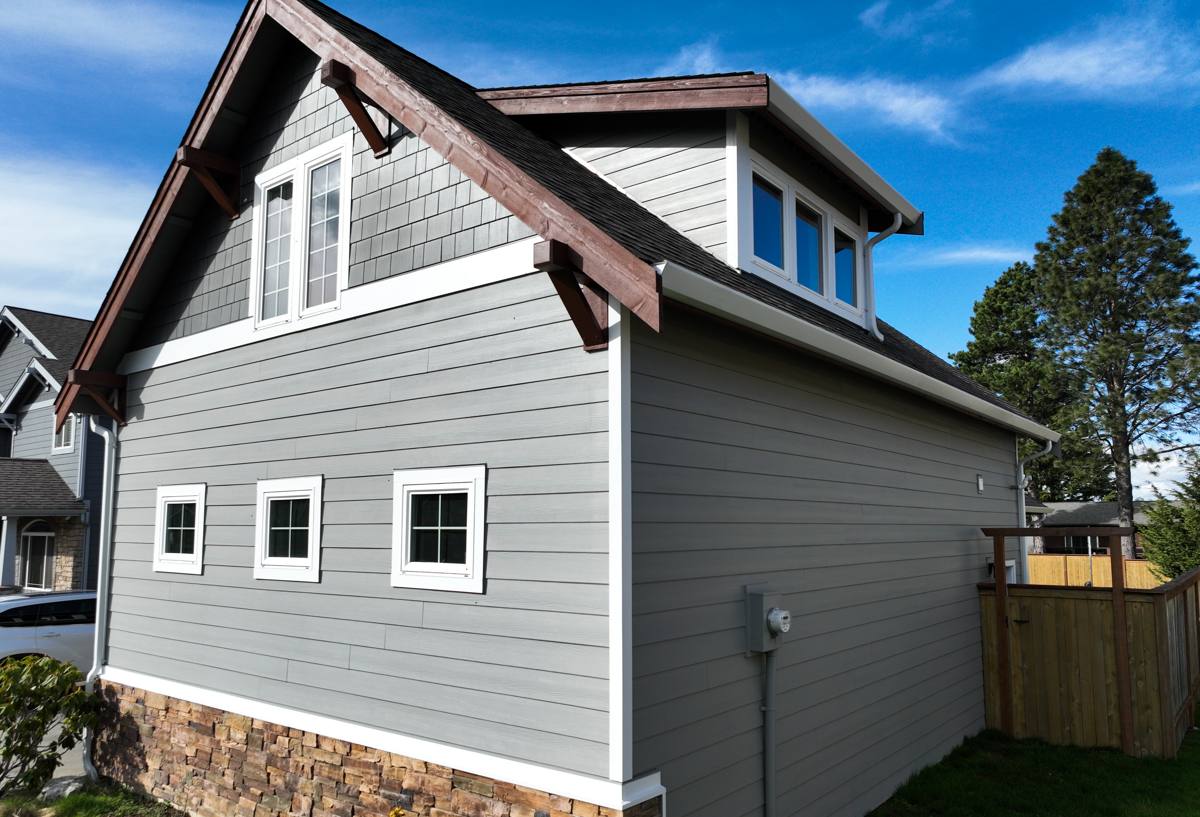
What We Actually See on Bee Ridge Exteriors
Sun and Heat Damage
Florida sun is relentless, and it's harder on painted and lower-grade siding than most homeowners expect. UV breaks down pigments and surface coatings over time, which is why so many houses in this area show chalking, fading, or uneven color on the sun-facing walls — usually the south and west sides — well before the north side shows any wear at all.
Moisture Intrusion
Wind-driven rain during Florida's afternoon storms doesn't just fall straight down — it gets pushed sideways into seams, laps, and trim joints. Siding that isn't installed with the right flashing details, or that swells and traps moisture by nature of its material, ends up with soft spots, buckling, or hidden rot behind the surface long before a homeowner sees an obvious problem.
Salt Air Effects
Even set back from the coast, Bee Ridge gets salt-laden air on onshore wind days. Salt accelerates corrosion on fasteners and metal trim, and it can degrade certain coatings faster than inland climates would. It's a slow, cumulative effect — which is exactly why it gets overlooked until a siding system starts failing years ahead of schedule.
Wind Exposure
Sarasota County sees real hurricane risk, and even non-named tropical systems can bring damaging gusts. Siding that isn't rated and fastened for regional wind speeds is at real risk of lifting, cracking, or blowing off outright — and once one panel fails, wind-driven rain has a direct path into the wall assembly.
Why We Standardized on James Hardie Fiber Cement
We install James Hardie fiber cement siding exclusively — we don't install vinyl, LP SmartSide, Cemplank, Allura, or primed wood products like spruce or cedar. That's not a marketing position; it's a standard we hold because of what we've seen play out on real homes in this climate over years of service calls and installs.
Fiber cement is non-combustible, which matters in a state where wildfire risk exists inland and where insurers increasingly factor exterior material into coverage and premiums. It doesn't expand and contract with humidity the way wood-based products do, so seams stay tighter and paint lines hold longer. And Hardie's ColorPlus factory-applied finish is baked on under controlled conditions, which gives it meaningfully better UV and fade resistance than field-applied paint — a real advantage in a market where sun exposure is a daily fact of life, not an occasional stress.
HZ5 Engineering for This Climate
James Hardie engineers specific product formulations for different climate zones, and Gulf Coast Florida falls into their HZ5 category — built to handle high humidity and moisture exposure better than their standard formulations. That's an engineering response to exactly the conditions Bee Ridge homes deal with, not a generic one-size-fits-all product.
How We Compare What's Out There
| Material | Moisture Behavior | UV/Fade Resistance | Combustibility | Typical Maintenance |
|---|---|---|---|---|
| James Hardie Fiber Cement (HZ5) | Stable, engineered for humidity | Factory ColorPlus finish, strong fade resistance | Non-combustible | Occasional wash, repaint on your schedule (not forced by failure) |
| Vinyl Siding | Can warp or buckle in heat; seams can trap moisture | Fades and becomes brittle with sustained UV | Combustible, can melt/deform | Low, but limited repair options once damaged |
| Primed Wood (spruce/cedar) | Absorbs moisture, prone to rot without diligent upkeep | Needs repainting on a shorter cycle | Combustible | High — regular repainting and moisture checks |
| LP SmartSide / Other Engineered Wood | Sensitive to sustained moisture exposure at edges/cuts | Field-applied finishes fade unevenly | Combustible | Moderate — edge sealing and finish upkeep matter |
Beyond Siding: Roofing, Windows, and Decks
Siding is only one piece of a home's exterior defense, and we treat it that way. We also handle roofing, windows, and decks for Bee Ridge homeowners, because these systems all interact — a roof leak can damage siding from behind, a failing window seal can let moisture into wall cavities, and a deck built with the wrong fasteners in salt air will corrode long before the structure itself gives out. When we look at a property, we look at the whole exterior envelope, not just one component in isolation.
Roofing
Florida roofs take a beating from UV and wind alike. We evaluate roof condition alongside siding because a compromised roofline is often the actual source of a moisture problem that shows up as siding damage lower down the wall.
Windows
Old or poorly sealed windows are a common entry point for wind-driven rain, and they undercut even a well-installed siding job if the flashing details around them aren't done right. We integrate window work into siding projects when it makes sense structurally and financially.
Decks
Outdoor living is a big part of why people move to this area, and decks here face their own combination of sun, humidity, and salt exposure. We build and repair decks with materials and fasteners suited to that reality, not generic hardware-store specs.
Why a Local Crew Matters in Bee Ridge
Installation quality is what actually determines how well any siding product performs — even James Hardie's engineered material will underperform if flashing, fastening, and clearances aren't done to spec. A crew that works Sarasota County regularly understands the wind load requirements, the humidity behavior of building materials here, and the way local permitting and inspection processes work. That local familiarity shows up in the details: proper starter strip installation, correct nail placement instead of relying on adhesive shortcuts, and flashing details around windows and doors that actually shed water instead of channeling it inward.
We also know that homeowners in this area are often juggling insurance requirements, HOA guidelines, or older homes with quirks that don't show up in a generic estimate. A local crew can walk a property, see those issues in person, and build a plan around them instead of applying a one-size-fits-all approach.
What a Bee Ridge Siding Project Involves
Assessment
We start by inspecting the current siding, checking for moisture intrusion, evaluating the condition of the underlying sheathing, and identifying any areas where past water damage may have already occurred.
Planning
We select the right Hardie product line and profile for the home's style, confirm color and trim details, and plan flashing and water management around every window, door, and penetration.
Installation
Correct installation means following manufacturer fastening specs, maintaining proper clearances from grade and roeflines, and sealing and flashing every transition point — the details that determine whether a siding job lasts fifteen years or fifty.
Final Inspection
We walk the finished project to confirm every detail meets both Hardie's installation requirements and our own standards before calling the job complete.
What to Ask Before Hiring Any Exterior Contractor
- Are they installing a product engineered for Gulf Coast humidity and wind, or a generic national product?
- Do they carry proper licensing and insurance for exterior work in Florida?
- Can they explain their flashing and water management approach in specific terms, not just "we seal everything"?
- Do they offer a manufacturer-backed warranty that's actually transferable if you sell the home?
- Have they worked on homes in Sarasota County specifically, and do they understand local wind and permitting requirements?
- Will they put the product line, color, and installation scope in writing before work begins?
The Cost Conversation
Every home is different, and pricing depends on square footage, the condition of the existing sheathing underneath, trim complexity, and how much of the roofing, window, or deck scope gets bundled into the same project. What we can say honestly is that fiber cement typically costs more upfront than vinyl, but it also avoids the repeat cycle of premature fading, warping, or replacement that lower-grade materials tend to run into in this climate. We'd rather walk a property and give a specific number than guess at a broad range that doesn't reflect your home.
If your Bee Ridge home is showing sun damage, moisture issues, or storm wear on the siding, roof, windows, or deck, we're happy to take a look and put together a free, no-pressure estimate — no obligation, just an honest read on where things stand and what your options are.