 Sarasota Siding
 What Primed Wood Siding Actually Is
Primed spruce (sometimes sold as primed pine or generic "primed wood lap siding") is solid-sawn wood board milled into siding profiles and coated with a factory or job-site primer before installation. It's been a staple of American home exteriors for generations, and it's still available today through most lumberyards. The primer is a base coat only — it's meant to help top-coat paint adhere and to slow moisture absorption during shipping and storage, not to seal the board permanently.
We get asked about it fairly often in Sarasota, usually from homeowners who grew up with painted wood siding on an older home, or who like the idea of a traditional painted look on a new install. We don't install it. Not because it's a bad material in the abstract — it isn't — but because of what happens to it once it's on a wall in this part of Florida.
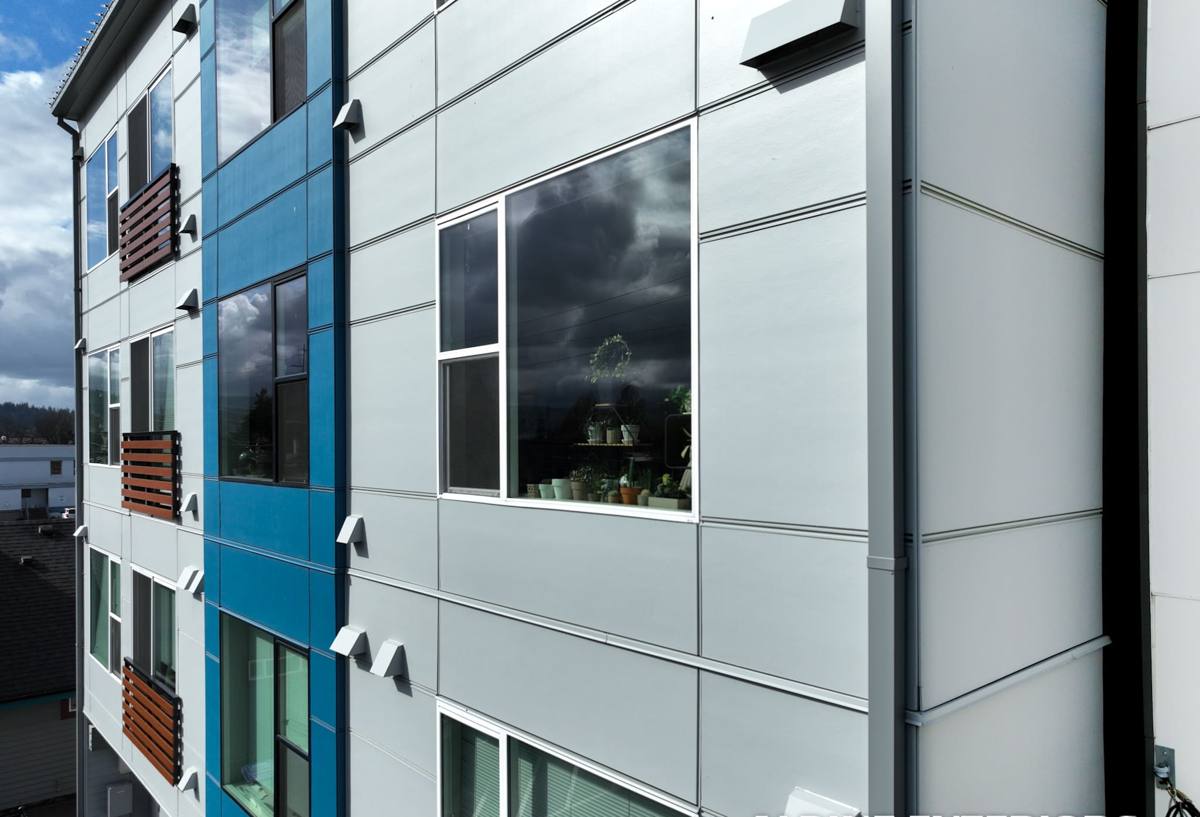
What Primed Spruce Gets Right
To be fair to the product: solid wood siding has real advantages that explain why it lasted as an industry standard for so long.
- Authentic wood grain and profile that some homeowners simply prefer over any manufactured alternative
- Easy to cut, shape, and repair with basic carpentry tools — no special saws or blades required
- Field-repairable in small sections without replacing an entire course
- Lower material cost per board than most engineered or fiber cement alternatives
- Long track record — painters and carpenters know exactly how it behaves
If this were a dry, temperate climate with moderate sun and low humidity, a lot of these trade-offs we're about to walk through would matter less. Sarasota isn't that climate.
Why Sarasota's Climate Is Tough on Painted Wood
UV and Sun Exposure
Sarasota County sees intense, near year-round sun. UV breaks down paint film chemically, not just cosmetically — it degrades the resin binders that keep a paint coat flexible and adhered. On solid wood, once UV starts chalking and cracking the top coat, the wood underneath is exposed to moisture cycling with nothing but a thin primer layer standing between it and the weather.
Wind-Driven Rain and Humidity
Gulf Coast storms don't just drop rain — they drive it sideways under laps, into seams, and behind trim. Solid wood is hygroscopic: it absorbs and releases moisture with humidity swings. In a climate that stays humid most of the year, that constant expansion and contraction stresses paint film, seams, and fasteners in ways a drier climate never would.
Salt Air and Coastal Corrosion
Even well inland from the barrier islands, Sarasota's air carries salt content that accelerates corrosion of fasteners and metal flashing, and it also seems to shorten the service life of exterior paint. Salt-laden moisture that gets behind a compromised paint coat sits against the wood longer and speeds up decay at the surface.
Hurricane Wind Loads
Sarasota County's wind zone requirements exist for a reason. Solid wood lap siding can be installed to meet code, but it depends heavily on fastener schedule, board condition, and installation detail — there's less built-in engineering margin than with products designed and tested specifically for high-wind coastal exposure.
Installation Sensitivity: Where Painted Wood Siding Goes Wrong
Most of the failures we've seen on painted wood siding over the years trace back to installation details rather than the wood itself. Primer from the mill covers the face and back of the board — it typically does not cover cut ends, and every butt joint, corner cut, and window trim cut on a job site creates a fresh, unprimed edge. If that end grain isn't field-primed and properly caulked before the board goes up, it becomes a wick that pulls moisture straight into the board.
Other common trouble spots:
- Nail placement too close to board edges, which splits wood fibers and opens a moisture path
- Insufficient lap overlap, which lets wind-driven rain track upward under the course above
- Caulked joints that look fine at installation but open up as the wood moves seasonally
- Bottom courses too close to grade or hardscape, where splash-back keeps the lowest boards wet longer than the rest of the wall
None of these are impossible to do correctly. But they require a level of field discipline — priming every cut, caulking every seam, holding proper clearances — that's easy to skip on a schedule and hard for a homeowner to verify once the wall is closed up.
The Maintenance Cycle Homeowners Take On
This is really the heart of it. Painted wood siding is not a "install and forget" product anywhere, and it's even less so on Florida's Gulf Coast. A homeowner who chooses it is signing up for an ongoing paint maintenance cycle, not a one-time exterior upgrade.
In practice, that means inspecting for chalking, cracking, and peeling on a regular basis, catching failed caulk joints before they let water in, and repainting on a cycle that's often shorter here than what a paint manufacturer's data sheet suggests for milder climates. Skip a cycle, and the next repaint often isn't just paint — it's replacing rotted boards first.
Cost Over Time
The sticker price on primed wood siding looks attractive next to fiber cement. The total cost of ownership tells a different story once you factor in the maintenance it demands in this climate.
| Factor | Primed Wood Siding | James Hardie Fiber Cement |
|---|---|---|
| Initial material cost | Lower | Moderate to higher |
| Finish | Field-applied paint, homeowner's choice of color | Factory-baked ColorPlus finish or field paint |
| Repaint interval in this climate | Every several years, sooner in full sun exposure | Much longer with ColorPlus finish; standard for field-painted Hardie too |
| Moisture/rot risk | Higher if paint film or caulk fails | Engineered to resist moisture damage; won't rot |
| Pest vulnerability | Susceptible to wood-boring insects and rot | Not a food source for pests |
| Combustibility | Combustible | Non-combustible |
| Typical warranty | Paint warranty only; siding itself often unwarrantied | Long-term manufacturer warranty on the siding substrate |
Add up two or three repaint cycles plus the likelihood of some board replacement along the way, and the "savings" on primed wood siding often disappears well before the 20-year mark.
How Primed Wood Compares to James Hardie Fiber Cement
James Hardie fiber cement is manufactured from cement, sand, and cellulose fibers, engineered specifically for climate performance rather than general-purpose lumber use. Hardie's HZ5 product line is formulated for exactly the conditions Sarasota deals with — humidity, moisture cycling, and temperature swings — and the ColorPlus factory finish is baked on under controlled conditions, which is a fundamentally different proposition than brushing paint onto a board in the field.
It's also non-combustible, which matters in a state where wildfire and lightning-strike home fires are a real, if less-discussed, risk. And because it isn't wood, it isn't a target for termites or wood-boring insects, which are active year-round in this part of Florida.
None of that makes fiber cement "better" in every possible sense — it doesn't replicate the exact tactile feel of solid wood, and it requires its own correct installation practices (proper clearance, fastening, and joint treatment matter for Hardie too). But when we weigh long-term performance in this specific climate against the maintenance burden of painted wood, fiber cement is what we're willing to put our name behind.
What We Install Instead — and Why
We standardized this company on James Hardie fiber cement siding exclusively. We don't install LP SmartSide, vinyl, Cemplank, Allura, primed spruce, or cedar, and we're upfront about why: we'd rather install one product family extremely well, understand its installation details cold, and stand behind a warranty that means something, than offer every option on the market and let homeowners discover the trade-offs after the fact.
For a Sarasota County home taking direct sun, salt air, and hurricane-season wind and rain, we think Hardie's combination of factory finish, climate-engineered formulation, non-combustibility, and manufacturer warranty is the more defensible long-term choice. That's a professional judgment call on our part, not a claim that painted wood siding is unusable — plenty of homes around the country still wear it successfully. It's just not what we choose to install here.
Checklist: Questions to Ask Before Choosing Painted Wood Siding
- Who is priming the cut ends and field joints on-site, and when in the install sequence does that happen?
- What clearance will the bottom course have from grade, decking, or hardscape?
- What paint product and repaint schedule does the manufacturer recommend for a coastal, high-UV climate?
- Is the siding itself warrantied, or only the paint finish?
- What is the fastener schedule, and does it meet Sarasota County's current wind zone requirements?
- Who is responsible for inspecting and re-caulking joints over the life of the siding?
If a contractor can't answer these clearly, that's worth noting before signing anything — regardless of which siding material you end up choosing.
If you're weighing siding options for a home in Sarasota, Sarasota County, or the surrounding area, we're happy to walk through what we'd recommend and why. Reach out for a free, no-pressure estimate using the form below.