 Sarasota Siding
 Exterior Work in Rosemary District: What the Climate Demands
Rosemary District sits close to downtown Sarasota, in the urban core where older homes stand alongside newer construction. Whatever the age of the structure, the exterior faces the same environment every other home in Sarasota County deals with: long stretches of intense UV, sudden wind-driven rain, salt-laden air moving in off the Gulf, and the real possibility of hurricane-force wind loads during storm season. None of that is unique to any one street or block in the neighborhood — it's the baseline condition for exterior materials anywhere in this part of Florida, and it's the standard we build every siding, roofing, window, and deck project around.
Homeowners in this part of Sarasota often ask us the same question in different words: why does my siding, trim, or roof edge seem to wear out faster here than it would somewhere inland? The answer is almost always some combination of sun exposure, moisture cycling, and salt air working on the material day after day, year after year. Understanding that process is the first step to choosing exterior products that actually hold up.
How Sun, Moisture, and Salt Air Break Down Exteriors
UV Exposure
Florida sun is relentless. Painted wood, vinyl, and lower-grade composite products fade, chalk, and become brittle under years of direct UV exposure. Color loss isn't just cosmetic — it's often the first visible sign that a material's protective surface is degrading.
Wind-Driven Rain
Sarasota's storms don't just drop rain straight down — wind pushes it sideways, forcing water into seams, laps, and fastener points that were never designed to handle sustained lateral pressure. Over time, water finds its way behind poorly installed or poorly designed siding and starts causing damage you can't see until it's serious.
Salt Air
Even well inland from the water, Sarasota County's air carries salt content that accelerates corrosion on fasteners, flashing, and metal components, and it speeds up the breakdown of certain siding substrates. Materials and hardware that aren't rated for coastal exposure age faster here than the same products would in a drier, inland climate.
Wind Load
Hurricane-force winds put direct mechanical stress on every exterior surface — siding panels, roof coverings, window assemblies, and attached structures like decks. Products and installation methods that aren't engineered for these wind speeds are more likely to fail exactly when a home needs its exterior to perform.
Why We Install Only James Hardie Fiber Cement Siding
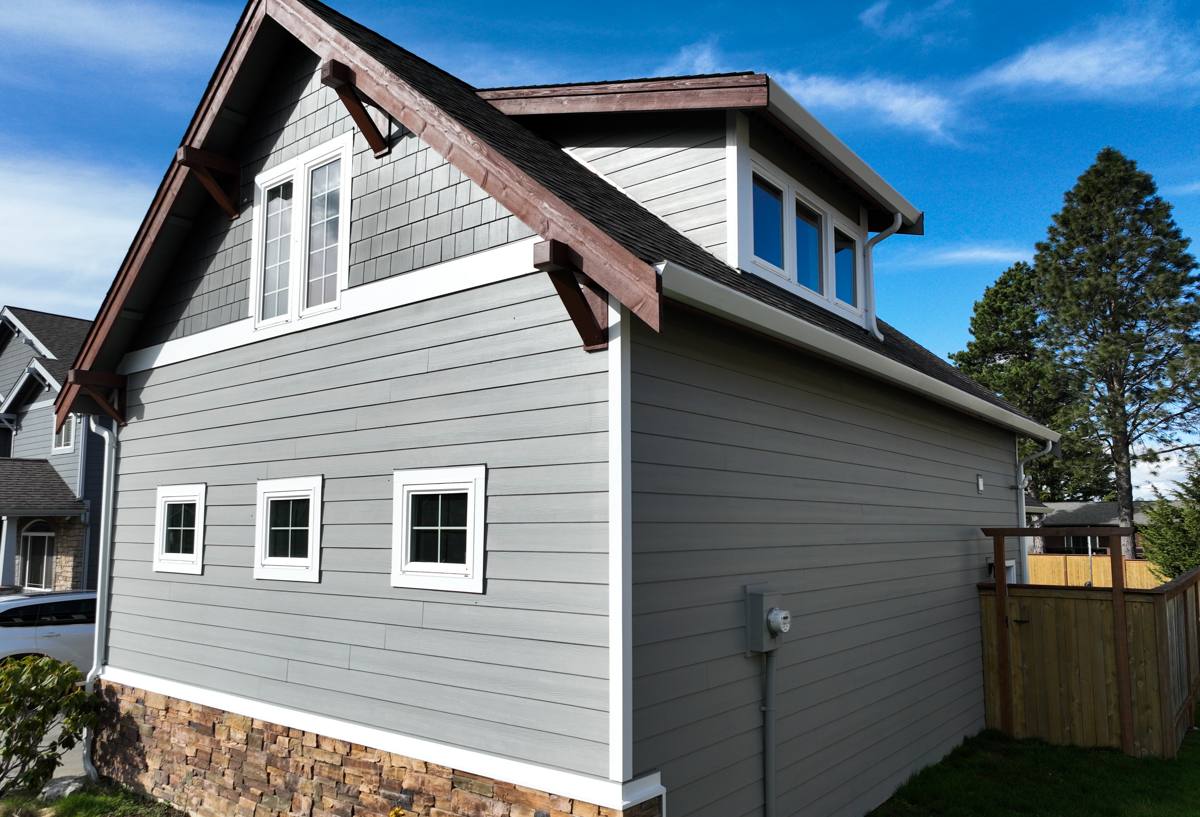
We made a deliberate decision as a company: we install James Hardie fiber cement siding, and we don't install vinyl, LP SmartSide, primed wood, cedar, or other fiber cement brands. That's not a marketing position — it's a reflection of what we've seen hold up under Gulf Coast conditions versus what tends to struggle.
Fiber cement is non-combustible, which matters in a state where wildfire and ember exposure are a real consideration in parts of Florida. It doesn't absorb water the way wood-based products can, so it resists the swelling, rot, and pest damage that plague untreated or under-protected wood siding in humid climates. And Hardie manufactures a version of its siding — the HZ5 product line — specifically engineered for hot, humid, high-moisture climate zones like ours, with a formulation designed to resist moisture-related damage better than their standard product line.
ColorPlus Factory Finish
Rather than relying on a field-applied paint job that has to fight UV and salt air from day one, Hardie's ColorPlus finish is baked on in a controlled factory environment in multiple coats, with a finish designed to resist fading and hold color far longer than most site-applied paint systems. That matters a great deal in a climate where sun exposure is constant.
Warranty Structure
Hardie backs its siding with a long-term, transferable limited warranty — a meaningful detail for homeowners who may eventually sell. A warranty that transfers to the next owner is one more reason buyers and inspectors view Hardie siding favorably during a sale.
None of this means other siding products are without merit — vinyl is inexpensive, LP SmartSide has its advocates, and wood has real aesthetic appeal. But when we weigh moisture behavior, fire performance, coastal wind rating, and long-term finish durability specifically for Sarasota County conditions, fiber cement is what we're willing to stand behind, and Hardie is the manufacturer whose climate-specific product line and finish process we trust most.
Beyond Siding: Roofing, Windows, and Decks
Siding is only one piece of a home's exterior envelope. We also handle roofing, windows, and decks — and in a climate like Sarasota's, these systems have to work together, not just sit side by side.
Roofing
A roof that's improperly flashed or fastened is a liability in hurricane-force wind, regardless of how good the siding underneath it is. We install and repair roofing systems built to handle Florida wind uplift requirements, with attention to underlayment, flashing details, and ventilation — the parts of a roof that don't show but determine whether it survives a bad storm season.
Windows
Impact-resistant and properly flashed windows do double duty here: they protect against wind-borne debris and they seal out wind-driven rain at one of the most common leak points on any house. Window replacement is also a natural pairing with a siding project, since both involve opening up the same wall assembly.
Decks
Outdoor living is part of why people choose to live in this area, and decks built here need materials and fasteners rated for sun, moisture, and salt exposure — not just standard construction-grade hardware that will corrode or degrade faster than the structure around it.
Comparing Siding Options for a Coastal Sarasota Climate
| Material | Moisture Resistance | UV/Color Stability | Wind/Impact Durability | Typical Maintenance |
|---|---|---|---|---|
| James Hardie Fiber Cement (HZ5, ColorPlus) | High — engineered for humid climates | High — factory-baked finish | High when installed to spec | Low — periodic cleaning, no repainting for many years |
| Vinyl Siding | Moderate — can warp or buckle in heat | Moderate — prone to fading and chalking | Variable — can crack or blow off in high wind | Low, but limited repair options once damaged |
| LP SmartSide (engineered wood) | Moderate — wood-based, vulnerable if seals fail | Moderate — relies on field-applied paint | Moderate | Moderate — paint maintenance and seam inspection |
| Primed Wood / Cedar | Lower in high-humidity, high-rain exposure | Lower — fades and weathers without upkeep | Moderate | High — regular painting/sealing and pest monitoring |
This isn't a knock on every alternative — it's a summary of the trade-offs we weigh, and why fiber cement wins out for our climate zone specifically.
What to Expect From a Local Crew
A crew based in and around Sarasota County brings something an out-of-area contractor can't: familiarity with local wind load requirements, permitting processes, and the way homes in this region are actually built. That matters for a few practical reasons.
- Correct fastening schedules and flashing details for Florida's wind and moisture requirements — not a generic national install spec
- Familiarity with local permitting and inspection processes, which keeps a project moving instead of stalling on paperwork
- An understanding of how salt air affects fastener and flashing material choices, not just the visible siding
- Availability for follow-up service — warranty questions, storm damage assessment, or maintenance guidance — without waiting on a crew that has to travel in from out of the area
- A working knowledge of how older Sarasota-area homes were originally built, which affects how new siding, roofing, or windows tie into the existing structure
What a Siding or Exterior Project Involves
Every property is different, but a well-run exterior project follows a consistent sequence:
- On-site assessment of existing siding, trim, flashing, and any moisture or structural issues
- Written scope and product selection — including Hardie board profile, exposure, and ColorPlus color
- Removal of old material and inspection of the sheathing and wall assembly underneath
- Repair of any rot, damage, or water intrusion found before new material goes on
- Installation of house wrap, flashing, and fiber cement siding to manufacturer and local code specifications
- Final inspection, cleanup, and a walkthrough of the finished work
Skipping the inspection-and-repair step is one of the most common shortcuts in this industry, and it's also the one most likely to cause problems a few years down the line — new siding installed over damaged sheathing doesn't fix the underlying issue, it just hides it.
Maintaining Your Exterior in a Salt-Air Environment
Fiber cement siding is low-maintenance compared to most alternatives, but "low-maintenance" doesn't mean "no maintenance" in a coastal climate. A periodic rinse to remove salt residue and airborne debris, an annual look at caulking and trim joints, and prompt attention to any impact damage go a long way toward getting the full lifespan out of the material. The same goes for roofing and window seals — small issues caught early are far cheaper to address than water damage that's had years to spread.
Get a Free, No-Pressure Estimate
If you're weighing siding, roofing, window, or deck work for a home in Rosemary District or elsewhere in Sarasota County, we're happy to take a look and walk you through what we're seeing and what it would take to fix it right. There's no obligation — just a straightforward assessment from a crew that works in this climate every day. Use the form below to request your free estimate.