 Sarasota Siding
 Vinyl siding is the most common exterior cladding installed in the United States, and there are reasons for that. It's inexpensive, it goes up fast, and in a lot of the country it holds up fine for a couple of decades. We get asked about it constantly, usually from homeowners comparing quotes and wondering why our estimate for James Hardie fiber cement is higher than a vinyl bid down the street. This page is our honest answer: what vinyl does well, where it struggles specifically in Sarasota County, and why we made the decision years ago to stop installing it altogether.
What Vinyl Siding Actually Gets Right
We're not going to pretend vinyl is a bad product everywhere. In moderate climates with less UV intensity and no hurricane exposure, vinyl can perform reasonably well for 15-20 years. It's lightweight, it doesn't need painting, and the material itself doesn't rot the way untreated wood does. For a builder working on a tight budget in a mild climate, it's a defensible choice.
The problem isn't that vinyl is inherently junk. The problem is that Sarasota isn't a mild climate, and vinyl's weaknesses line up almost exactly with what this region throws at a house year after year.
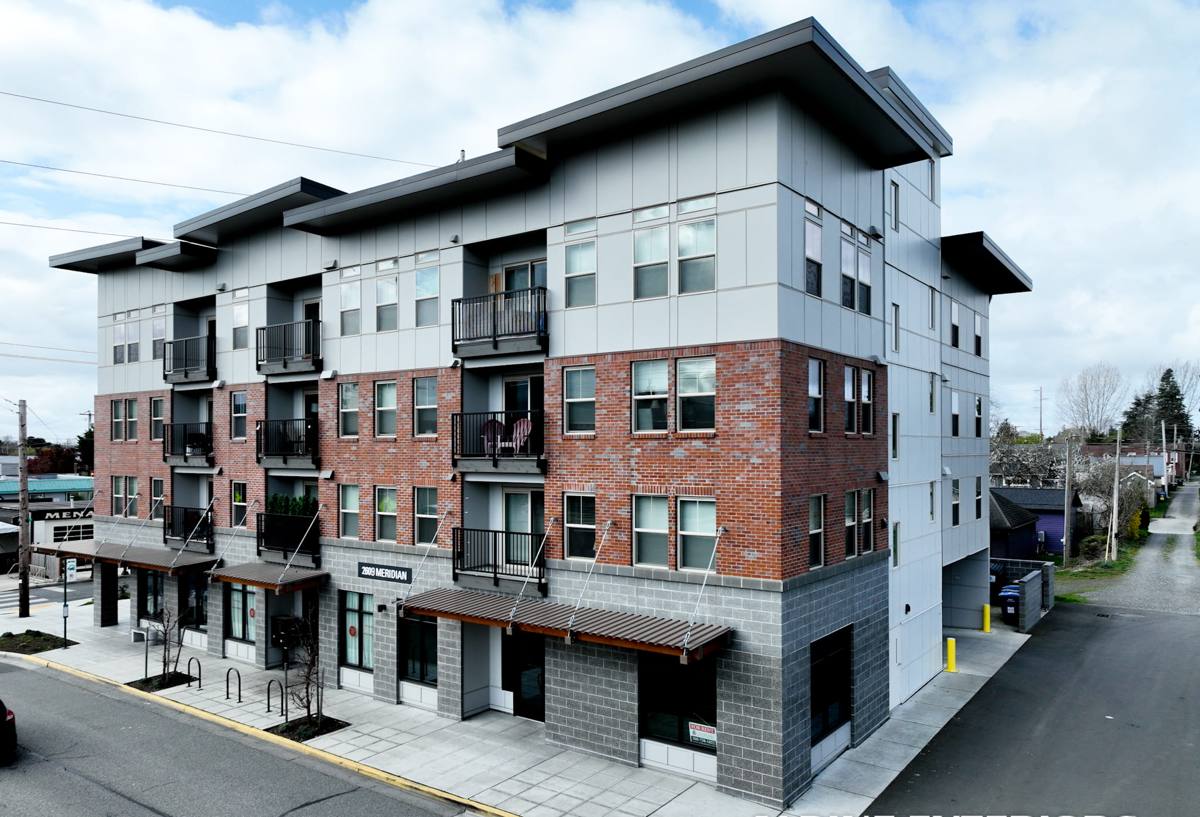
Sarasota's Climate Is a Stress Test Vinyl Wasn't Built For
Homes in Sarasota County face a combination of conditions that few siding products are asked to survive at once: sustained hurricane-force wind events, some of the most intense year-round UV exposure in the continental U.S., wind-driven rain that gets pushed sideways into wall assemblies, and salt-laden air off the Gulf that accelerates degradation of plastics and coatings. Any one of these is manageable. All four, every year, is a different story.
Wind and Impact
Vinyl panels are hung, not fastened rigidly — they're designed to expand and contract with temperature, which means they rely on interlocking joints rather than a solid fixed skin. In a straight-line wind event or a hurricane, that same flexibility that lets vinyl handle thermal movement is what lets it lift, crack at the nail slots, or peel off in sheets when wind gets underneath a panel edge. We've replaced enough storm-damaged vinyl in this county to know it's one of the first things to go in a bad blow.
UV and Heat
Vinyl is a plastic, and plastics chalk, fade, and become brittle under sustained UV exposure. Florida sun is more intense and more constant than in most of the country, and dark vinyl colors absorb enough heat to warp or "oil-can" — a visible waviness in the panel — well before the material physically fails. Once vinyl starts to fade unevenly, there's no repainting it back to original; the color is baked into the resin, and once that resin degrades, the color goes with it.
Salt Air and Moisture
Being close to the Gulf means airborne salt settles on everything, including siding. Salt accelerates the breakdown of plastics and metal fasteners alike. Combined with wind-driven rain that can push moisture behind panels through gaps and seams, this creates conditions where moisture gets trapped against the wall sheathing without an obvious way to escape or dry out.
The Moisture Problem Nobody Talks About
Vinyl siding is not a water barrier by itself — it's designed to shed most water while relying on a separate weather-resistant barrier behind it to manage anything that gets through. That's a reasonable system on paper. In practice, wind-driven rain in a coastal county like ours can drive water past the panels more often than in calmer climates, and vinyl's loose-hanging design means seams and J-channels are common entry points. Once water is behind the panel, vinyl doesn't trap or hold moisture itself, but it also does nothing to help the wall assembly dry — and any wood sheathing or framing behind it is now dealing with intermittent wetting with no visible warning sign, since the vinyl face looks the same whether the wall behind it is fine or quietly rotting.
This isn't a defect unique to any one manufacturer. It's a structural characteristic of how vinyl siding systems work. It's manageable with meticulous installation, but it leaves very little room for error, and it means problems can go undetected for years before they show up as soft spots, stains, or pest damage.
Installation Sensitivity: Where Vinyl Jobs Go Wrong
Vinyl has a reputation as an "easy" siding to install, and that reputation is part of the problem. Because it's fast and forgiving to hang, it attracts crews who treat it as a low-skill product. But vinyl actually has strict installation rules that are easy to skip and hard to notice until something fails:
- Panels must be nailed loosely enough to allow for thermal expansion and contraction — nail it too tight and it can buckle or crack in heat
- Housewrap and flashing details behind the panels have to be done correctly since the vinyl itself isn't a primary water barrier
- J-channels and corner posts need proper gaps and sealant placement to keep wind-driven rain from tracking inside
- Fastening patterns and nail placement affect how well panels resist wind uplift in a storm
When these details are rushed — which happens often on high-volume, low-margin vinyl jobs — the failures don't show up on install day. They show up two or three years later, or during the first serious storm, which is exactly when they're most expensive to trace back to a workmanship issue.
What Happens When Vinyl Fails
Vinyl siding failure tends to follow a predictable pattern in our area: a panel or section lifts or cracks in a wind event, sometimes exposing the wall behind it to direct rain until it's noticed and repaired. Faded or discontinued colors make matching a repair to the rest of the house difficult, since vinyl color runs vary between manufacturing batches and older colors get discontinued. A homeowner ends up either patching visibly mismatched sections or replacing larger runs of siding than the actual damage required, just to keep the color consistent.
None of this makes vinyl a scam or a bad-faith product — it's simply a product whose failure mode is disruptive and whose repair path is awkward, in a climate that puts it through more stress than it sees in most of the country.
Cost Comparison: Upfront vs. Real-World
We're always straightforward about upfront cost. Vinyl is cheaper to buy and install than fiber cement. Where the comparison changes is in what happens over the life of the siding, particularly in a coastal Florida climate.
| Factor | Vinyl Siding | James Hardie Fiber Cement |
|---|---|---|
| Upfront material + install cost | Lower | Higher |
| Wind resistance | Prone to lifting/cracking in high wind | Rigid, fastened system engineered for wind zones |
| UV/color stability | Fades and chalks over time, especially dark colors | ColorPlus factory finish resists fading |
| Fire behavior | Combustible plastic | Non-combustible fiber cement |
| Salt air durability | Degrades faster near coast | Formulated for moisture and coastal exposure |
| Repair/color matching | Batch color variation, discontinued colors common | Factory-matched color runs, better long-term consistency |
| Typical functional lifespan here | Often replaced sooner in coastal wind/UV exposure | Built for 30+ year performance when installed to spec |
The real-world cost of vinyl in this climate often isn't the sticker price — it's the storm repairs, the color mismatches, and the earlier full replacement cycle that coastal exposure tends to force.
Why We Standardized on James Hardie Instead
We don't install LP SmartSide, Cemplank, Allura, primed spruce, cedar, or vinyl. We install James Hardie fiber cement exclusively, and it's not because of a distributor relationship or a marketing arrangement — it's because after years of doing repair work and replacements across this county, Hardie is the product we've seen hold up best against the specific combination of wind, UV, rain, and salt air that Sarasota homes face.
What Makes It Different
- Non-combustible — fiber cement doesn't burn, which matters in a state where wildfire and lightning-driven structure fires are a real risk
- Engineered for wind zones — Hardie's HZ10 product line is specifically formulated for high-humidity, coastal, hurricane-prone regions like ours
- ColorPlus factory finish — a baked-on finish process that resists fading and chalking far longer than field-applied paint or vinyl's molded-in color
- Rigid, fastened installation — unlike vinyl's hanging system, Hardie panels are solidly fastened, which changes how the wall performs in wind events
- Strong transferable warranty — coverage that's designed to hold up through a change in ownership, which matters for resale
Fiber cement isn't magic, and it isn't maintenance-free — it still needs to be installed to manufacturer spec, with correct clearances, fastening, and caulking, just like any other product. The difference is that when it's installed correctly, it's working with the climate here instead of constantly being tested by it.
Questions Worth Asking Before You Choose a Siding Product
Whatever you decide, and whoever you hire, these are worth asking before signing a contract:
- Is this product rated or engineered for coastal wind zones, or is it a general-purpose version?
- What does the manufacturer's warranty actually cover, and does it transfer if you sell the home?
- How is the installer handling flashing, housewrap, and moisture management behind the panels?
- What's the realistic repair path if a section is damaged in a storm five years from now?
- Is the color a factory-applied finish, or will it need repainting at some point?
Our Honest Take
We understand vinyl is going to remain the most common siding choice in a lot of new construction, and there's nothing dishonest about a builder using it within a reasonable budget. Our position is simply that for the wind, sun, rain, and salt exposure that comes with living in Sarasota County, we've decided we're not willing to put our name on a product we don't think performs well enough here long-term. That's a standard we hold ourselves to, not a claim about every vinyl installation everywhere.
If you're weighing your siding options — whether you're set on fiber cement, still comparing products, or just want a straight answer about what will actually hold up on your specific home — we're happy to walk through it with you. Reach out for a free, no-pressure estimate, and we'll give you our honest read on what your house needs.