 Sarasota Siding
 Why Color Choice Is a Bigger Decision in Sarasota Than It Looks
Picking a siding color feels like a design decision, but on the Gulf Coast it's also a durability decision. Sarasota County sees some of the most intense year-round UV exposure in the continental United States, plus salt-laden air off the coast, wind-driven rain during summer storms, and the occasional direct hit from a hurricane. Paint that looks great in a showroom in Ohio can chalk, fade unevenly, or start peeling within a few years once it's facing a Sarasota summer. That's why the finish underneath the color matters as much as the color itself.
This guide walks through how James Hardie's color system actually works, how it's engineered differently from a can of exterior paint, and what to think about when narrowing down a color for a home in this climate.
What ColorPlus Technology Actually Is
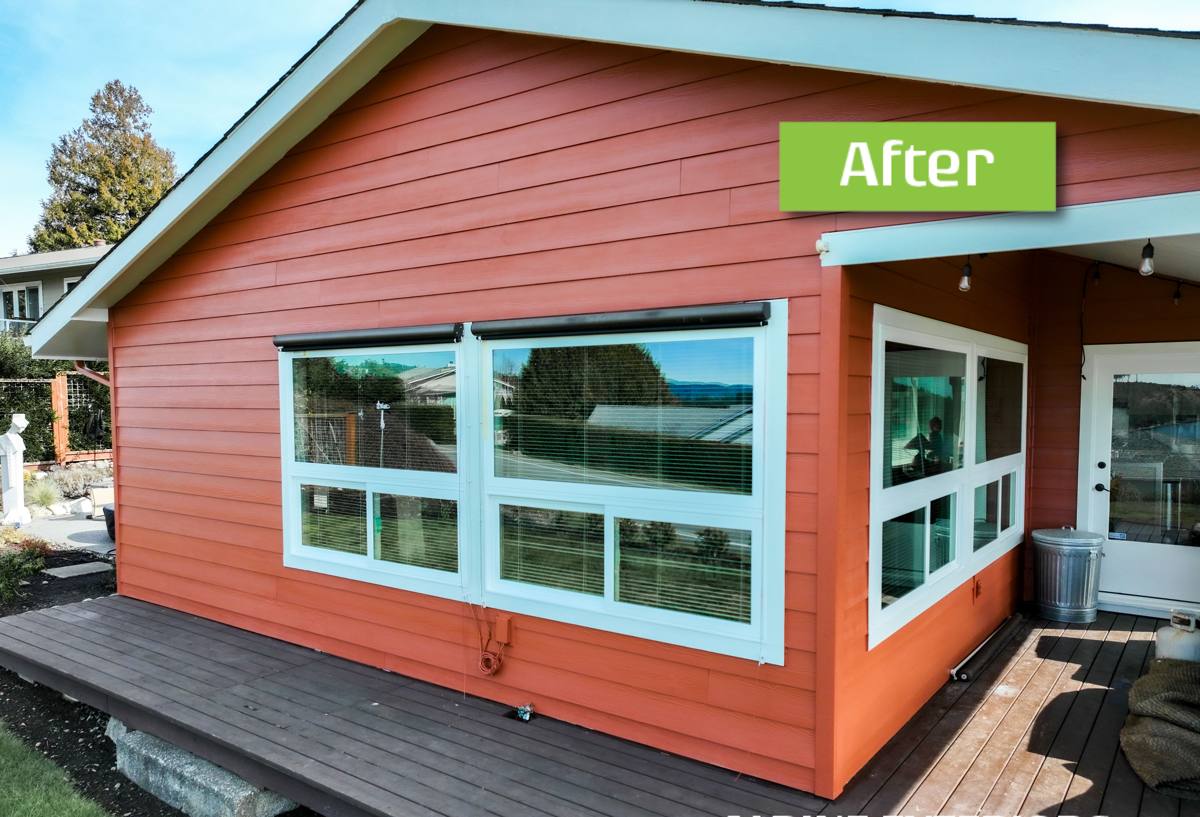
ColorPlus is James Hardie's factory-applied finish system. Instead of siding being installed bare and then painted on site, ColorPlus boards and panels are coated with multiple layers of color at the factory, under controlled conditions, and cured before they ever reach a job site. The process is designed to bond the finish to the fiber cement substrate more consistently than a brush, roller, or sprayer can achieve outdoors in variable temperature and humidity.
The practical result for a homeowner: better color consistency from board to board, a finish that's less prone to early fading and chalking, and touch-up product available for the rare nick or scratch that happens during handling or installation. It doesn't mean the color lasts forever with zero maintenance, but it starts from a stronger baseline than field-applied paint.
Primed Siding Is Still an Option
James Hardie siding can also be ordered primed only, for a painter to finish on site after installation. Some homeowners choose this route because they want a custom color outside the factory palette, or they're matching an existing paint scheme exactly. The trade-off is real: site-applied paint depends entirely on surface prep, weather conditions during application, and the quality of the paint and crew doing the work, and it typically won't carry the same factory finish warranty coverage that ColorPlus does. We're upfront about that trade-off with every homeowner who asks.
Factory Finish vs. Field-Applied Paint
| Factor | ColorPlus Factory Finish | Site-Applied Paint |
|---|---|---|
| Application conditions | Controlled factory environment | Weather-dependent, variable |
| Color consistency | Uniform across every board | Depends on crew and batch mixing |
| UV/fade resistance | Engineered for sun exposure | Varies by paint quality |
| Touch-up matching | Manufacturer-matched touch-up available | Requires saving or remixing paint |
| Finish warranty | Separate factory finish coverage | Typically none from the siding manufacturer |
| Custom colors | Limited to palette | Any color available |
Neither option is wrong in every situation, but for most homeowners in this climate, starting with a factory finish and picking from the available palette is the lower-maintenance, longer-lasting path.
How the Color Palette Is Organized
James Hardie groups its ColorPlus colors into collections rather than offering one giant, unstructured list. Broadly, there's a larger palette of standard colors meant to work across a wide range of architectural styles, and a smaller, curated set of colors selected specifically for how they perform and read in a given region's light and climate. The idea behind the curated regional set is that a color that looks right in overcast New England light can look completely different under Florida's brighter, more direct sun.
Because James Hardie periodically updates which specific colors are offered, we don't rely on a fixed list here — we pull current physical samples and the live palette when we sit down with a homeowner, so what's being discussed is what's actually available today rather than a shade that's been retired.
Reading Color Samples in Florida Light
- Always view samples outdoors, not under indoor lighting — Sarasota's sun shifts how a color reads compared to a showroom
- Check the sample at different times of day; a color can look neutral at noon and warmer at dusk
- Hold the sample against your actual roof shingles and trim, not just in isolation
- View it both in direct sun and in shade, since most homes have both exposures
- Consider how the color will look against neighboring homes if you're in an HOA community
Choosing a Color for a Sarasota Home
A few things come up repeatedly when homeowners in this area are narrowing down choices:
Heat and Glare
Very dark colors absorb more heat and, under Sarasota's intensity, can show more visible fading over time on south- and west-facing walls than lighter or mid-tone colors. Dark colors can still be a good choice — plenty of homes wear them well — but it's worth knowing that the sunniest exposures will work that color harder than a north-facing wall will.
Salt Air and Coastal Proximity
Homes closer to the water deal with more airborne salt, which can accelerate the breakdown of lower-quality finishes and hardware. This is more of an argument for a durable factory finish generally than for one specific color over another, but it's part of why we don't cut corners on the underlying product for coastal Sarasota properties.
HOA and Neighborhood Context
Many Sarasota County communities, especially planned developments and coastal neighborhoods, have architectural review boards with approved color ranges. It's worth checking your HOA guidelines before falling in love with a specific shade, since some communities restrict darker or higher-contrast colors.
The Product Underneath the Color: HZ5 Engineering
Color is only half the story — what the color is applied to matters just as much in this climate. James Hardie's HZ5 product line is engineered for climate zones like ours, with higher humidity, heavy seasonal rain, and storm exposure. Fiber cement in general resists the moisture absorption, swelling, and insect vulnerability that come with some wood-based and wood-alternative sidings, and it's non-combustible, which matters for both safety and, in some cases, insurance considerations. Pairing that substrate with a factory-cured finish is why we standardized on Hardie rather than mixing and matching brands or going with a site-painted alternative.
Maintenance: Keeping Color Looking Right for the Long Haul
ColorPlus finish is low-maintenance, not zero-maintenance. A few habits go a long way in this climate:
- Rinse the siding periodically to remove salt residue and airborne grime, especially on homes near the coast
- Keep an eye on caulking at joints, trim, and penetrations — failed caulking lets water behind the siding, which is a bigger problem than any color issue
- Trim back landscaping that keeps siding shaded and damp, which encourages mildew growth on any finish
- Address touch-up needs promptly with manufacturer-matched product rather than a generic hardware-store paint
- Have the siding and trim inspected after major storms for cracked caulk, loose fasteners, or impact damage
Warranty: What's Covered and What Isn't
It's worth understanding that James Hardie's coverage has two separate parts. There's a limited warranty on the siding substrate itself — the fiber cement board or panel — and there's separate coverage specific to the ColorPlus finish. The finish warranty is generally structured around defects in the factory coating (things like excessive fading or peeling under normal conditions), while the substrate warranty covers the board itself. If siding is field-painted after installation instead of ordered in ColorPlus, that separate finish warranty doesn't apply, since the factory never applied the color. We go over the current warranty documentation with homeowners directly, since terms are set by the manufacturer and get updated from time to time — we'd rather hand over the real document than summarize it and get a detail wrong.
Practical Checklist Before You Commit to a Color
- View physical samples outdoors in Sarasota daylight, not just on a screen or in a showroom
- Check your HOA or deed restrictions for approved color ranges before finalizing a choice
- Decide whether ColorPlus factory finish or primed-for-field-paint fits your goals and budget
- Confirm which warranty applies to your chosen option — factory finish vs. site-applied paint
- Ask about current touch-up product availability for your chosen color
- Consider how the color performs on your home's sunniest exposures, not just in shade
- Think about long-term maintenance — rinsing, caulk inspection, and landscaping clearance
Bringing It Together
Color is one of the most visible decisions in a siding project, but the finish system behind that color is what determines whether it still looks good after a few Sarasota summers. A factory-applied finish on a climate-engineered fiber cement board is a fundamentally different proposition than a coat of paint on any substrate, and that difference shows up most in exactly the conditions this area throws at a home — sun, salt, and storms.
If you're weighing colors for a siding project, we're happy to bring current samples out, walk your property in real daylight, and talk through what makes sense for your home's exposure and your neighborhood's guidelines. There's no cost and no pressure to get a straight answer — reach out below for a free estimate.