 Sarasota Siding
 University Park Homes Face a Different Kind of Wear
University Park sits in that stretch of Sarasota County where mature tree canopy, golf-course landscaping, and lake-view lots make for a beautiful place to live — and a demanding environment for the exterior of a house. Homes here tend to be a mix of well-established construction and newer builds, many with stucco or older lap siding that was never engineered for Gulf Coast conditions in the first place. When we work in University Park, we're usually looking at one of two situations: siding that's failing years ahead of schedule because the wrong material was used, or siding that's simply reached the end of its useful life after a couple of decades of Florida sun and rain.
Either way, the diagnosis usually traces back to the same handful of stressors: intense year-round UV, wind-driven rain during summer storms, humidity that never really lets a wall assembly dry out completely, and — closer to the coast than most people realize — a steady dose of salt-laden air. None of these are dramatic on their own. Stacked together, day after day, they're what separates a house that looks good at year 20 from one that's showing cracked caulk, faded paint, and soft trim by year 8.
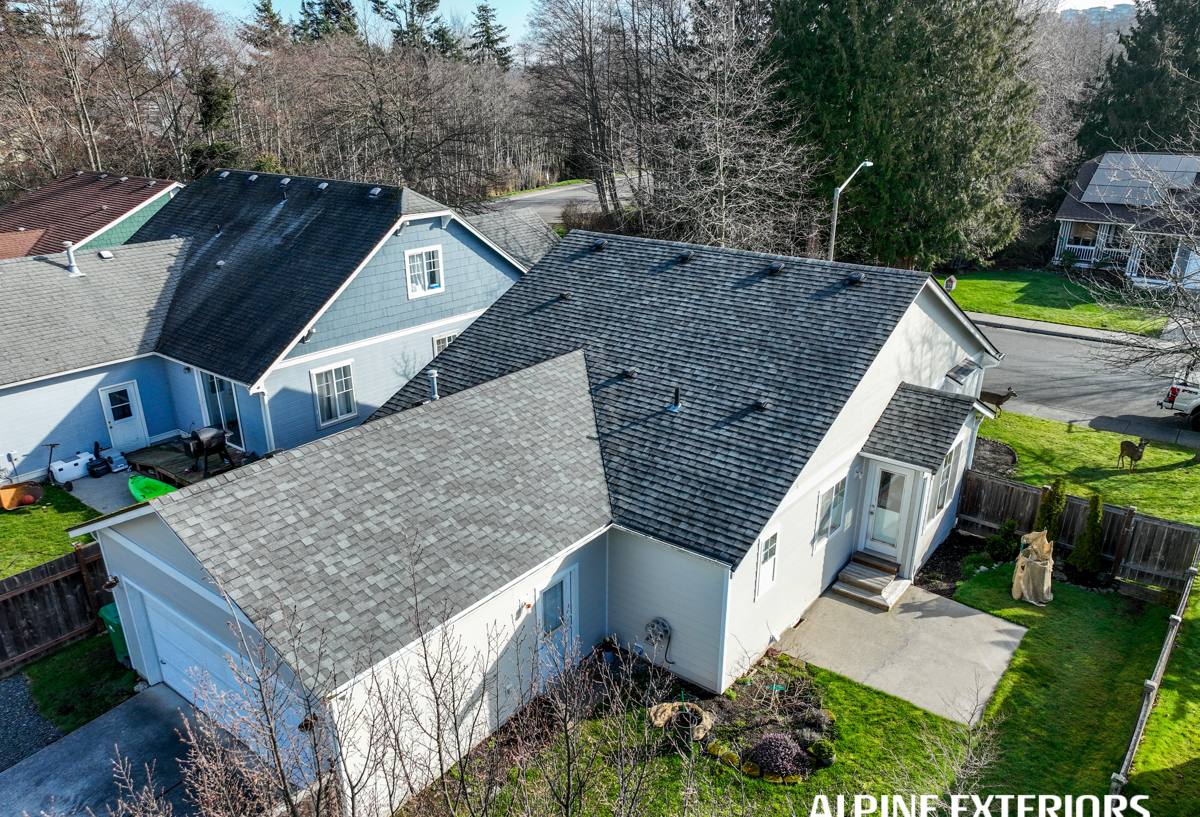
Sun, Salt, and Wind: The Sarasota Climate Factor
Sarasota County's climate is a big part of why we're picky about what we put on a wall. A few specific mechanisms matter more than people expect:
- UV exposure: Florida gets more direct, high-angle sun for more months of the year than almost anywhere else in the country. Pigments in paint and in some engineered wood coatings break down faster here, leading to chalking, fading, and eventually cracking.
- Wind-driven rain: Tropical systems and even ordinary summer thunderstorms push rain sideways into seams, laps, and trim joints. Any siding product that's sensitive to moisture intrusion at the edges is going to find every weak point over time.
- Salt air: University Park isn't oceanfront, but Sarasota's proximity to the Gulf means salt aerosol travels inland on prevailing winds. Salt accelerates corrosion of fasteners and can worsen the breakdown of certain composite materials.
- Humidity and slow drying: High ambient moisture means wall assemblies that get wet don't dry out quickly. Materials that swell, wick water, or trap moisture behind them are working against the climate, not with it.
- Hurricane-force wind events: Even homes that never take a direct hit still see damaging wind gusts most years. Fastening pattern and product rigidity matter as much as the material itself when wind gets under a panel edge.
This is the environment every exterior product on a University Park home has to survive, not just look good in on installation day.
What We Look For on a University Park Inspection
When we walk a property in this area, we're checking the same things every time, because they're the places Sarasota's climate attacks first:
| Area Inspected | What We're Looking For | Why It Matters Here |
|---|---|---|
| Siding laps and seams | Gaps, cracked caulk, separation | Entry points for wind-driven rain |
| Trim and fascia boards | Softness, swelling, paint failure | Common failure point on non-fiber-cement trim in humidity |
| Fasteners and flashing | Rust staining, corrosion | Salt air accelerates metal fatigue |
| Roof-to-wall transitions | Proper flashing, no reliance on caulk alone | A major source of hidden water intrusion |
| Window and door perimeters | Sealant condition, sill pan drainage | Wind-driven rain finds unsealed penetrations fast |
| Deck ledger and framing | Moisture staining, fastener corrosion | Structural connection points take the most weather abuse |
Most of what we find isn't dramatic failure — it's slow, cumulative wear that homeowners don't notice until paint won't hold anymore or a soft spot shows up under a window.
Why We Only Install James Hardie Fiber Cement
We made a decision as a company to stop installing several products that are common in this market — vinyl siding, LP SmartSide and other engineered wood products, and composite boards like Cemplank or Allura. That's not a knock on every homeowner who has one of these products on their house today; plenty perform fine for a while under the right conditions. It's a statement about what we're willing to warranty and stand behind on Sarasota County homes specifically.
Vinyl siding is inexpensive and easy to install, but it's a thin plastic product that softens and can deform in extreme heat, and it becomes brittle with age and UV exposure — exactly the two things Sarasota has in abundance. It also isn't fire-rated the way fiber cement is, which matters given Florida's building code direction over the past decade.
Engineered wood products, including LP SmartSide, use a wood-strand core with a resin coating. Done right, it's a reasonable product in drier climates. In a high-humidity, high-rainfall environment with wind-driven rain, any breach in that coating — a nail pop, a cut edge, a scuff during installation — gives moisture a path into a wood-based core, and swelling or rot can follow. We've replaced enough of it on Gulf Coast homes to no longer install it as a first choice.
Other fiber cement brands like Cemplank and Allura are chemically similar to James Hardie's product. Our reason for not installing them isn't the base material — it's manufacturing consistency, factory-finish quality control, and the strength and clarity of the warranty backing the product. James Hardie has the longest track record in fiber cement siding, purpose-engineered product lines for humid climates, and a factory paint finish system we trust more than field-applied alternatives.
The Hardie Product Lines We Install
James Hardie makes several siding profiles, and part of doing this job right is matching the right one to the house:
- HardiePlank lap siding — the most common choice, available in smooth and cedar-textured finishes, installed in traditional horizontal laps.
- HardieShingle — for homeowners who want a shingle or shake look on accent areas or full elevations without the moisture problems of real wood shingles.
- HardiePanel — vertical panel siding often used on gable ends, porch ceilings, or modern-style facades.
- HardieTrim — fiber cement trim boards that hold paint and resist moisture far better than the wood or composite trim they replace.
James Hardie also engineers its products by climate zone — the HZ5 formulation is built for humid, high-moisture regions like ours, with a manufacturing process tuned for the way this climate stresses a wall assembly. And every Hardie board we install comes pre-finished with the ColorPlus factory finish: baked-on color and UV-cured protection that consistently outlasts field-applied paint in direct sun, with a warranty that's specific to the finish itself, not just the substrate.
Siding, Roofing, Windows, and Decks — Handled as One System
A house's exterior doesn't fail in isolated pieces — siding, roofing, windows, and decks all interact at the seams, and problems in one usually show up as damage in another. That's why we handle all four rather than subcontracting pieces out:
- Roofing: Roof-to-wall flashing details are one of the most common sources of the water intrusion we find behind failed siding. We coordinate roof and wall work so those transitions are done once, correctly.
- Windows: New siding is the right time to address window flashing and sealant, since the siding has to be removed around openings anyway.
- Decks: Outdoor living space in University Park takes the same sun and moisture abuse as the siding above it, and ledger board connections are a common weak point we check during any exterior project.
Treating the exterior as one connected system, rather than four separate trades, is how water intrusion problems actually get solved instead of just moved somewhere else.
What a Siding Project Actually Looks Like
A typical Hardie siding installation in this area follows the same sequence on nearly every house:
- Inspection and estimate — walking the exterior, checking for hidden moisture damage, and measuring for material.
- Tear-off — removing the existing siding down to the sheathing so we can see what's actually underneath.
- Sheathing repair — replacing any rotted or water-damaged sheathing found during tear-off, before anything new goes up.
- Weather-resistive barrier and flashing — installing house wrap and flashing at every window, door, and penetration, since this layer does as much work as the siding itself.
- Hardie installation — hanging boards to manufacturer fastening specifications, which matters as much for wind performance as the product choice does.
- Trim, caulk, and touch-up paint — finishing joints and cut edges to manufacturer spec so the factory finish warranty stays intact.
- Final walkthrough — reviewing the finished work with the homeowner.
Fastening pattern and flashing detail are where most siding failures actually originate — not the board itself. It's also why we don't treat installation as a commodity task to move through quickly.
Cost Factors Homeowners Should Understand
Every University Park home is different, so we don't quote sight-unseen, but the same variables drive cost on nearly every project:
| Factor | Why It Affects Price |
|---|---|
| Amount of sheathing repair needed | Hidden water damage found during tear-off adds material and labor |
| Home size and wall complexity | Cutouts, dormers, and multiple stories add labor time |
| Siding profile chosen | Lap, shingle, and panel styles have different material and labor costs |
| Trim scope | Full trim replacement vs. spot repair changes both material and labor |
| Accessibility | Landscaping, lake-lot grading, and lot layout can affect equipment access |
We'd rather walk a homeowner through these factors honestly during an estimate than throw out a number that doesn't hold up once tear-off starts.
A Simple Maintenance Checklist for This Climate
Whatever siding is currently on a University Park home, a few habits catch problems early:
- Walk the exterior twice a year, after peak storm season and again in the drier months, looking for cracked caulk or separated seams.
- Check window and door perimeters for sealant that's pulled away or gone brittle.
- Look at fasteners and metal flashing for rust staining, which shows up before structural problems do.
- Keep irrigation heads from spraying directly on siding or trim — constant wetting shortens the life of almost any exterior material.
- Have a professional check roof-to-wall transitions after any major storm, since that's where hidden leaks most often start.
Why a Local Crew Matters in University Park
Sarasota County's exterior challenges aren't generic — they're shaped by this specific mix of sun, salt air, humidity, and storm exposure, and a crew that works this area regularly recognizes the early warning signs faster than one coming in from outside the region. We know what proper fastening and flashing look like under Gulf Coast wind loads, we know which details fail first in this climate, and we stand behind our own installation with a company that isn't going anywhere. That local accountability is worth more than a lower bid from a crew passing through.
If you're weighing a siding, roofing, window, or deck project on a University Park home, we're glad to walk the property, give you a straight answer about what we see, and provide a free, no-pressure estimate.