 Sarasota Siding
 Why a Deck Built for Bradenton Has to Be Built Differently
Bradenton sits along Manatee County's stretch of the Gulf Coast, just north of Sarasota, and homes here deal with a specific combination of conditions that a lot of generic deck-building advice doesn't account for. Hurricane-force wind is a real design load, not a rare event. UV exposure runs strong nearly year-round. Wind-driven rain gets pushed under and around a deck surface in ways ordinary rainfall doesn't, and salt air off the Gulf and the bays works into fasteners and finishes whether a home is waterfront or several miles inland. A deck that isn't built with those factors in mind can look fine for a season or two and then start showing problems — loose railings, soft framing, fading boards — well before it should.
This page covers what a custom deck actually needs to hold up in Bradenton, what a correct build involves from the ground up, and how our process works for homeowners in this specific part of the Gulf Coast.
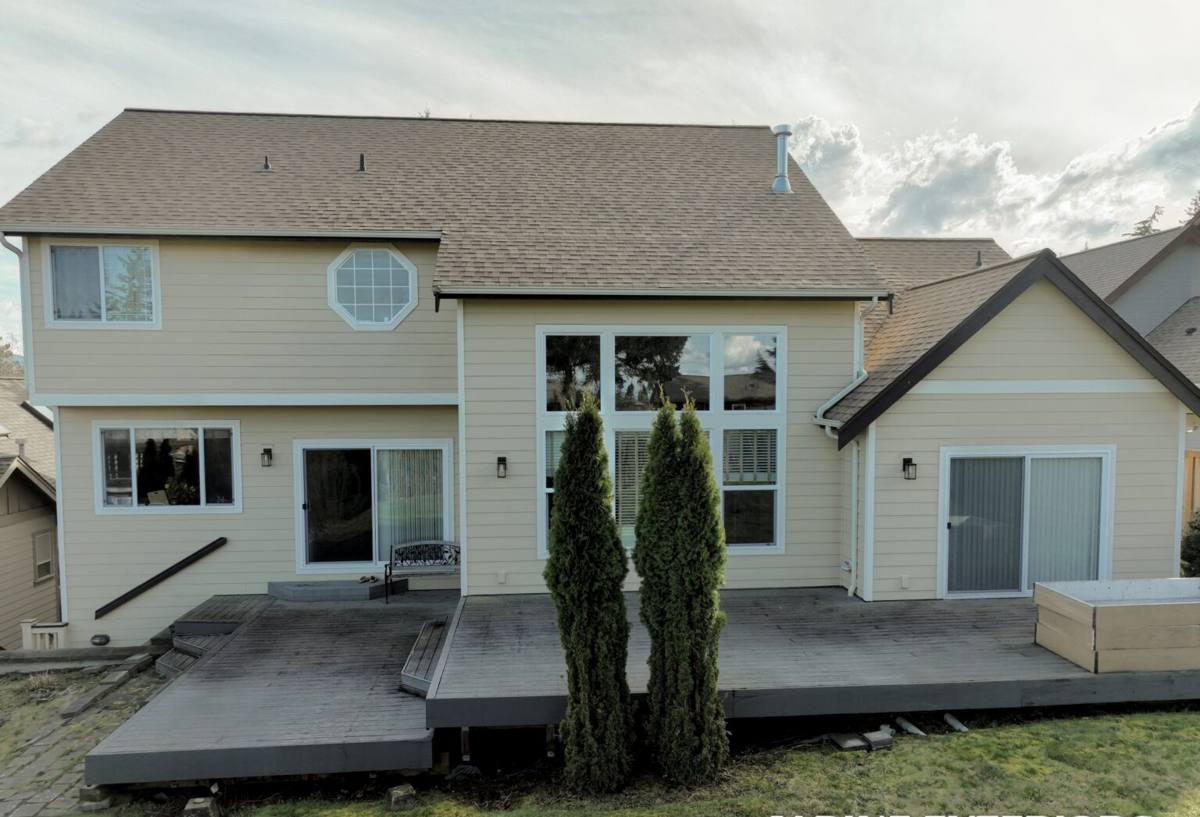
What Bradenton's Climate Actually Does to a Deck
Hurricane-Force Wind
Manatee County sits squarely in an active hurricane zone, and a deck's framing, railing system, and ledger attachment all have to be sized and fastened for wind loads that a lot of inland regions never have to plan around. This isn't just about the structure staying attached in a storm — it's also about how the deck is designed day to day, since undersized framing or under-fastened railing posts can start to loosen well before any named storm ever tests them.
Intense, Nearly Year-Round UV
Florida's sun load is among the highest in the country, and a deck surface takes it directly, with no wall or roofline to shade it for most of the day. UV breaks down unstabilized finishes and plastics over time, fades wood and lower-quality composite alike, and on darker boards it drives surface temperatures high enough to matter for bare feet in summer. Board color, cap quality, and finish all affect how much of that damage actually reaches the material underneath, which is why product choice matters more here than it would somewhere with a shorter, milder sun season.
Wind-Driven Rain
Straight-down rain is manageable for almost any decking material. Wind-driven rain is different — it gets forced sideways and upward into gaps, fastener holes, and the underside of the deck surface, which is exactly where moisture does the most damage if the substructure isn't built to handle it. Drainage and airflow beneath the decking matter as much as what's happening on top.
Salt Air
Bradenton's proximity to Tampa Bay and the Gulf means salt-laden air is a factor across most of the area, not just on waterfront lots. Salt accelerates corrosion in exposed metal — fasteners, brackets, railing hardware — and it settles onto surfaces continuously, not just during storms. A fastener that starts corroding loses holding strength long before it looks visibly bad, which is one reason fastener grade isn't a place to save money on a Gulf Coast deck.
What a Correct Custom Deck Build Involves Here
The decking boards get most of the attention when people picture a new deck, but the substructure and the fastening details are what actually determine whether it holds up over the years. A build done right for Bradenton conditions includes coastal-rated framing, corrosion-resistant hardware throughout, correctly sized joist spacing for whatever decking product goes on top, and ledger and railing connections engineered for local wind loads — not just whatever spacing or hardware happens to be on the truck.
Framing and Substructure
Pressure-treated lumber rated for ground contact and moisture exposure is the standard choice for most Bradenton decks, though aluminum or composite substructure systems are worth discussing for elevated decks, waterfront lots, or homeowners who want to minimize long-term substructure maintenance entirely. Whatever the material, joist spacing has to match the specific decking product's span rating rather than a generic wood-framing standard, since composite and PVC boards flex differently than wood between supports.
Fasteners and Connections
Stainless steel or coated coastal-grade fasteners should be used throughout, including at the ledger board where the deck ties into the house — a connection point that's a common failure spot in wind and wet conditions if it's flashed or fastened incorrectly. Hidden fastener systems are worth using on the visible decking surface where the product allows, both for a cleaner look and to reduce exposed metal.
Railing and Structural Sizing
Railing posts, guardrails, and stair stringers all need to be sized and attached for Florida's wind load and life-safety code requirements, which are stricter here than in a lot of the country. This matters most on elevated decks, decks near open water, or any deck built for entertaining where the railing needs to hold up to real use, not just look right on installation day.
Choosing the Right Decking Material for a Bradenton Home
There's no single right decking material for every home — the right call depends on budget, how much upkeep you want to take on, and how exposed the specific lot is to sun and salt. Here's how the common options actually compare in this climate:
| Material | Sun & Salt Performance | Maintenance | Typical Cost Position |
|---|---|---|---|
| Capped composite | Strong — cap layer resists moisture, staining, and UV fade | Occasional washing; no sealing or staining | Mid to upper-mid |
| Cellular PVC | Excellent — no wood fiber to absorb moisture at all | Occasional washing; no sealing or staining | Upper-mid to high |
| Uncapped composite | Moderate — can absorb some moisture, more prone to fading | Periodic cleaning to manage staining and mold | Mid |
| Pressure-treated wood | Weakest against salt air and UV over time | Regular sealing or staining required | Lowest upfront |
| Tropical hardwood | Good natural density, but still needs finish upkeep against UV and graying | Periodic oiling | High |
Composite and PVC decking dominate new builds in this area for good reason — they're engineered specifically to resist the moisture, UV, and salt exposure that wears down wood faster here than almost anywhere inland. Wood still has a place for homeowners who want a specific look and are willing to keep up with finishing, but it's a higher-maintenance choice in this climate, not a lower-cost one over the life of the deck.
Design Details That Matter on Bradenton Lots
Multi-Level and Pool-Adjacent Decks
A lot of Bradenton properties pair a deck with a pool or a screened lanai, which changes the design conversation — drainage has to account for pool splash-out, and material choice matters more since pool decks see near-constant moisture and sun exposure together. Multi-level decks also need extra attention paid to stair and railing code compliance at every level change, not just the main deck surface.
Shade and Comfort
Given how much direct sun a Bradenton deck sees, a lot of homeowners build in a pergola, shade sail, or covered section from the start rather than adding it later. This isn't just about comfort — reducing direct UV exposure on part of the deck surface also slows fading and heat buildup on whatever decking material is used there.
Waterfront and Elevated Sites
Homes near a canal, the bay, or otherwise elevated above grade carry additional structural and code considerations — higher wind exposure, potential flood zone requirements, and sometimes additional permitting review. These decks need framing and fastening specified for that exposure specifically, not scaled up from a standard inland design.
Permitting and Building Code in Manatee County
Custom deck construction in Bradenton and unincorporated Manatee County generally requires a building permit, and the review process accounts for Florida's wind load requirements along with standard structural and life-safety code — railing height, baluster spacing, stair geometry, and guardrail load ratings all get checked. Waterfront or elevated properties can carry additional review depending on flood zone designation. We handle the permitting process as part of the job rather than leaving it to the homeowner to navigate, since getting it wrong means delays, and getting it wrong on a structural element means a deck that isn't actually safe.
How Our Process Works
We start with a site visit to look at what's actually there — existing framing condition if it's a replacement, drainage and grade around the planned deck area, sun exposure through the day, and how exposed the lot is to wind and salt air. From there we talk through decking material and design options that fit the budget and how the space will actually be used, whether that's a quiet space off a bedroom, an entertaining deck, or something built around a pool.
Once the design and materials are settled, we handle permitting through the appropriate local authority before any framing goes in. The build itself follows the substructure first, with framing material and fastener grade matched to the site's actual exposure, then the decking surface, railing, stairs, and any trim work. We finish with a walkthrough covering what maintenance the specific product you chose actually needs — which is usually minimal with composite or PVC, but not zero.
What a Correctly Built Deck Should Include
Whether you're comparing quotes or just want to know what to look for, a properly built custom deck in this climate should check every one of these boxes:
- Framing material rated for coastal exposure and ground contact where applicable
- Stainless steel or coated coastal-grade fasteners throughout, including at the ledger connection
- Joist spacing matched to the specific decking product's manufacturer span rating
- Proper ledger board flashing where the deck attaches to the house
- Railing, guardrail, and stair components sized for Florida wind load and life-safety code
- Adequate drainage and airflow beneath the decking surface
- Correct board gapping for expansion, contraction, and water runoff
- A permit pulled and inspected through the appropriate Manatee County or City of Bradenton process
Skipping any one of these rarely causes an obvious problem on day one. It shows up years later as a soft spot in the framing, a loosening railing post, or fastener corrosion staining the boards around it.
Keeping a New Deck Looking Right
Composite and PVC decking are low-maintenance compared to wood, not maintenance-free. A little routine attention keeps a Bradenton deck performing the way it should for the long haul:
- Rinse or wash the surface periodically to clear salt residue, pollen, and organic buildup before it stains the surface
- Keep gaps between boards clear of debris so water and airflow can move through as designed
- Check railing posts and hardware at least once a year for early signs of corrosion or loosening, especially after storm season
- Trim back plants or landscaping that trap moisture against the deck edge or block airflow underneath
- Address any substructure issue — soft framing, standing water underneath — right away, since that's structural rather than cosmetic
Why It Matters That We Already Work in Bradenton
A crew that mostly builds inland or out of the region can still put together a competent-looking deck, but Bradenton's Gulf Coast conditions bring up requirements that don't come up as often elsewhere — wind load detailing tied to hurricane exposure, permitting that runs through Manatee County or City of Bradenton review, salt exposure that affects fastener choice even away from the immediate waterfront, and design decisions around pools, lanais, and shade that are far more common here than inland. Working this area regularly means we're not learning those requirements on your project. We know what fastener grade actually holds up, which decking products perform well against years of Gulf sun rather than just a few seasons, and how local permitting works, because we've built to those standards on homes like yours before.
Whether you're replacing a tired wood deck, building new, or want an honest read on what a custom deck would take on your Bradenton property, we're happy to walk the site with you and lay out the options plainly. Reach out below for a free, no-pressure estimate.