 Sarasota Siding
 Composite Decking in Bee Ridge: Built for This Climate, Not Just Any Climate
Bee Ridge sits inland from the barrier islands but still lives under the same Gulf Coast weather load as the rest of Sarasota County: long stretches of intense UV, sudden wind-driven downpours, and salt-laden air that drifts in off the coast even a few miles out. A deck built here has to survive all of that, year after year, without cupping, fading, or rotting out from underneath. Composite decking, installed correctly, handles that load far better than untreated wood — but "composite decking" covers a wide range of products and installation quality, and not every crew builds it the same way.
This page covers what a composite deck actually needs to hold up in Bee Ridge specifically — the substructure, the fasteners, the drainage, the board selection — and what our process looks like from first visit to final walkthrough.
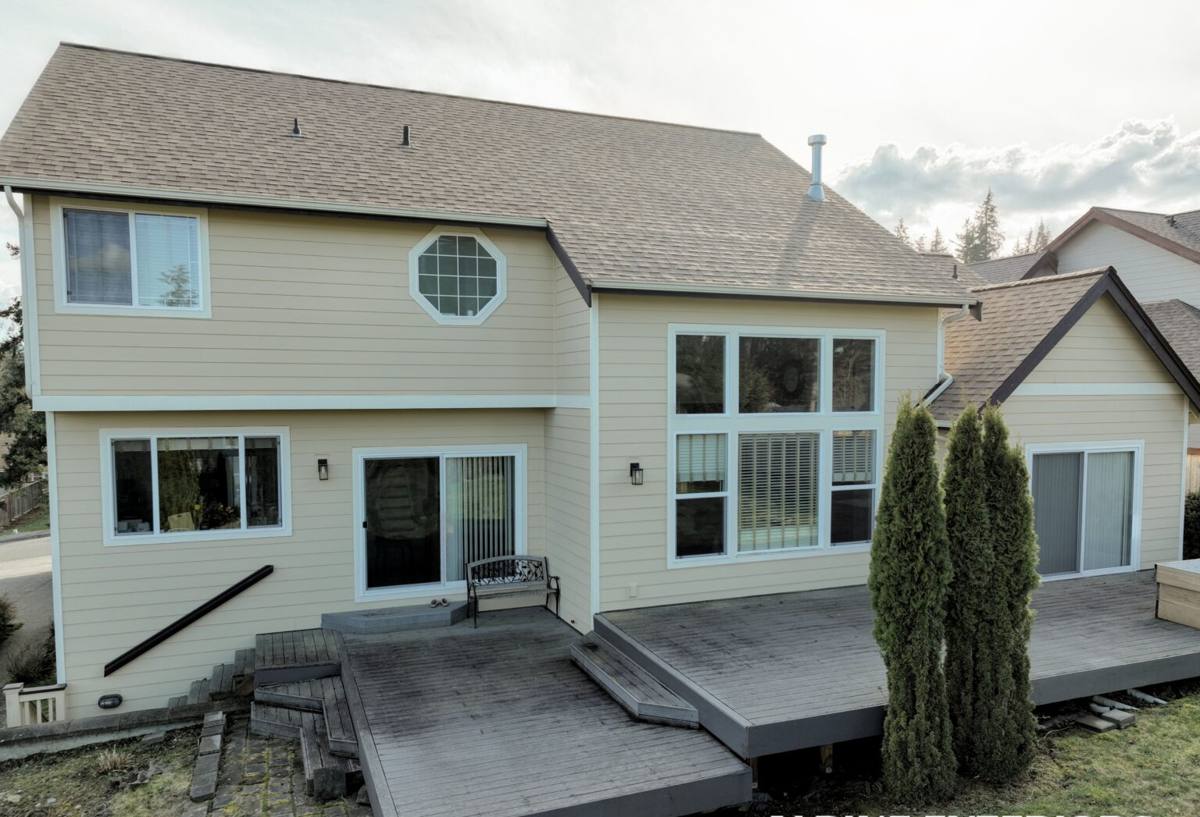
What Sarasota County's Climate Does to a Deck
Before getting into materials and methods, it helps to understand what's actually working against a deck in this part of Florida.
UV and Heat
Sarasota gets sun exposure most of the year, and surface temperatures on a dark deck board in July can run well above the surrounding air temperature. Cheap composites without real UV inhibitors will fade unevenly and can go chalky or brittle at the surface over time. Boards with a proper cap layer or UV-stabilized formulation are built specifically to resist this.
Wind-Driven Rain
Afternoon storms here don't fall straight down — they come in sideways, driven by gusty wind, and that means water gets pushed under railings, into fastener holes, and against ledger boards and framing that a calm-weather installation might not account for. Flashing and drainage details matter more here than in drier climates.
Salt Air
Bee Ridge isn't beachfront, but salt air travels well inland across this part of Florida, especially with onshore wind patterns. Salt accelerates corrosion on fasteners, brackets, and any exposed metal hardware. Standard carbon-steel screws or connectors will rust and stain a deck's surface within a few seasons if they're not rated for coastal exposure.
Hurricane-Force Wind
Sarasota County sits in an active hurricane corridor, and decks — especially elevated ones, or ones attached to the house — take real structural load during high wind events. Ledger attachment, post spacing, and railing anchoring all need to meet current wind-load requirements, not just look sturdy.
What a Correctly Built Composite Deck Actually Involves
The decking boards themselves get most of the attention, but the boards are the last thing installed, not the most important thing. A deck that fails in this climate almost always fails from the structure up, not from the surface down.
The Substructure
Framing lumber should be pressure-treated and rated for ground contact where applicable, with joist spacing tightened to what the composite manufacturer specifies — composite boards typically need closer joist spacing than solid wood, especially on angled or picture-frame layouts. Undersized or improperly spaced framing is one of the most common causes of bounce, sag, and premature board wear.
Fasteners and Hardware
In a coastal-adjacent climate like Sarasota's, hardware should be stainless steel or coated specifically for corrosion resistance — not standard exterior-grade screws. This applies to joist hangers, structural screws, and hidden fastener clips alike. Rust bleed from cheap hardware is one of the most common complaints we see on decks that weren't built with this climate in mind.
Ledger Attachment and Flashing
Where a deck attaches to the house, proper flashing keeps wind-driven rain from working its way behind the siding or into the rim joist. This is a spot that's invisible once the deck is finished but is one of the most consequential details for long-term moisture protection.
Drainage and Airflow
Composite boards don't rot, but the framing underneath still can if water and humidity get trapped with no way to escape. Proper spacing between boards, a slight slope away from the house, and clear airflow underneath the deck all matter — especially during Sarasota's humid summer months.
Choosing the Right Composite Board
Not all composite decking is built the same, and the differences matter more in a high-UV, high-humidity climate than they would somewhere milder. Here's how the main categories compare for a Bee Ridge install.
| Board Type | UV/Fade Resistance | Moisture Handling | Maintenance |
|---|---|---|---|
| Capped composite | Strong — protective cap resists fading and staining | Very good; cap sheds water and resists staining | Occasional wash; no sealing or staining needed |
| Uncapped composite | Moderate — more prone to fading and surface wear over time | Fair; more absorbent surface | May need periodic cleaning to prevent mold/mildew buildup |
| PVC/cellular decking | Strong | Excellent; essentially non-absorbent | Low; wash as needed |
| Pressure-treated wood | Weak; fades and grays quickly in strong sun | Poor without upkeep; prone to splitting, cupping | Regular sealing/staining required |
For most Bee Ridge homeowners, a good capped composite hits the right balance of upfront cost, appearance, and low maintenance under this much sun and humidity. Uncapped composite can still be a reasonable choice on a tighter budget, but it needs more attentive cleaning to avoid mildew staining in Florida's humidity. We'll walk through the honest trade-offs for your specific project rather than pushing a single product line.
Our Installation Process
- On-site assessment — we look at the attachment point to your house, existing grade and drainage, sun exposure, and any structural conditions specific to your lot.
- Design and board selection — layout, railing style, and board selection based on your budget and how you'll use the space.
- Permitting — decks in Sarasota County typically require a permit, especially when attached to the structure or elevated; we handle this so the finished deck is properly documented, which matters for insurance and resale.
- Framing — pressure-treated substructure built to the spacing the decking manufacturer requires, with corrosion-resistant hardware throughout.
- Flashing and ledger work — proper flashing at the house attachment point before any decking goes down.
- Decking and railing installation — boards installed with the fastening system specified for that product, railing anchored to current wind-load standards.
- Final walkthrough — we go over the finished deck with you, including basic care and what to expect from the material over time.
What Affects Cost
Every deck is different, but these are the main factors that move the price up or down. We'll give you a firm, itemized quote after seeing the site — we don't do vague ballpark numbers that change once work starts.
| Factor | Why It Matters |
|---|---|
| Deck size and shape | Square footage and complex angles (curves, picture-framing) both add material and labor |
| Board tier | Uncapped composite, capped composite, and PVC decking carry different material costs |
| Height and structure | Elevated decks need more substantial framing, footings, and stairs |
| Railing style | Composite, aluminum, and cable railing all price differently |
| Site access and existing conditions | Demo of an old deck, grading, or tricky access can add labor time |
| Permitting requirements | Attached and elevated decks generally require permitting and inspection |
Maintenance in a Florida Climate
Part of the appeal of composite decking is how little upkeep it needs compared to wood — but "low maintenance" isn't "no maintenance," especially with Sarasota's humidity and pollen load.
- Rinse or sweep debris and pollen off the surface periodically, especially after storms
- Wash with mild soap and water a couple of times a year to prevent mildew buildup in shaded or low-airflow areas
- Check railing hardware and fasteners annually for corrosion, especially after hurricane season
- Keep gutters and downspouts near the deck clear so water isn't dumping directly onto boards or framing
- Trim back landscaping that traps moisture or blocks airflow under low sections of the deck
Why It Matters That We Work in Bee Ridge Specifically
A crew that regularly works in and around Bee Ridge already understands the local permitting process, the typical lot conditions in this part of Sarasota County, and how a deck built here needs to be detailed differently than one built somewhere with milder weather. That's not a small thing — it's the difference between a deck that's still tight and solid in five years and one that starts showing rust streaks, soft framing, or loose railing after its first couple of hurricane seasons.
We also stand behind our own installation work, not just the manufacturer's material warranty. If something about the build itself isn't right, that's on us to fix.
A Few Questions Worth Asking Before You Start
- Is the substructure pressure-treated and spaced correctly for the specific composite board being used?
- Are the fasteners and hardware rated for coastal/salt-air exposure?
- Is flashing being installed at the ledger board attachment point?
- Is a permit being pulled, and does the design meet current wind-load requirements?
- What does the manufacturer's warranty actually cover, and what does the installer warranty cover separately?
If you're weighing composite decking for a Bee Ridge property, we're happy to take a look at your space, talk through honest options for your budget, and give you a straightforward, no-pressure estimate. There's no obligation — just fill out the form below and we'll get in touch.