 Sarasota Siding
 Why Downtown Sarasota's Climate Is Hard on Siding
Homes in and around Downtown Sarasota sit close enough to Sarasota Bay and the Gulf that salt air is a daily fact of life, not an occasional nuisance. Combine that with the intense, near-constant Florida sun, seasonal hurricane-force wind, and the wind-driven rain that comes with our summer thunderstorms and named storms, and you get a climate that is genuinely tough on exterior building materials. Siding here doesn't just need to look good — it needs to survive repeated cycles of UV exposure, salt exposure, and wind and water pressure that most of the country never sees.
A lot of the siding problems we get called out to inspect in this area aren't really installation failures from years ago showing up late. They're the predictable result of a product or a detail that was never really suited to a coastal Gulf Coast climate in the first place. Understanding what this climate actually does to a wall system is the starting point for doing a replacement that lasts.
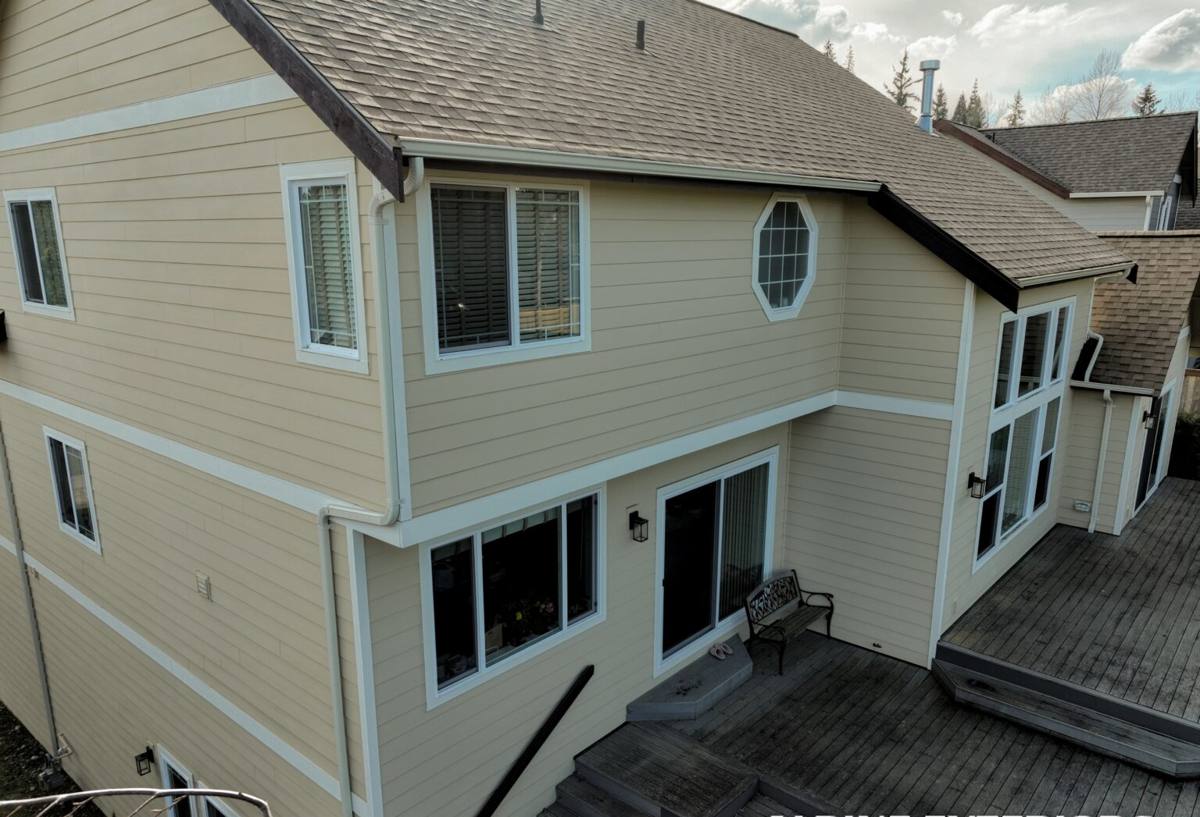
Signs a Downtown Sarasota Home Needs Siding Replacement, Not Just a Repair
Visual Warning Signs
Cracking, buckling, or visibly warped panels are the most obvious flags. On some materials you'll also see fastener heads starting to pop or "bulge" through the surface as the panel behind them loses its grip. Chalking or fading well beyond what you'd expect for the siding's age is another sign — it usually means the finish has broken down faster than it should have under our UV load.
Moisture and Structural Signs
Swelling near the bottom courses of siding, around window and door trim, or at any point where two pieces of siding meet is worth taking seriously. If you press on the siding in these spots and it feels soft or spongy, that's often a sign the sheathing behind it has already started to take on water. Musty smells near an exterior wall, or peeling paint and staining on an interior wall that backs up to the exterior, can both point to moisture that's been working its way in for a while.
Age and Material Signs
A lot of the housing stock in and near Downtown Sarasota is older, and much of it was sided decades ago with materials — original vinyl, wood, or early-generation composites — that simply weren't built for a fifty-plus-year coastal service life. If your siding has needed the same repair more than once, or if you're not sure what's actually behind the surface layer, that's usually a sign it's time for a real inspection rather than another patch.
Fast Self-Check
- Press firmly on the bottom few feet of siding near ground level — any give or softness?
- Check the underside of window and door trim for staining, swelling, or gaps
- Look at south- and west-facing walls for heavier fading or chalking than the rest of the house
- Note any spots that have been caulked or patched more than once
- Check for rust streaking below fasteners or trim, which points to corrosion from salt air
What Correct Siding Replacement Actually Involves
Siding replacement done right is not just pulling off old panels and nailing up new ones. The siding itself is the visible part of a larger water-management system, and every layer underneath it matters as much as the finish coat everyone sees.
Full Tear-Off, Not a Cover-Up
We remove the existing siding down to the sheathing rather than installing new material over the old. That's the only way to actually see what condition the wall is in — soft or delaminated sheathing, hidden rot around old flashing, or damage from a past leak all need to be dealt with before anything new goes up. Covering over a problem just hides it for a while.
Weather-Resistive Barrier and Flashing
A properly lapped weather-resistive barrier, correctly taped and sealed at seams, is what actually keeps wind-driven rain from reaching your framing if water gets past the siding — and in a climate like ours, it will occasionally get past the siding. Flashing at every window, door, roof-wall intersection, and penetration has to be installed so water sheds outward and downward at every layer, not caulked over as a shortcut. Caulk is a detail, not a strategy.
Fastening and Clearances
Fastener type and spacing matter more here than in a lot of the country, because salt air accelerates corrosion on anything that isn't rated for it. We follow manufacturer fastening schedules and use corrosion-resistant fasteners throughout. We also hold proper clearance between siding and grade, and between siding and roof surfaces, so water and moisture-laden debris don't sit against the bottom edge of the wall.
Why We Install Only James Hardie Fiber Cement Here
We standardized on James Hardie fiber cement siding and don't install vinyl, LP SmartSide, Cemplank, Allura, or primed wood species like spruce or cedar. That's not a marketing position — it's a decision built around what actually holds up on a Gulf Coast home in Sarasota County.
Fiber cement is non-combustible, which matters on a home surrounded by dry landscaping through parts of the year and gives real peace of mind that wood-based sidings simply can't offer. James Hardie's ColorPlus finish is baked on at the factory under controlled conditions, and it holds color significantly better under intense, near-year-round UV than a field-applied paint job — which is a real factor here, not a hypothetical one. Hardie also engineers its product lines by climate zone; homes in our region fall into the HZ10 zone, meaning the boards are formulated for hot, humid, high-moisture conditions rather than a generic one-size-fits-all mix. And because it's cement-based rather than wood-based, it doesn't absorb moisture and swell, rot, or feed pests the way wood and some wood composites can when they take on repeated wind-driven rain.
None of that means fiber cement is maintenance-free — no siding is. It still needs to be installed to spec, caulked and painted at trim in accordance with the manufacturer's requirements, and inspected periodically. But installed correctly, it's the product we're willing to put our name behind on homes that take this much sun, wind, and salt.
Comparing Siding Options for a Downtown Sarasota Home
| Material | How It Handles This Climate | Maintenance Reality | Our Position |
|---|---|---|---|
| James Hardie Fiber Cement (HZ10) | Non-combustible, engineered for heat and humidity, factory-baked color resists UV fade | Periodic caulk/paint upkeep at trim; no rot or pest risk | What we install |
| Vinyl | Can warp or distort in high heat and intense sun; seams are a weak point in wind-driven rain | Low upkeep but limited repair options if damaged or faded | Not installed by us |
| Wood / Cedar | Absorbs moisture, prone to rot and pest damage under repeated wind-driven rain | Frequent repainting/sealing; highest long-term upkeep | Not installed by us |
| LP SmartSide (engineered wood) | Wood-strand core is sensitive to sustained moisture exposure at cut edges and seams | Requires diligent edge sealing and paint maintenance | Not installed by us |
Our Siding Replacement Process, Start to Finish
- Inspection and estimate — we walk the home, check current siding, trim, and any visible moisture signs, and put together a written estimate.
- Tear-off and sheathing inspection — old siding comes off, sheathing is checked and any damaged sections are repaired before moving forward.
- Weather-resistive barrier and flashing — barrier and flashing are installed at every window, door, and penetration per manufacturer detailing.
- James Hardie installation — panels or planks are installed per Hardie's fastening schedule and clearance requirements for our HZ10 zone.
- Trim, caulking, and touch-up — trim is finished, caulk joints are placed only where specified, and factory finish is matched at cuts.
- Final walk-through and cleanup — we walk the job with you, answer questions, and clear the site of old material and debris.
Why a Crew That Already Works Downtown Sarasota Matters
A siding job in this part of Sarasota County comes with details that a crew unfamiliar with the area can easily miss. Florida Building Code wind-load requirements apply to exterior work here, and permitting and inspection expectations are things a local crew already knows how to navigate rather than learning on your job. Many properties in and near downtown sit on narrower, established lots with mature tree canopy, which affects everything from staging and equipment access to how much debris and shade a wall sees year-round. Some communities in the area also carry HOA or deed-restriction requirements on exterior appearance that are worth checking before work begins.
There's also the simple matter of being reachable afterward. A crew that works this area regularly is going to be around next year and the year after for warranty questions or a trim touch-up — not a one-time crew that's moved on to another region entirely.
Questions to Ask Before You Hire
- Do you tear off the old siding completely, or install over it?
- What weather-resistive barrier and flashing details do you use, and can you explain why?
- Which siding products do you install, and which ones do you choose not to install — and why?
- Are you familiar with Sarasota County permitting requirements for siding replacement?
- What fastener type do you use, and is it rated for a coastal salt-air environment?
- What does your warranty actually cover, and is it transferable if you sell the home?
- Can you provide a written, itemized estimate before work begins?
If your Downtown Sarasota home is showing any of the warning signs above, or you're simply ready to stop patching old siding that keeps giving you trouble, we're happy to take a look. A free, no-pressure estimate gets you a straight answer on what your home actually needs — use the form below to get started.