 Sarasota Siding
 Laurel Park's Older Homes Face a Different Set of Siding Problems
Laurel Park is one of Sarasota's established, tree-canopied neighborhoods close to downtown, with a mix of older bungalow-style and mid-century homes built well before today's siding products and installation codes existed. That combination — mature trees, older wall assemblies, and decades of Gulf Coast weather — means siding here tends to fail in specific, predictable ways: cupped or delaminating original wood siding, chalky and cracked vinyl that was never rated for the wind exposure this area sees, or old fiberboard product that soaked up moisture years ago and has been quietly rotting behind the paint ever since.
We install and repair siding across Sarasota County, and Laurel Park's housing stock is different enough from newer subdivisions that a generic siding job doesn't hold up. Older framing, older window and door details, and in some cases uneven wall surfaces all change how a new siding system needs to be flashed, fastened, and finished. This page covers what fiber cement siding done right actually involves for a home in this neighborhood, and why we install only one product system — James Hardie — to do it.
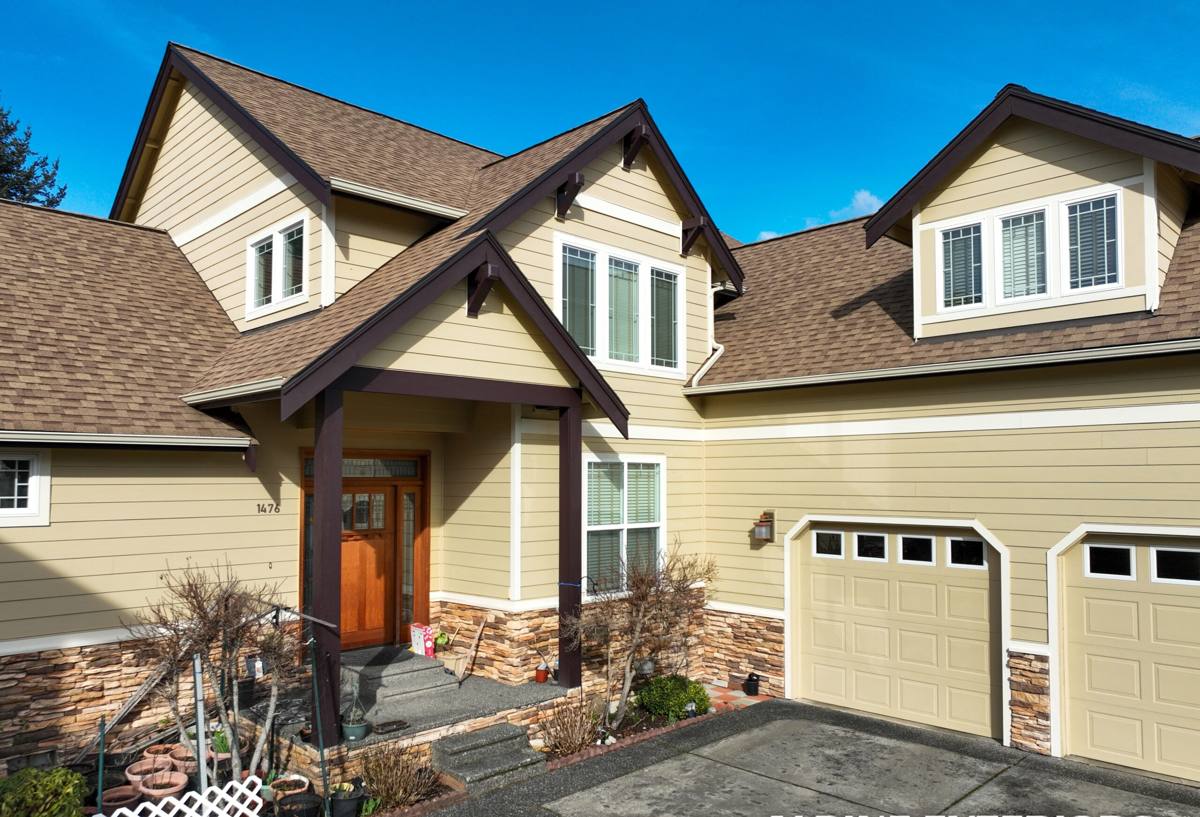
What Sarasota's Climate Actually Does to Siding
Sarasota County sits in a wind-borne debris region with a long history of tropical storm and hurricane exposure, and that's the baseline every siding product on a Laurel Park home has to survive — not just the occasional named storm, but the everyday grind of coastal weather between them.
- Hurricane-force wind: Siding has to stay fastened and intact under sustained high wind and wind gusts, not just look fine on a calm day. Fastening pattern and product wind rating both matter more here than in inland climates.
- Intense, near year-round UV: Florida sun breaks down pigments and resins in lower-grade siding, leading to fading, chalking, and surface cracking years before a manufacturer's warranty would suggest.
- Wind-driven rain: Storms here don't just drop rain, they push it sideways into seams, laps, and trim joints. A siding system that isn't detailed correctly at those points lets water behind the cladding, where it causes rot and mold long before any damage is visible from the street.
- Salt air: Even a few miles inland from Sarasota Bay, airborne salt accelerates corrosion on fasteners and metal flashing, and degrades some paint and coating systems faster than manufacturers' standard testing accounts for.
Any one of these factors will shorten the life of the wrong siding product. Together, they're why we don't treat siding as an appearance upgrade — it's a building envelope decision.
Why We Install Only James Hardie Fiber Cement
We made a standing decision to install James Hardie fiber cement siding exclusively, and not vinyl, not LP SmartSide, not Cemplank or Allura, not primed spruce or cedar. That's not a marketing preference — it's a professional judgment call based on how each of those products actually performs over years in exactly the conditions Laurel Park deals with.
James Hardie fiber cement is non-combustible, which matters for insurance and fire safety and doesn't degrade over time the way combustible claddings can. Hardie's HZ product lines are engineered for specific climate zones — Florida installations use the HZ5 formulation, built around the humidity, moisture cycling, and storm exposure of the Gulf Coast rather than a one-size-fits-all national spec. The factory-applied ColorPlus finish is baked on under controlled conditions, which holds color and resists the fading and chalking that field-applied paint struggles with under constant Florida sun. And Hardie backs the product with a strong, transferable limited warranty, which matters to a future buyer as much as it does to you.
None of this means other products are worthless — vinyl and engineered wood both have real uses and real fans. It means that after years of installing and repairing siding on Gulf Coast homes, we don't think they're the right long-term answer for what Sarasota weather does to a house, and we'd rather tell a homeowner that plainly than sell them something we don't believe in.
What a Correct Fiber Cement Installation Actually Involves
Fiber cement siding is only as good as the assembly behind it. Most siding failures we get called out to inspect — on any brand — trace back to installation shortcuts, not the product itself. On a Laurel Park home, a correct install includes:
Water Management Behind the Siding
A continuous weather-resistant barrier goes over the sheathing before any siding touches the wall, with all seams properly lapped and taped. Flashing gets installed at every window, door, and horizontal trim transition so wind-driven rain that gets past the siding has a way out instead of a place to collect.
Fastening for Wind Exposure
Fastener type, spacing, and embedment follow James Hardie's published requirements for the local wind zone — not a generic pattern. Under-fastened siding is one of the most common reasons boards come loose in a storm, and it's invisible from the ground until it happens.
Clearances and Gaps
Fiber cement needs proper clearance from grade, roofing, decks, and other siding terminations, plus small gaps at butt joints and trim to allow for expansion. Installers who tuck it in tight to make it look "clean" set the board up to trap moisture and crack.
Caulking and Joint Treatment
Only in the specific locations Hardie's installation guide calls for — not everywhere, and not as a substitute for correct flashing. Over-caulking is a common shortcut that seals moisture in rather than keeping it out.
Finish Work
Cut edges get sealed per manufacturer spec, ColorPlus touch-up is used sparingly and correctly, and trim details are matched to the home's existing lines rather than forced into a generic profile.
Skipping any one of these steps might not show up for a year or two. It will show up eventually, usually as a warranty claim that gets denied because the installation didn't meet the manufacturer's requirements.
How Fiber Cement Compares to Other Options for an Older Sarasota Home
| Factor | James Hardie Fiber Cement | Vinyl Siding | Wood / Cedar |
|---|---|---|---|
| Wind performance | Engineered and tested for high-wind zones | Can loosen, crack, or blow off in sustained high wind | Depends on fastening; prone to warping over time |
| Moisture behavior | Dimensionally stable, resists moisture-driven warping | Doesn't rot, but traps moisture behind it if installed poorly | Absorbs moisture; prone to rot without diligent upkeep |
| UV / color retention | Factory-baked ColorPlus finish resists fading | Fades and chalks with years of intense Florida sun | Paint/stain needs reapplication every few years |
| Fire resistance | Non-combustible | Combustible; can melt or deform near heat sources | Combustible |
| Typical maintenance | Periodic wash, repaint on a longer cycle | Low, but replacement panels are hard to color-match later | Ongoing sealing, staining, or painting |
This isn't a claim that vinyl or wood are bad products — it's a comparison of how each performs under this specific climate load. For a Laurel Park home that's already carrying decades of coastal exposure, we think the trade-offs favor fiber cement.
Signs Your Laurel Park Home's Siding May Already Be Failing
- Soft or spongy spots when you press on the siding near the bottom edges or window corners
- Paint that's bubbling, peeling, or won't hold a fresh coat
- Visible warping, cupping, or gaps opening up at seams and corners
- Musty smell or discoloration on interior walls that back up to exterior siding
- Siding that flexes or feels loose when pushed by hand
- Chalky residue that rubs off on your hand when you wipe the surface
Matching Laurel Park's Architectural Character
A lot of Laurel Park's housing stock has an older, more detailed character than newer Sarasota subdivisions — narrower lap reveals, trim details around windows and porches, and in some cases mixed materials on a single elevation. Fiber cement siding comes in multiple plank widths, panel styles, and trim profiles specifically so an installer can match what a home originally had rather than defaulting to whatever's easiest to install. We take measurements and existing trim details into account before ordering material, so the finished result reads as an upgrade to the home rather than a mismatch with it.
If your property falls within any local historic designation or neighborhood association guidelines, exterior material and appearance changes may need to go through an approval process before work starts. We're glad to work from whatever guidelines apply to your specific property — that's a conversation worth having early, before material is ordered.
Our Process, From Estimate to Finished Install
- On-site inspection: We walk the exterior, check for existing moisture damage or rot behind current siding, and take measurements and photos.
- Written estimate: A clear scope covering removal (if needed), water barrier and flashing work, material and color selection, and trim details — no vague allowances.
- Material order: James Hardie product ordered in the correct HZ5 formulation, plank width, and ColorPlus finish for your home.
- Tear-off and prep: Existing siding removed where required, sheathing inspected and repaired if damaged, weather-resistant barrier and flashing installed.
- Installation: Siding installed to manufacturer fastening and clearance specifications, with trim and joint detailing matched to the home.
- Final walkthrough: We review the finished work with you before calling the job complete, and provide the documentation behind your Hardie warranty.
Cost Factors on a Fiber Cement Project
Every home is different, so we don't quote ranges without seeing the property, but these are the main variables that move a fiber cement siding estimate up or down:
| Factor | Why It Matters |
|---|---|
| Removal of existing siding | Tear-off, disposal, and any sheathing repair found underneath add labor and material cost |
| Home size and wall complexity | More corners, gables, and dormers mean more cutting, trim, and labor time |
| Plank profile and finish | Wider or narrower reveals, shake-style accents, and premium ColorPlus colors vary in material cost |
| Trim and detail work | Matching older architectural trim takes more time than a straightforward flat-elevation install |
| Access and site conditions | Mature trees, tight lot lines, or limited equipment access can affect labor time |
Why Local Installation Experience Matters
Fiber cement siding is a forgiving product when it's installed to spec, and an unforgiving one when it isn't. A crew that regularly works Sarasota County homes already knows the wind zone fastening requirements, has a working relationship with local permitting, and has seen firsthand what happens to siding assemblies that weren't detailed for wind-driven rain and salt air. That experience shows up in details a homeowner might never notice until years later — the extra flashing at a tricky roofline transition, the right gap left at a butt joint, the fastener spacing that holds through a real storm instead of a calm afternoon.
For an older neighborhood like Laurel Park specifically, that also means recognizing when a home's existing trim, wall condition, or architectural details call for a different approach than a newer build down the road would need — and having the judgment to slow down and get it right rather than run a standard install on a non-standard house.
If you're weighing a siding replacement or repair for a Laurel Park home, we're happy to take a look and give you a straightforward, no-pressure estimate — no hard sell, just an honest read on what your siding needs and what it would take to do it right. The form below gets you started.