 Sarasota Siding
 What Fruitville's Climate Demands From an Asphalt Shingle Roof
Fruitville sits inland of Sarasota's barrier islands, but that doesn't spare it from Florida's toughest roofing conditions. Homes here still fall inside Sarasota County's wind-borne debris region, which means a shingle roof isn't just protecting against rain — it's engineered to stay attached and intact through tropical storm and hurricane winds, then keep doing its job through the rest of the year's heat, humidity, and salt-laden air. A roof spec that works fine in a milder climate simply doesn't hold up the same way here.
We treat every Fruitville roofing job as a climate problem first and a cosmetic one second. Get the underlying system right — the shingle rating, the underlayment, the flashing, the fastening pattern — and the roof looks good for years because it's actually built for where it sits, not because it happened to survive one storm season.
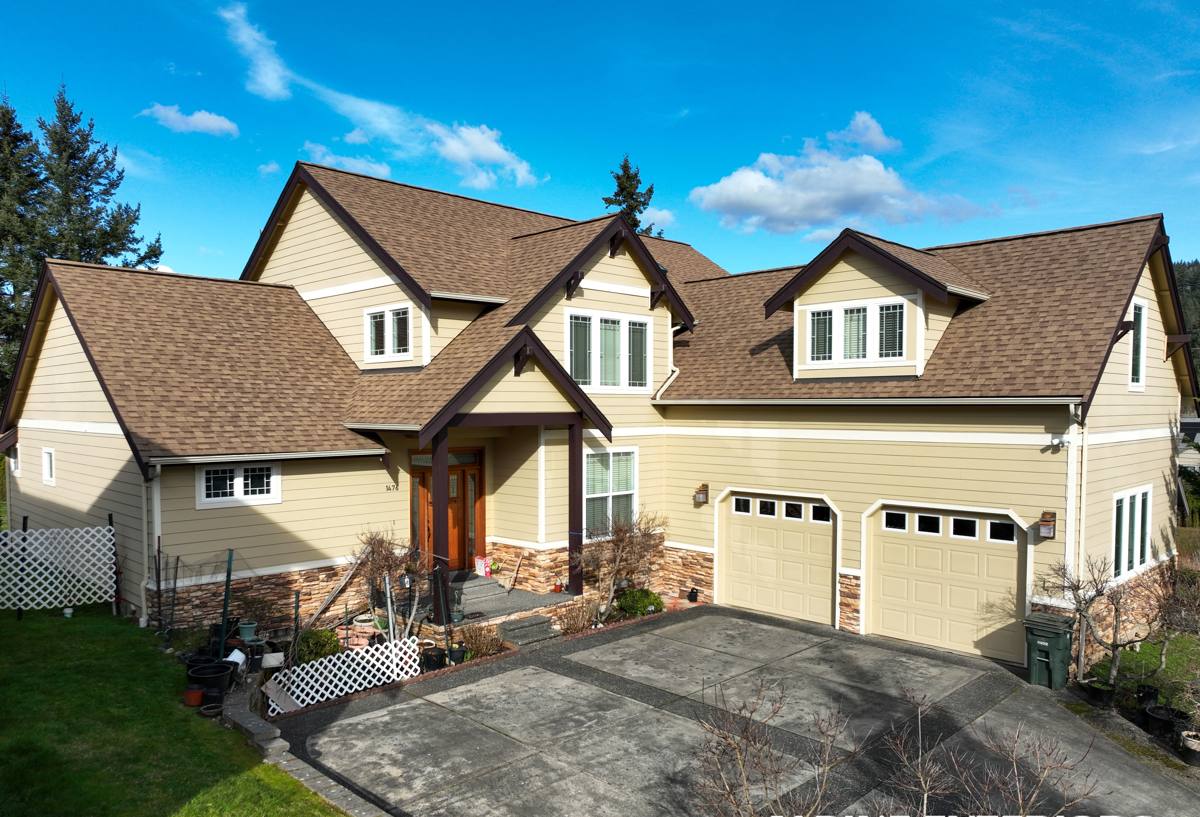
The Four Forces Working Against Your Roof
Hurricane-Force Wind
Wind is the biggest structural threat to a shingle roof in this part of Florida. Uplift pressure concentrates at the edges, ridges, and corners of a roof first, which is exactly where a rushed or budget installation tends to cut corners on fasteners and sealant. A shingle that isn't rated for local wind speeds, or one that's nailed with too few fasteners or in the wrong pattern, can start lifting well before a storm reaches its peak.
Year-Round UV
Sarasota County doesn't get much of a winter break from sun exposure. Constant UV breaks down the asphalt in shingles over time, drying out the mat and driving off the protective granules that shield it. Roofs on south- and west-facing slopes typically show this wear first, and once granule loss starts, the shingle beneath is exposed to heat and moisture with nothing left to buffer it.
Wind-Driven Rain
Florida rain rarely falls straight down. When it's pushed sideways by wind, it works its way up under shingle tabs, into valleys, and around any flashing that isn't sealed correctly. A roof can look completely fine from the ground and still be letting water in at a poorly lapped valley or an under-flashed penetration — the kind of detail that only shows up as a stain on a ceiling months later.
Salt Air
Even away from the immediate coast, salt carried inland on Gulf breezes accelerates corrosion on exposed metal — nail heads, flashing, vent boots, and drip edge. Once that metal starts to corrode, it loses its ability to shed water properly, and a roof's weakest point often turns out to be a rusted-through flashing detail rather than the shingles themselves.
What a Correctly Installed Shingle Roof Includes
"Asphalt shingle roof" covers a wide range of actual installations, and the difference between a roof that lasts and one that fails early usually isn't the shingle brand — it's the system underneath it. A correct installation for this climate includes a wind-rated shingle appropriate for the home's exposure, a fully adhered or mechanically sealed underlayment, self-adhering membrane at valleys and eaves where water concentrates, corrosion-resistant drip edge and flashing, and a nailing pattern that meets or exceeds Florida Building Code requirements for the wind zone.
| Shingle Type | Typical Wind Rating | Best Fit For | Relative Cost |
|---|---|---|---|
| Standard 3-tab | Lower wind rating | Budget-conscious projects, less wind exposure | Lowest |
| Architectural (laminated) | Mid-to-high wind rating | Most Fruitville homes; better appearance and durability | Moderate |
| High-wind / impact-rated architectural | Highest available rating | Open or exposed lots, homeowners prioritizing storm resilience | Higher upfront, often better long-term value |
We walk homeowners through where their specific lot and roof shape fall on that table rather than defaulting to whatever's cheapest to install. A slightly higher-rated shingle, installed correctly, is usually the more cost-effective decision once you account for how much less likely it is to need storm repair.
Our Fruitville Installation Process
Inspection and Estimate
Every project starts with a full roof inspection — deck condition, existing ventilation, flashing details, and any signs of past water intrusion. We check the attic from the inside too, since moisture and heat damage often show up there before they're visible on the surface. You get a written estimate that spells out materials, scope, and price, with no pressure to sign on the spot.
Tear-Off vs. Overlay
In almost every case, we recommend a full tear-off rather than shingling over an existing roof. Overlays trap heat, hide deck damage, and don't allow for a proper underlayment or flashing reset — all things that matter more in a high-wind, high-UV climate like this one. A tear-off also lets us inspect and repair the roof deck itself, which is the structural layer everything else depends on.
Installation Day
Once the old roofing is off, we address any deck repairs, then build the system in order: drip edge, self-adhering membrane at eaves and valleys, synthetic underlayment across the field, flashing at every penetration and wall intersection, and finally the shingles themselves, fastened according to the wind-rated pattern the product and code require. We keep the work area contained and clean up debris daily, not just at the end.
Final Walkthrough
Before we consider the job done, we walk the roof and the property with you, confirm ventilation is functioning, and make sure every detail — ridge caps, flashing, gutters disturbed during the work — is finished correctly. Any required county inspection is scheduled and completed before final payment.
Signs Your Fruitville Roof May Be Telling You Something
Most shingle roof problems give warning signs well before they turn into interior damage. Worth checking for, especially after a windy or rainy stretch:
- Shingles that look cupped, curled, or are visibly missing granules in patches
- Tabs lifted at the edges or corners of the roof, even slightly
- Granules collecting in gutters or at the base of downspouts
- Dark streaking or staining across the shingle field
- Soft spots, sagging, or discoloration on interior ceilings near exterior walls
- Rust staining around vent boots, flashing, or exposed fasteners
- Daylight visible through the attic roof deck
None of these automatically mean a full replacement is needed, but any of them are worth a professional look before the next storm season rather than after.
Repair or Replace? How We Help You Decide
Age, extent of damage, and remaining life of the roof system all factor into this decision, and we'd rather tell you honestly that a roof has a few good years left than sell a replacement it doesn't need yet. A roof with isolated wind damage or a single failed flashing detail is usually a straightforward repair. A roof with widespread granule loss, multiple past patches, or a deck that's showing moisture damage in several areas is usually past the point where repair makes financial sense — you end up paying for patchwork that won't outlast the next hurricane season anyway.
We give you our honest read on which category your roof falls into, along with the reasoning behind it, so the decision is yours to make with real information rather than a sales pitch.
Why Local Experience in Sarasota County Matters
A roofing crew that already works in and around Fruitville knows the practical details that generic contractors have to learn on your job: what Sarasota County's permitting and inspection process actually requires, how local wind zone requirements apply to a given roof shape and exposure, and which installation details tend to fail first on homes in this specific climate. That familiarity shows up in fewer surprises during the permitting process and a roof built to the standard the county — and the weather — actually demands, not just a generic national spec.
It also matters when a storm has already passed through. A crew with local roots is easier to reach for a follow-up inspection or a warranty question long after the invoice is paid, rather than a name that only shows up once and disappears.
Keeping an Asphalt Shingle Roof Sound Between Services
A well-installed shingle roof in this climate still benefits from basic upkeep. Keep gutters and downspouts clear so water isn't backing up under the eaves. Trim back overhanging branches that drop debris or hold moisture against the shingles. After any significant storm, a quick visual check from the ground — or a call to have it looked at professionally — can catch a lifted tab or damaged flashing before it turns into an interior leak. And having a roof looked at every couple of years, even when nothing seems wrong, catches the slow wear that UV and salt air cause before it becomes a bigger repair.
If you're weighing a repair, replacement, or just want an honest read on where your Fruitville roof currently stands, we're happy to take a look. Fill out the form below for a free, no-pressure estimate.