 Sarasota Siding
 Siding Built for How Fruitville Actually Weathers
Fruitville sits inland from the coast but still takes the full brunt of a Sarasota County climate: long stretches of intense UV, summer storms that dump rain sideways, and humidity that never really lets up. It's not beachfront salt spray, but the air carries enough moisture and airborne salt off Sarasota Bay and the Gulf to matter for anything nailed to the outside of a house. Add hurricane-force wind events that pass through the region most years, and you have a climate that is genuinely hard on exterior materials — harder than most siding products were designed for.
We install fiber cement siding in Fruitville because it's the one product category that holds up to all of that at once: sun, wind, water, and salt-laden air, without the maintenance spiral that other materials fall into after a few Florida summers. This page covers what that actually means for a Fruitville home — what the material needs to do, how a correct installation works, and what our crew does differently because we already work this neighborhood.
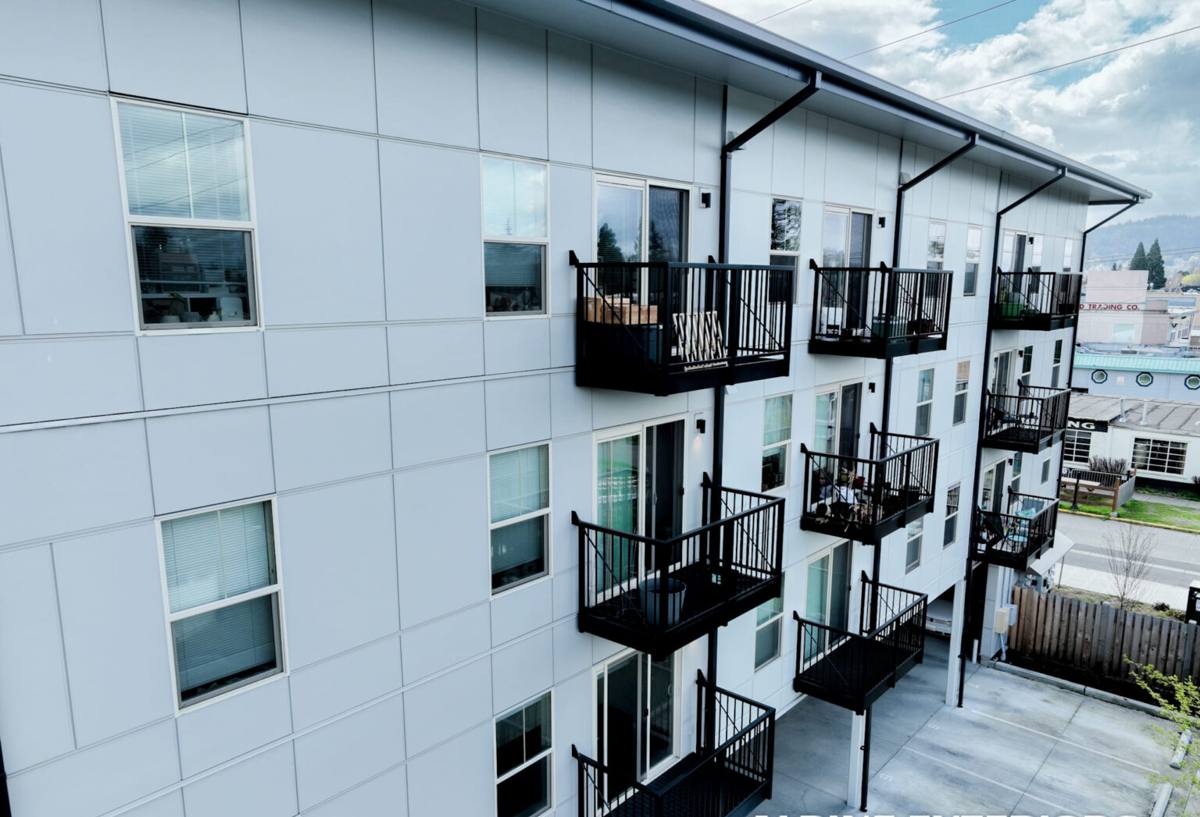
What Fruitville's Climate Demands From Siding
UV and Heat
Sarasota gets sun exposure most siding manufacturers never designed for. Vinyl siding softens, warps, and fades under sustained UV and summer surface temperatures. Painted wood chalks and fades faster than the same product would up north. Fiber cement doesn't soften or warp from heat, and a factory-applied finish like James Hardie's ColorPlus coating is baked on and UV-cured specifically to resist fading — it's not the same as a field-applied paint job trying to survive a Florida roof line.
Wind-Driven Rain
The bigger issue for most homes isn't the wind itself — it's what wind pushes through. During tropical storms and the outer bands of hurricanes, rain doesn't just fall, it drives sideways into wall assemblies at pressure. Siding that isn't installed with the right water-management details (proper flashing, house wrap integration, correct clearances) lets that water behind the cladding, where it causes rot, mold, and hidden structural damage long before anyone notices a problem on the surface.
Salt Air and Humidity
Fruitville isn't oceanfront, but Sarasota County as a whole sits in a salt-influenced air corridor, and humidity here stays high nearly year-round. Materials that trap moisture against the substrate — or that corrode, swell, or feed mold growth in damp conditions — age faster here than the same product would in a drier climate. Fiber cement is inert to salt and doesn't feed mold the way wood-based products can.
Why We Only Install James Hardie Fiber Cement
We don't install vinyl, LP SmartSide, primed wood, cedar, or other fiber cement brands like Cemplank or Allura. That's a deliberate standard, not a sales pitch, and it's worth explaining honestly rather than just asserting it.
- Vinyl is affordable and low-maintenance in mild climates, but it softens and can deform in sustained Florida heat, and it doesn't have the wind resistance profile we want to put behind our name in a hurricane-exposed county.
- LP SmartSide is a strand-based wood product with a real, functional warranty — but it's still wood-based, and wood-based siding depends heavily on unbroken factory finish and perfect field sealing to resist moisture. In a climate this wet, that's a maintenance burden we're not comfortable asking homeowners to carry.
- Primed spruce and cedar look great on day one and are genuinely appealing materials, but they need repainting and re-caulking on a schedule Florida weather compresses, and any missed maintenance cycle shows up as rot faster here than almost anywhere else in the country.
- Other fiber cement brands (Cemplank, Allura) are legitimate products, and we don't claim they fail — we simply don't have the plant relationship, product-line depth (HZ5 humidity-zone formulation), and warranty structure with them that we have with James Hardie, and we'd rather stand behind one system we know thoroughly than spread across several.
James Hardie's HZ5 product line is engineered specifically for humid, high-moisture climates like Sarasota County's — it's a formulation decision, not marketing language, and it's the reason we standardized on it years ago rather than switching brands by job.
What a Correct Fiber Cement Installation Actually Involves
Fiber cement siding fails early almost exclusively because of installation mistakes, not material defects. The board itself is extremely durable; the water-management system behind it is where jobs go wrong. On every Fruitville installation, our process includes:
Water Management Behind the Cladding
A weather-resistant barrier (house wrap) goes over the sheathing first, with all seams taped and all penetrations flashed — around windows, doors, hose bibs, and electrical penetrations — before a single piece of siding goes up. This is the layer that actually keeps wind-driven rain out of the wall cavity if any moisture gets past the cladding itself.
Clearances and Fastening
James Hardie specifies minimum clearances from grade, roof lines, decks, and other siding-to-trim junctions, and specific fastener patterns and spacing. Skipping these clearances is one of the most common shortcuts we see on older installs in this area, and it's a direct cause of moisture wicking into board ends.
Caulking and Sealant Joints
Every joint that needs a sealant bead gets one, with a manufacturer-approved, paintable, flexible caulk rated for exterior use — not a bead of whatever was on the truck. Joints that don't get sealed properly are where water finds its way in first.
Cut Ends and Field Cuts
Every field-cut edge of a Hardie board needs to be primed and sealed before installation, because cut ends expose unfinished material. This step gets skipped constantly on rushed jobs and it's one of the fastest ways to shorten a siding job's real lifespan.
Our Process for a Fruitville Project
| Step | What Happens |
|---|---|
| 1. On-site assessment | We walk the exterior, check current siding condition, identify moisture or rot issues, and take measurements. |
| 2. Written estimate | Itemized scope covering removal, water-resistant barrier, trim, fiber cement product line, and finish color — no vague lump-sum guessing. |
| 3. Tear-off and inspection | Old siding comes off and sheathing gets inspected for hidden damage before anything new goes up. |
| 4. Water barrier and flashing | House wrap, taped seams, and flashing at every penetration — the part of the job that's invisible once finished but determines how long it lasts. |
| 5. Hardie installation | Boards installed to manufacturer clearance and fastening specs, cut ends sealed, joints caulked. |
| 6. Final walkthrough | We review the finished job with you before calling it complete. |
Why a Crew That Already Works Fruitville Matters
Siding installation isn't uniform across Florida. A crew used to inland Central Florida work may not think as carefully about wind-driven rain details as a crew that installs regularly in coastal Sarasota County, where those details are the difference between a job that lasts and one that needs rework in a few years. Working consistently in and around Fruitville also means we already understand the general permitting expectations in the area and can plan a project timeline around it instead of learning that process for the first time on your job.
There's also a simple accountability argument: a contractor with an ongoing local presence in Sarasota County has a reason to stand behind the work. We're not passing through.
Signs Your Fruitville Home May Need New Siding
- Soft or spongy spots when you press on siding, especially near the bottom courses or window trim
- Visible warping, buckling, or gaps between boards
- Paint that's peeling or blistering repeatedly in the same spots, which often points to moisture trapped behind the siding rather than a paint problem
- Rising cooling bills without another clear cause, which can indicate compromised insulation behind failing siding
- Visible mold or mildew staining that keeps returning after cleaning
- Siding that's more than 20-25 years old, especially older wood or early-generation vinyl products not built for current wind and moisture standards
Cost Factors for a Fruitville Fiber Cement Project
Every home is different, so we won't quote a number without seeing the house, but the factors that move price on a fiber cement job are consistent:
| Factor | How It Affects Cost |
|---|---|
| Home size and wall area | More square footage means more material and labor, the most straightforward driver of total cost. |
| Current siding removal | Tear-off of old material, especially multiple layers or damaged wood, adds labor time. |
| Substrate repair | Rot or damaged sheathing found during tear-off needs to be repaired before new siding goes on — this is a common surprise, not a padding tactic. |
| Board profile and product line | Lap siding, shingle-style panels, and board-and-batten all have different material and labor costs. |
| Trim and detail work | Corner boards, window and door trim, and fascia detail add labor beyond flat wall coverage. |
| Home complexity | Multiple stories, steep rooflines, and complex angles increase both time and equipment needs. |
Maintenance: What Fiber Cement Actually Needs
Part of the pitch for fiber cement over other materials is how little it asks of you afterward, but "low maintenance" doesn't mean "no maintenance." In Sarasota County's climate, a realistic maintenance routine is:
- Rinse the exterior periodically to clear salt residue, pollen, and general grime — a garden hose is usually enough
- Inspect caulking at trim and joints annually and re-caulk any cracked or separated sealant before rainy season
- Watch for any paint or finish issues at cut ends or field repairs, since those are the spots most likely to need attention first
- Keep landscaping and sprinklers from directing constant moisture at the base of the siding
That's a meaningfully lighter routine than repainting wood every few years or replacing warped vinyl panels, and it's a big part of why fiber cement holds up better over a full ownership timeline in this climate.
Get a Straightforward Estimate
If your Fruitville home's siding is showing its age, or you're planning ahead for storm season, we're happy to walk the exterior with you, explain what we see, and put together a written estimate — no pressure, no inflated scare-tactic pitch. Use the form below to request a free estimate.