 Sarasota Siding
 Roof Replacement Built for Fruitville's Climate
Fruitville sits inland from the coast but still takes the full brunt of what Sarasota County weather delivers: tropical downpours that turn into wind-driven rain during storm season, months of intense UV exposure that most of the country never sees, and enough salt-carrying air moving in off the Gulf to accelerate corrosion on fasteners, flashing, and vents even a few miles from the water. A roof here is not just shedding rain — it is standing up to hurricane-force gusts, thermal cycling that bakes shingles from above and bakes the attic from below, and humidity that never really lets a roof deck dry out completely. When a roof in this area fails, it is rarely one single problem. It is usually years of cumulative UV breakdown, wind stress on fasteners, and moisture intrusion around penetrations finally catching up with the building at once.
That is the lens we bring to every Fruitville roof replacement: not just "put new material on," but building an assembly that is matched to what this specific climate does to a roof over a 15-, 20-, or 30-year service life.
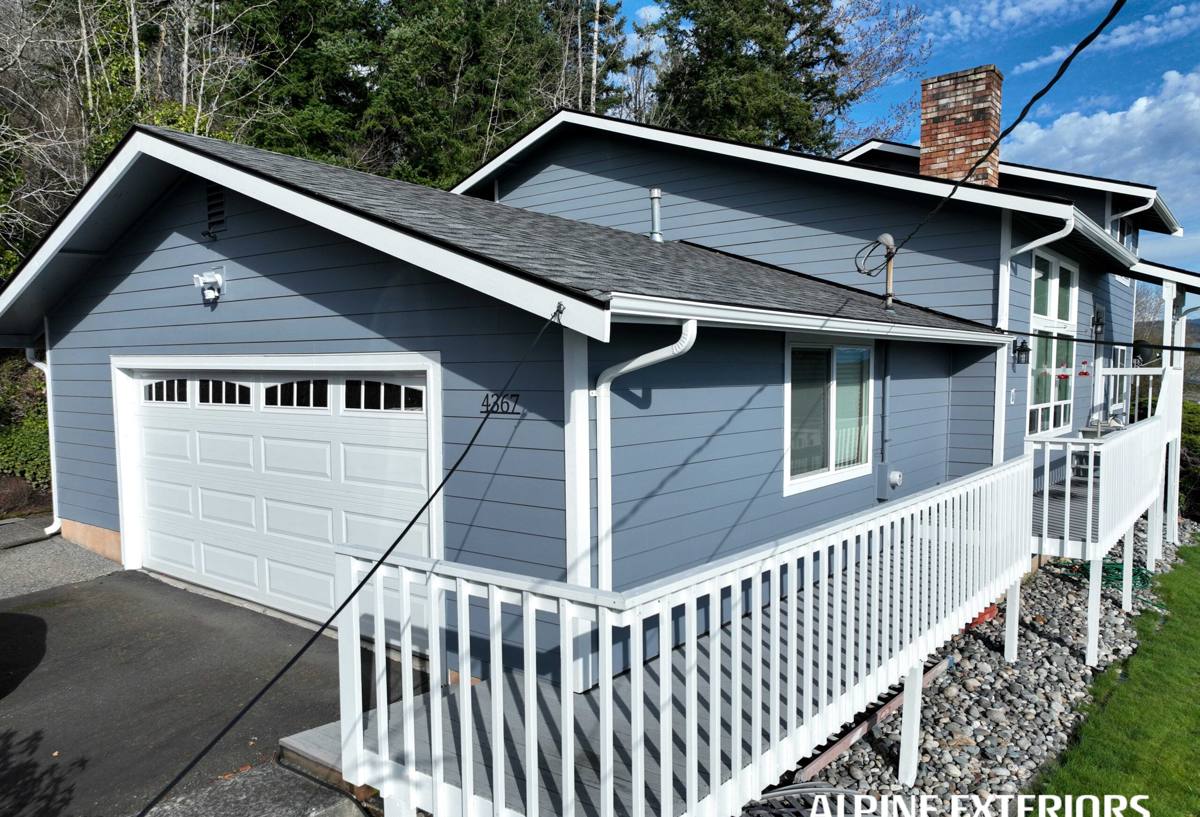
Signs a Fruitville Roof Needs Full Replacement, Not Another Repair
Homeowners often call us assuming they need a repair, and sometimes that is exactly right. But there is a point where patching a roof costs more over time than replacing it, and in this climate that point tends to arrive earlier than homeowners expect.
Age and material fatigue
Asphalt shingle roofs in Sarasota County's UV and heat load typically show real wear well before the manufacturer's rated lifespan. Granule loss, brittle shingle tabs that crack when lifted, and mat exposure are signs the material has used up its protective life, not just its appearance.
Widespread granule loss and exposed mat
A few bald spots are a repair. Granule loss across large sections of the roof means the asphalt layer underneath is exposed to direct UV, which accelerates failure everywhere else on the roof at the same time.
Soft decking or repeated leaks in different spots
If leaks keep showing up in new locations rather than the same one, water is likely moving under the underlayment and finding new exit points. That usually means the decking or underlayment layer has failed broadly, not just at one shingle or flashing detail.
Storm damage that exceeds practical repair
After a significant wind event, a roof can lose enough shingles, fasteners, or flashing integrity across enough of its surface that patch repairs would leave mismatched material and unreliable seams. At that point a full replacement is usually the more honest recommendation, both for performance and for insurance purposes.
What a Correct Roof Replacement Involves Here
A roof replacement is a system, not a single product. Every layer has a job, and in a high-UV, high-wind, salt-air environment, skipping or shortcutting any one of them shows up as a problem within a few years rather than a few decades.
Full tear-off, not overlay
We do not install new shingles over old ones. A tear-off lets us inspect the actual roof deck, correct any soft or damaged sheathing, and start the new assembly on a sound, dry, fastener-ready surface. Overlaying traps moisture and hides the condition of the deck, which is exactly what you do not want in a climate this humid.
Deck inspection and repair
Once the old roofing is off, we check the plywood or OSB decking for soft spots, delamination, or fastener pull-through — all common after years of humidity cycling. Any compromised sheathing gets replaced before anything else goes down.
Underlayment matched to wind and moisture exposure
Self-adhering, high-temperature underlayment at eaves, valleys, and penetrations gives a secondary water barrier if wind ever drives rain up under the primary roofing — a realistic scenario during Sarasota County storm season, not a rare edge case.
Fastening for wind uplift, not just for looks
Florida Building Code wind provisions exist because roofs here genuinely need to resist uplift, not just shed water. Nailing pattern, fastener count, and starter strip installation at edges and rakes all affect how a roof performs in a wind event — this is where a rushed installation shows its weakness first.
Flashing and penetration detail
Chimneys, vent stacks, skylights, and wall-to-roof transitions are where the overwhelming majority of roof leaks actually originate — not in the open field of the roof. Correct step flashing, counterflashing, and sealant selection at these points matters more to long-term dryness than the shingle brand itself.
Material Options for Fruitville Homes
There is no single "best" roofing material — the right choice depends on the home's roof pitch, budget, and how long the owner plans to stay in the house. Here is how the common options compare for this climate specifically.
| Material | Wind & storm performance | UV/heat durability | Typical service life here | Maintenance |
|---|---|---|---|---|
| Architectural asphalt shingle | Good, with proper fastening and rated shingle class | Moderate — UV is the primary wear factor | 15-25 years | Periodic inspection, especially after storms |
| Metal (standing seam) | Excellent uplift resistance when properly installed | Very good — reflects heat, doesn't granule-shed | 30-50 years | Low, but fastener and sealant checks over time |
| Concrete or clay tile | Very good for the tile itself; underlayment is the weak point | Excellent — tile itself doesn't degrade from UV | 30-50 years (underlayment often needs replacement sooner) | Occasional tile replacement, underlayment renewal |
We do not push one material as universally superior. Each has real trade-offs — tile roofs, for example, are only as good as the underlayment beneath them, since the tile itself rarely fails but the water barrier underneath eventually does. Metal costs more upfront but spreads that cost over a much longer service life. We walk through these trade-offs honestly based on your roof's pitch, structure, and budget rather than defaulting to whatever is easiest to install.
Our Roof Replacement Process, Step by Step
- Inspection and estimate — we assess the current roof, decking condition (where visible), attic ventilation, and any storm or moisture history before quoting anything.
- Material selection — we walk through shingle, metal, or tile options against your budget and how long you plan to own the home.
- Permitting — Sarasota County requires permits for roof replacement, and we handle that process rather than leaving it to the homeowner.
- Tear-off and disposal — old roofing is fully removed and hauled off, not left staged in the yard for days.
- Deck repair — any compromised sheathing is replaced and documented before covering it up.
- Underlayment and flashing — the water-management layer goes down first, correctly detailed at every penetration.
- Roofing installation — installed to the fastening pattern and wind-rating specification for the product and this region.
- Final inspection and cleanup — magnetic sweep for nails, site cleanup, and a final walkthrough with the homeowner.
Attic Ventilation and Insulation Matter as Much as the Roof Itself
A new roof installed over a poorly ventilated attic will underperform no matter how good the shingles are. In Sarasota County's heat, an attic that cannot exhaust hot, moist air will cook the underside of the roof deck and shorten the life of the new roofing from below, not just from above. As part of a replacement, we check intake and exhaust ventilation balance — ridge vents, soffit vents, and any obstructions — and flag anything that would undercut the new roof's expected lifespan. This is a detail that is easy to skip and shows up years later as premature shingle aging or higher cooling bills.
What Drives the Cost of a Roof Replacement
Every roof is different, so we do not quote sight unseen — but these are the factors that actually move the number, in rough order of impact.
| Factor | Why it matters |
|---|---|
| Roof size and number of facets | More squares and more valleys/hips mean more material and labor |
| Material choice | Asphalt, metal, and tile carry very different material and labor costs |
| Decking condition | Rotted or delaminated sheathing found during tear-off adds material and labor |
| Roof pitch and access | Steep or hard-to-access roofs take longer and require more safety setup |
| Number of penetrations | Chimneys, skylights, and multiple vent stacks each add flashing labor |
| Permitting and code upgrades | Bringing an older roof assembly up to current wind code can add scope |
Preparing Your Property Before the Crew Arrives
A little preparation on your end keeps the project moving smoothly and protects your property during tear-off and installation.
- Move vehicles out of the driveway and away from the immediate work area
- Take down wall art, mirrors, or shelving inside the home near exterior walls — tear-off vibration can loosen items
- Trim back tree branches touching the roofline if you're able to safely
- Cover patio furniture, grills, or pool equipment near the work zone
- Plan for pets to be inside or away from the yard during active work days
- Clear a path for material delivery and dumpster or trailer placement
Why a Crew That Already Works Fruitville Matters
Roofing crews who work this area regularly already know what Sarasota County permitting expects, what wind-rating documentation an inspector will ask for, and how local homes were typically built — which affects deck thickness, truss spacing, and common penetration layouts. That familiarity shows up in fewer surprises mid-project and fewer callbacks after storm season. It also means we are a known, local presence if a warranty question or a post-storm check comes up years down the line, rather than a company that did one job in the neighborhood and moved on.
If you're weighing repair versus replacement, or just want an honest read on where your roof actually stands, we're happy to take a look. The estimate is free, there's no pressure, and you'll get a straight answer about what your roof needs — use the form below to get started.