 Sarasota Siding
 Siding That Has to Work Harder in Gulf Gate Estates
Gulf Gate Estates sits in one of the more demanding exterior-materials environments in the country. Homes here deal with hurricane-force wind gusts during storm season, wind-driven rain that gets pushed sideways into wall assemblies, intense year-round UV that most northern siding products were never designed to survive, and a steady dose of salt air rolling in off the Gulf. None of these stresses show up all at once in a dramatic way — they work slowly, over years, and the siding that looks fine in month six can be failing by year six if it wasn't built for this climate to begin with.
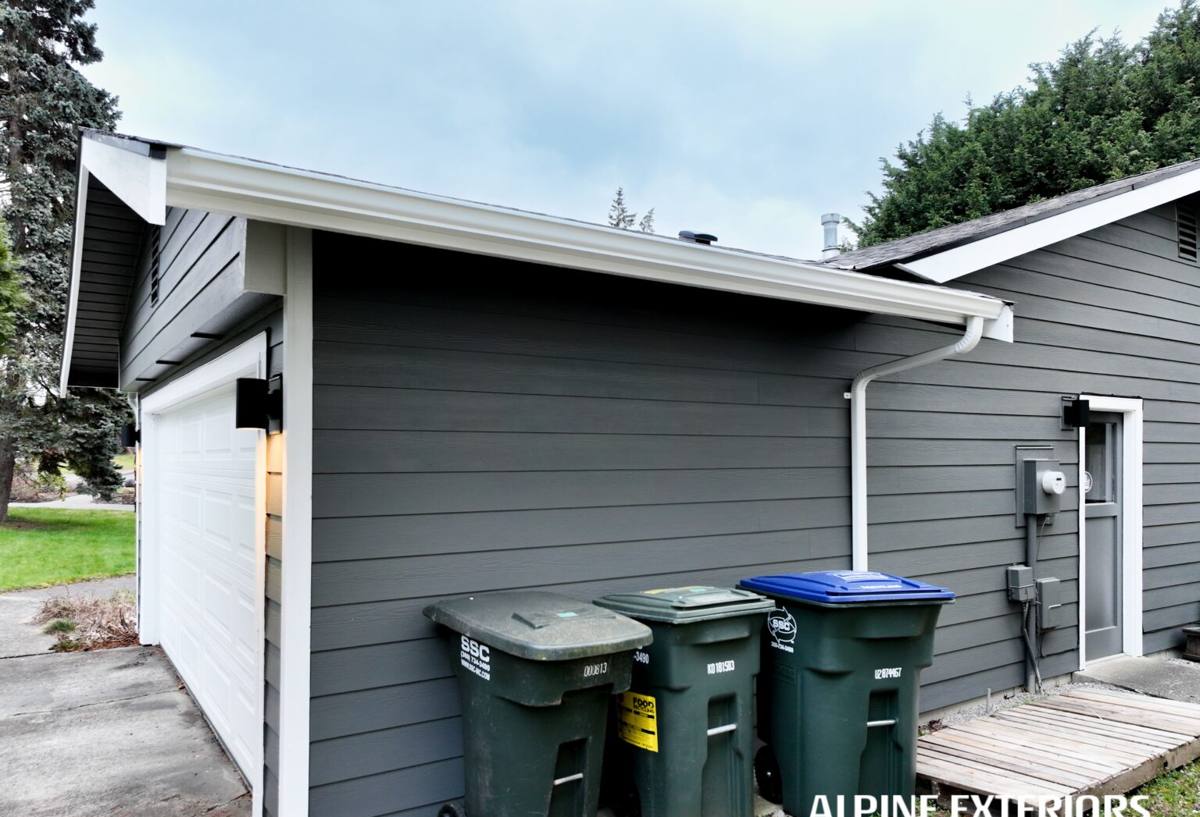
That's the lens we use on every Gulf Gate Estates project: not "what's the cheapest way to re-side this house," but "what will still be doing its job in fifteen or twenty years without babysitting." For siding, in Sarasota County, that answer is James Hardie fiber cement — installed correctly, with the right product line and the right details at every seam, corner, and penetration.
What This Climate Actually Does to Siding
Wind and Wind-Driven Rain
Sarasota's storm season brings sustained high winds and gusts that push rain sideways with real force. Siding that isn't fastened correctly, or that relies on face-nailing patterns not rated for high-wind zones, can loosen, lift at the edges, or let water track behind it during a single bad afternoon. Once water gets behind siding, the damage keeps happening long after the storm passes — it's the wall assembly underneath that actually rots, not usually the siding itself.
UV Exposure
Florida sun is relentless almost every month of the year. Paint film on site-finished wood or fiber cement breaks down faster here than in most of the country, leading to chalking, fading, and early repainting cycles. A factory-applied finish that's engineered to resist UV breakdown holds its color and its protective integrity far longer than anything brushed or sprayed on-site.
Salt Air and Humidity
Gulf Gate Estates isn't beachfront, but it's close enough to the coast that salt-laden air is a real factor, and combined with Sarasota's humidity, it accelerates corrosion of fasteners and trim and speeds up the breakdown of moisture-sensitive materials. Siding that swells, splits, or delaminates when it takes on moisture is a poor match for a climate where humidity is a year-round condition, not an occasional problem.
Why We Only Install James Hardie Fiber Cement Here
We don't install vinyl, LP SmartSide, primed wood, cedar, or other fiber cement brands. That's a deliberate standard, not a marketing line. Vinyl can warp and become brittle under sustained UV and heat, and it isn't rated for the wind speeds Sarasota County design pressures call for in the same way engineered fiber cement systems are. Wood-based and OSB-based products are moisture-sensitive by nature — exactly the wrong trait for a climate with wind-driven rain and high humidity. Fiber cement as a category solves most of that, but not all fiber cement is built or finished the same way, which is why the brand and the product line both matter.
James Hardie is non-combustible, dimensionally stable in heat and humidity, and backed by a factory finish system (ColorPlus Technology) engineered specifically to resist UV fade and hold up in coastal-adjacent climates. It's also backed by a strong, transferable manufacturer warranty — something that matters more, not less, in a market like Sarasota where storms and sun exposure are constants rather than exceptions.
The HZ5 Product Line: Built for This Exact Climate
James Hardie engineers its siding by climate zone, and Florida — including Sarasota County — falls under the HZ5 product designation. HZ5 siding is formulated with moisture and humidity resistance as a primary design goal, not an afterthought. That distinction matters for Gulf Gate Estates specifically: a product engineered for a dry, cold climate and shipped everywhere the same way will not perform the same as one engineered for wet, humid, high-UV coastal exposure. We install the HZ5 line on every Gulf Gate Estates project because it's the version of the product actually built for the conditions the house will face.
What a Correct Fiber Cement Installation Involves
Fiber cement siding is only as good as the installation behind it. A rushed or under-specified install can undercut even the best product. The details that separate a correct install from a shortcut one include:
- Proper water-resistive barrier and flashing at every window, door, and penetration before the first board goes up
- Correct fastener type, spacing, and embedment for Sarasota County's wind-load requirements
- Manufacturer-specified clearances at grade, roof lines, and decks to keep the bottom edge of the siding from sitting in standing water or constant moisture
- Factory-cut and factory-primed edges kept intact wherever possible, with field cuts properly sealed per Hardie's installation instructions
- Correct joint treatment and caulking at butt joints and trim, using sealants rated for sustained UV and moisture exposure
- Ventilation and drainage plane detailing that lets any incidental moisture escape instead of getting trapped behind the cladding
Skip any one of these and you can end up with a house that has "Hardie siding" on it in name only, without the performance the product is actually capable of. This is where hiring experience matters as much as hiring the right brand.
Our Process for Gulf Gate Estates Projects
1. On-Site Assessment
We walk the exterior, check the condition of the existing siding and substrate, look at drainage around the foundation, and note any areas where past moisture intrusion has already caused damage that needs to be addressed before new siding goes up.
2. Product and Color Selection
We go over the relevant Hardie product lines — lap siding, panel siding, and trim options — and help you choose a ColorPlus finish that fits the home and the neighborhood, without needing a repaint for decades.
3. Written, Itemized Estimate
You get a clear scope of work and pricing before any deposit changes hands — what's being removed, what's being repaired, what's being installed, and what warranty applies to each part of the job.
4. Tear-Off and Substrate Repair
Old siding comes off, and any water-damaged sheathing or framing found underneath gets repaired or replaced before new material goes up. Covering damage instead of fixing it is how small problems become expensive ones.
5. Installation to Manufacturer Spec
Siding, flashing, and trim go in following James Hardie's published installation requirements for this climate zone — not shortcuts, not "close enough" fastener spacing.
6. Final Walkthrough
We review the finished job with you, confirm everything meets spec, and go over the manufacturer warranty registration and what maintenance (minimal as it is) looks like going forward.
What Fiber Cement Siding Costs — and What Drives the Price
Every home is different, but the factors that move the price up or down are consistent. Get multiple quotes broken down by these line items, not just a single bottom-line number, so you can actually compare them.
| Cost Factor | Why It Matters |
|---|---|
| Substrate condition | Rotted sheathing or framing found during tear-off adds repair cost but prevents new siding from failing early |
| Home size and complexity | More corners, dormers, and trim details mean more cutting, flashing, and labor time |
| Siding profile | Lap siding, panel siding, and shingle-style profiles carry different material and labor costs |
| Trim and accessory scope | Fascia, soffit, and trim board replacement alongside the siding affects total project cost |
| Access and site conditions | Landscaping, fencing, and multi-story sections can add setup and labor time |
| Color and finish | Factory ColorPlus finishes cost more upfront than field-painted options but eliminate repainting for many years |
Why Hiring a Crew That Already Works in Gulf Gate Estates Matters
Sarasota County has its own permitting process, inspection expectations, and wind-load design requirements, and a crew that already works in this specific area knows how to navigate that without it becoming a delay on your project. Familiarity with the neighborhood also means a more realistic read on what a given home is dealing with — the age and construction style of homes in this part of Sarasota County, common substrate conditions found under older siding, and what kind of exposure a given lot actually gets. A crew parachuting in from outside the region is starting from zero on all of that, on your dime.
There's also a simple accountability argument: a company that works this neighborhood regularly has a reputation to protect here, not just a job to finish and move on from.
Maintenance After Installation
One of the practical advantages of James Hardie fiber cement is how little upkeep it asks for once it's installed correctly. Still, a few habits keep it performing at its best over the long run:
- Rinse the siding periodically to clear salt residue and airborne debris, especially after storm events
- Inspect caulking at joints and trim annually and have any cracked or missing sealant redone promptly
- Keep irrigation heads from spraying directly onto siding, which causes localized mineral buildup and staining
- Trim back landscaping that holds moisture against the siding surface
- Have a professional check flashing and clearances after any major storm, even if there's no visible damage
If you're in Gulf Gate Estates and thinking about your siding — whether it's aging, storm-damaged, or you're just tired of repainting every few years — we're happy to walk the property and give you a straightforward, no-pressure estimate. Use the form below to get started.