 Sarasota Siding
 Downtown Sarasota sits close enough to the water that every exterior material on a home is doing double duty: it has to look good under some of the most intense sun in the country, and it has to survive whatever the Gulf sends inland during hurricane season. Older siding materials that work fine in a drier, calmer climate tend to fail faster here. That's the whole reason we standardized on James Hardie fiber cement and stopped installing anything else — and it's worth explaining exactly what that means for a home in Downtown Sarasota specifically, not just Florida in general.
What Downtown Sarasota's Climate Actually Does to Siding
Homes in and around Downtown Sarasota deal with a combination of stresses that few other parts of the country see all at once. Understanding each one explains why product choice and installation quality matter more here than in a milder climate.
Hurricane-force wind and wind-driven rain
Sarasota County sits in a hurricane-prone coastal zone, and wind isn't just a once-a-year event — it's a design load. Siding has to stay fastened through sustained high winds without lifting, cracking, or opening gaps at the seams. Wind-driven rain is the more constant problem: during tropical storms, rain doesn't just fall, it's pushed sideways into every joint, corner, and penetration in the wall. Siding and flashing details that aren't built for that will let water behind the wall long before the material itself visibly fails.
Intense, year-round UV
Sarasota gets strong sun essentially every month of the year, not just in summer. UV breaks down pigments and surface coatings over time, which is why paint jobs on wood and some engineered sidings chalk, fade, and need repainting far sooner here than up north.
Salt air
Proximity to Sarasota Bay and the Gulf means airborne salt is a constant, low-level presence even blocks inland. Salt accelerates corrosion of fasteners and trim, and it interacts badly with materials that absorb moisture, since a damp, salt-laden surface stays wet longer and degrades faster.
None of these three forces is unique to Sarasota. What's unique is having all three working on a house simultaneously, year-round, which is exactly the environment James Hardie's HardieZone system was engineered to address.
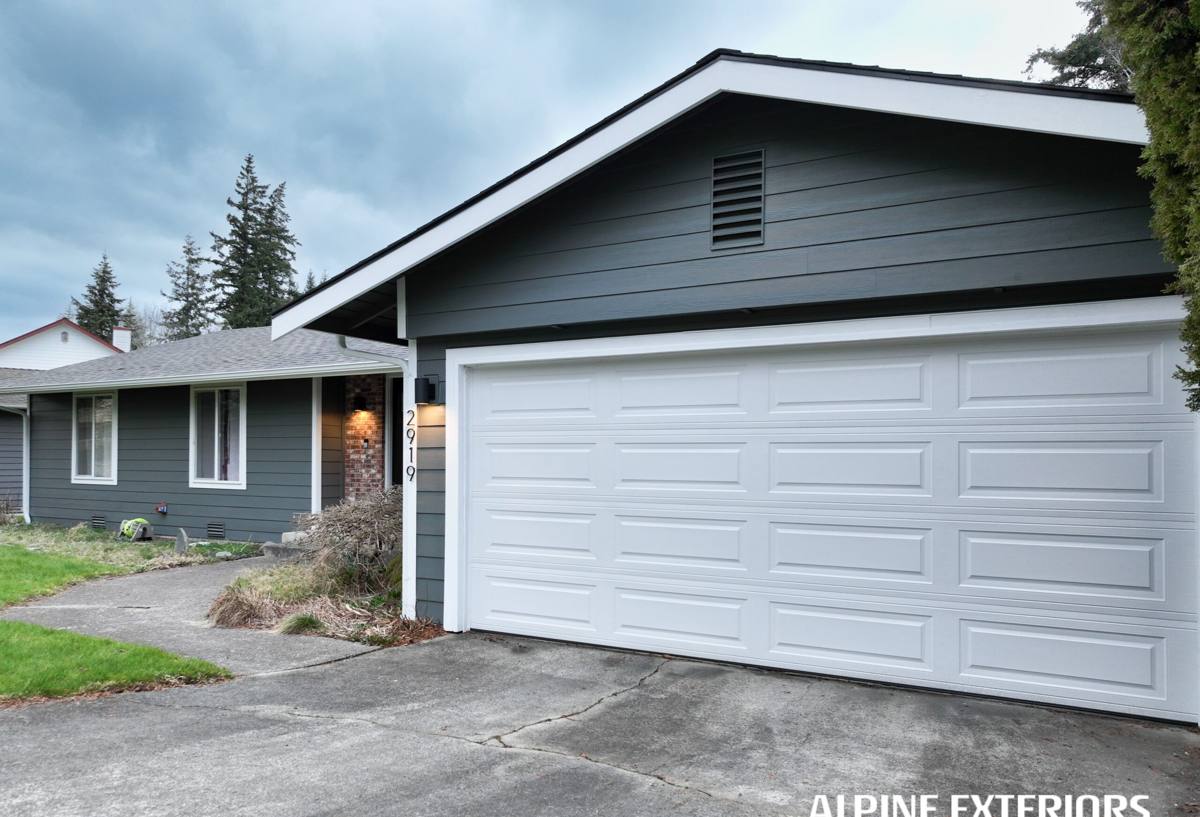
Why James Hardie Is the Right Fit for This Climate
James Hardie fiber cement is made from cement, sand, and cellulose fibers, and it's manufactured specifically in HardieZone HZ5 formulations for climates like ours — hot, humid, and hurricane-exposed. A few properties matter directly for a Downtown Sarasota home:
- Non-combustible — fiber cement doesn't burn, feed, or spread flame the way wood-based or foam-backed sidings can.
- Dimensionally stable — it doesn't expand and contract with humidity swings the way wood does, which keeps seams and paint lines tighter over time.
- Engineered for wind zones — Hardie's HZ5 products and installation specs are built around the wind and moisture exposure common to Gulf Coast counties, including fastening patterns rated for high-wind areas.
- ColorPlus factory finish — a baked-on, multi-coat finish applied under factory conditions, which resists UV fade and salt exposure far better than a field-applied paint job, and carries its own finish warranty separate from the substrate.
This is also why we don't install LP SmartSide, vinyl, Cemplank, Allura, or primed wood siding. Each of those products has legitimate uses, but every one of them asks a homeowner to accept a trade-off — moisture sensitivity, more frequent repainting, seam and impact vulnerability, or a thinner warranty — that we're not willing to put on a home sitting this close to the Gulf. Hardie's combination of non-combustible material, factory finish, and climate-specific engineering is what we're comfortable standing behind here.
What a Correct James Hardie Installation Actually Involves
Fiber cement siding is only as good as the installation behind it. Most siding failures we get called out to inspect aren't a product problem — they're a water-management or fastening problem that shows up years later. A correct job includes:
Water management behind the siding
A weather-resistant barrier (housewrap) goes on first, with all seams and penetrations properly taped and lapped so water that gets past the siding has a path down and out, not into the wall cavity. Every window, door, and penetration gets flashed so water sheds outward at each layer, not into the framing.
Correct clearances and fastening
Hardie's install specs call for specific clearances from roof lines, decks, and grade, and for specific fastener types, spacing, and embedment — tighter patterns are required in high-wind zones like ours. Fasteners driven too shallow, too deep, or too far apart are one of the most common causes of siding that lifts or cracks in a storm.
Joints, caulking, and paint touch-up
Butt joints get treated correctly (not just butted and caulked over), and any field-cut edges get sealed and touched up with Hardie-matched product so the cut edge doesn't wick moisture. This is a small step that gets skipped constantly, and it's usually where premature edge swelling starts.
Trim and penetration details
Every hose bib, light fixture, vent, and piece of trim is a place water can find a way in. Careful crews treat these as the priority details, not an afterthought after the flat wall is done.
Skip any one of these steps and the siding can look fine for a while — the problems it causes tend to surface two, five, or ten years later as trapped moisture, soft spots, or paint failure, well after a rushed crew is gone.
Choosing the Right Hardie Product for a Downtown Sarasota Home
Downtown Sarasota has a mix of housing stock — older bungalow and cottage-style homes, mid-century construction, and newer infill and renovation projects — and the right Hardie profile depends on the home's style and existing trim details.
| Hardie Product | Best For | Notes |
|---|---|---|
| HardiePlank lap siding | Traditional and bungalow-style homes | Most common choice; wide range of exposures and textures to match existing sightlines |
| HardiePanel vertical siding | Modern or mixed-material facades | Often paired with lap siding as an accent on gables or porches |
| HardieShingle | Cottage or Craftsman-style accents | Used selectively for gable ends or dormers rather than whole-house coverage |
| HardieTrim boards | Corners, window/door surrounds, fascia | Matches the siding's durability so trim doesn't fail before the field siding does |
We walk each home and match the profile, exposure, and color to what's already there or what the homeowner wants to change, rather than defaulting to one product for every job.
How Our Process Works
- Inspection and measurement — we look at the existing wall assembly, note any moisture or rot issues under the current siding, and measure for material.
- Product and color selection — homeowner picks the Hardie profile and ColorPlus color; we advise on what performs best given the home's sun exposure.
- Tear-off and wall prep — old siding comes off, sheathing is inspected and repaired as needed, and housewrap goes on correctly before anything else.
- Installation to spec — flashing, fastening, and clearances follow Hardie's published requirements for our wind zone, not shortcuts.
- Final detailing and walkthrough — trim, caulking, and touch-up are finished, and we walk the home with the owner before calling it done.
Why Local Experience in Downtown Sarasota Matters
Installing siding correctly on paper and installing it correctly on a specific street in Sarasota County are two different things. A crew that regularly works this area already knows the county's permitting requirements, the wind-load fastening specs that apply here, and the kind of older wall assemblies common in Downtown Sarasota's housing stock — which matters when you're tearing off existing siding and don't yet know what's underneath it. That familiarity shows up in fewer surprises mid-project and a job that's built to the standard the area actually requires, not a generic one.
What Affects the Cost of a Hardie Siding Job
| Factor | Why It Matters |
|---|---|
| Home size and wall complexity | More corners, gables, and penetrations mean more cutting, flashing, and labor time |
| Condition of existing sheathing | Rot or water damage found during tear-off adds repair work before new siding goes on |
| Product line and profile | Lap, panel, shingle, and trim combinations price differently based on material and labor |
| Color and finish | Factory ColorPlus finishes vs. field-painted options affect both cost and long-term maintenance |
| Access and site conditions | Tight downtown lots, multi-story sections, or limited staging area can add labor time |
We give homeowners a real, itemized number after seeing the home in person — we don't quote blind off a phone call.
Maintaining Hardie Siding in a Salt Air Environment
Hardie siding is low-maintenance, not no-maintenance, especially this close to the Gulf. A simple annual routine keeps it performing the way it's supposed to:
- Rinse the exterior with a garden hose once or twice a year to clear salt residue, especially on sides facing prevailing wind.
- Inspect caulking at trim joints and penetrations annually and re-caulk any cracked or separated seams before rainy season.
- Check fastener heads and trim edges for early rust staining, which can signal a spot needing attention.
- Keep irrigation heads and sprinklers from spraying directly onto siding, which causes localized mineral buildup and staining.
- Trim back vegetation touching the siding so leaves and moisture aren't held against the surface.
None of this is heavy work, but skipping it entirely is how small issues turn into bigger repairs a few years down the line.
If you're planning a siding project in Downtown Sarasota and want a straight answer on what your home actually needs, we're happy to take a look. Fill out the form below for a free, no-pressure estimate.