 Sarasota Siding
 Why Decks in Nokomis Wear Out Faster Than the National Average
A deck in Nokomis lives a harder life than a deck almost anywhere inland. Between the Gulf breeze rolling in off the Intracoastal and open water nearby, the intense Florida sun overhead nearly every day of the year, and the occasional direct hit from a tropical system, the structure under your feet is under constant assault. Most decks aren't destroyed by one dramatic event — they're worn down slowly, year after year, until a repair isn't enough anymore.
Three forces do most of the damage in this part of Sarasota County:
- Salt air corrosion — airborne salt settles on fasteners, joist hangers, and any exposed metal, accelerating rust in ways inland homes never experience.
- Year-round UV exposure — constant sun breaks down wood fibers, dries out sealants, and fades or chalks composite and PVC boards faster than manufacturers' worst-case estimates.
- Wind-driven rain — during storms, rain doesn't just fall, it's pushed sideways and upward into ledger connections, under boards, and into end grain, feeding rot and hidden moisture damage.
When we replace a deck, we're not just installing new boards — we're rebuilding for this specific environment, not the generic conditions most decking products are designed and marketed for.
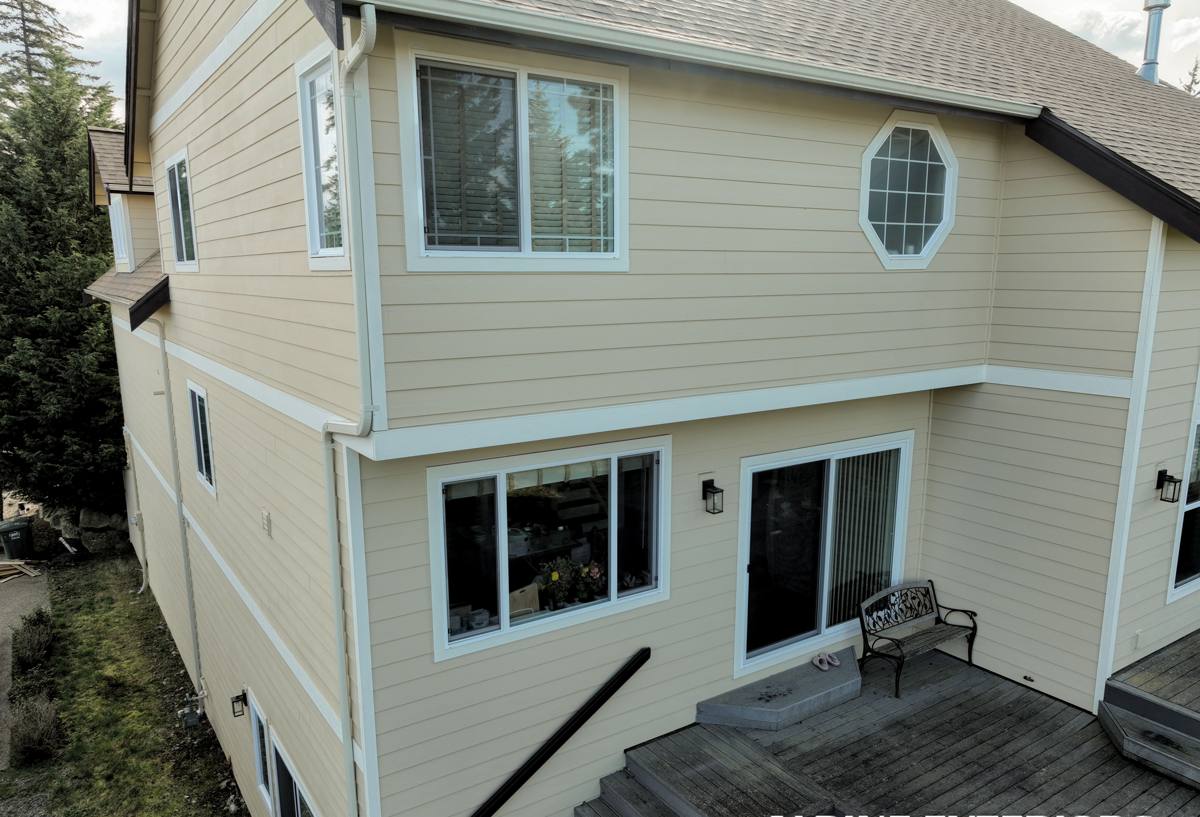
Signs Your Nokomis Deck Needs Replacement, Not Repair
Homeowners often call us wanting a few boards swapped, and sometimes that's genuinely all it takes. But there's a point where patching a deck costs more over time than starting fresh, and it's worth knowing where that line sits.
Repair Is Usually Enough When:
- Only a handful of boards show cupping, splintering, or fading, and the frame underneath is solid.
- Railings are loose but the posts themselves aren't rotted at the base.
- Fasteners are surface-rusted but structurally intact.
Replacement Becomes the Honest Recommendation When:
- The ledger board (where the deck attaches to the house) shows soft spots or water staining on the siding above it.
- Joists flex noticeably when walked on, or you can push a screwdriver into the wood with light pressure.
- Multiple support posts or footings have shifted, cracked, or show signs of moisture wicking up from the ground.
- The deck predates current Florida wind-load and connection requirements — this is common on homes built or decked out before more recent code updates.
That last point matters more in coastal Sarasota County than almost anywhere else. A deck that was "fine" structurally twenty years ago may simply not meet what current code requires for uplift and lateral load resistance today.
Choosing the Right Decking Material for a Nokomis Property
There's no single "best" decking material — there's a best material for your budget, your maintenance appetite, and how close you are to open water. We'll walk through the honest trade-offs rather than push whatever has the best margin.
| Material | Salt Air / Moisture Resistance | UV / Fade Resistance | Maintenance | Typical Lifespan |
|---|---|---|---|---|
| Pressure-Treated Wood | Moderate — needs sealing | Fades and grays without upkeep | Annual cleaning/sealing recommended | 10-15 years |
| Composite Decking | Good — won't rot | Good, though color can fade slightly over years | Occasional washing, no sealing | 20-30 years |
| Capped PVC Decking | Excellent — fully sealed surface | Excellent | Lowest of the group | 25+ years |
| Tropical Hardwoods | Very good naturally | Grays without regular oiling | Higher — oiling every 1-2 years | 20-25 years |
Framing matters just as much as the decking surface, and here we're firmer in our recommendation. In a salt-air environment, we standardize on corrosion-resistant fasteners and connectors rated for coastal exposure, and we favor treated or composite substructure options where ground contact and moisture exposure are a factor. A beautiful deck surface on an undersized or under-protected frame is a problem waiting to resurface in a few years, and we won't build it that way just to save a line item.
A Note on Wood vs. Composite
Wood costs less upfront and has a warmer, natural look many homeowners want. Composite and PVC cost more initially but remove the sealing/staining cycle almost entirely, which matters when UV exposure is this constant. Neither is "wrong" — it's a genuine trade-off between upfront cost and long-term maintenance labor, and we'll lay out real numbers for your specific deck size before you decide.
What a Correct Deck Replacement Actually Involves
A deck replacement done right is a rebuild from the ground up, not a resurfacing job with a new coat of boards on top of old problems. Here's what we check and address on every project:
- Ledger board attachment — properly flashed and lag-bolted or through-bolted into the home's structure, with flashing that actually sheds water away from the house rather than trapping it against the wall.
- Footings and posts — sized and set to current code depth and bearing requirements, checked against Sarasota County's soil and flood-zone considerations where they apply.
- Joist spacing and hardware — spaced for the specific decking material chosen (composite and PVC often need tighter spacing than wood) and connected with coated or stainless hardware suited to salt exposure.
- Railing and guard systems — built to current height and baluster-spacing requirements, with post connections strong enough to resist both everyday use and storm loading.
- Fastener selection — coastal-rated screws and connectors throughout, not standard-grade hardware that will streak and corrode within a couple of seasons.
Skipping any one of these to save time or money is exactly how a deck ends up needing another full replacement in a decade instead of lasting twenty-five years or more.
Permits and Coastal Code Considerations in Sarasota County
Deck replacement in Nokomis isn't a handshake project — it goes through Sarasota County permitting, and for good reason. Coastal Florida building requirements exist specifically because of the wind and water conditions this area sees, and inspectors are checking for the same things that actually matter for a deck's survival: proper attachment, adequate footings, and correct load paths.
We handle the permitting process as part of the job, including scheduling the required inspections. If your property sits near a flood zone or waterway, there may be additional considerations around footing height or setback that we'll flag during the estimate — better to know upfront than discover it mid-project.
Our Deck Replacement Process, Step by Step
Homeowners want to know what's actually going to happen once they hire someone, so here's the straightforward version:
- On-site evaluation — we inspect the existing deck's framing, ledger, footings, and any moisture damage to the house itself, not just the visible surface.
- Material and design conversation — honest walkthrough of decking options, railing styles, and any layout changes you're considering, with real cost ranges for each.
- Permit submission — we prepare and submit the permit package to Sarasota County and schedule required inspections around the work.
- Demolition and disposal — full removal of the old structure, checking framing members and ledger condition as we go in case anything changes the scope.
- Rebuild — new footings, framing, ledger flashing, decking, and railings installed to current code and to the coastal-fastener standard described above.
- Final inspection and walkthrough — county sign-off, then a walkthrough with you covering care and maintenance specific to the material you chose.
What Deck Replacement Typically Costs — and What Drives the Range
Every deck is different, but the factors that move the price are consistent. Here's what typically drives cost up or down on a Nokomis replacement:
| Cost Factor | Impact |
|---|---|
| Decking material (wood vs. composite vs. PVC) | Largest single line item — composite/PVC run higher upfront, lower over time |
| Deck size and shape | More linear footage of railing, stairs, and cuts increases labor |
| Footing and framing condition | Full structural rebuild costs more than a straightforward framing reuse (when framing genuinely qualifies to stay) |
| Height off the ground | Taller decks need more substantial post bracing and stair runs |
| Multi-level or built-in features | Built-in benches, planters, or multiple levels add labor and material |
| Permit and inspection scope | Varies with size and any flood-zone or setback factors on the property |
We'll always give you a written estimate broken down by these factors so you can see exactly where the money goes and where you have real choices to spend more or less.
Protecting Your Investment After Installation
A correctly built deck still needs some ongoing attention, especially in this climate. A short, honest maintenance checklist for Nokomis homeowners:
- Rinse salt residue and debris off the surface every few weeks, more often in windier months.
- Check railing posts and stair connections once or twice a year for any looseness.
- For wood decks, plan on resealing or staining roughly every 1-2 years to keep UV and moisture protection intact.
- For composite and PVC, an occasional wash is usually all that's needed — resist the urge to power-wash aggressively, which can damage the surface texture.
- After any major storm, do a quick visual check of footings and railing connections before heavy use resumes.
Why Hiring a Crew That Already Works in Nokomis Matters
Deck construction isn't the same job in every part of the country, and it isn't even the same job everywhere in Florida. A crew that regularly works Sarasota County knows the local permitting office's expectations, understands which fastener and framing choices actually hold up against salt air and wind-driven rain here, and has already seen how different decking materials perform after a few real Gulf Coast summers — not just what the manufacturer's brochure claims.
That local experience shows up in small decisions that add up: how flashing is detailed at the ledger, which hardware grade gets specified without being asked, and how footings are sized for the soil conditions actually found in this part of the county. It's the difference between a deck that needs attention again in eight years and one that comfortably reaches its full expected lifespan.
If your deck is showing its age or you're simply ready for something built to handle everything Nokomis's climate throws at it, we're happy to take a look and talk through honest options. Reach out for a free, no-pressure estimate using the form below — there's no obligation, just a straight assessment of what your deck actually needs.