 Sarasota Siding
 Osprey's Exterior Walls Work Harder Than Most
Osprey sits on the water between Sarasota and Venice, which means homes here take on a specific combination of punishment that inland Florida siding never has to deal with. You've got salt-laden air rolling in off Little Sarasota Bay and the Gulf, intense UV exposure nearly every day of the year, wind-driven rain that gets pushed sideways into wall assemblies during summer storms, and the ever-present risk of a hurricane putting sustained high winds and flying debris against your exterior. Any one of those is manageable. All four at once, year after year, is what actually determines whether a siding job holds up or starts failing in five to seven years.
This is why we install James Hardie fiber cement exclusively. We don't offer LP SmartSide, vinyl, Cemplank, Allura, or wood siding as alternatives — not because those products don't have a place somewhere, but because we've made a professional judgment that they don't hold up to Sarasota County's coastal conditions as reliably as Hardie does when correctly installed. For a page dedicated to Osprey specifically, it's worth explaining what that actually means for a house in this part of the county.
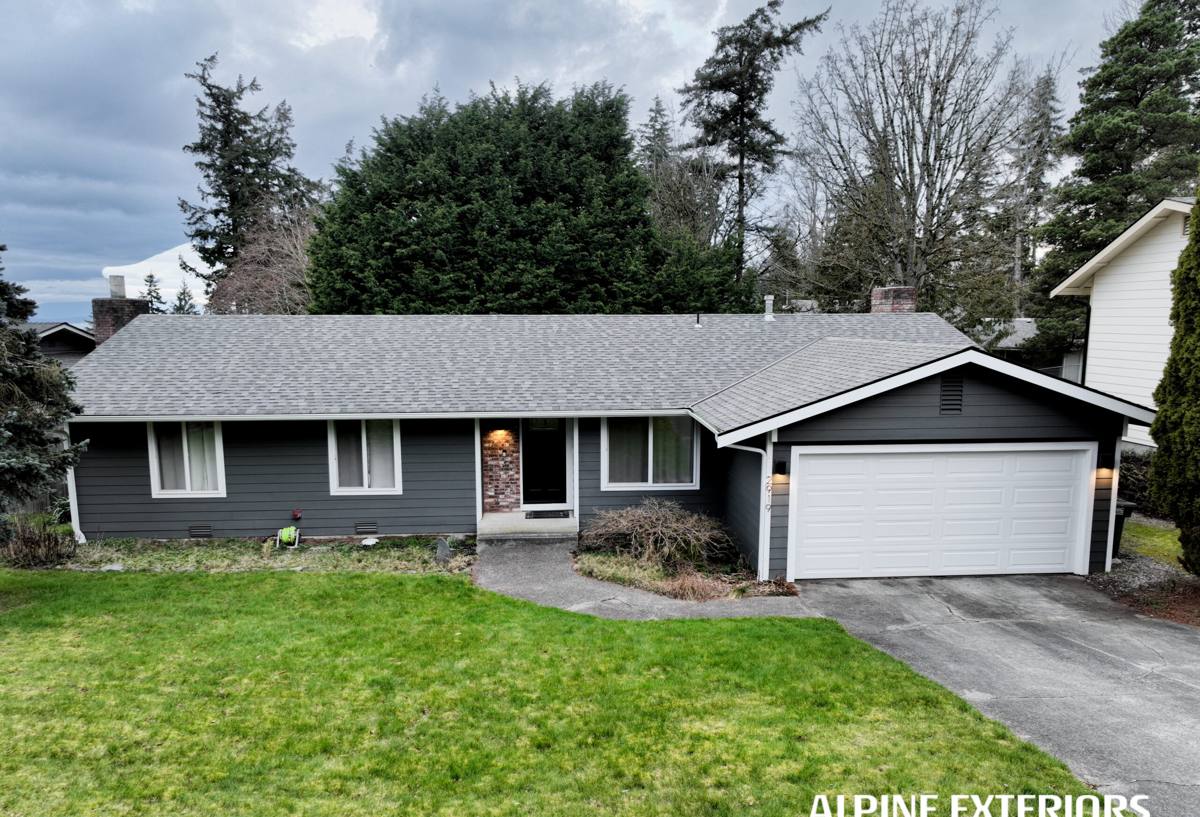
What Osprey's Climate Does to Siding
Salt Air and Humidity
Airborne salt is corrosive and it's persistent — it doesn't just affect homes directly on the water, it travels well inland on Gulf breezes. Combined with Florida's humidity, that salt accelerates the breakdown of anything with exposed wood fiber, weak paint adhesion, or fasteners that aren't rated for coastal exposure. Materials that rely on a factory coating to keep moisture and salt out need that coating to actually stay bonded, year after year, in this environment.
UV Exposure
Central Florida sun is relentless. Paint film on siding chalks, fades, and eventually cracks under sustained UV, and once that film opens up, whatever's underneath is exposed to moisture. A siding product's long-term color and finish performance matters more here than it does in a milder climate.
Wind-Driven Rain
Sarasota County doesn't just get rain — it gets rain pushed horizontally into wall assemblies during thunderstorms and tropical systems. That means the water-resistive barrier behind the siding, the flashing details around windows and penetrations, and the siding's own butt joints and laps all have to work together as a system. A siding product that absorbs and holds moisture, or an installation that leaves gaps for wind-driven water to get behind the cladding, sets up rot and mold problems that show up months later, not immediately.
Hurricane-Force Wind
Even outside a direct hurricane strike, Osprey regularly sees tropical-storm-force gusts. Siding has to stay fastened to the structure under that load, and it has to survive impact from wind-borne debris without shattering or peeling away in sheets.
Why James Hardie Is Engineered for This
James Hardie fiber cement is manufactured to be non-combustible and dimensionally stable, meaning it doesn't expand, contract, warp, or absorb water the way wood-based products can. For our climate specifically, Hardie makes an HZ5 product line engineered for high-humidity, high-moisture regions like ours, with formulations designed to resist the moisture-related failures that show up faster in Gulf Coast conditions than they would in a drier part of the country.
The factory-applied ColorPlus finish is the other half of the equation. It's baked on under controlled conditions rather than field-applied, which gives it better UV and fade resistance than a job-site paint job, and it comes backed by its own finish warranty separate from the substrate warranty. In a market where sun exposure is a daily reality, that finish durability is not a minor spec — it's a big part of why the product holds its look for decades instead of five or six years.
| Factor | Why It Matters in Osprey |
|---|---|
| Non-combustible fiber cement | Resists wildfire embers and doesn't feed a structure fire the way wood-based siding can |
| HZ5 moisture engineering | Built for high-humidity, high-rainfall Gulf Coast conditions rather than a generic national spec |
| Factory ColorPlus finish | Holds color and film integrity under sustained Florida UV far longer than field-applied paint |
| Dimensional stability | Doesn't swell, warp, or cup with humidity swings between wet season and dry season |
| Transferable warranty | Backs the material through ownership changes, which matters in an active resale market like Osprey |
What a Correct Installation Actually Involves
Hardie's performance is only as good as the installation behind it. Most of the siding failures we get called out to inspect in this area aren't product failures — they're installation shortcuts that let water behind the cladding. A correct job on an Osprey home includes:
- A properly lapped and sealed water-resistive barrier installed before any siding goes up
- Correct starter strip placement so the bottom course sheds water the way the system is designed to
- Manufacturer-specified clearance between the siding's bottom edge and the ground, roof, deck, or patio surfaces
- Flashing integrated at every window, door, and penetration — not just caulk covering a gap
- Fastener type, spacing, and placement matched to Hardie's published install specs for our wind zone
- Properly gapped and sealed butt joints, using the right sealant for a coastal climate rather than a generic caulk
- Field-touch-up paint on cut edges done with Hardie-matched, exterior-grade product, not skipped
None of that is exotic — it's published in Hardie's own installation manual. But it takes time and attention to detail that gets skipped by crews trying to move fast, and once the siding is up, most of those shortcuts are invisible until moisture damage shows up behind the wall years later.
Our Process for an Osprey Project
Assessment and Tear-Off
We start with a walk of the exterior to check the condition of the existing siding, sheathing, and any areas around windows or roof-to-wall transitions where past water intrusion may have already caused damage. If there's rot or compromised sheathing under the old siding, that gets addressed before anything new goes up — covering damaged substrate with new siding just hides the problem.
Weather Barrier and Flashing
Once the wall is sound, we install a new water-resistive barrier and integrate flashing at every window, door, and penetration point. This is the step that determines whether wind-driven rain stays out of your walls, and it's the step that's easiest to rush — we don't.
Installation to Spec
Siding goes up following James Hardie's published fastening and clearance specifications for our wind exposure, with attention to butt joint sealing and factory-cut edge treatment.
Final Inspection
We walk the finished job looking specifically for anything that could let water behind the siding — caulk lines, flashing laps, clearances — before calling the project complete.
Why Hiring a Crew That Works Osprey Already Matters
Sarasota County's permitting and inspection requirements, along with the wind-load standards built into the Florida Building Code for this part of the coast, aren't identical to what a crew working further inland or in another state deals with day to day. A contractor who regularly pulls permits and schedules inspections in this county already knows the local process, has a working relationship with the inspectors, and understands what documentation is expected — that keeps a project moving instead of stalling on paperwork.
Local experience also means knowing how buildings in this specific coastal microclimate actually age. A crew that's been back to check on its own work in Osprey and the surrounding barrier island and mainland communities has direct feedback on which details hold up to salt air and wind-driven rain over years, not just guesses based on a manufacturer spec sheet.
Living With Hardie Siding in a Salt-Air Environment
James Hardie siding, correctly installed, is low-maintenance — but "low-maintenance" doesn't mean "no maintenance," especially this close to the water. A simple annual routine keeps it performing:
- Rinse the exterior periodically with a garden hose to clear accumulated salt residue, especially on sides facing the water or prevailing wind
- Inspect caulk lines around windows, doors, and trim once a year for cracking or separation
- Keep irrigation heads and sprinklers from spraying directly onto the siding, which accelerates mineral buildup
- Trim back landscaping that holds moisture against the wall or blocks airflow and sun exposure
- After any named storm, walk the exterior to check for impact damage, loose fasteners, or lifted caulk before small issues become entry points for water
What Affects the Cost of a Project Like This
| Cost Factor | Why It Varies |
|---|---|
| Substrate condition | Rot or damaged sheathing found during tear-off adds repair scope before new siding goes on |
| Home size and wall complexity | More corners, gables, and window/door openings mean more flashing and trim work |
| Product line and profile | HardiePlank lap, HardiePanel vertical, and HardieShingle each have different material and labor needs |
| Existing siding removal | Full tear-off of old vinyl, wood, or damaged siding takes more labor than a bare-wall install |
| Trim and accent work | HardieTrim boards and detail work around windows, corners, and fascia add to scope |
Every Osprey property is different, and the only way to give you real numbers is to look at your home in person and measure the actual scope of work.
If you're weighing a siding project for your Osprey home, we're happy to come take a look, walk you through what your specific house needs, and put together a free, no-pressure estimate — no obligation, no pressure to decide on the spot.