 Sarasota Siding
 Southside Village Homes Face a Tougher Climate Than Most Siding Is Built For
Southside Village sits close enough to Sarasota Bay and the Gulf that homes here take on the full range of what Southwest Florida weather can deliver: tropical-storm and hurricane-force winds, months of intense, near-vertical summer UV, wind-driven rain that gets pushed sideways into wall assemblies, and a steady dose of salt air that never really lets up. Older homes in established Sarasota neighborhoods like this one were often sided with whatever was standard at the time — vinyl, aluminum, or painted wood — and it shows. Chalking, fading, soft spots at the bottom courses, and siding that's pulled away from fastening points are common findings on our walk-throughs in this part of Sarasota County.
This page is specifically about James Hardie fiber cement siding for homes in Southside Village — what the local climate demands from a siding system, what a correct installation actually involves, and why using a crew that already works in this neighborhood is worth something real, not just a sales line.
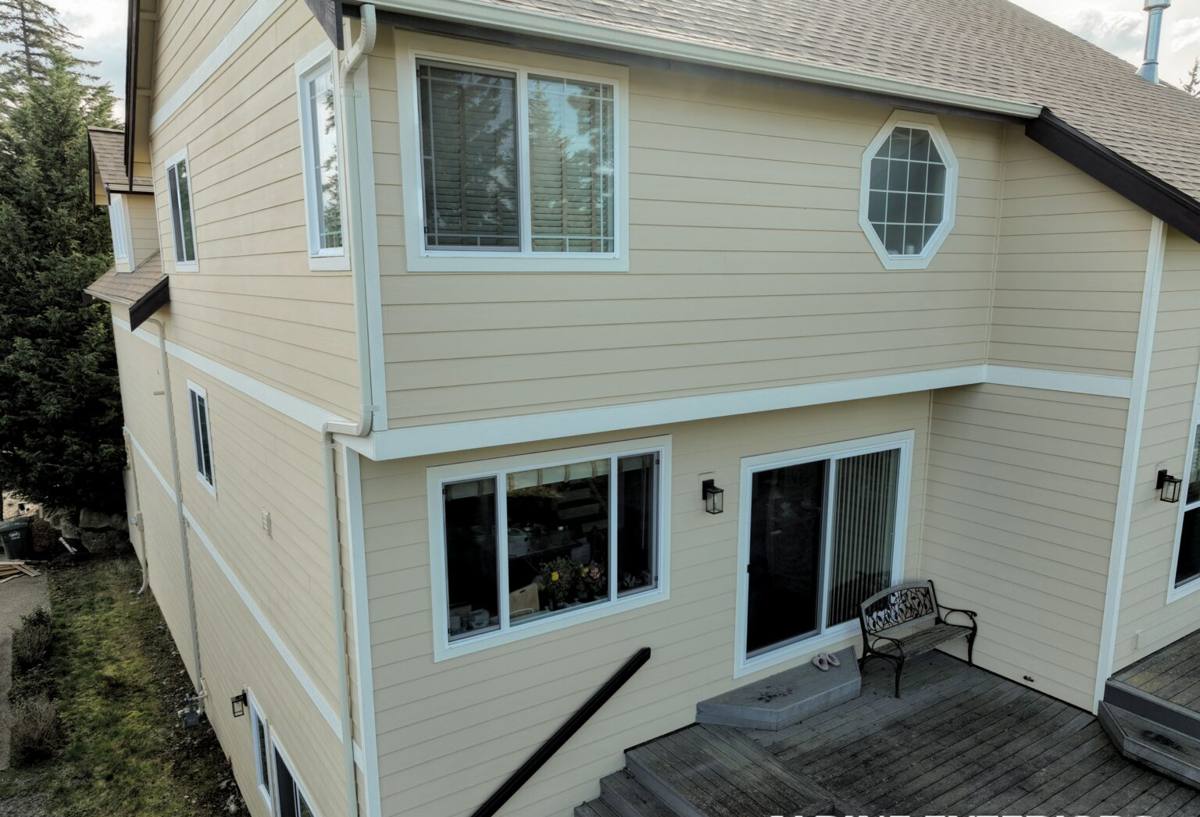
What Sarasota's Climate Actually Does to a Wall System
Wind
Sarasota County sits in a high-wind design zone. Every siding component — the panel itself, the fastener pattern, the starter strip, the corners — has to be installed to a fastening schedule that accounts for uplift and lateral pressure, not just gravity. Siding that's "close enough" on fastener spacing can look fine for years and then fail all at once during a tropical storm, because wind doesn't test a wall gradually — it tests it in one bad afternoon.
UV and heat
Southside Village gets long stretches of direct, high-angle sun for most of the year. Field-applied paint on wood or fiber cement breaks down under that kind of exposure faster than most homeowners expect, especially on south- and west-facing walls. Color that's baked on in a factory, under controlled conditions, holds up differently than color applied on-site with a brush or sprayer.
Salt air and moisture
Proximity to the bay means airborne salt settles on exterior surfaces continuously, not just after a storm. Combined with Sarasota's humidity and frequent wind-driven rain, that salt accelerates corrosion of fasteners and trim metal, and it speeds up the breakdown of siding materials that aren't dimensionally stable when they take on moisture.
Why We Install Only James Hardie — Not Vinyl, LP, or Other Fiber Cement Brands
We standardized on James Hardie's HZ5 product line for every home we side, including in Southside Village, and we don't install vinyl siding, LP SmartSide, or other fiber cement brands. That's a deliberate call, not a marketing preference. Vinyl expands, contracts, and can deform in sustained high heat, and its seams and J-channels give wind-driven rain more paths into the wall. Engineered wood products like LP SmartSide use wood strand cores that are vulnerable at cut edges and fastener penetrations if moisture gets in and isn't caught early — a real risk in a climate where wind-driven rain is routine. Other fiber cement brands may perform reasonably, but we've chosen to standardize on one system so our crews install it the same correct way on every job, and so the warranty coverage is consistent and well understood. Hardie's fiber cement is non-combustible, dimensionally stable in heat and humidity, and available in the HZ5 formulation engineered specifically for hot, humid climates like ours.
What a Correct James Hardie Installation Involves
Prep and moisture management first
The siding is the last thing that goes on, not the first thing that matters. Correct installation starts with checking the wall sheathing for existing damage, installing or repairing a code-compliant weather-resistant barrier, and getting flashing right at every window, door, and roof-to-wall intersection. In a neighborhood like Southside Village, where wind-driven rain hits walls at an angle instead of falling straight down, flashing details at horizontal joints and penetrations matter more than they would in a drier, calmer climate.
Clearances and fastening
James Hardie's installation instructions specify minimum clearances from grade, roofing, and decks, plus a fastener pattern and type matched to the local wind zone. Skipping these — nailing too close to panel edges, using the wrong fastener, or closing up clearances during a deck or landscaping project after the fact — is the single most common cause of premature siding failure we see on inspections.
Caulking and joint treatment
Butt joints, corners, and trim intersections need to be treated exactly as specified, with the right sealant and the right gap. Done wrong, these become the first points of water intrusion during the county's rainy season.
Finish
We install Hardie's ColorPlus factory-finished products wherever possible, which bakes the color onto the board under controlled conditions before it ever reaches the site. That finish is engineered to resist the UV load and humidity cycling that Sarasota homes see year-round, and it comes with its own finish warranty separate from the substrate warranty.
Choosing the Right Hardie Product Line for a Southside Village Home
Southside Village has a mix of home ages and styles, from older Florida cottages to more recently updated properties. The right Hardie profile depends on the home's existing architecture and the look the owner wants — not a one-size answer.
| Hardie Product | Best For | Look |
|---|---|---|
| HardiePlank lap siding | Traditional and cottage-style homes, the most common choice in older Sarasota neighborhoods | Classic horizontal lap, various exposures and textures |
| HardiePanel vertical siding | Accent walls, gables, or modern updates | Clean vertical lines, often paired with board and batten |
| HardieShingle siding | Coastal or cottage aesthetics, accent gables | Staggered or straight-edge shingle profile |
| Board and batten | Homes wanting a more custom or Florida vernacular look | Wide vertical boards with raised battens over joints |
All of these are available in the HZ5 formulation, which is what we spec for Sarasota County regardless of which profile a homeowner chooses.
Our Process for a Southside Village Siding Job
- On-site assessment of the existing siding, sheathing condition, and any moisture damage already present
- Written scope and product selection, including profile, color, and trim details
- Permitting through the applicable local building department, sized to the scope of work
- Removal of old siding and inspection of the sheathing underneath before anything new goes up
- Weather barrier and flashing repair or replacement where needed
- Hardie installation to manufacturer fastening and clearance specs for our wind zone
- Final walkthrough and cleanup
Nothing on that list is unique to us — it's what a correct installation requires anywhere in Sarasota County. What changes house to house is what we find once the old siding comes off, which is exactly why the assessment step matters before any price gets finalized.
What Drives Cost on a Southside Village Siding Project
| Factor | Why It Matters |
|---|---|
| Sheathing condition | Rot or damage found after tear-off requires repair before new siding can go on |
| Home size and wall complexity | More corners, gables, and trim details mean more labor and material cuts |
| Product line and profile | Lap, panel, shingle, and board-and-batten carry different material and labor costs |
| Color | Factory ColorPlus finishes vs. field-applied paint affect both cost and long-term durability |
| Access and site conditions | Mature landscaping, fencing, or tight lot lines common in older neighborhoods can add labor time |
We give a firm, written price after the on-site assessment — not a phone estimate — because the sheathing condition alone can change the scope significantly once the old siding is off.
Why a Crew That Already Works in Southside Village Matters
A crew that's already worked this neighborhood knows the general age and construction patterns of the homes here, has already dealt with the local permitting process, and understands the wind zone requirements that apply in Sarasota County without needing to look them up mid-project. That familiarity shows up in small but real ways: fewer surprises during tear-off, fewer permitting delays, and a crew that isn't learning the neighborhood's quirks on the homeowner's dime. It also means we're a known, findable name if a warranty question comes up five or ten years down the road — not a company that did one job and moved on.
Maintaining Hardie Siding in a Sarasota Coastal Climate
- Rinse siding periodically to remove salt residue and airborne grime, especially on walls facing open water or prevailing wind
- Keep irrigation heads and sprinklers from spraying directly on siding — constant wetting at the same spot accelerates wear
- Inspect caulking at joints and trim yearly, and re-caulk any cracked or separated seams promptly
- Keep mulch, soil, and landscaping from building up against the bottom edge of the siding
- Have gutters and downspouts checked so water isn't sheeting down wall sections during heavy rain
- Address any impact damage or fastener pops quickly rather than waiting for the next storm season
None of this is difficult, but it's the difference between siding that looks and performs the same at year fifteen and siding that starts showing problems at year five.
If you're in Southside Village and thinking about a siding replacement, we're happy to come take a look and give you a straight, no-pressure assessment of what your home actually needs. The estimate is free, and there's no obligation — just an honest look at your walls and what it would take to do the job right.