 Sarasota Siding
 Why Siding in The Meadows Has to Work Harder
Homes in The Meadows sit under one of the most established tree canopies in Sarasota, which is a real asset for shade and curb appeal, but it also means siding here deals with more shifting shade-to-sun exposure, more organic debris, and more humidity trapped against exterior walls than a home on open land. Add in the conditions every house in the region faces — hurricane-force wind gusts, intense year-round UV, wind-driven rain that gets pushed sideways into wall assemblies, and salt air drifting in off the Gulf — and you have a climate that is genuinely hard on exterior materials.
Sarasota County building requirements reflect this. Wind load and water-intrusion standards here are stricter than in most of the country, and for good reason: a siding job that would hold up fine in a mild climate can fail within a few years on the Suncoast. For a mature, established community like The Meadows, where homeowners tend to plan on staying put and want the neighborhood's look to hold up over time, the siding decision isn't cosmetic — it's structural protection for the house underneath it.
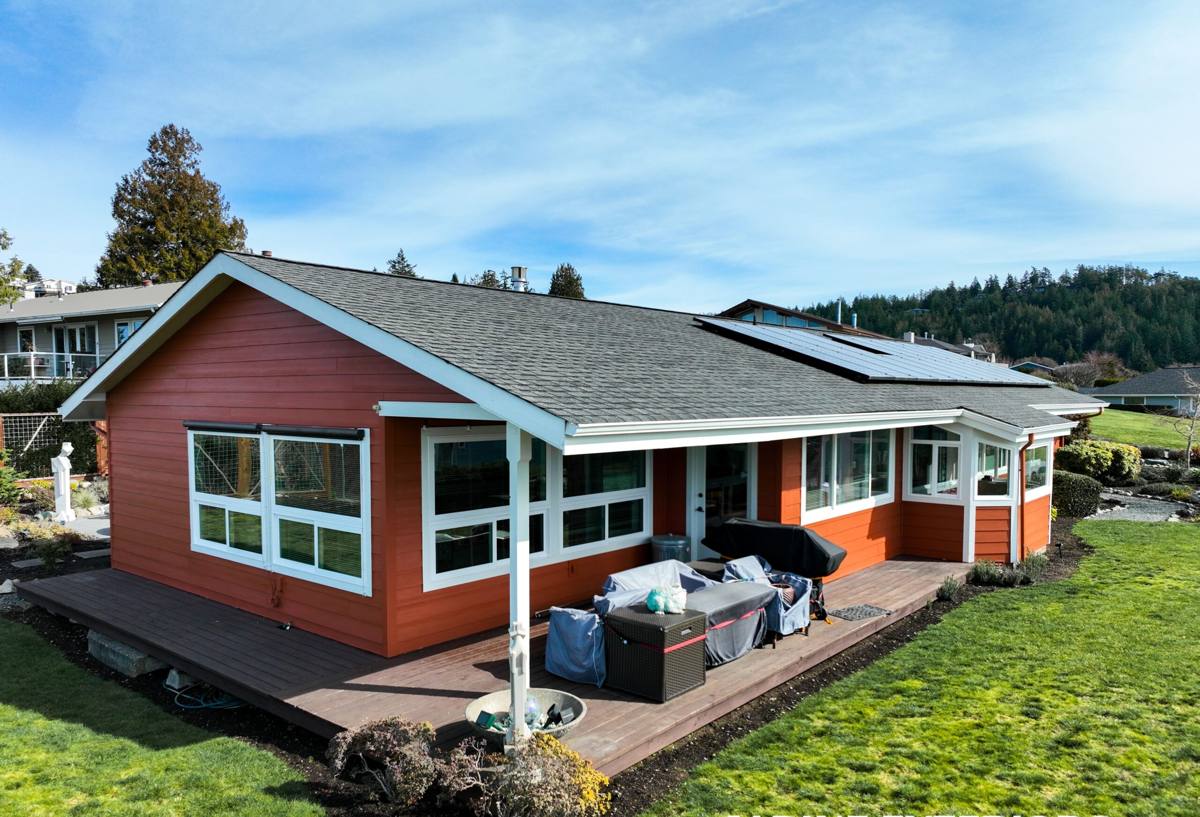
What Correct Siding Installation Actually Involves
Siding failures in this climate are rarely about the siding material sitting on the wall — they're about what's happening behind it. A siding job can look perfect on install day and still fail in three years if the details underneath are wrong. Correct installation means getting the whole wall assembly right, not just the visible surface.
Moisture Management
Every wall needs a continuous weather-resistant barrier behind the siding, properly lapped so water is always directed outward and downward, never inward. Flashing around windows, doors, and any wall penetration has to be integrated with that barrier correctly — flashing that's an afterthought is one of the most common causes of hidden rot behind siding in this region. Wind-driven rain doesn't fall straight down here; it gets forced sideways and upward under eaves and around corners, so gaps that would be harmless in a calmer climate become entry points in a Sarasota storm.
Fastening and Wind Resistance
Fastener type, spacing, and placement all matter more in a hurricane-wind zone than most homeowners realize. Under-fastened or improperly spaced siding can lift or fail well before wind speeds reach the rated capacity of the material itself, because the failure point becomes the installation, not the product. Correct fastening schedules for high-wind zones aren't optional extras — they're what the product is actually rated for when installed to manufacturer spec.
Trim and Joint Detailing
Every seam, corner, and joint is a potential water entry point. Proper caulking, gapping, and trim detailing keep water moving off the wall instead of pooling or wicking into seams. Sloppy joint work is often invisible for a year or two and then shows up as staining, soft trim, or paint failure right at the seams.
Why This Company Installs Only James Hardie Fiber Cement
We made a decision early on to install one siding system — James Hardie fiber cement — rather than offer a menu of products at different price points. Fiber cement doesn't absorb water the way wood-based siding does, doesn't expand and contract with humidity swings the way vinyl does in direct sun, and it's non-combustible, which matters in a state where wildfire and lightning-strike risk are real considerations for insurers. James Hardie's HZ product lines are engineered specifically for climate zones like ours, and the ColorPlus factory finish is baked on under controlled conditions rather than field-applied, which gives it far better UV and fade resistance than a job-site paint job exposed to Florida sun from day one.
None of that means other products are without merit — vinyl is inexpensive and easy to install, and engineered wood siding has real fans. But after years of doing exterior work in this climate, we don't think those trade-offs hold up well against sustained Gulf Coast sun, salt air, and wind-driven rain over a 15-20 year ownership horizon, so we standardized on the product we trust to still look right a decade from now.
How James Hardie Fiber Cement Compares
| Factor | Vinyl Siding | Engineered Wood (e.g. LP SmartSide) | James Hardie Fiber Cement |
|---|---|---|---|
| Wind resistance | Can deform or blow off in sustained high winds if fasteners loosen | Rated well when new; performance depends heavily on moisture condition | Engineered and rated for high-wind zones when installed to spec |
| Moisture behavior | Doesn't absorb water, but can trap moisture behind panels | Wood-based core can swell, delaminate, or rot if water gets in | Cement-based composition doesn't rot or swell with moisture |
| UV/color retention | Can fade and chalk under intense sustained sun | Field-applied or factory paint, variable long-term fade resistance | Factory-baked ColorPlus finish built for extended UV exposure |
| Salt air durability | Generally stable but can become brittle over time | More vulnerable if coating is compromised | Cement composition holds up well against salt exposure |
| Combustibility | Combustible, can melt or warp near heat sources | Combustible | Non-combustible |
Our Process for a The Meadows Siding Installation
Every project follows the same disciplined sequence, whether it's a full re-side or a partial replacement after storm damage.
- On-site assessment: We walk the entire exterior, checking existing sheathing condition, flashing, window and door transitions, and any signs of prior moisture intrusion before quoting anything.
- Tear-off and substrate inspection: Once old siding is removed, we inspect the sheathing itself. Soft or water-damaged sheathing gets repaired or replaced before anything new goes up — covering a compromised substrate just hides a problem for later.
- Weather barrier installation: A continuous, properly lapped weather-resistant barrier goes on before any siding, with flashing integrated at every penetration.
- James Hardie installation to manufacturer spec: Fastening schedule, clearances, and joint treatment follow Hardie's published requirements for our wind zone — this is also what keeps the manufacturer's warranty intact.
- Trim, caulking, and final detailing: Every seam and transition gets finished properly, not just caulked over as a last step.
- Final walkthrough: We review the finished work with the homeowner before calling the job complete.
Why Local Experience in The Meadows Matters
A siding crew that has already worked in established Sarasota communities like The Meadows understands things a crew from outside the area doesn't have to think about: the way mature tree canopy affects drying time and organic debris buildup on walls, how long-standing HOA architectural review processes typically work for exterior changes, and the realistic timeline for permitting through Sarasota County. None of that replaces doing the installation correctly, but it does mean fewer surprises, fewer delays, and a smoother process from quote to finished project. If your community has specific architectural guidelines on siding profile, color, or trim, that's worth confirming with your HOA early — we're happy to work within whatever those requirements are.
Maintenance After Installation
James Hardie fiber cement is genuinely low-maintenance compared to the alternatives, but "low-maintenance" isn't "no-maintenance" in this climate. A simple annual routine keeps it performing the way it's supposed to:
- Rinse siding periodically to remove salt residue, pollen, and organic buildup, especially on shaded or tree-covered walls
- Inspect caulking at joints, window trim, and corners once a year and reseal anything that's cracked or pulled away
- Trim back vegetation and tree limbs that stay in contact with or overhang the siding
- Watch for soft spots, staining, or bubbling paint near the ground line, roofline, or window trim, which can indicate a moisture issue worth checking
- Repaint only with products compatible with ColorPlus finishes if a refresh is ever needed, and only after confirming it's actually necessary
Signs Your Siding May Already Need Attention
Not every siding problem is obvious from the street. Before scheduling a full replacement, it's worth knowing what to look for:
- Visible cracking, warping, or buckling panels, especially after storm season
- Soft or spongy areas when pressed gently, which often points to moisture behind the surface
- Persistent staining or streaking that doesn't clean off, particularly near seams
- Paint that's peeling, bubbling, or fading unevenly across the same wall
- Rising energy bills that could point to a compromised weather barrier letting in outside air
- Visible gaps at trim, corners, or window and door transitions
If you're noticing any of these on a home in The Meadows, it's worth a professional look before the underlying sheathing takes on more damage.
Get a Straight Answer on Your Siding
Every home is a little different, and the right scope of work depends on what's actually happening behind your current siding, not just what it looks like from the curb. We're happy to come take a look, walk you through what we find, and give you a clear, no-pressure estimate for a James Hardie installation built for what The Meadows' climate actually demands. Fill out the form below to get started.