 Sarasota Siding
 Why Decks in University Park Face Tougher Conditions Than a Typical Backyard Project
University Park sits inland from the coast but well within the reach of everything Sarasota County's climate throws at an exterior structure. Salt-laden air still travels inland on prevailing winds, afternoon UV exposure runs near-constant for most of the year, and summer storms bring wind-driven rain that finds every unsealed seam and fastener hole. A deck built with generic, big-box assumptions about lumber and hardware tends to show its age here in years, not decades — cupped boards, rust-streaked fasteners, and railings that loosen at the posts.
A deck built correctly for this area has to account for three things at once: structural loads from hurricane-force wind gusts, moisture cycling from both rain and the humidity that never fully lets up, and slow material degradation from UV and airborne salt. None of those are exotic problems, but they do require different choices at nearly every stage — footing depth, fastener grade, board spacing, and finish schedule — than a deck built somewhere with a milder, drier climate.
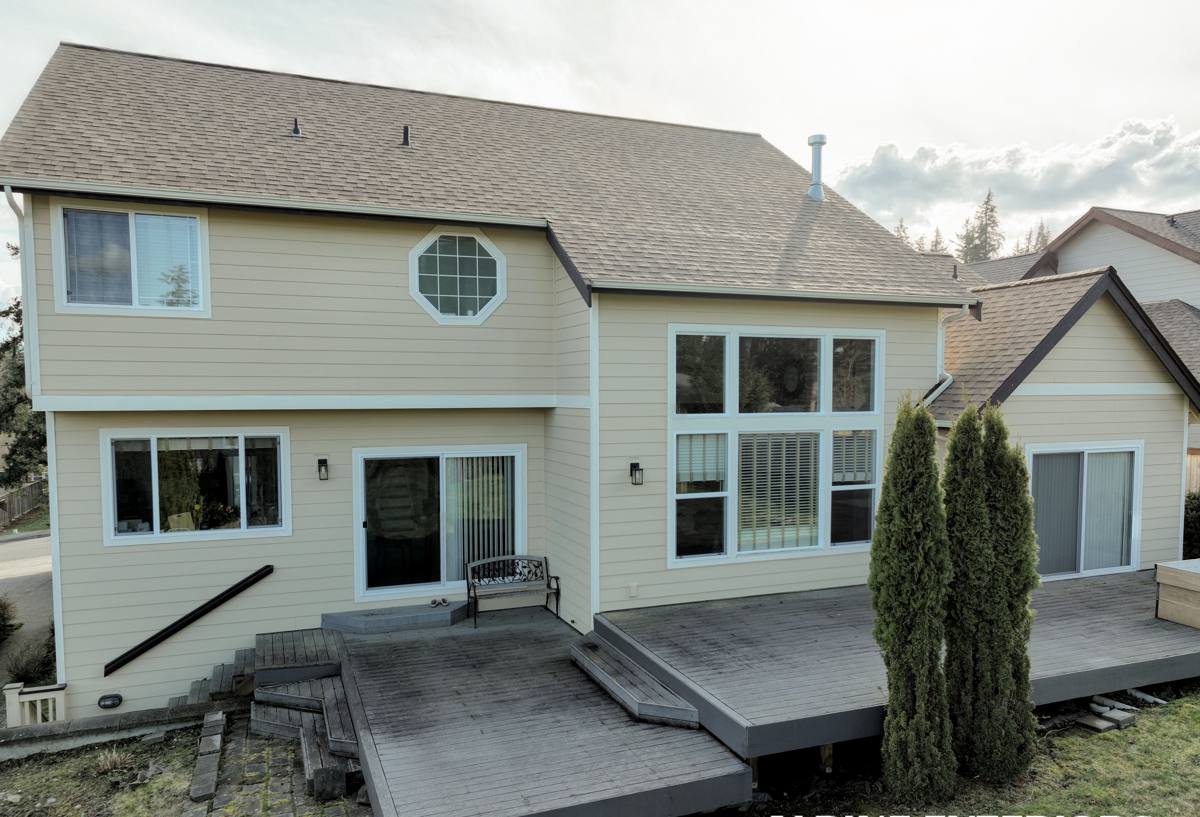
What University Park Homes Actually Need From a Deck
Structural Framing Built for Wind, Not Just Weight
Deck framing has to resist uplift and lateral wind load, not just carry the weight of furniture and foot traffic. That means properly sized and spaced joists, hurricane ties or approved structural connectors at ledger and beam connections, and post bases rated for wind uplift rather than just gravity load. In University Park's sandy Florida soils, footing depth and diameter also matter more than homeowners usually expect — undersized footings are one of the most common reasons an older deck develops a wobble or a soft spot near the stairs.
Decking Material Suited to Sun, Rain, and Salt Air Together
No decking material is immune to Florida's climate, but some hold up with far less maintenance than others. The table below reflects how the common options actually perform under Sarasota-area sun, humidity, and salt exposure — not just their price tag.
| Material | UV / Fade Resistance | Moisture Behavior | Maintenance |
|---|---|---|---|
| Pressure-treated pine | Fades and grays without regular sealing | Prone to cupping and splitting if not sealed on all sides | Annual cleaning and re-sealing recommended |
| Tropical hardwoods (e.g., ipe) | Very good, still grays over time without oiling | Dense and stable, low water absorption | Periodic oiling to maintain color; low structural upkeep |
| Capped composite | Good to very good, brand-dependent | Won't rot, but can trap heat and moisture at fastener points if not detailed properly | Low — occasional washing |
| Uncapped composite | Fair — more prone to fading and moisture absorption at cut edges | More susceptible to swelling than capped composite | Moderate — needs cleaning and occasional sealing at cut ends |
Fasteners and Hardware That Won't Corrode
Salt air accelerates corrosion on standard fasteners faster than most homeowners expect, even well inland from the water. We use stainless steel or heavy hot-dip galvanized fasteners and connectors rated for coastal exposure, not the mill-standard hardware that ships with many lumber packages. A deck is only as strong as its weakest connection, and on a coastal-climate deck that connection is almost always a fastener, not the wood or composite itself.
Permits, Codes, and HOA Review in the University Park Area
Deck additions in Sarasota County require a building permit, and the structural requirements — footing size, ledger attachment, guard and stair rail heights, baluster spacing — are set by the Florida Building Code's wind and structural provisions, not just local preference. If your property is in an HOA-governed community like University Park, there's usually also an architectural review step before construction can begin, covering things like footprint, materials, and railing style. We handle the permit submission and can prepare the drawings an HOA committee typically asks for, so you're not managing two separate approval processes on your own.
How We Build a Deck for This Climate
- Site and structural assessment. We evaluate soil conditions, drainage, existing ledger attachment points (if tying into the house), and sun/wind exposure specific to your lot.
- Design and material selection. We walk through decking, railing, and fastener options with honest trade-offs — upfront cost versus long-term maintenance — rather than steering you toward whatever is easiest to install.
- Permit drawings and HOA documentation. We prepare what Sarasota County requires and what your community's architectural review committee typically asks to see.
- Footings and framing. Footings are sized and set to local code and soil conditions, with structural connectors at every load path — not just nailed lumber.
- Flashing and moisture detailing. Ledger boards, posts, and any house connection points get properly flashed so wind-driven rain can't work its way into the structure over time.
- Decking, railing, and finish. Boards are installed with the fastening pattern and spacing appropriate to the material's expansion behavior in Florida heat and humidity.
- Final walkthrough. We go over the finished deck with you, including what maintenance it actually needs — and what it doesn't.
Common Problems We Find on Older or Poorly Built Decks
When we're called out to repair or replace a deck in the University Park area, a handful of issues come up again and again:
- Ledger boards attached without proper flashing, leading to hidden moisture damage against the house band board
- Standard (non-coated) fasteners that have rusted, bled, and weakened at the head
- Footings that are too shallow or too narrow for the actual load and soil type
- Composite decking installed without the gapping needed for thermal expansion, causing buckling
- Railing posts attached only through the rim joist with no blocking, creating a wobble over time
- Untreated cut ends on pressure-treated lumber, which invites rot from the inside out
Most of these are invisible at first glance and only show up as a problem years later — which is exactly why the build quality matters more than the finished appearance on day one.
Maintaining a Deck in Sarasota County's Climate
Even a well-built deck needs some seasonal attention to hold up against sun, rain, and salt air over the long run. A simple annual routine covers most of it:
- Sweep debris and organic buildup out of board gaps, especially under trees or near landscaping
- Check railing posts and stair stringers for any looseness at the connection points
- Inspect fasteners for early rust streaking, which signals it's time to address that hardware
- Re-seal or re-oil wood decking on the schedule appropriate to that species — this varies significantly by material
- Confirm gutters or downspouts aren't dumping extra water directly onto or under the deck
- Look at ledger board flashing after major storms for any signs of water intrusion at the house connection
What Drives Deck Building Cost in This Area
Every deck is different, but the same handful of factors move the price up or down on most projects we quote in and around University Park:
| Cost Factor | Why It Matters |
|---|---|
| Decking material choice | Pressure-treated lumber costs less upfront; hardwoods and composites cost more but need less long-term upkeep |
| Deck height and stair requirements | Taller decks need deeper footings, more framing, and code-compliant stair and guard systems |
| Footing depth and soil conditions | Sandy or variable soil sometimes requires deeper or larger footings to meet structural requirements |
| Railing style and material | Aluminum, cable, and glass systems cost more than standard wood or composite balusters |
| Ledger attachment complexity | Tying into an existing structure properly, with correct flashing, takes more time than a freestanding deck |
| HOA-driven design requirements | Community architectural standards can dictate materials, colors, or footprint, affecting scope |
We provide a written estimate that breaks these factors down for your specific property, rather than a flat per-square-foot number that doesn't reflect what your lot and design actually require.
Why It Matters to Hire a Crew That Already Works in University Park
A crew that regularly works in University Park and similar Sarasota-area communities already knows the local permitting process, has a working sense of common HOA architectural requirements, and has seen firsthand how PT lumber, composites, and standard hardware actually hold up locally versus how they perform on paper. That local track record shows up in fewer surprises during permitting, fewer callbacks for loose railings or rusted hardware down the road, and a deck that's built to the conditions it will actually face — not a generic spec sheet.
If you're planning a new deck or replacing one that's showing its age, we're happy to take a look and put together a free, no-pressure estimate. Use the form below to get started.