 Sarasota Siding
 Siding in Venice Has to Work Harder Than Siding Almost Anywhere Else
Venice sits on the Sarasota County Gulf Coast, much of it on a barrier island and mainland neighborhoods split by the Intracoastal Waterway. That location is a big part of why homes here look the way they do — and it's also why siding fails here faster than it does inland. Homes in Venice deal with hurricane-force wind loads, sustained wind-driven rain that pushes water sideways into wall assemblies, some of the most intense year-round UV exposure in the continental United States, and salt-laden air moving in off the Gulf. Individually, any one of those would be a tough environment for exterior cladding. Together, they're the reason so many siding products that perform fine in Ohio or Georgia start failing within a few years down here.
This page is about one thing specifically: what it takes to install fiber cement siding correctly on a Venice home, and why the climate factors above should drive nearly every decision in that process — from the product line you choose to how the crew flashes a window opening.
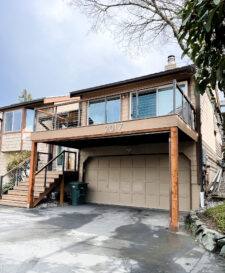
Why We Only Install James Hardie in This Market
We install James Hardie fiber cement siding exclusively. We don't install vinyl, LP SmartSide, Cemplank, Allura, or primed wood siding, and we're upfront about why: in a coastal Gulf climate like Venice's, those products carry trade-offs we're not willing to put our name behind. That's not a knock on every homeowner who has one of those products on their home today — it's a statement about our own standard for what we'll warranty and stand behind.
What Hardie Gets Right for This Climate
- Fiber cement is non-combustible, which matters in a state where lightning-driven brush fires happen and insurers increasingly factor exterior materials into premiums.
- It doesn't rot, delaminate from moisture the way engineered wood products can, or become brittle and crack the way some vinyl does after years of intense UV exposure.
- James Hardie's ColorPlus factory finish is baked on and formulated with UV-cured resins specifically to resist the fading that plain field-painted siding shows within a few Florida summers.
- James Hardie engineers a specific product formulation — HZ10 — for high-humidity, hurricane-exposed climates like ours, as opposed to a one-size-fits-all national product.
The Three Climate Factors That Should Drive Every Decision
Wind
Venice falls within Florida's high-velocity wind design zones, which means siding attachment isn't optional trim work — it's structural. Fastener type, fastener spacing, and panel engagement all have to match the wind pressure the wall assembly is rated for. A siding job that looks identical from the curb can be dramatically under-fastened compared to what code and the manufacturer's installation instructions actually require.
Wind-Driven Rain
In a straight-down rainstorm, a lot of siding mistakes never show themselves. In a Gulf Coast squall with rain moving sideways, every gap in flashing, every reused nail hole, and every place where house wrap wasn't lapped correctly becomes a path for water into the wall cavity. Venice gets these storms regularly, not just during named hurricanes.
Salt Air and UV
Homes closer to the Gulf and the Intracoastal see faster corrosion of exposed fasteners and hardware, and faster breakdown of finishes that aren't rated for it. Combined with Florida's UV load — among the highest in the country — this is exactly the environment ColorPlus finishes and stainless or coated fastener systems were engineered to handle.
What Correct Fiber Cement Installation Involves
A James Hardie installation is only as good as the assembly behind the visible panel. On every Venice project, that assembly includes:
- Full removal of failing existing siding and inspection of the sheathing underneath for hidden rot or moisture damage before anything new goes on
- A code-compliant water-resistive barrier, correctly lapped shingle-style so water sheds outward, not into the wall
- Proper flashing at every window, door, and roof-to-wall intersection — the single most common place we find prior installations failed
- Fastening schedules matched to Venice's wind exposure category, not a generic national default
- Correct clearances at grade, roof lines, and horizontal trim so siding isn't sitting in standing water or trapped moisture
- Factory-finished ColorPlus panels and trim, caulked and sealed at joints with a sealant rated for the finish system
Skipping any one of these doesn't necessarily show up on day one. It shows up two or three storm seasons later, as buckling, staining, or water intrusion that's far more expensive to fix than it would have been to install correctly the first time.
Comparing Fiber Cement to the Alternatives in a Gulf Coast Climate
| Factor | James Hardie Fiber Cement | Vinyl | LP SmartSide / Engineered Wood |
|---|---|---|---|
| Wind performance | Rated for high-velocity zones when installed to spec | Can deform, crack, or blow off in sustained high wind | Adequate when installed correctly, but panel joints are a wind-driven-rain risk |
| Moisture behavior | Does not rot or swell; engineered HZ10 formulation for humid climates | Doesn't absorb water, but trapped moisture behind it goes unnoticed | Wood-based core is vulnerable to swelling and delamination if water gets behind it |
| UV / fade resistance | ColorPlus finish is factory-cured and warrantied against fading | Can fade and become brittle after years of intense sun | Field-applied finishes fade faster and need more frequent repainting |
| Salt air exposure | Performs well with coated/stainless fastener systems | Fasteners and trim hardware still corrode over time | Fastener corrosion plus wood-based core is a tougher combination near the coast |
| Fire rating | Non-combustible | Combustible | Combustible (wood-based) |
This isn't a claim that vinyl or engineered wood siding always fails — plenty of it is out there performing adequately. It's a statement of where we, as a crew that works this specific coastline, decided our standard needed to be.
Our Process for Venice Projects
1. On-Site Assessment
We look at the existing siding, the sheathing condition where it's exposed, wind exposure for the specific lot, and any moisture damage already present — especially around windows, corners, and roof-to-wall transitions, which is where most failures start.
2. A Written, Specific Estimate
You get a scope that names the Hardie product line, the ColorPlus color, the fastening approach, and what's included in tear-off, house wrap, and flashing — not a vague line item that just says "siding."
3. Permitting
Siding replacement in Sarasota County and the City of Venice requires permitting, and in wind-borne debris regions that permitting process checks that the assembly meets current wind load requirements. We handle this as part of the job rather than leaving it to the homeowner.
4. Installation
Tear-off, sheathing inspection and repair as needed, water-resistive barrier, flashing, Hardie panel or plank installation to the fastening schedule the wind zone requires, and finish trim work.
5. Final Walkthrough
We walk the完成ed job with you, check caulking and seams, and make sure clearances at grade and rooflines are correct before we call it done.
Maintenance in a Venice Climate
Fiber cement is low-maintenance, not no-maintenance. A few habits go a long way toward getting the full service life out of the material near the Gulf:
- Rinse salt residue and airborne grime off exterior walls periodically, especially on homes closer to the water
- Inspect caulked joints annually and re-caulk any that have opened up or gone brittle
- Keep irrigation heads and sprinklers from spraying directly on siding, which accelerates staining and mineral buildup
- Trim landscaping back from walls so siding can dry out fully after rain instead of staying damp against foliage
- After any named storm, do a visual check for loosened panels, damaged trim, or fresh water staining near seams
Why a Crew That Already Works Venice Matters
Wind zone requirements, permitting steps, and the way salt air and storms behave on this stretch of coast aren't generic knowledge — they're specific to working this county regularly. A crew that installs siding across a range of inland climates and occasionally takes a Gulf Coast job doesn't have the same working familiarity with what actually fails here first, or how the local permitting process handles wind load documentation. That familiarity is what keeps a project on schedule and keeps the finished assembly performing the way it's supposed to for the next hurricane season, not just for the photos.
If you're weighing a siding replacement or repair in Venice, we're happy to take a look and walk you through what correct James Hardie installation would involve on your specific home. Request a free, no-pressure estimate using the form below.