 Sarasota Siding
 Composite Decking Built for Osprey's Coastal Conditions
Osprey sits in a stretch of Sarasota County where a backyard deck earns its keep almost year-round — but that same exposure is what wears decking out fast. Homes here sit close enough to the Intracoastal and the Gulf that salt-laden air is a daily fact of life, not an occasional nuisance. Add in Florida's relentless UV load, afternoon downpours that show up on a schedule you can set a watch by, and the real risk of hurricane-force wind during storm season, and you have a climate that punishes any decking material with a weak spot. Composite decking, installed correctly, is one of the few products that holds up to all of that without turning into a maintenance chore.
We install composite decking across Sarasota County, and Osprey jobs come with their own set of considerations — lot drainage near the water, older homes with framing that needs a closer look, and HOA or deed-restricted communities that care about sightlines and color consistency. This page covers what a correct composite deck install looks like for an Osprey property specifically, not a generic national overview.
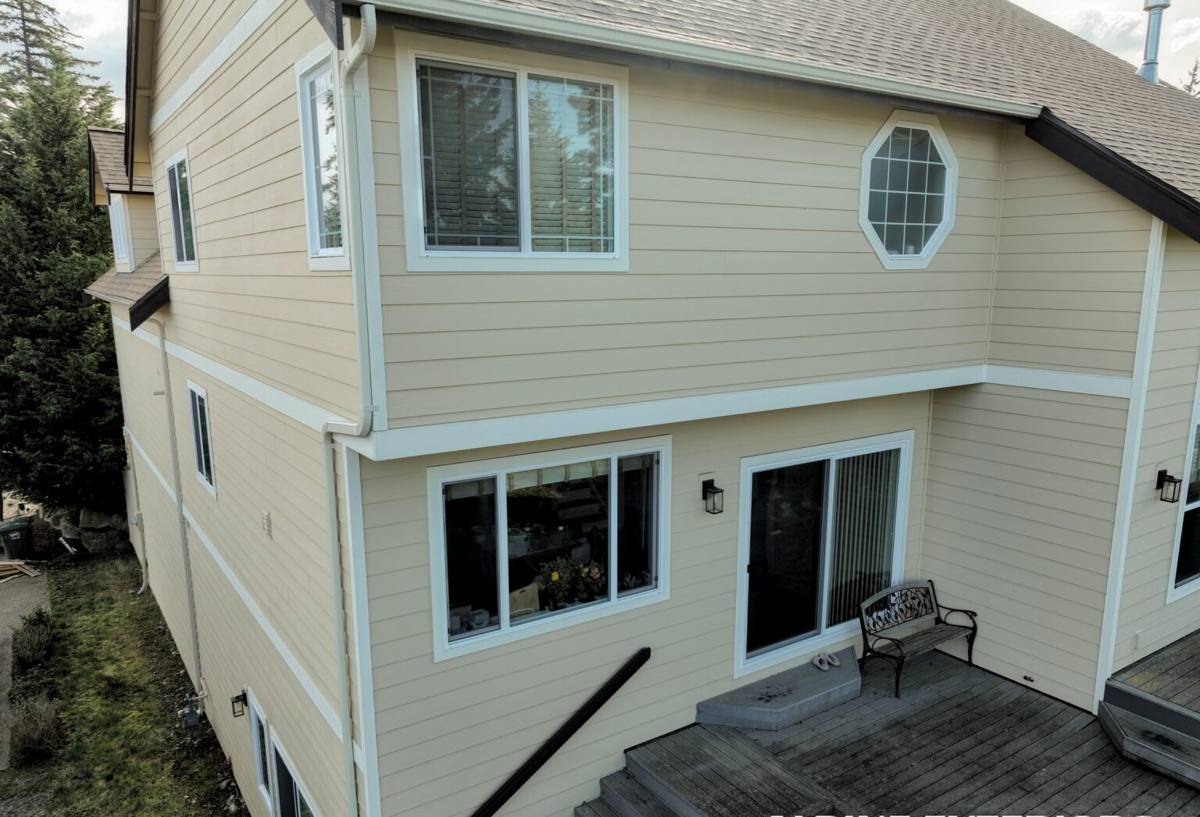
Why Wood Struggles Here — and Why Composite Holds Up
Pressure-treated wood decking is still common in Sarasota County because it's cheap up front, but it's a poor match for this climate. Wood absorbs moisture from wind-driven rain and humidity, then dries out fast under intense UV — that expansion-and-contraction cycle is what causes cupping, splitting, and popped fasteners within a few seasons. Add salt air and you accelerate corrosion on any exposed hardware, plus the wood itself starts graying and splintering faster than it would inland.
Composite decking — a blend of wood fiber and recycled plastic, capped with a protective polymer shell on quality products — doesn't absorb moisture the way solid wood does, so it isn't cycling through swelling and shrinking every time a storm rolls through. It doesn't need annual staining or sealing. And a capped composite board resists UV fade far better than wood finishes, which matters when your deck sits in full Florida sun most of the year.
That said, composite isn't maintenance-free or foolproof — it's only as good as the substructure underneath it and the installation details around fasteners, spacing, and ventilation. That's where most decking problems actually originate, regardless of material.
What Salt Air and Storm Wind Actually Do to a Deck
- Corrodes uncoated or low-grade screws, brackets, and joist hangers over time, weakening connections you can't see from the top of the deck
- Accelerates rot in any wood framing member that stays damp — especially ledger boards and joists close to grade
- Loosens railing posts and fastener points under repeated wind load, which is a safety issue as much as a cosmetic one
- Fades and chalks lower-quality composite boards that lack real UV-stabilized capping
- Drives water intrusion at poorly flashed ledger connections, which is one of the most common causes of deck failure in coastal Florida
What a Correct Composite Deck Build Involves
The Substructure Comes First
The decking boards get the attention, but the framing underneath is what determines whether the deck lasts 10 years or 25. For Osprey homes we spec:
- Pressure-treated or, where budget allows, coated/composite structural framing rated for ground contact where applicable
- Stainless steel or coated corrosion-resistant fasteners and hardware throughout — not standard galvanized, which pits faster in salt air
- Proper ledger board flashing and waterproofing where the deck attaches to the house, to stop water intrusion at the single most common failure point
- Joist spacing tightened to the composite manufacturer's spec (often 12" or 16" on center depending on board and installation angle) rather than assuming standard wood-deck spacing is fine
- Adequate ventilation beneath the deck so moisture doesn't get trapped against framing
Fastening and Board Layout
Composite boards expand and contract with heat even though they don't absorb water like wood — Florida sun on a dark-colored deck board gets hot. Gapping between boards has to account for that thermal movement, and fastener choice matters: hidden fastener clip systems give a cleaner look and avoid the surface penetrations that face-screwing creates, which is worth it in a climate where every fastener point is a potential water entry or corrosion spot.
Choosing the Right Composite Board for an Osprey Home
Not all composite decking is built the same, and the difference shows up fastest in a coastal climate like this one. We walk homeowners through a few real trade-offs rather than pushing one brand:
| Factor | What to Look For | Why It Matters in Osprey |
|---|---|---|
| Capping | Fully capped (all four sides) vs. partially capped | Full capping resists moisture and salt intrusion at cut ends and edges, not just the top surface |
| Fade/stain warranty | Manufacturer-backed UV fade warranty length | Direct exposure to Gulf Coast sun is intense and constant most of the year |
| Color | Lighter, mineral-based tones vs. dark solid colors | Darker boards run hotter underfoot and show fade differential faster in high-UV areas |
| Board profile | Grooved (hidden fastener) vs. square edge (face screw) | Grooved profiles reduce surface fastener exposure to weather and salt air |
| Mold/mildew resistance | Cap technology rated for humid, wet climates | Sarasota County humidity and frequent rain make this a real factor, not a marketing line |
Our Process for an Osprey Composite Deck Project
- On-site assessment. We look at the existing structure (if replacing a deck), grading and drainage around the footprint, proximity to the waterline if applicable, and any HOA guidelines that affect color or railing style in the community.
- Design and material selection. We walk through board options, railing systems, and layout with you, being upfront about what each tier of product costs and what you get for it.
- Permitting. Deck construction in Sarasota County typically requires a permit, especially for elevated structures or anything attached to the home. We handle that process rather than leaving it on the homeowner.
- Demo (if applicable) and framing. Old decking and any compromised framing gets removed and replaced before new composite boards go down — we don't install new boards over questionable substructure.
- Decking, railing, and fascia install. Boards, railings, stairs, and trim go in to spec, with attention to fastener corrosion resistance and proper drainage gaps.
- Final walkthrough. We go over the finished deck with you, including basic care and what to watch for over time.
Storm Season Considerations for Deck Structures
Sarasota County sees real hurricane risk, and a deck attached to your home is a structural element that has to be built to handle wind load — not just foot traffic. Railing posts, ledger connections, and footing depth all factor into how a deck performs in high wind. We build to current wind-load requirements for the area, not the minimum that gets a job done cheaply. If you're rebuilding after storm damage, that's also a chance to correct whatever weak point failed the first time — often it's an under-flashed ledger board or corroded hardware rather than the decking material itself.
Maintenance: What Composite Actually Needs
Composite decking is low-maintenance, not no-maintenance. A realistic care routine for an Osprey property:
- Periodic rinse-down to clear salt residue, pollen, and organic debris — more often for decks close to the water or under tree cover
- Occasional soap-and-water or manufacturer-approved cleaner for mildew spots, which show up faster in humid, shaded areas
- Keeping planters, grills, and furniture feet from trapping moisture against the board surface
- Checking railing hardware annually for looseness or corrosion, especially after storm season
- Clearing debris from underneath the deck so airflow and drainage stay unobstructed
Why Hire a Crew That Already Works in Osprey
Composite decking installation isn't complicated in theory, but the details that make it last in this specific climate — fastener grade, flashing at the ledger, framing spacing, drainage — are exactly the details that get skipped by crews that don't work coastal Florida regularly. A contractor who's done decks throughout Sarasota County knows the permitting process locally, understands what HOA reviewers in this area typically ask for, and has already seen which fastener and framing shortcuts fail first in salt air and storm wind. That experience shows up in the parts of the job you don't see once the boards are down.
Get a Free Estimate for Your Osprey Deck
If you're planning a new composite deck or replacing one that's showing its age, we're happy to come take a look, walk the site, and give you a straightforward, no-pressure estimate — including honest input on which board tier makes sense for your budget and how the site's exposure should shape the build. Use the form below to get started.