 Sarasota Siding
 Why Nokomis Decks Wear Out Faster Than You'd Expect
A deck in Nokomis takes a different kind of beating than one built further inland. This stretch of the Sarasota County coastline sees intense, near year-round UV exposure that dries out and breaks down wood fibers and finishes months ahead of schedule. Add in wind-driven rain that gets pushed sideways under railings and into board seams, salt-laden air that accelerates corrosion on anything metal, and the occasional hurricane-force wind event that racks a structure and loosens connections, and you have a set of conditions that most deck-building standards weren't written with in mind.
None of this means a deck can't hold up in Nokomis — it means the repair work has to account for how decks actually fail here, not just patch the symptom you can see. A gray, weathered board is often the least of the problem. What's underneath it, and what's holding it together, matters more.
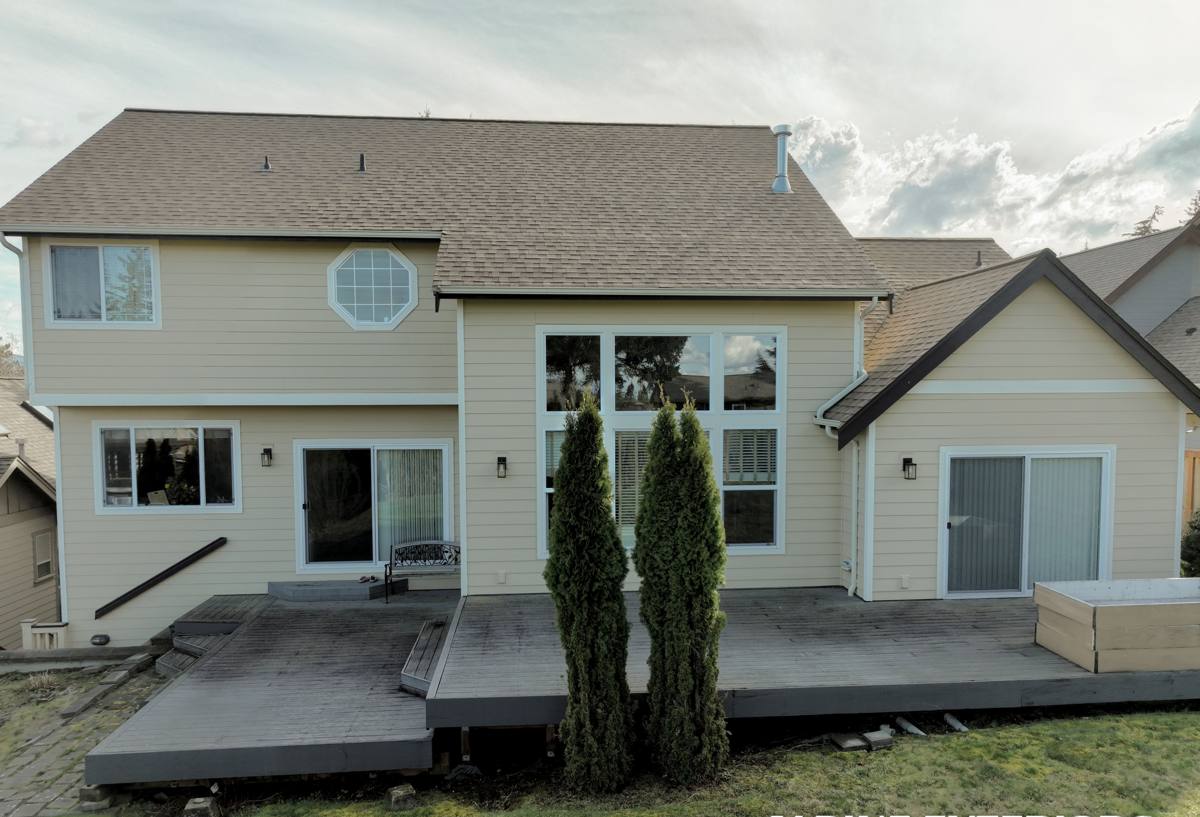
Signs Your Nokomis Deck Needs Repair
Most deck problems show small warning signs long before anything becomes dangerous. Homeowners along the Gulf Coast should watch for these specifically, since our climate speeds up the timeline:
- Soft, spongy, or springy spots when you walk across the decking
- Boards that have cupped, split, or pulled away from fasteners
- Rust streaks running down from screws, nails, or brackets
- A railing or post that wiggles or flexes when pushed
- Gaps opening up where the deck meets the house (the ledger board connection)
- Visible mold, dark staining, or a musty smell near ground-level framing
- Nail or screw heads that have backed out or "popped" above the board surface
- Stairs that feel uneven, bouncy, or have a wobbly stringer
Any one of these on its own might be minor. Several at once, especially near the ledger board or support posts, usually points to moisture that's been working on the structure for a while.
What a Correct Deck Repair Actually Involves
Start Below the Surface
A repair that only replaces the boards you can see is a cosmetic fix, not a structural one. Before we touch decking, we check the framing underneath — joists, beams, and especially the ledger board where the deck attaches to the house. In humid, salt-air environments, this is where rot and fastener corrosion do their real damage, hidden from view until a board finally gives way.
Fasteners and Hardware
Standard hardware corrodes faster near the coast. Galvanized fasteners that would last decades further inland can show rust and pitting in a fraction of that time here. Part of a correct repair is checking every joist hanger, bolt, and screw for corrosion — not just the ones near the visible problem — and replacing with coastal-rated, corrosion-resistant hardware where it's needed.
Railings and Guards
Railings take direct wind load during storms and get the most sun and rain exposure of any part of the deck. Loose posts or degraded railing connections are a safety issue, not just an appearance one, so we treat railing repair as a structural task with its own inspection, not an afterthought.
Board Replacement Done Right
Swapping a single rotten board without checking why it rotted just delays the same failure. We look at drainage, spacing, and ventilation underneath before replacing decking, so water has somewhere to go instead of sitting against new material.
Wood vs. Composite: Repair Material Options
When we repair a deck, we can usually match the existing material or use the repair as a chance to upgrade a section to something more weather-resistant. Each option has real trade-offs worth understanding rather than a clear "best" answer:
| Material | Upfront Cost | Maintenance | Coastal Durability |
|---|---|---|---|
| Pressure-treated wood | Lower | Needs regular sealing/staining | Good if maintained; vulnerable to rot if neglected |
| Composite decking | Higher | Minimal — occasional cleaning | Strong UV and moisture resistance; won't rot |
| Cedar or tropical hardwood | Highest | Regular oiling to prevent graying/splitting | Naturally rot-resistant but still needs upkeep in salt air |
For a small, targeted repair, matching the existing wood usually makes the most financial sense. For a deck that's had repeated rot problems in the same spot, or for railings and stair treads that take the brunt of sun and rain, composite is worth considering even if the rest of the deck stays as wood. We'll walk you through the honest maintenance commitment either way — composite isn't "no maintenance," and wood isn't a bad choice if you're willing to reseal it on schedule.
Our Deck Repair Process
- Full structural inspection — framing, ledger board, posts, and hardware, not just the visible decking
- Written scope and estimate — what needs repair, what's optional, and why, in plain language
- Moisture and rot removal — cutting back to solid, sound material rather than patching over damage
- Hardware and fastener replacement — corrosion-resistant hardware sized correctly for the connection
- Board, railing, or stair repair — matched or upgraded material, properly spaced for drainage
- Final walkthrough — we point out anything to keep an eye on and how to maintain the repair
We don't upsell a full deck replacement when a repair will genuinely hold up, and we won't quote a "quick fix" on a deck that has real structural rot underneath. You get a straight answer about which one your deck actually needs.
Repair or Replace? How We Help You Decide
This is the question almost every homeowner asks, and the honest answer depends on where the damage is and how far it's spread. These are the factors we actually weigh:
| Factor | Leans Toward Repair | Leans Toward Replacement |
|---|---|---|
| Location of damage | Isolated to a few boards or one railing section | Spread across framing, ledger board, and multiple posts |
| Age of the deck | Under 10-15 years, otherwise sound | Original structure already near end of service life |
| Cause of damage | One-time event (storm, impact, isolated leak) | Ongoing moisture problem or systemic drainage issue |
| Code compliance | Structure already meets current standards | Older framing doesn't meet current wind/load code |
If the framing is sound and the damage is contained, repair is almost always the more cost-effective route. If we find the ledger board or multiple support posts compromised, we'll tell you plainly — patching that kind of damage just moves the failure point somewhere else on the deck.
Permits and Sarasota County Considerations
Deck work in Sarasota County, including projects in Nokomis, can require a permit depending on the scope — structural repairs, railing replacement, and any work touching the ledger board connection to the house are the kinds of jobs that typically need one, while minor cosmetic board swaps often don't. Coastal construction standards in this part of Florida also factor in wind load requirements given how exposed the area is during hurricane season. We handle the permitting conversation as part of the process so you're not left guessing whether your repair is code-compliant.
Why It Matters to Hire a Crew That Already Works in Nokomis
A contractor who mostly works inland doesn't see salt-air corrosion or wind-driven rain damage often enough to know what to expect from it. Working decks up and down this part of the Gulf Coast means we know which connections fail first in this environment, which hardware actually holds up, and which "quick fix" shortcuts don't survive a second storm season. That's not a marketing line — it's the difference between a repair that lasts and one you're redoing in three years.
It also means faster, more accurate estimates. We're not learning the local climate on your project; we already know what to look for the moment we're under the deck.
Keeping Your Repaired Deck in Good Shape
A good repair buys you years, but a little regular attention buys you more. After a repair, we recommend:
- Rinsing off salt residue and debris every few weeks, especially after storms
- Checking railings and stair connections for looseness twice a year
- Resealing or restaining wood decking on the schedule the product calls for — usually every 1-3 years in this climate
- Keeping gutters and downspouts clear so runoff isn't dumping onto the deck
- Watching for new soft spots or staining near ground-level posts
These small habits are what separate a deck that needs a full repair every few years from one that just needs occasional upkeep.
If your deck in Nokomis has soft boards, loose railings, rust streaks, or you're just not sure whether it needs repair or replacement, we're happy to take a look. Estimates are free, honest, and come with no pressure — fill out the form below to get started.