 Sarasota Siding
 Windows Work Harder in Downtown Sarasota Than Almost Anywhere Else
Downtown Sarasota sits close enough to the water that its housing stock — from older bungalows and mid-century homes to newer infill construction and condo units — takes a steady beating that inland Florida properties simply don't see. Hurricane-force wind events are a real design load here, not a hypothetical. Year-round UV breaks down seals, glazing compounds, and vinyl faster than in most of the country. Wind-driven rain finds every gap in flashing and trim during summer storms. And salt air drifting in off the bay corrodes hardware, fasteners, and aluminum components that would last decades somewhere drier and further inland.
Windows are one of the first components on a house to show that wear, and one of the most consequential to get wrong. A window that isn't properly rated, flashed, or fastened for this environment doesn't just fail slowly — it can fail catastrophically during a storm, and it will absolutely fail slowly in the meantime through leaks, fogging, and rot around the opening. This page covers what window replacement actually requires for Downtown Sarasota homes, what a correct installation looks like, and how we approach the work.
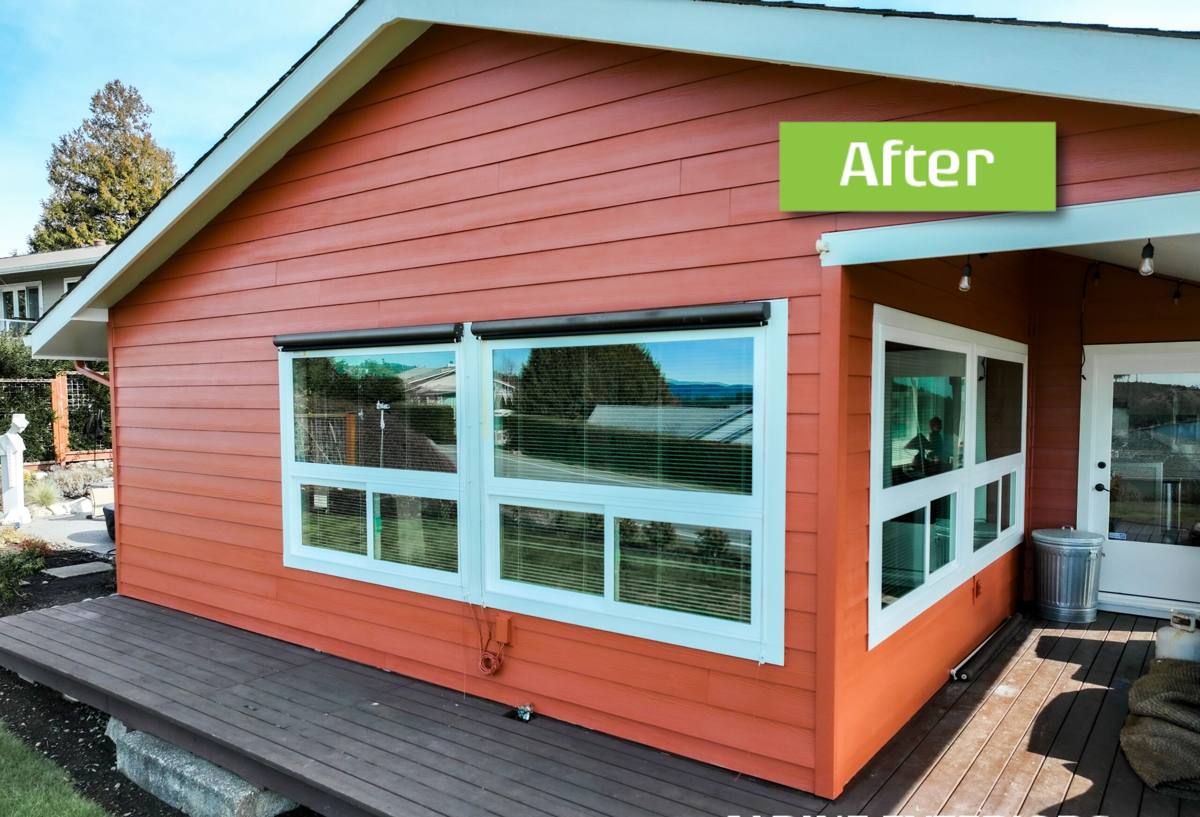
Signs Your Windows Are Overdue for Replacement
Not every window problem means full replacement — some issues are repairable. But in a coastal climate like this one, certain symptoms point clearly toward end-of-life windows rather than a quick fix.
- Fogging or a permanent haze between panes on double-glazed units — the seal has failed and the insulating gas or air gap is gone
- Windows that are difficult to open, close, or lock, especially after humidity swings
- Visible daylight, drafts, or whistling sounds around the frame during windy conditions
- Soft, discolored, or bubbling wood or drywall at the interior sill or jamb — a sign water has been getting past the frame
- Chalky, pitted, or corroded aluminum frames, especially on older single-pane units
- A noticeable jump in cooling costs with no other explanation
- Frames that are not rated for current Florida Building Code wind and impact requirements for this area
- Condensation on the interior glass regularly, even when the AC is running normally
If you're seeing two or more of these across multiple windows, replacement is usually more cost-effective long-term than continuing to patch individual units.
What a Correct Window Replacement Actually Involves
Window replacement gets treated as a simple swap far too often — pull the old unit, drop in the new one, caulk the edges. In a wind and moisture zone like Sarasota, that approach is where leaks and future frame failures come from. A correct job addresses the opening itself, not just the window sitting in it.
Assessing the Rough Opening
Before a new window goes in, the opening needs to be checked for square, level, and soundness. Rot, moisture damage, or out-of-square framing found at this stage needs to be corrected — installing a new window into a compromised opening just locks the problem behind new trim.
Flashing and Water Management
This is the step that determines whether a window leaks in five years or twenty-five. Proper flashing tape and sill pans direct any water that gets past the exterior seal back out and away from the wall assembly, rather than letting it sit against wood framing or sheathing. This matters more in Sarasota than in drier climates because wind-driven rain pushes water sideways and upward, not just straight down.
Fastening for Wind Load
The window has to be anchored according to its manufacturer's tested and approved installation instructions, using fasteners rated for the wind zone and, near the coast, resistant to salt-air corrosion. Anchor spacing and fastener type are not optional details — they're what the window's wind and impact rating is actually based on.
Sealing and Finishing
Exterior sealant, backer rod where needed, and proper trim work close out the installation. Interior finishing should restore the sill, casing, and any drywall disturbed during the swap.
Impact-Rated Windows: What They Are and Why We Recommend Them Here
"Impact-rated" or "impact-resistant" windows use laminated glass — a plastic interlayer bonded between glass panes — so the unit stays intact even when the outer pane cracks from wind-borne debris. In Sarasota County's wind zone, this isn't a luxury upgrade; it's the more sensible baseline for most exterior-facing replacements, and it can eliminate the need for separate storm shutters or panels.
| Factor | Impact-Rated Windows | Standard Windows + Shutters |
|---|---|---|
| Storm prep | None required — always protected | Shutters must be installed before every storm |
| Daily use | No visual obstruction, full light and view year-round | Clear view except when shutters are up |
| Upfront cost | Higher per window | Lower window cost, but shutters add their own expense |
| Insurance | Often qualifies for wind-mitigation credits | Credits depend on shutter type and documentation |
| UV and noise | Laminated interlayer also cuts UV transmission and outside noise | No added benefit outside of storm events |
Standard, non-impact windows are still code-compliant when paired with approved shutters or panels, and they remain the right call on some budgets or for interior-facing openings that are less exposed. We'll walk through both options honestly rather than steering every job toward the more expensive one by default.
Choosing a Frame Material for This Climate
Vinyl
Vinyl frames handle Florida humidity well and don't corrode, which makes them a common, cost-effective choice. The trade-off is that dark colors and lower-grade vinyl can soften or warp under sustained, intense UV exposure over many years, so frame quality matters more here than in milder climates.
Aluminum
Aluminum is strong and holds up structurally to wind loads well, but bare aluminum is vulnerable to salt-air corrosion this close to the coast. Where we use it, it needs a marine-grade finish, and hardware should be corrosion-resistant as well.
Fiberglass and Composite
Fiberglass and composite frames generally hold paint and color better under UV exposure and resist warping, at a higher material cost than vinyl. For homeowners planning to keep a property long-term, the added durability can be worth the premium.
There's no single "correct" material for every house — it depends on the home's exposure, the homeowner's budget, and how long they plan to own the property. We'll talk through the honest trade-offs for your specific windows rather than pushing one product line across the board.
Cost Factors for Downtown Sarasota Window Replacement
Pricing varies by opening size, glass package, frame material, and how much repair the rough opening needs — we won't quote a number without seeing the job. What we can tell you is what actually moves the price up or down.
| Factor | Effect on Cost |
|---|---|
| Impact-rated vs. standard glass | Impact glass costs more per unit but removes the need for shutters |
| Frame material | Vinyl typically lowest, fiberglass/composite highest, aluminum in between |
| Rough opening condition | Rot or out-of-square framing adds labor before the new window can go in |
| Window size and configuration | Large openings, sliders, and custom shapes cost more than standard single/double-hung sizes |
| Number of windows replaced at once | Doing a full home or unit at once is usually more cost-efficient than one-off replacements over time |
| Interior trim and drywall repair | Adds cost if the existing finish work needs to be rebuilt, not just the window swap |
Our Process, Start to Finish
The process is straightforward, but we don't skip steps to move faster:
- On-site assessment of your current windows, openings, and any water or wind damage already present
- Honest recommendation on glass rating and frame material based on the home's exposure and your budget — not a one-size-fits-all pitch
- Written estimate covering material, labor, and any opening repair we identify
- Permitting handled through Sarasota County or the City of Sarasota as required for the scope of work
- Removal of old units and inspection of the rough opening before new windows go in
- Installation following manufacturer specs for flashing, fastening, and sealing to the required wind rating
- Final walkthrough and inspection sign-off where required by local permitting
Permits, Codes, and What's Different About Downtown
Window replacement in Sarasota County generally requires a permit, and the wind and impact requirements are tied to the property's specific wind zone under the Florida Building Code. Downtown Sarasota also has properties in areas with additional design or historic-district considerations depending on the specific street and structure, and some condo and HOA buildings have their own rules about approved window styles, colors, or contractors. We handle the permitting process and will flag if your property falls under any additional review before work starts, rather than leaving you to sort that out mid-project.
Why Hiring a Crew That Already Works Downtown Matters
A contractor who works Downtown Sarasota regularly already understands the wind-zone requirements that apply here, has a working relationship with the local permitting process, and has seen how homes in this specific area age under sun, salt, and storm exposure. That's different from a crew pulling permits in this jurisdiction for the first time. It shows up in fewer surprises during the permitting and inspection process, fewer callbacks for missed flashing or fastening details, and a more accurate estimate the first time, because we're not guessing at conditions specific to this part of Sarasota County.
Get a Straight Answer on Your Windows
If your windows are original to the house, fogging, sticking, or you're just planning ahead of the next storm season, we're happy to take a look and give you a clear, no-pressure assessment of what needs replacing and what doesn't. Fill out the form below for a free estimate — no obligation, no pressure, just an honest read on where your windows stand.