 Sarasota Siding
 Deck Repair Built for Gulf Gate Estates Conditions
Gulf Gate Estates is an established residential neighborhood on the south side of Sarasota, with homes built across several different decades and a mix of deck types — wood-framed platforms, screened lanai extensions, and pool-adjacent decking among them. Whatever the age or style, decks in this part of Sarasota County share the same enemy: a coastal Gulf Coast climate that does not let up. Intense year-round UV breaks down wood fibers and fades or chalks finishes. Wind-driven rain during summer storms and hurricane season finds its way into every seam, joint, and fastener hole. Salt-laden air corrodes metal hardware faster than most homeowners expect, even well inland from the water. And when a named storm brings hurricane-force gusts, any weakness in a deck's structure — a soft ledger board, a loosened post base, an under-fastened railing — gets tested immediately.
A deck repair here isn't just cosmetic work. It's structural maintenance for a piece of your home that's constantly exposed to the harshest conditions Florida throws at it. Doing it right means understanding how these specific stressors interact, not just patching whatever looks bad on the surface.
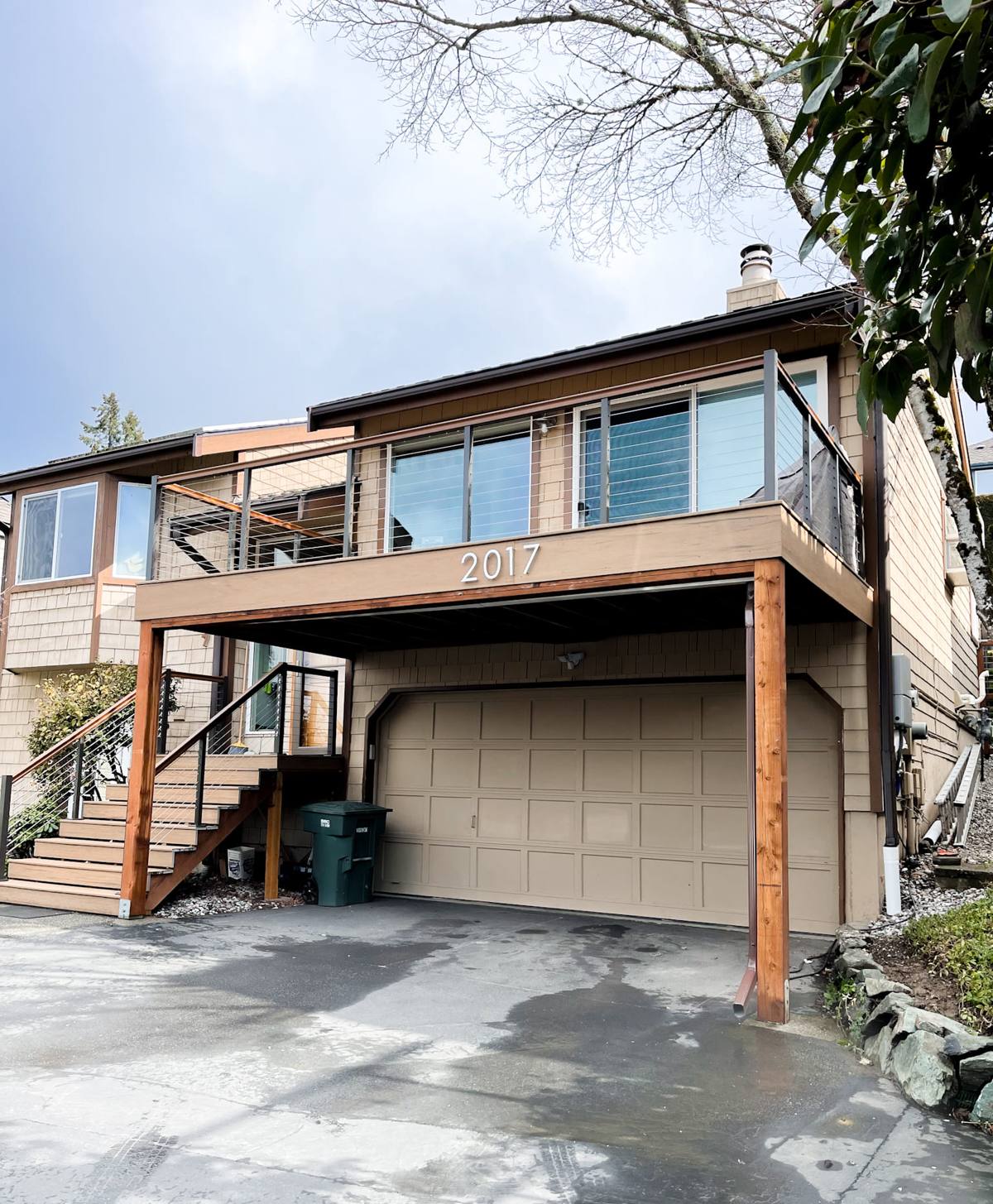
Signs a Gulf Gate Estates Deck Needs Repair
Deck damage in this climate tends to start where you can't see it — underneath, at connection points, and where moisture collects — before it shows up on the surface. Homeowners usually notice one of these first:
- Boards that feel spongy, bounce, or flex more than they used to when walked on
- Visible splitting, cupping, or graying of wood that hasn't been resealed in a while
- Rust streaks or corrosion around screws, nails, bolts, or joist hangers
- A railing or stair post that wiggles or feels less solid than it should
- Gaps opening up where the deck meets the house, or around the ledger board
- Soft spots near planters, grills, or low areas where water pools after rain
- Popped fasteners or nail heads backing out of the boards
Any one of these on its own might be a minor fix. Several at once, or anything involving the ledger board (the part that attaches the deck to the house), the support posts, or the footings, means it's time for a real structural assessment rather than a quick patch.
Repair vs. Replace
Not every deck problem calls for a full rebuild, and not every deck should be repaired piecemeal forever. As a general rule: if the framing underneath — joists, beams, posts, and footings — is sound and only the decking boards, railings, or fasteners are failing, targeted repair makes sense and extends the deck's life for years. If the framing itself is compromised by rot, insect damage, or corrosion at multiple structural connections, repeated surface repairs become a losing game, and a partial or full rebuild of the substructure is the more honest recommendation.
What a Proper Deck Repair Actually Involves
A repair that only addresses what's visible from the top often misses the actual problem. Here's what we check and address on a Gulf Gate Estates deck repair:
Structural Framing
Joists, beams, and the ledger board connection get inspected for rot, cracking, and fastener corrosion. In a humid, salt-exposed climate, framing failures usually start at connection points — where two pieces of wood meet, or where metal hardware penetrates wood — long before the boards on top show obvious wear.
Fasteners and Hardware
This is where a lot of decks in coastal-influenced areas fail early. Standard galvanized fasteners can corrode faster than the wood around them when exposed to salt air over years, leading to loose boards, streaking, and eventually fastener failure under load. We match hardware to the environment rather than defaulting to whatever is cheapest.
Post Bases and Footings
Wind uplift during storms puts real stress on how posts anchor into footings. A repair that ignores a compromised post base or an undersized connection is leaving the same failure point in place for the next big storm.
Decking Boards and Surface
Individual board replacement, sanding, or refinishing addresses the surface issues homeowners notice first — but it should happen after the structure underneath is confirmed sound, not instead of checking it.
Wood vs. Composite: What We Consider During Repair
If your deck needs significant board replacement, it's worth thinking about whether to match the existing material or transition part of the deck to a different one. Both have a place in Sarasota's climate, and the right call depends on your budget, your maintenance appetite, and how the rest of the deck is built.
| Factor | Pressure-Treated Wood | Composite Decking |
|---|---|---|
| Upfront cost | Lower | Higher |
| UV fading resistance | Fades without regular resealing | Better color retention, though not immune |
| Moisture behavior | Can absorb and release moisture; needs sealing | Doesn't absorb water the same way, but installation must allow for expansion |
| Maintenance | Periodic cleaning, sealing, and inspection | Lower maintenance, but not maintenance-free |
| Repair approach | Board-by-board replacement is straightforward | Matching color/lot and fastening system matters |
| Salt air tolerance | Fine with correct fasteners and sealing schedule | Generally tolerant, hardware still needs attention |
Neither material is automatically "better" — the maintenance burden and installation care matter more than the material itself. A composite deck installed with the wrong fastening system or without proper gap spacing will have its own problems in this climate, just different ones than a poorly sealed wood deck.
How Our Repair Process Works
- On-site assessment. We inspect the full structure — not just the boards you called about — including framing, fasteners, and post connections, and walk you through what we find in plain terms.
- Honest scope and estimate. You get a clear picture of what's cosmetic, what's structural, and what your real options are, with pricing before any work starts.
- Repair or replacement of compromised components. This may mean swapping individual boards, sistering or replacing damaged joists, upgrading fastener hardware, or reinforcing post bases — matched to what your deck actually needs.
- Fastener and hardware upgrades where warranted. Where existing hardware has corroded or was undersized for the exposure, we address it as part of the repair rather than reusing compromised connections.
- Finish work. Sanding, sealing, or staining as needed so the repaired sections perform and look right alongside the rest of the deck.
- Final walkthrough. We check the deck's stability, board fit, and railing security with you before calling the job done.
Permits and Local Code Considerations
Deck work in Sarasota County, particularly anything involving structural framing, railings, or attachment to the home, can fall under local building permit requirements and Florida's wind-load building code standards — the same codes that govern hurricane-resistant construction generally. Permit requirements depend on the scope of work; a like-for-like board swap is treated differently than framing repair or a railing rebuild. We handle the determination of what's required for your specific repair rather than leaving you to guess, and we build repairs to hold up against the wind loads this region actually sees, not just the minimum that would pass a casual look.
After-Repair Maintenance Checklist
A repaired deck holds up longer with a little seasonal attention. This is a reasonable baseline for a Gulf Gate Estates deck:
- Rinse off salt residue and debris after storms, especially on decks near open exposure
- Inspect fasteners and hardware for early rust or corrosion once or twice a year
- Reseal or restain wood decking on the schedule appropriate to the product used — sun exposure here shortens the interval compared to milder climates
- Keep gutters and downspouts clear so runoff isn't dumping directly onto or under the deck
- Trim back vegetation touching the deck to reduce trapped moisture
- Check post bases and stair connections for movement after any major windstorm
- Address small issues — a loose board, a hairline crack — before the next rainy season, not after
Why Local Experience Matters for This Job
Deck repair sounds like a generic service until you account for what a specific neighborhood's homes actually go through. A crew that regularly works in Gulf Gate Estates has a working sense of the common construction approaches used in homes of different eras here, how prior repairs in the area tend to have been done, and how quickly this specific stretch of coastline's combination of sun, humidity, and salt air ages different materials and hardware. That translates into fewer surprises once we open things up, a more accurate first estimate, and repairs specified for the actual exposure your deck sees — not a one-size-fits-all approach borrowed from a different climate.
It also means straightforward scheduling and follow-up. We're not driving in from across the region for a single job; we're a contractor who works this area consistently and stands behind the work because we'll be back through the neighborhood regardless.
Get a Free, No-Pressure Estimate
If your deck in Gulf Gate Estates has soft spots, loose railings, corroded hardware, or you just want an honest read on its condition before storm season, we're happy to take a look. Fill out the form below for a free estimate — no pressure, no obligation, just a clear picture of what your deck needs.