 Sarasota Siding
 Lakewood Ranch Homes Face a Specific Kind of Weather Stress
Lakewood Ranch sits inland from the coast, but "inland" in Sarasota County doesn't mean sheltered. Homes here still take direct hits from hurricane-force wind gusts, the same wind-driven rain that soaks coastal neighborhoods, and a year-round dose of UV intensity that most siding materials simply weren't built to survive for decades. Add in the humidity that never really lets up and the salt air that drifts inland on Gulf breezes, and you have a climate that tests every seam, fastener, and finish on a house continuously, not just during storm season.
This matters because siding is not a cosmetic layer. It's the first line of defense between that weather and your home's structure. When we talk about fiber cement siding for Lakewood Ranch specifically, we're talking about a product and an installation approach chosen because it holds up to this exact combination of stressors — not because it's a generic upgrade that works everywhere.
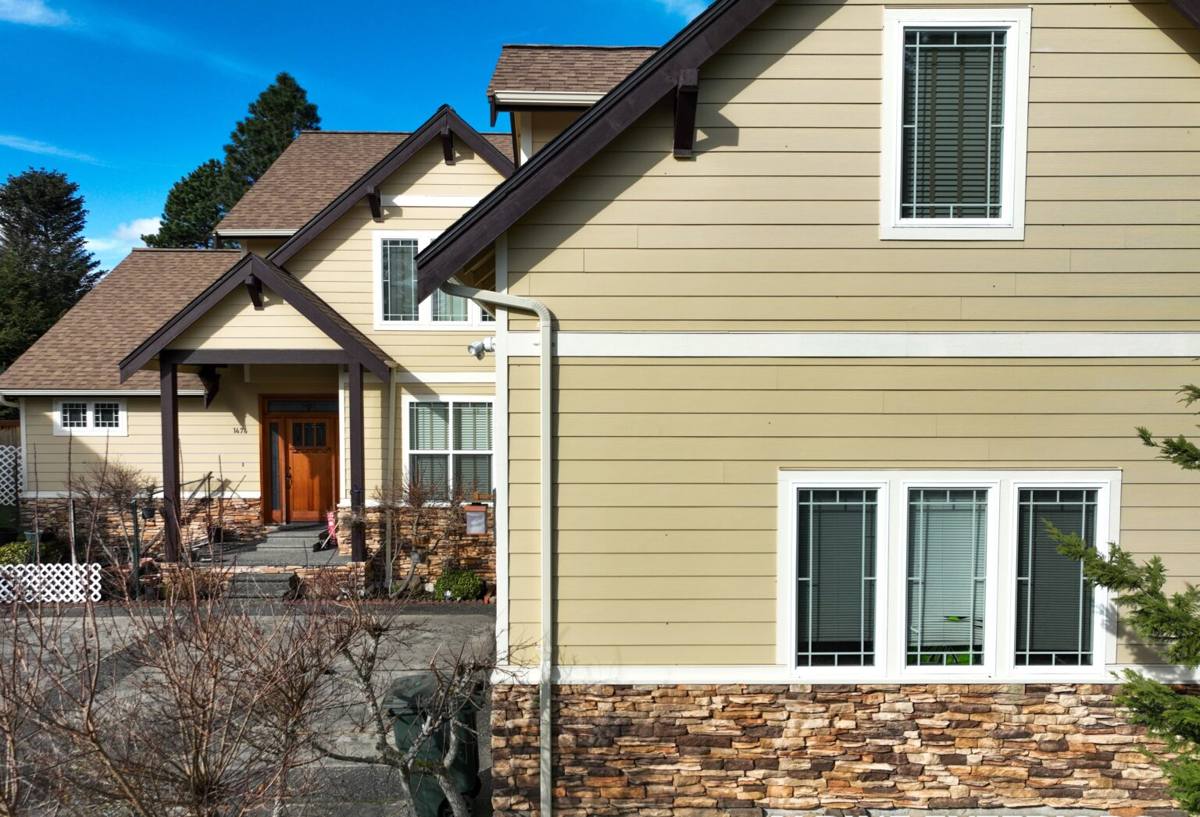
Why Fiber Cement Is the Right Material Here
Fiber cement is a mix of cement, sand, and cellulose fibers, pressed and cured into planks that don't expand and contract with humidity the way wood does, don't soften in standing moisture, and don't become brittle and chalky under sustained UV exposure the way many vinyl products do over time. For a Lakewood Ranch home, those three properties line up directly with the three biggest threats: wind-driven rain intrusion, humidity cycling, and sun exposure that runs nearly twelve months a year in this part of Florida.
| Property | Why It Matters in Sarasota County |
|---|---|
| Non-combustible core | Adds a layer of fire resistance vinyl and wood-based products can't match |
| Dimensionally stable | Resists the swelling and shrinking that opens gaps and cracks paint under humidity swings |
| Factory-applied finish | Color and UV protection baked in at the plant, not sprayed on site where curing conditions vary |
| Rigid plank structure | Holds a tight fastening pattern that resists wind uplift better than flexible materials |
| Moisture resistant core | Does not rot, delaminate, or absorb water the way engineered wood substrates can |
None of this means fiber cement is maintenance-free or storm-proof. It means the material itself isn't the weak link — the installation is where a job succeeds or fails, which is the next thing worth understanding before you hire anyone.
What a Correct Installation Actually Involves
Fiber cement siding is unforgiving of shortcuts in a way that's easy to miss until years later, when a poorly flashed window or an under-fastened panel starts letting water in behind the wall. A correct job on a Lakewood Ranch home involves several steps that don't show up in a quick visual inspection after the crew leaves.
Substrate and Moisture Barrier Prep
Before a single plank goes up, the wall needs a continuous weather-resistant barrier, properly lapped and taped at every seam, with all penetrations — hose bibs, vents, electrical, hardware — sealed correctly. In a climate where wind-driven rain gets pushed sideways into walls during storms, this hidden layer does as much work as the siding itself.
Fastening to Manufacturer Spec
Fiber cement has specific fastener type, spacing, and penetration requirements that change based on wind exposure. Skipping a stud, using the wrong nail gauge, or over-driving fasteners so they crack the board are common shortcuts that don't show up until a wind event finds the weak point.
Flashing at Every Transition
Windows, doors, roof lines, and any place two planes of the house meet are where water intrusion actually happens — almost never through the flat field of the siding itself. Correct step flashing, head flashing, and kick-out flashing at these transitions is what keeps wind-driven rain from finding its way behind the cladding.
Joints and Caulking
Butt joints need to land on framing, be back-primed or factory-sealed, and use a sealant rated for continuous UV and moisture exposure — not a general-purpose caulk that chalks and cracks within a couple of Florida summers.
The Hardie Product Lines We Install
We install James Hardie fiber cement exclusively, and for a Gulf Coast climate like Sarasota County's, that means specifying products engineered for higher humidity and moisture exposure rather than a generic formulation built for drier regions. James Hardie's ColorPlus factory-finish system bakes the color and UV-protective topcoat on at the plant under controlled conditions, which holds up more consistently than field-applied paint exposed to variable temperature and humidity during application.
Depending on the home's design, that typically means HardiePlank lap siding for the main field, HardieTrim for corners and window surrounds, and HardieShingle in accent areas where a homeowner wants a textured look without stepping away from fiber cement performance. The right combination depends on the house's architecture and how much wind and rain exposure specific elevations get.
Why We Only Install James Hardie
Homeowners sometimes ask why we don't offer lower-cost alternatives like LP SmartSide, vinyl, or unbranded fiber cement boards. Those products aren't scams and some perform reasonably well when installed correctly — but each carries trade-offs we're not willing to put our name behind. Engineered wood products use a wood-strand substrate that, however well treated, still depends on an intact factory coating to keep moisture out over the long term; once that coating is compromised at a cut edge or fastener hole, the substrate is vulnerable in exactly the humid, wet conditions Lakewood Ranch sees most of the year. Vinyl siding is inexpensive and low-maintenance in mild climates, but it softens and can deform under intense, sustained UV and doesn't offer the wind resistance or fire rating fiber cement does. Unbranded fiber cement can perform fine on paper but comes without the factory finish, product line depth, and transferable warranty structure that James Hardie backs.
We standardized on Hardie because it's the fiber cement system engineered specifically for high-humidity, high-UV, storm-prone climates, backed by a warranty that transfers with the home and a track record we can stand behind when we tell a homeowner it's built to last decades, not years.
Our Process, Start to Finish
Every Lakewood Ranch project follows the same sequence, whether it's a full re-side or a targeted section replacement.
- On-site inspection of the existing siding, wall assembly, and any moisture damage already present
- Detailed proposal specifying product line, color, trim details, and fastening plan — not just a square-footage price
- Removal of old siding and inspection of sheathing for hidden rot or damage before anything new goes up
- Installation of a fully lapped and sealed weather-resistant barrier
- Fiber cement installation to manufacturer fastening spec, with flashing at every transition point
- Caulking, trim, and paint touch-up at cut edges
- Final walkthrough with the homeowner before we consider the job done
Why Local Experience in Lakewood Ranch Matters
A crew that regularly works Sarasota County knows the permitting requirements the county and any applicable HOA architectural review boards expect, understands realistic wind-exposure categories for this specific area, and has already seen how the local combination of sun, humidity, and storm exposure ages siding over time. That's different from a crew that installs the same product everywhere and treats Lakewood Ranch like any other job site. Local familiarity shows up in details — how flashing is detailed around window styles common in the area's newer construction, how HOA color approval gets handled before material orders, and what fastening pattern actually holds up to the wind exposure this specific area sees.
Maintenance After Installation
Correctly installed fiber cement is low-maintenance, not no-maintenance. A simple annual routine keeps it performing the way it's designed to for the long haul.
- Rinse the exterior annually to remove salt residue and airborne grime before it builds up
- Inspect caulking at joints and trim yearly, especially after a active storm season
- Watch for any hairline cracks at butt joints or corners and address them before water finds a path in
- Keep sprinklers and irrigation from spraying directly on siding day after day
- Trim vegetation back so it isn't holding moisture against the wall
What Affects Cost on a Lakewood Ranch Project
| Factor | How It Affects the Job |
|---|---|
| Home size and story count | More surface area and access complexity increase labor time |
| Condition of existing sheathing | Hidden rot found during tear-off adds repair scope before new siding goes up |
| Trim and architectural detail | Multiple gables, dormers, and trim styles add cutting and flashing time |
| Product line selection | Lap, shingle, and panel products carry different material and labor costs |
| HOA-driven color or style requirements | Custom ColorPlus selections may affect lead time and ordering |
We won't quote a number without seeing the house — anyone who does is guessing, and on a fiber cement job that guess can be off in either direction once the old siding comes off and the sheathing underneath is visible.
If you're considering fiber cement siding for a home in Lakewood Ranch, we're happy to walk the property, look at what's there now, and give you a straightforward, no-pressure estimate using the form below.