 Sarasota Siding
 Why Storms Hit Lakewood Ranch Roofs Harder Than They Look
Lakewood Ranch sits inland from the coast within the greater Sarasota area, stretching across parts of both Sarasota and Manatee counties, but being inland doesn't mean being sheltered from what Gulf Coast weather does to a roof. Hurricane-force wind gusts travel well inland before losing much strength, and once a storm system slows down or stalls over the region, the wind-driven rain that comes with it gets forced sideways under shingle edges, flashing, and vents in a way ordinary straight-down rain never does. Add in some of the most intense year-round UV exposure in the country and salt air that reaches inland communities on onshore breezes, and Lakewood Ranch roofs are absorbing a combination of stresses that most roofing crews outside Florida rarely have to design or repair for.
Because large sections of Lakewood Ranch were built and re-roofed within similar windows of time, whole streets and villages often carry roofs of the same age and the same materials. That means storm damage here rarely shows up on just one house — it tends to appear on several roofs in the same neighborhood, in the same style, after the same weather event. Knowing what that damage actually looks like, and what a correct repair involves in this climate, is what separates a roof that's genuinely fixed from one that quietly fails again during the next system.
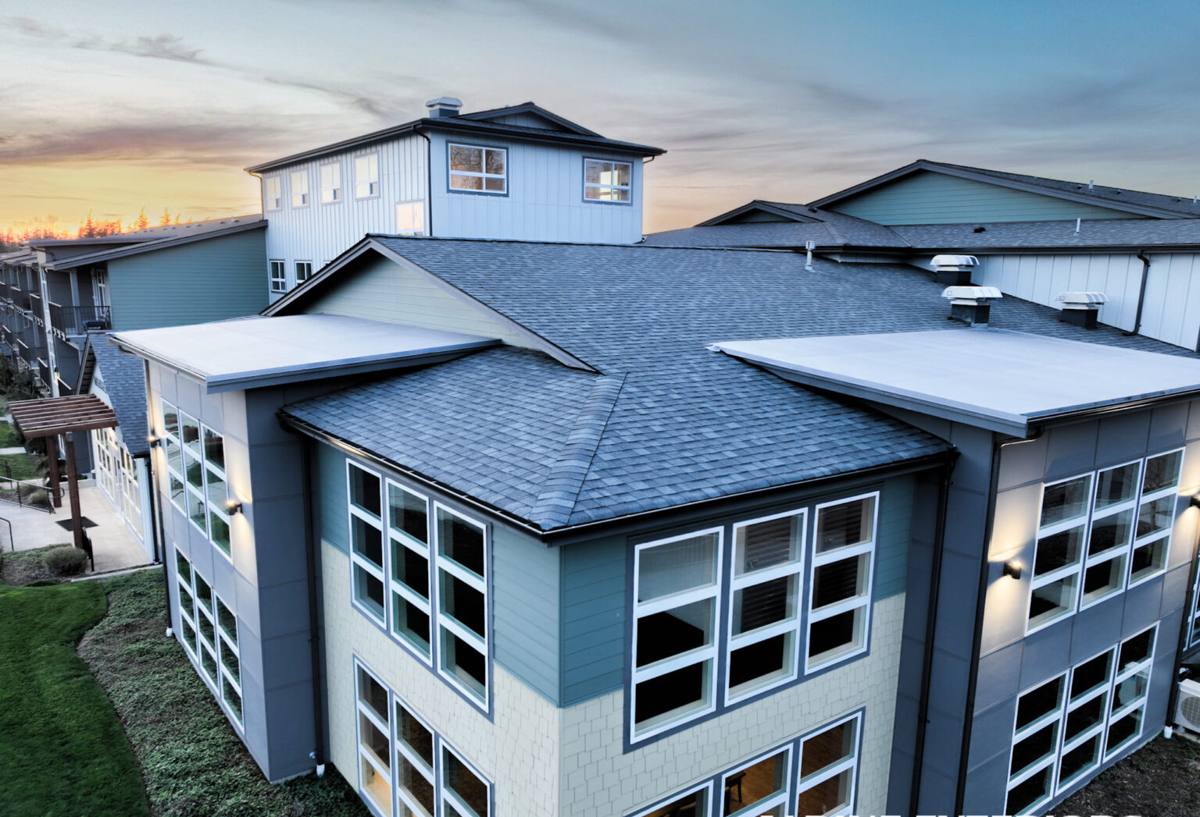
What Storm Damage Actually Looks Like on a Roof
Storm damage doesn't always look dramatic. A roof can lose its wind rating, its watertight seal, or years of remaining service life without a single shingle blowing off in a way you'd notice from the driveway. The damage we're most often called out for after wind and hail events in this area falls into a handful of categories:
- Wind-lifted or creased shingles that broke their seal but are still sitting in place, looking mostly normal
- Missing shingles or exposed underlayment, usually starting at ridges, edges, and valleys
- Granule loss or bruising from hail, which weakens a shingle's protective layer even when it hasn't cracked
- Torn, lifted, or separated flashing around chimneys, skylights, plumbing vents, and roof valleys
- Soffit and fascia damage from wind-driven rain forced up and under the roofline
- Cracked, slipped, or displaced tiles, on the tile roofs common throughout Lakewood Ranch's newer communities
- Water staining on an attic deck or interior ceiling that shows up days or weeks after the storm, not during it
Some of this is visible from ground level. Most of it isn't, which is a big part of why a real storm damage inspection means getting on the roof, not just looking up at it from the yard.
Why Damage That "Looks Fine From the Ground" Often Isn't
A shingle that lost its seal in high wind can settle back down almost flush once the storm passes, looking intact from below while no longer being watertight. Tile roofs hide slipped or cracked tiles even more easily, since the damage is frequently underneath the visible course rather than on the surface. And the most expensive kind of storm damage — a soaked or delaminating section of roof decking — usually isn't visible at all until it's already produced an interior leak or a soft spot underfoot. We check for all of this with a full roof walk and, wherever there's a reasonable question about hidden moisture, a look at the decking from the attic side, not just a visual pass from the driveway.
Repairing It Right — Materials, Code, and What Corners Not to Cut
Matching Materials Instead of Patching Around Them
A storm damage repair is only as good as how well it matches what's already there, in material, profile, and how it ties into the surrounding roof. Setting mismatched shingles over a damaged section, or resealing a cracked tile instead of replacing it, might stop a leak for a while, but it doesn't restore the roof's wind resistance or watertight performance, and it usually looks like exactly what it is from the street. We match shingle or tile profile and color as closely as the product line allows, and we replace underlayment and flashing at the repair site rather than reusing storm-damaged material simply because it's still technically attached.
Florida Building Code and Wind Requirements
Sarasota County enforces Florida's high-wind building code provisions, and any legitimate roof repair here has to meet those standards, not just match the condition the roof happened to be in before the storm hit. That means correct fastening patterns, proper underlayment, and flashing details built to current code, not "close enough" to what was already there. This also matters for insurance: a wind mitigation inspection looks at exactly these details, and a roof repaired below code can actually work against your wind mitigation discount at the next policy renewal, on top of being a weaker repair to begin with.
Our Storm Damage Repair Process
Storm damage repair moves faster than a standard remodel, but it shouldn't skip steps. Here's how we handle it:
- We inspect the full roof, not just the section you noticed damage on, and document everything with photos and, where relevant, moisture readings at the decking.
- We give you a straightforward written scope of repair and cost estimate before any work starts, and we explain which items are storm damage versus wear that predates the storm.
- We complete the repair with matched materials and current code-compliant methods, not the fastest patch that would technically stop a leak.
- We do a final walkthrough with you, so you know exactly what was repaired and have documentation in hand if you're filing an insurance claim.
Insurance Claims: What We Do, and What We Don't
Storm damage repair and insurance claims often go together, but we're not your insurance company or a public adjuster, and we won't pretend to be either one. What we do is document the damage thoroughly, with photos, measurements, and a clear written scope, so you have solid evidence to bring to your adjuster. We're also glad to meet an adjuster on-site and walk the roof with them if that helps your claim move along. What we won't do is inflate a scope of work to hit a number, or write up damage we didn't actually find on the roof. After a bad storm, this area typically sees an influx of out-of-town contractors going door to door with fast estimates and pressure to sign on the spot — that's a decision worth slowing down on, since a contractor with no ongoing presence here has little reason to stand behind the work a year or two later.
Repair or Replace?
Not every storm-damaged roof needs to come off entirely, and not every repair is worth doing instead of replacing. The honest answer usually comes down to a handful of factors:
| Factor | Leans Toward Repair | Leans Toward Replacement |
|---|---|---|
| Extent of damage | Isolated to one section or slope | Spread across multiple sections or the whole roof |
| Roof age | Well within its expected service life | Nearing or past the point where major repairs stop making financial sense |
| Repair history | First significant repair on this roof | Several prior repairs already patched into the same roof |
| Decking condition | Dry, sound decking found during inspection | Soft, delaminating, or water-stained decking |
| Material availability | Matching shingle or tile still in production | Discontinued product with no reasonable color or profile match |
We'll give you a straight answer on which side of that line your roof actually falls on, based on what the inspection finds, not on which option happens to cost more.
Why It Matters That We Already Work Lakewood Ranch
A roofing crew that mostly works other parts of the county can still do a competent repair, but Lakewood Ranch has a few things that don't come up everywhere. Many of its communities operate under HOA architectural guidelines that affect which roofing materials and colors are approved for a given neighborhood, and getting that wrong means redoing work or dealing with a compliance issue after the fact. Permitting also depends on exactly where a property sits, since Lakewood Ranch spans both Sarasota and Manatee counties, and pulling the correct permit from the correct jurisdiction is part of doing the job right, not an afterthought handled later. Working here regularly means we already know which communities carry which requirements, and when a storm moves through, we're not driving in from somewhere else afterward — we're already local, with a crew that already knows the roofs on these streets.
Signs You Need a Storm Damage Inspection
- A recent storm brought sustained wind, hail, or a tornado warning to your area
- You've noticed granules collecting in gutters or at downspouts after a storm
- A neighbor's roof was inspected or repaired after the same weather event
- There's any new water staining on a ceiling or in the attic, even a small one
- Shingles or tiles look slightly out of alignment compared to before the storm
- Your insurance company has flagged the roof's age or condition at renewal
If a recent storm has you wondering whether your roof took real damage or just needs a closer look, we're glad to come out, walk the roof, and give you a straight answer, no pressure and no inflated scope. Reach out below for a free estimate.