 Sarasota Siding
 Siding Repair in Laurel Park: What Sarasota's Climate Actually Demands
Laurel Park is one of Sarasota's older, established neighborhoods just south of downtown — a mix of long-standing bungalow-style homes and more recently updated properties, most sitting on smaller lots with mature tree canopy close to the walls. That combination matters when it comes to siding. Older housing stock means more variation in what's actually on the walls today, and dense tree cover means more moisture sitting against siding after every storm. Add in what the rest of Sarasota County deals with — hurricane-force winds, intense year-round UV, wind-driven rain, and salt air drifting in from the Gulf and Sarasota Bay — and you have a neighborhood where siding takes a steady beating no matter how well it was installed originally.
Siding repair here isn't just cosmetic patchwork. Done right, it's about restoring the wall's ability to shed water, resist wind uplift, and hold up to sun exposure for years, not months. Done wrong — caulk over a soft spot, a mismatched patch panel, paint over rot — it's a temporary cover-up that costs more to undo later than it would have to fix correctly the first time.
Why Laurel Park Homes Face Distinct Repair Challenges
Older Homes, Mixed Siding Materials
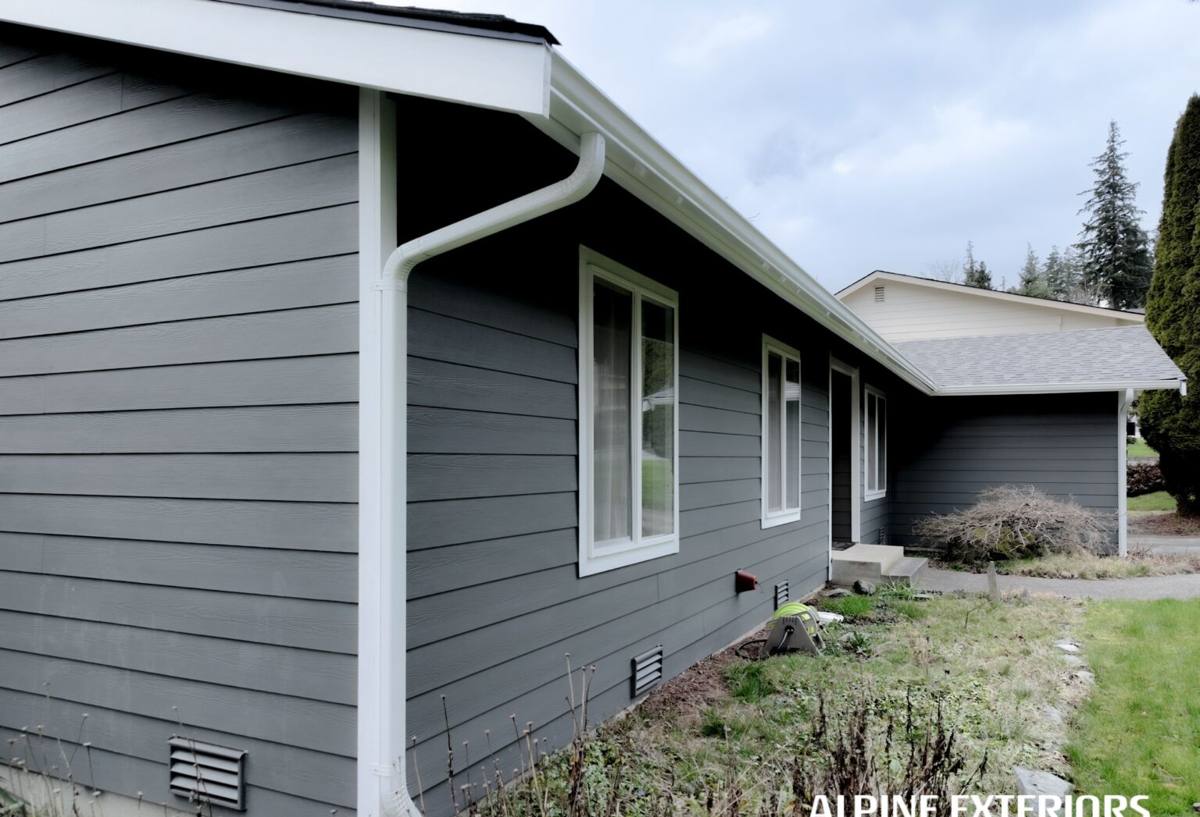
Because Laurel Park has been built out over several decades, we regularly find homes where the siding isn't uniform — original wood siding under later additions, sections of aluminum or vinyl from a past remodel, or fiber cement patched in at different times by different crews. That patchwork history makes repair more complicated than a newer subdivision where every wall is the same product installed the same year. A proper repair has to account for what's actually there, not just what's visible on the surface.
Tree Cover and Trapped Moisture
Mature landscaping is part of what makes the neighborhood attractive, but shaded, tree-lined lots also mean siding dries out more slowly after rain. Sections that stay damp longer are more prone to rot at the bottom edges, behind trim, and around window and door casings — exactly the spots we check first on any repair call in this part of Sarasota.
Proximity to the Bay
Like most of Sarasota, Laurel Park sits close enough to the water that salt-laden air is a constant, low-grade stressor on exterior materials. Salt air accelerates corrosion of exposed fasteners and trim, and it breaks down paint and caulk faster than in inland climates — which means seams and joints that look fine from the street can be failing underneath.
Common Siding Damage We See in This Area
Wind and Storm Damage
Sarasota County sits squarely in hurricane territory, and even storms that don't make direct landfall bring sustained wind and gusts strong enough to lift panels, crack corners, and drive rain sideways into any gap in the siding envelope. After a named storm or a bad summer squall, we typically see loosened panels, popped fasteners, and cracked or split sections — sometimes on just one exposed elevation of the house.
Moisture Intrusion and Rot
Wind-driven rain doesn't just hit siding — it gets pushed up and under laps, around poorly sealed trim, and into any gap where caulking has failed. On older wood or wood-composite siding especially, this shows up as soft, spongy boards, dark staining, or bubbling paint. Left alone, moisture intrusion spreads to the sheathing and framing behind the siding, turning a surface repair into a structural one.
UV Fading, Chalking, and Surface Breakdown
Florida sun is relentless. Painted siding — especially older wood siding — chalks, fades, and loses its protective film coat well before its structural life is over. On some products this is purely cosmetic; on others, UV breakdown of the surface layer opens the door to moisture absorption, which is a bigger problem than faded color.
Fastener and Trim Corrosion
Salt air corrodes exposed nail heads, staples, and metal trim pieces faster here than it would inland. Corroded fasteners lose their grip, which is often the real reason a panel that looks intact still rattles loose in a moderate wind.
What a Correct Siding Repair Actually Involves
A repair that's done right starts with figuring out why the damage happened, not just patching what's visible. That means pulling back damaged sections to check the water-resistive barrier and sheathing underneath, confirming there's no hidden rot spreading beyond the visible damage, and matching new material and fastening methods to what the wall actually needs — not just what's quickest to install.
- Inspect the full elevation, not just the damaged panel — hidden moisture rarely stays in one spot
- Check flashing and trim around windows, doors, and corners for gaps that let water behind the siding
- Confirm the water-resistive barrier (house wrap) is intact before any new siding goes back on
- Replace corroded fasteners, not just the panel they were holding
- Match reveal, profile, and fastening pattern so repaired sections don't stand out or perform differently
- Re-seal and re-caulk with materials rated for sun and salt exposure, not standard interior-grade product
Repair vs. Replacement: How We Make the Call
Not every damaged section needs a full re-side, and not every repair is worth doing. The honest answer depends on how much of the wall is affected, what's underneath, and how the existing material is holding up overall. We walk homeowners through this rather than defaulting to the more expensive option.
| Factor | Favors Repair | Favors Replacement |
|---|---|---|
| Extent of damage | Isolated to one or two sections | Spread across multiple elevations |
| Underlying sheathing | Dry, sound wood behind the damage | Soft, rotted, or water-stained sheathing |
| Age of existing siding | Siding is otherwise mid-life and sound | Siding is near or past its service life |
| Material match | Replacement panels can match closely | Discontinued product, visible mismatch likely |
| Storm history | First significant damage on the home | Repeated storm damage in the same areas |
When damage is contained and the wall assembly underneath is dry and sound, a targeted repair is the right call — it's faster, less disruptive, and less expensive. When we find rot spreading behind multiple sections, or the existing material is old enough that matching panels aren't realistically available, we'll say so directly and lay out what replacement would look like, including the option to move to James Hardie fiber cement in the repaired area or across the elevation.
Our Siding Repair Process
Every repair job in Laurel Park follows the same sequence, whether it's a single storm-damaged panel or a broader moisture problem found during an inspection.
- On-site assessment. We look at the damaged area and the surrounding siding, not just the spot you called about.
- Open it up. Where moisture is suspected, we pull back siding to check the barrier and sheathing before quoting anything.
- Honest scope. You get a clear explanation of what's actually wrong, what repair will fix, and what it won't.
- Matched materials and fastening. Repairs are done to the same standard as new installation — proper flashing, correct fastener spacing, sealed seams.
- Final check. We confirm the repaired section sheds water correctly and blends with the surrounding siding before calling the job done.
Why We Repair — and Replace — With James Hardie Fiber Cement
When a repair calls for new siding material, or when replacement is the better answer, we only use James Hardie fiber cement. It's a deliberate standard, not a default. Fiber cement doesn't rot, isn't a food source for pests, and holds up to wind-driven rain and salt air far better over the long term than wood or vinyl products we regularly find failing on Laurel Park homes. Hardie's ColorPlus factory finish is baked on and warranted against fading, which matters directly here given how hard Florida sun is on painted surfaces. And Hardie's HZ5 product line is engineered specifically for high-humidity, storm-exposed climates like ours — it's built with this kind of weather in mind, not adapted from a product designed for somewhere else.
We don't install LP SmartSide, vinyl, Cemplank, Allura, or primed wood siding. Each has legitimate uses, but none of them match fiber cement's combination of moisture resistance, non-combustibility, and factory-finish durability in a climate that includes hurricane winds and salt air. When we repair with Hardie, or transition a damaged section to Hardie during a partial replacement, it's because we believe it's the material that will actually last on a Sarasota exterior wall — not just look right on installation day.
Why a Crew That Already Works in Laurel Park Matters
Siding repair in an older, established neighborhood isn't the same job as new construction in a fresh subdivision. It means recognizing older wood siding profiles, knowing what's likely hiding behind a wall that's been patched more than once, and understanding how tree-shaded lots and bay-adjacent salt exposure change what "normal wear" looks like here versus a drier, more exposed part of the county. A crew that's worked houses in this neighborhood before isn't guessing at any of that — they've already seen the patterns.
There's also a practical side: local crews can typically respond faster after storm damage, are familiar with permitting expectations in Sarasota County, and have a reputation in the neighborhood worth protecting, which tends to show in the quality of the work.
What to Look for in a Siding Repair Contractor
- Will they open up damaged areas to check for hidden moisture before quoting, or just patch what's visible?
- Do they explain repair vs. replacement honestly, including when repair is the cheaper, correct answer?
- Are they licensed and insured to work in Sarasota County?
- Can they match existing siding profile and reveal, or will they tell you plainly when a match isn't realistic?
- Do they use fasteners, flashing, and sealants rated for coastal, high-UV conditions?
If you're seeing loose panels, soft spots, cracked corners, or fading and chalking on your Laurel Park home, it's worth getting an honest look before small damage turns into a bigger repair. We offer free, no-pressure estimates — fill out the form below and we'll take a look and tell you straight what your siding actually needs.