 Sarasota Siding
 Building Decks That Actually Hold Up in Palmer Ranch
Palmer Ranch sits in south Sarasota County, and homes here deal with a specific combination of stresses that a lot of decking material simply isn't built for: long stretches of intense UV exposure, heavy summer humidity, wind-driven rain during storm season, and salt-laden air that drifts in off the Gulf. None of that is exotic to us — it's the baseline we design every deck around. But it does mean a deck that would hold up fine in a drier, milder climate can fail early here if it's the wrong material or the installation cuts corners you can't see once the boards are down.
Composite decking has become the go-to choice for homeowners in this part of Sarasota County precisely because it's engineered to resist the things that wear wood down fastest — moisture-driven rot, splintering, and UV fading. But "composite" isn't one product. The board quality, the substructure underneath it, and the way it's fastened and flashed all determine whether a deck lasts twelve years or twenty-five. This page walks through what a correctly built composite deck looks like for a Palmer Ranch property, and why the details matter more here than they would somewhere with a gentler climate.
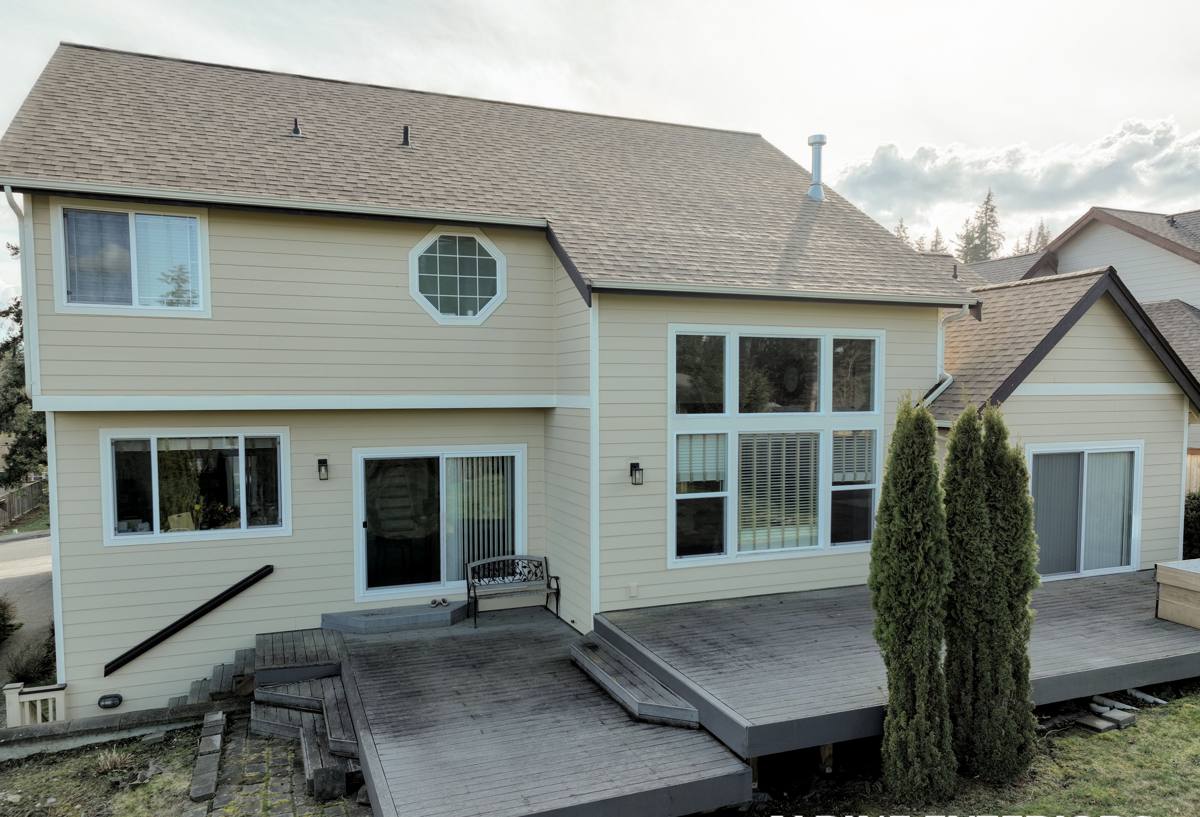
What a Correct Composite Deck Installation Involves
Composite boards get most of the attention, but the framing underneath them does most of the work. A beautiful composite surface over a poorly built substructure is still a poorly built deck — it just takes longer to show.
Substructure and Framing
In our humidity and rainfall pattern, we frame with either pressure-treated lumber rated for ground contact or, where budget allows, aluminum or composite substructure systems that don't absorb moisture at all. Joist spacing gets tightened from typical wood-deck standards when composite boards are used, since composite material has different flex characteristics than solid wood and needs closer support to avoid bounce or long-term sagging between joists.
Fastening Systems
Face-screwing composite boards is faster, but it leaves exposed fastener heads that can telegraph rust stains and give water a path into the board core over time. We install with hidden-fastener clip systems in almost every case, which keep the board surface clean, allow for the board's natural thermal expansion and contraction in our heat swings, and avoid the small puncture points that lead to long-term moisture intrusion.
Flashing and Moisture Management
Where the deck ties into the house — the ledger board connection — is the single most common failure point we see on decks that weren't built right the first time. Proper flashing there, plus a gap between the house and the decking surface, keeps wind-driven rain from working its way behind the structure and into the wall assembly. We also grade and vent the space under the deck so standing water and trapped humidity don't sit against the framing between rains.
Choosing the Right Composite Board for This Climate
Not all composite decking is built the same, and the differences matter more in a hot, humid, salt-exposed climate than they would inland or up north. The biggest distinction is between capped and uncapped composite boards.
Capped composite decking has a polymer shell wrapped around a wood-plastic core, which blocks moisture absorption and resists fading and staining far better than uncapped boards, where the core is more directly exposed to sun and water. In our climate — full sun most of the year, frequent rain, and salt air along the coastal side of the county — that capped layer is the difference between a deck that still looks good in year ten and one that's chalking and fading by year five. It costs more up front. We think it's worth it here, and we'll say so plainly rather than upsell you on something you don't need for your situation.
Composite vs. Wood vs. PVC — An Honest Comparison
| Material | Heat & UV Behavior | Moisture Resistance | Maintenance | Typical Lifespan |
|---|---|---|---|---|
| Capped Composite | Fade-resistant caps; can still get warm underfoot in full sun like any dark surface | Excellent — core is sealed from moisture | Occasional wash-down; no staining or sealing | 25–30 years |
| Uncapped Composite | More prone to fading and surface wear over time | Good, but core can absorb some moisture at cut edges | Low, but ages faster than capped boards | 15–20 years |
| Pressure-Treated Wood | Fades and grays quickly in strong sun | Moderate — depends on sealing schedule | Annual sealing/staining recommended in this climate | 10–15 years with upkeep |
| PVC (Cellular Vinyl) | Very fade-resistant; can run hotter underfoot in dark colors | Excellent — no organic material to absorb moisture | Minimal; wash-down only | 25–30+ years |
These are broad industry ranges, not guarantees — actual lifespan depends heavily on installation quality, board color and quality tier, and how exposed a given deck is to full sun or salt spray. We'll walk you through the real tradeoffs for your specific site rather than steering you toward whatever's easiest to install.
Our Process, Start to Finish
- On-site assessment. We look at sun exposure, drainage, ledger connection to the house, existing structure if it's a rebuild, and any HOA architectural guidelines that may apply to your section of Palmer Ranch.
- Design and material selection. We talk through board tier, color, railing style, and layout, with honest tradeoffs on cost versus longevity for your specific yard and sun exposure.
- Permitting. We handle the Sarasota County permit process, including structural details for framing, footings, and railing where required.
- Demolition (if applicable). Old decking and, if needed, compromised framing is removed and hauled off.
- Framing and substructure. Joists, beams, footings, and ledger flashing are built to hold up under Florida wind and rain loads, not just to pass a quick inspection.
- Decking and railing installation. Boards are installed with hidden fasteners where possible, with attention to expansion gaps and drainage.
- Final walkthrough. We go over the finished deck with you, including basic care so it stays looking right.
Permits, Wind Load, and Sarasota County Code
Most new deck construction and many deck replacements in Sarasota County require a building permit, with structural requirements tied to Florida's wind-load standards — this part of the state is built to a higher wind design standard than most of the country because of hurricane exposure. That affects footing depth, joist hangers, ledger attachment, and railing construction. Guardrails are generally required once a deck surface reaches a certain height above grade, and baluster spacing has to meet code to prevent a young child from passing through. We pull permits and build to these standards as a matter of course, not as an extra step — a deck that's out of code is a liability for you as the homeowner, not just a paperwork issue.
If your property is within an HOA-governed section of Palmer Ranch, there may also be architectural review requirements around visible materials, colors, or railing style. We're glad to help gather what's needed for that submission, but the specific rules vary by community association, so we always recommend confirming current guidelines directly with your HOA before final color and material selection.
Keeping a Composite Deck Looking Right in This Climate
Composite decking is low-maintenance compared to wood, but "low-maintenance" doesn't mean "no maintenance," especially with our pollen, humidity, and salt air. A little regular care goes a long way toward protecting the investment and keeping any warranty coverage intact.
- Rinse the deck surface every few weeks to clear pollen, dust, and salt residue before it builds up in the board texture.
- Wash with a soft-bristle broom and a mild soap and water solution a few times a year — avoid pressure washers on composite, which can damage the surface layer.
- Keep planters, grills, and furniture feet from sitting in standing water on the deck surface after rain.
- Trim back nearby landscaping so leaf litter and organic debris don't collect and trap moisture against the boards.
- Check railing connections and fasteners annually, especially after a named storm passes through the area.
- Clear gutters and downspouts near the deck so runoff isn't dumping directly onto or under the structure.
Why a Crew That Already Works Palmer Ranch Matters
Building decks in this specific pocket of Sarasota County day in and day out means we're not guessing at wind-load requirements, permit timelines, or the kind of substructure that actually holds up to a full South Florida rainy season followed by a dry, sun-baked winter. We know what humidity does to a poorly flashed ledger board over a few years, and we build to avoid that from day one rather than fixing it later.
Local experience also means faster, more accurate estimates — we're not learning the permit office's process or the area's soil and drainage patterns on your project. And if a storm rolls through and you need someone to check a connection or a railing, you're working with a crew that's a short drive away and already familiar with your property, not someone dispatched from across the region.
Signs Your Existing Deck Needs Attention
If you already have a deck in Palmer Ranch — composite or wood — a few warning signs are worth a professional look sooner rather than later: soft or spongy spots underfoot, boards that have visibly cupped or warped, railing posts that wiggle when pushed, staining or dark streaking around fasteners, or a persistent musty smell near the ledger connection to the house. Caught early, most of these are manageable repairs. Left alone through another humid season or storm cycle, they tend to turn into full structural replacements.
If you're planning a new composite deck for your Palmer Ranch home, or want an honest opinion on whether your current deck needs repair or replacement, we're happy to walk the property with you and give you a straight assessment. Use the form below to request a free, no-pressure estimate.