 Sarasota Siding
 Siding in Rosemary District Has to Work Harder Than It Does Almost Anywhere Else
Rosemary District sits just north of downtown Sarasota, a walkable in-town neighborhood where older bungalow-style homes stand next to newer infill construction. Whatever era a house was built in, the exterior on it is fighting the same climate: hurricane-force wind gusts during storm season, wind-driven rain that gets pushed sideways into wall assemblies, intense year-round UV that never really takes a season off, and salt-laden air drifting in off Sarasota Bay and the Gulf. That combination is harder on exterior cladding than almost any other U.S. climate, and it's why the siding decision on a Sarasota County home isn't cosmetic — it's structural and financial.
This page is about one thing: installing fiber cement siding correctly on a Rosemary District home, in a way that actually holds up to this environment rather than just looking good on installation day.
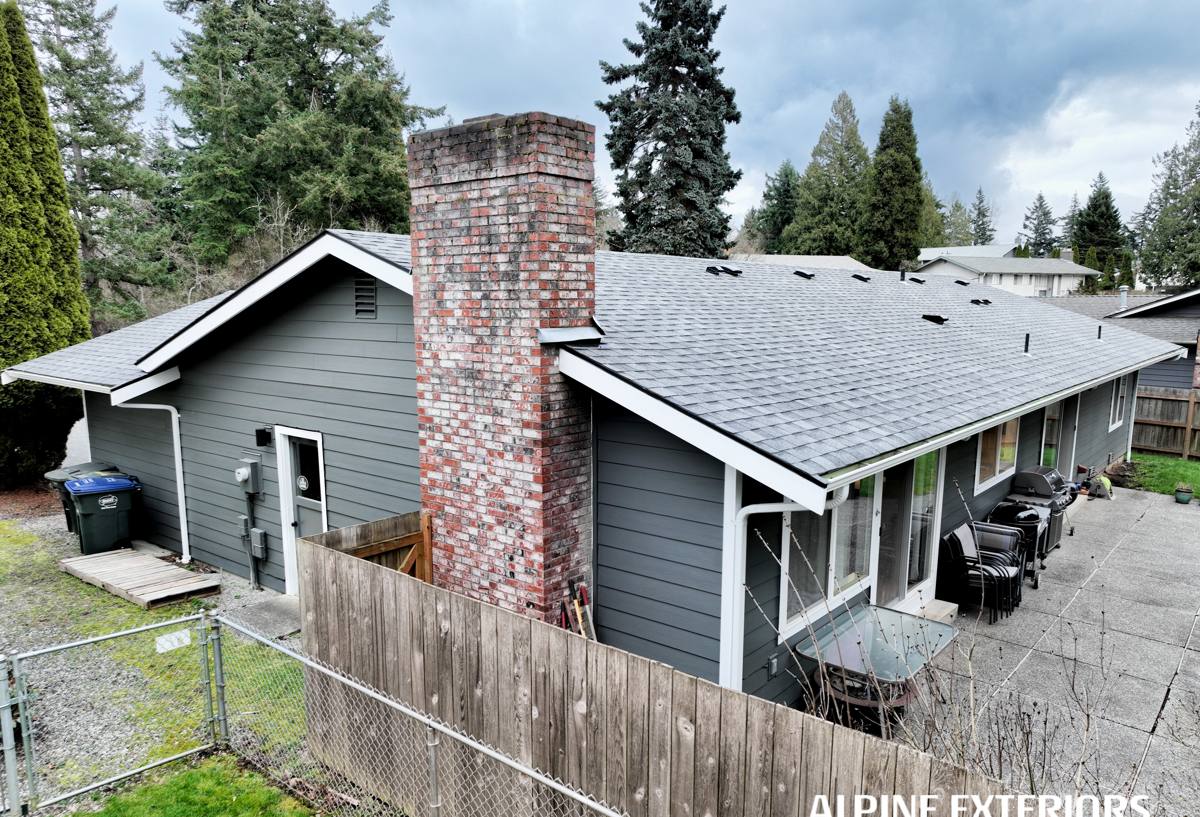
What This Climate Actually Does to Siding
Wind and Wind-Borne Debris
Sarasota County sits inside wind-borne debris and high-velocity hurricane zone requirements. Siding here needs a real wind rating behind it — not just a manufacturer's general claim, but a product tested and installed to a fastening schedule that matches local code. A panel that isn't fastened correctly for this wind zone is the first thing to peel off in a storm, and once one section lets go, it usually takes the assembly behind it with it.
Wind-Driven Rain
Straight-down rain is easy to shed. Wind-driven rain gets forced sideways and upward under laps, around trim, and into any gap in the water-resistive barrier. Siding material matters less here than the assembly behind it — the house wrap, flashing, and drainage plane are doing most of the actual water-management work, and the siding is the first line of defense in front of them.
Salt Air and Coastal Corrosion
Rosemary District isn't oceanfront, but it's close enough to the bay that salt aerosol reaches the neighborhood regularly. Salt air accelerates corrosion on fasteners, trim, and anything metal, and it degrades cheap coatings faster than inland exposure would. Fastener selection and coating quality matter more here than they would on a home fifty miles inland.
Year-Round UV
Sarasota doesn't get a real off-season for sun exposure. UV breaks down pigments and resins in exterior coatings steadily, month after month, which is why field-applied paint on siding tends to chalk, fade, and need recoating on a shorter cycle here than in most of the country. A factory-cured finish designed for UV exposure holds color dramatically longer than paint applied on site after installation.
Why We Install Only James Hardie Fiber Cement
We don't install vinyl, LP SmartSide, Cemplank, Allura, or primed wood siding, and in a climate like this one, that's not a brand preference — it's a standard built around what actually survives here.
- Vinyl softens and can deform in sustained high heat and is more prone to cracking under wind-borne debris impact than fiber cement.
- LP SmartSide is an engineered wood product — wood-based siding is more moisture-sensitive by nature, which matters in a climate with heavy humidity and wind-driven rain.
- Cemplank and Allura are also fiber cement, and reasonable products, but they don't carry the same factory finish system, coastal product engineering, or warranty structure we've standardized on with James Hardie.
- Primed spruce or cedar requires the most ongoing maintenance of any option — regular repainting, sealing, and vigilance against rot — which is a hard ask in a climate this aggressive on coatings.
James Hardie's fiber cement is non-combustible, dimensionally stable in heat and humidity, and available in HZ product lines engineered specifically for climate zones like ours. Paired with the factory-applied ColorPlus finish — baked on and UV-cured before the boards ever reach the jobsite — it holds color and resists cracking and warping in a way field-applied paint on other materials struggles to match.
HZ5 and Why the Climate Zone Rating Matters
James Hardie engineers its siding by climate zone rather than shipping one universal product everywhere. HZ5, the line built for hot, humid, high-moisture regions, is formulated and tested for exactly the conditions Sarasota County deals with — sustained humidity, heavy seasonal rain, and intense sun. Installing the wrong climate-zone product, or installing the right product with the wrong detailing, is one of the most common ways a fiber cement job underperforms. The product only delivers what it's rated for if it's specified and installed correctly for this zone.
What a Correct Installation Involves Here
Fiber cement siding is only as good as the assembly it's installed into. On a Rosemary District project, that means:
Water Management First
A code-compliant weather-resistive barrier goes on before a single piece of siding, with flashing detailed at every window, door, and penetration so water that reaches the wall plane has a path back out rather than a place to collect.
Correct Clearances
Siding needs proper clearance from grade, roof lines, decks, and other hard surfaces so it isn't sitting in standing water or trapping moisture against the wall — a detail that gets skipped more often than it should on rushed jobs.
Fastening for This Wind Zone
Fastener type, spacing, and embedment need to match both the manufacturer's specification and the local wind-load requirements for Sarasota County. This is the single biggest factor in whether siding stays attached during a serious wind event.
Joint and Seam Treatment
Butt joints, corners, and trim need to be sealed and detailed correctly, since these are the highest-risk points for wind-driven rain intrusion on any siding system.
Our Process for a Rosemary District Project
- On-site inspection — we look at the existing wall assembly, not just the visible siding, to understand what's actually happening behind it before quoting anything.
- Tear-off and substrate check — old siding comes off and we check the sheathing underneath for rot, water damage, or prior installation shortcuts before covering it back up.
- Water-resistive barrier and flashing — installed to current code, with attention to every window, door, and penetration.
- Hardie panel or plank installation — fastened to the correct schedule for this wind zone and climate zone product line.
- Trim, caulking, and final detailing — the finish work that determines how well the assembly sheds water over the long run.
- Walkthrough and cleanup — final review with the homeowner before we consider the job done.
Cost Factors for Fiber Cement Siding in This Area
| Factor | Why It Matters in Rosemary District | Effect on Cost |
|---|---|---|
| Substrate condition | Older homes may have hidden moisture or rot behind existing siding that has to be addressed before new siding goes on | Can add repair cost once walls are opened up |
| Home style and trim detail | Bungalow-style homes with more trim and architectural detail take more labor than simple flat elevations | Increases labor hours |
| Product line (HZ5 vs. standard) | Climate-matched HZ5 product is the correct spec for this region | Slightly higher material cost, offset by longer service life |
| Site access | Narrow lots and close-set homes common in-town can slow staging and material handling | Can affect labor time |
| Finish and color | Factory ColorPlus finish vs. field-applied paint | ColorPlus costs more up front, less to maintain over time |
Signs a Rosemary District Home May Need New Siding
- Visible cracking, warping, or soft spots when pressed
- Paint that's chalking, peeling, or fading unevenly across a wall
- Gaps opening up at seams, corners, or trim joints
- Soft or discolored sheathing visible around window and door edges
- Rising cooling bills that suggest the wall assembly isn't performing
- Siding that's simply reached the end of its expected service life for the material it's made from
Any one of these is worth a look. Several of them together usually means the wall assembly, not just the surface material, needs attention.
Why It Matters That We Already Work This Neighborhood
A crew that already works in and around Rosemary District knows the mix of home ages and construction styles here, understands Sarasota County's permitting and wind-load requirements without having to relearn them on your job, and has already worked through the access and staging challenges that come with tighter in-town lots. That familiarity shows up in fewer surprises mid-project and a job that's specified correctly the first time — not adjusted on the fly once problems show up.
If you're weighing a siding replacement or repair in Rosemary District, we're happy to take a look and give you a straightforward, no-pressure estimate — just fill out the form below.