 Sarasota Siding
 Rosemary District Roofs Work Harder Than Most
Rosemary District sits close to downtown Sarasota, which means its roofs catch the same weather as every other neighborhood along this stretch of the Gulf Coast — but often on older framing, tighter lots, and a mix of building styles that ranges from established bungalows to newer infill construction. Sarasota County sees more than its share of tropical systems, and even in years without a direct hurricane hit, the roofs here are absorbing tropical downpours, straight-line squalls, and months of unfiltered Florida sun. That combination is why storm damage repair in this part of Sarasota is rarely a one-and-done fix — it's an ongoing relationship between the homeowner, the roof, and the climate.
A roof that looks fine from the street can be hiding real problems underneath. Wind-driven rain finds the smallest gap in flashing or shingle seal, and once water gets under the roofing material, the damage keeps spreading long after the storm has passed. That's the core challenge with storm damage repair here: the visible damage is rarely the whole story.
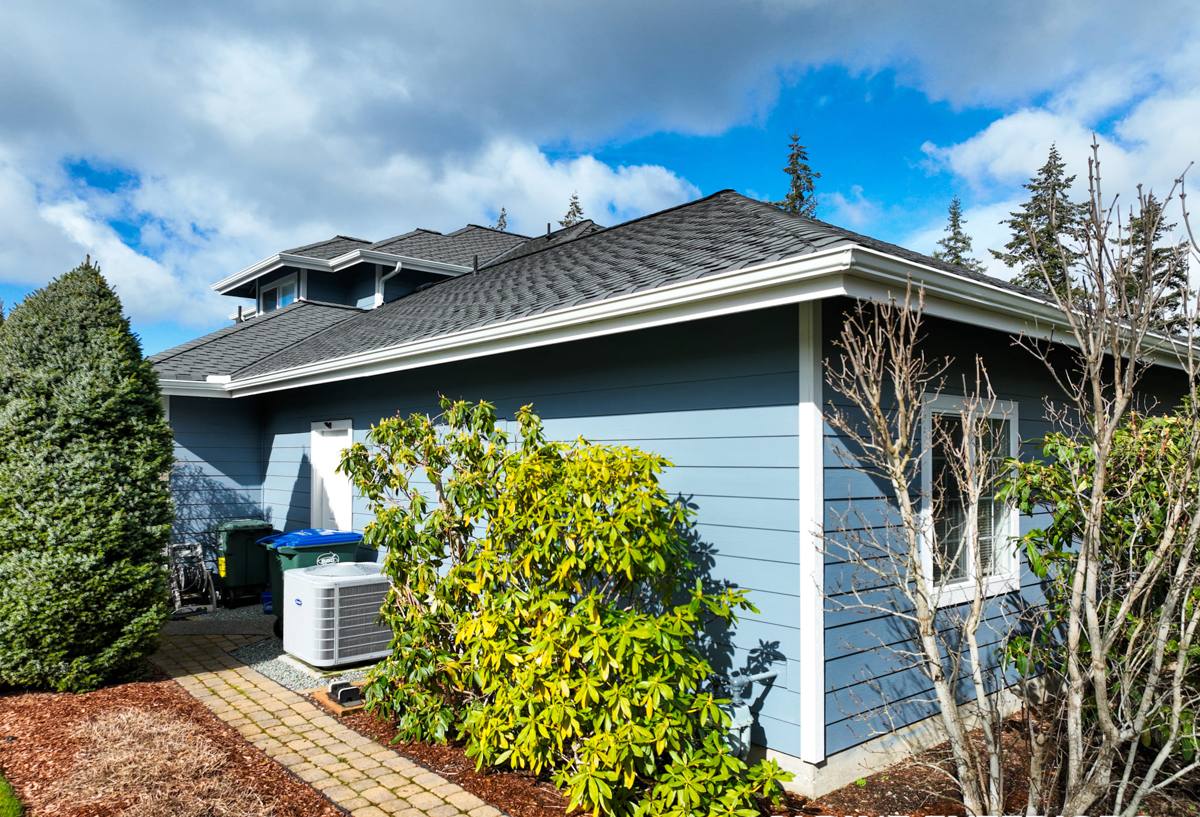
What "Storm Damage" Actually Looks Like on a Sarasota Roof
Wind
Hurricane-force and even tropical-storm-force gusts lift shingle edges, crease metal panels, and pull fasteners loose. Sometimes the damage is obvious — missing shingles, a lifted ridge cap, a section of underlayment exposed. Often it's subtler: shingles that got lifted and reset by the wind can look intact but have broken their seal strip, which means the next rain gets underneath them.
Wind-Driven Rain
Florida storms rarely drop rain straight down. When rain comes in sideways, it can work its way under flashing, around vent boots, and through any gap that would never leak in a normal rainstorm. This is one of the most common reasons homeowners get an interior stain weeks after a storm with no obvious roof damage visible from the ground.
Debris Impact
Palm fronds, oak limbs, and airborne debris are a fact of life during Sarasota storm season. Impact damage can bruise or crack shingles, dent metal roofing, and puncture underlayment in ways that aren't always visible until the material starts to fail.
UV and Heat Cycling
This one doesn't get talked about as much, but it matters just as much as the storms themselves. Sarasota's intense, near year-round sun bakes asphalt shingles and dries out sealants between storm events. A roof that's already brittle from UV exposure is far more likely to sustain real damage in the next wind event than a roof that's been properly maintained.
Salt Air Corrosion
Being close to the Gulf means airborne salt is a constant, low-grade stressor on metal flashing, fasteners, and roof vents. Corrosion weakens the small components that keep water out long before most homeowners notice a problem.
What a Correct Storm Damage Repair Actually Involves
Not every storm-damaged roof needs a full replacement, and not every leak can be fixed with a quick patch. Doing this correctly means understanding the difference and being honest with the homeowner about which situation they're in.
A Real Inspection, Not a Glance
A proper storm damage inspection covers the whole roof system — shingles or panels, underlayment where accessible, flashing around chimneys, vents, and roof-to-wall transitions, and the attic itself, where water staining and damp insulation tell the truth about a leak's real path. Water doesn't always travel straight down, so the visible interior stain and the actual point of entry are often several feet apart.
Matching the Repair to the Damage
Isolated wind damage with a handful of missing or lifted shingles usually calls for a targeted repair — replacing the damaged section, re-sealing surrounding shingles, and checking that the underlayment beneath wasn't compromised. Damage that's spread across multiple slopes, or that's exposed a large section of underlayment to repeated rain, often needs a larger tear-off and re-roof of the affected area rather than a patch that won't hold.
Flashing and Penetrations
Most roof leaks after a storm trace back to flashing — around chimneys, skylights, vent stacks, and wall transitions — rather than the field of the roof itself. A repair that only replaces shingles and ignores compromised flashing is a repair that's going to fail again in the next storm.
Underlayment Integrity
The underlayment is the roof's real waterproofing layer; shingles are the wear surface on top of it. If wind or impact damage has torn or exposed the underlayment, that section needs to be replaced, not just covered back over. Skipping this step is one of the most common shortcuts in rushed post-storm repair work, and it's the reason some "fixed" roofs leak again in the very next rain.
Our Repair Process
- Inspection and documentation. We assess the full roof and attic, photograph the damage, and identify every point where water could be getting in — not just the spot where the stain showed up inside.
- Honest scope and written estimate. We explain what actually needs to be done, why, and what it will cost — including whether this is a repair situation or one where replacement makes more sense long-term.
- Temporary protection if needed. If there's active exposure, we get the roof weathertight first, before scheduling the full repair, so the problem doesn't get worse while materials are ordered.
- The repair itself. Damaged material comes out, underlayment and flashing are restored to proper condition, and new material is installed and sealed to match the surrounding roof as closely as possible.
- Final walkthrough. We show the homeowner what was found and what was fixed, in plain language, before we consider the job done.
Repair or Replace? How We Help You Decide
This is one of the most common questions after a storm, and the honest answer depends on the roof's age, the extent of damage, and how much of the roof system is still sound. The table below covers the main factors we weigh.
| Factor | Leans Toward Repair | Leans Toward Replacement |
|---|---|---|
| Roof age | Under roughly 10-12 years, still within useful life | Near or past the material's expected lifespan |
| Extent of damage | Isolated to one section or slope | Spread across multiple slopes or the whole roof |
| Underlayment condition | Intact outside the damaged area | Widespread exposure or deterioration |
| Prior repair history | Few or no previous patches | Multiple past repairs in different spots |
| Granule loss / material condition | Minimal, localized | Significant loss across the roof, brittle material |
| Cost over time | Repair cost is a small fraction of replacement cost | Repeated repairs are approaching replacement cost |
Cost for a targeted storm repair typically runs from a few hundred dollars for minor shingle and flashing work up to a few thousand for a larger section tear-off and re-roof, depending on the roof's pitch, material, and how much of the underlying deck and underlayment needs replacing. We won't quote a firm number without seeing the roof, but we'll always tell you honestly whether a repair makes sense or whether you'd be better served putting that money toward a replacement.
Working With Your Insurance Claim
Many storm damage repairs in this part of Sarasota County get filed through homeowners insurance. We're glad to document damage clearly — photos, notes on cause, and a written scope — so you have what you need for your claim. A few things worth knowing going in:
- Insurance adjusters look for a clear connection between a specific storm event and the damage, so timely inspection after a storm matters.
- Wear-and-tear damage (like UV-degraded shingles) is generally treated differently from storm-caused damage, and a good inspection separates the two honestly.
- Getting a repair done quickly after damage occurs, rather than waiting, usually results in a smaller, less expensive job — and reduces the odds of secondary damage like interior water intrusion or mold.
- We work for you, not the insurance company — our job is to accurately document and correctly repair the damage, whatever the claim outcome ends up being.
Why It Matters That We Already Work in Rosemary District
A crew that's unfamiliar with this neighborhood is starting from zero every time — guessing at typical roof ages, unfamiliar with the mix of older and newer construction nearby, and not necessarily up to speed on Sarasota's local permitting requirements for roof work. We're not guessing. We know the kind of roofs common to this part of Sarasota, we're familiar with the city and county permitting process for roof repairs, and we can usually get a crew out faster because we're already working in the area regularly rather than treating it as a one-off trip.
That local familiarity also shows up in smaller ways that matter: knowing which roofing details tend to fail first on the building styles common here, being realistic about how tree canopy and lot layout affect debris and drainage, and having a track record with local suppliers so material delays don't stretch out a repair that should take days, not weeks.
Materials We Use — and Why
Coastal Sarasota conditions — salt air, UV intensity, and wind-driven rain — mean we're selective about the materials we put on a roof here. We favor products with a genuine track record in this climate over cheaper options that look fine on day one but degrade faster under Florida sun and storm exposure.
- High-wind-rated shingles when the roof is asphalt, matched to local wind-zone requirements rather than a generic minimum-code product.
- Synthetic underlayment in most cases, for better tear resistance and water resistance than older felt products during the time between tear-off and final roofing.
- Corrosion-resistant flashing and fasteners, given how quickly standard hardware can degrade this close to the Gulf.
- Properly sealed and matched vent boots, since these are one of the most common leak points we find during storm inspections.
- Ridge and soffit ventilation checks, because poor attic ventilation accelerates shingle aging from the underside, not just the surface.
A Homeowner's Post-Storm Roof Checklist
After any significant wind or rain event, it's worth doing a basic check before calling for an inspection — from the ground, safely, without getting on the roof yourself.
- Look for shingles or roofing material in the yard or gutters after a storm.
- Check the attic (if accessible) for new water stains, damp insulation, or daylight coming through the roof deck.
- Note any new ceiling stains inside the home, even faint ones.
- Look at gutters and downspouts for granule buildup, which can indicate shingle wear or damage.
- Check that vent covers, ridge caps, and flashing look straight and intact from the ground.
- If you see visible damage or suspect a leak, avoid running attic fans or HVAC systems that could spread moisture until it's inspected.
Maintenance That Extends the Life of a Repair
A well-done repair is only half the equation — a little regular maintenance keeps it holding up against the next storm season. We recommend a visual roof check twice a year, ideally before and after the height of hurricane season, along with keeping gutters clear so water isn't backing up under the roof edge. Trimming back tree limbs that overhang the roof reduces both debris impact risk and the amount of organic debris that traps moisture against shingles. If your roof has had prior repairs, it's worth having those checked periodically too — repair points are sometimes the first place a new leak shows up if the original work wasn't done thoroughly.
If your Rosemary District home has visible storm damage, a suspicious ceiling stain, or you just want a professional set of eyes on your roof after the last round of weather, we're happy to take a look. Reach out for a free, no-pressure estimate using the form below.