 Sarasota Siding
 Why Lakewood Ranch Siding Takes More Punishment Than It Looks
Lakewood Ranch sits inland from Sarasota Bay, but "inland" doesn't mean sheltered. Homes here still take direct hits from the same tropical systems that move across Sarasota County every hurricane season, and the wind doesn't lose much strength crossing a few extra miles of flat Florida terrain. Add in year-round UV exposure that's among the most intense in the continental United States, humidity that rarely lets building materials fully dry out, and the salt-laden air that drifts well inland on Gulf breezes, and you have a climate that quietly stresses siding every single day, not just during storms.
Most siding damage in this area doesn't show up as a dramatic blowout. It shows up as a hairline crack that lets water behind a panel, a caulk joint that dried out and split, or a section of trim that's been absorbing moisture for two years before anyone notices the paint bubbling. By the time it's visible from the street, there's usually already damage happening behind the surface. That's the pattern we see repeatedly on repair calls in this neighborhood, and it's why we treat siding repair here as a diagnostic job first and a patching job second.
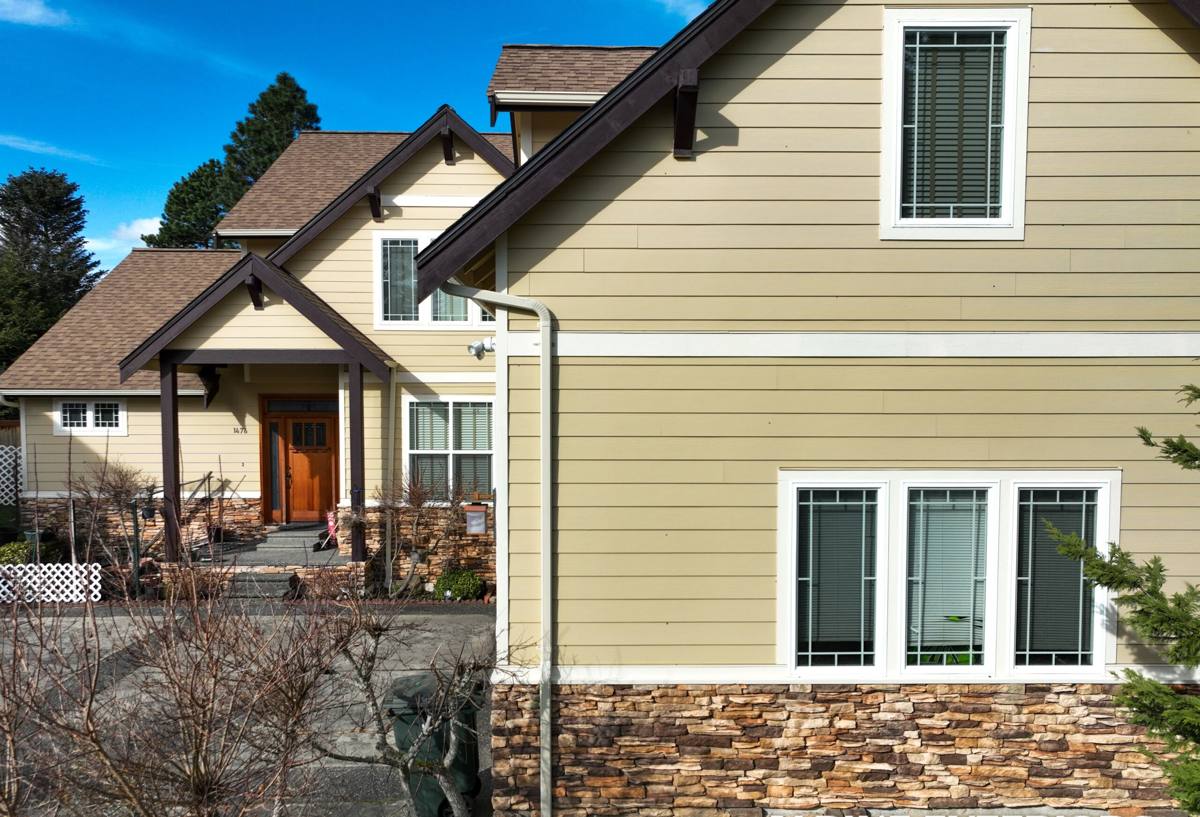
Signs Your Siding Needs Repair
Some damage is obvious. Some isn't. Homeowners in Lakewood Ranch should walk the exterior a couple of times a year, especially after a named storm passes through the region, and look for these warning signs:
- Cracked, split, or warped panels, especially near corners and window trim
- Soft or spongy spots when you press on the siding near the bottom of walls
- Paint that's peeling, bubbling, or discoloring in patches rather than evenly
- Gaps or separation at seams, joints, or where siding meets trim, windows, or doors
- Visible fastener heads (nails or screws backing out of the panel)
- Staining or streaking that suggests water is running behind the siding, not just across it
- Soft drywall, musty odor, or peeling paint on interior walls that back up to exterior siding
- Missing or dislodged panels after high winds, even if nothing looks broken
Any one of these on its own might be minor. Several together, or anything paired with interior symptoms, usually means water has already found a way in and the repair needs to address more than the visible panel.
What a Proper Repair Actually Involves
It Starts Behind the Siding, Not At It
A repair that only replaces the damaged piece you can see is a temporary fix. The house wrap, flashing, and fastening underneath are what actually keep water out — the siding panel is the visible layer on top of that system. When we open up a damaged section, we're checking the condition of the water-resistive barrier, the flashing around penetrations like hose bibs and light fixtures, and the sheathing underneath. If any of that has been compromised by trapped moisture, patching the surface without addressing it just seals the problem back in.
Matching Matters More Than People Expect
Replacing a damaged section with siding that doesn't match — in profile, exposure, or finish — is one of the most common shortcuts we see from patch jobs done in a hurry. It's also one of the easiest things to get right if the crew has access to the correct product line and color match. We keep this in mind on every repair: a fix should be functionally sound and visually seamless, not a patch you can spot from the driveway.
Fasteners and Caulking Are Not an Afterthought
A huge share of siding failures we find in this climate trace back to incorrect fastening (too shallow, too tight, or in the wrong location on the panel) or caulk that was never rated for constant UV and moisture cycling. Both are cheap to get right and expensive to ignore. Correct repair means using the fastening pattern and sealants the manufacturer specifies, not whatever was fastest.
Repair or Replace? How We Decide
Not every damaged section needs full replacement, and not every home needs a whole new siding job because of one bad wall. We look at the scope, age, and underlying condition before recommending either path.
| Situation | Usually Repair | Usually Replace |
|---|---|---|
| Isolated storm damage to a few panels | Yes | No |
| Localized moisture damage with sound sheathing | Yes | No |
| Widespread cracking or fading across most walls | No | Yes |
| Rot or soft sheathing found in multiple areas | No | Yes |
| Original material is a discontinued product with no match | Sometimes | Sometimes |
| Siding is near or past its expected service life | No | Yes |
When the damage is contained and the structure underneath is sound, a targeted repair is the right call and the honest recommendation — we're not going to push a full replacement on a home that doesn't need one. When we find recurring issues across multiple walls, or moisture damage that's been progressing for a while, we'll say so plainly and explain why patching it again isn't the better long-term move.
Our Repair Process
1. Inspection and Diagnosis
We start by identifying not just the visible damage but the likely cause — wind, impact, moisture intrusion, sun exposure, or a combination. This determines whether the fix is a simple panel swap or something that requires opening up the wall assembly.
2. Scope and Straight Answer on Repair vs. Replace
Before any work starts, you get a clear explanation of what we found, what it will take to fix it correctly, and whether repair is genuinely the right call for the scope of damage.
3. The Repair Itself
Damaged material comes out, the barrier and flashing underneath get inspected and corrected if needed, and new siding goes in matched to the existing panels using proper fastening and manufacturer-rated sealants.
4. Finish and Cleanup
Trim, caulking, and paint or factory finish touch-ups are matched as closely as possible so the repair blends into the rest of the wall rather than standing out.
Why We Repair With James Hardie Materials Only
We install and repair exclusively with James Hardie fiber cement siding. That's a deliberate standard, not a limitation. Fiber cement doesn't absorb and swell with moisture the way wood-based products can, it's non-combustible, and it holds up to UV exposure without the chalking and fading that shortens the life of some other siding types in a climate this sunny. James Hardie's ColorPlus factory finish is also engineered specifically for exactly the conditions Lakewood Ranch deals with year-round: baked-on color that resists fading, backed by a finish warranty that a field-applied paint job can't match.
Practically, that means when we repair a Hardie home, we can match the existing panel profile and finish with a product built for this, rather than improvising with a substitute material that behaves differently in heat, humidity, and salt air. If your home currently has a different siding material, we'll still repair it honestly and correctly — but if you're ever facing a repair scope large enough to consider replacement, we'll explain why Hardie is what we'd put on the wall instead.
What Affects the Cost of a Siding Repair
| Factor | Why It Matters |
|---|---|
| Extent of visible damage | More panels affected means more material and labor |
| Condition of the barrier and sheathing underneath | Hidden moisture damage adds scope once a wall is opened |
| Color and profile matching | Discontinued or custom colors may require special ordering |
| Access and height | Second-story or hard-to-reach sections take more time and equipment |
| Trim and flashing work | Repairs around windows, doors, and penetrations require more careful detailing |
We won't quote a number without seeing the damage in person, since two homes with what looks like the same crack can have very different amounts of hidden work behind it. What we will always do is explain what's driving the cost before we start, not after.
Why a Crew That Already Works Lakewood Ranch Matters
Siding repair isn't just about swapping a panel — it's about understanding how a specific climate and building style tend to fail over time, and catching that pattern early. A crew that regularly works in this part of Sarasota County has already seen how wind-driven rain finds its way into corner joints on homes built with a particular trim detail, or which orientations take the worst UV exposure through a Florida summer. That familiarity shows up in faster, more accurate diagnosis and fewer surprises once a wall is opened.
It also matters for response time. Storm damage doesn't wait for a convenient week, and a compromised section of siding left exposed to more wind-driven rain can turn a contained repair into a much bigger one. Working with a crew already established in the area means a shorter gap between the damage happening and it getting properly addressed.
Get a Straight Answer on Your Siding
If you're seeing cracked panels, soft spots, staining, or storm damage on your Lakewood Ranch home, it's worth getting eyes on it before it gets worse. We'll give you a clear, no-pressure assessment of what's actually going on, what it will take to fix it right, and whether repair or replacement makes sense for your situation. Request a free estimate using the form below.