 Sarasota Siding
 Why Siding Repair Looks Different in Venice
Venice sits directly on the Gulf of Mexico in Sarasota County, and that position shapes what actually goes wrong with siding here compared to a home further inland. Homes take on salt-laden air moving in off the Gulf, intense UV exposure nearly year-round, wind-driven rain that gets pushed sideways into walls during storms, and the structural stress of hurricane-force wind loads during the active part of the season. None of those forces work alone — they compound each other, and a repair that only addresses what's visible on the surface often misses the combination of causes that actually created the problem.
Siding repair done right in Venice starts with figuring out what's actually failing and why, not just patching what's easiest to see. This page covers what actually damages siding on Venice homes, how a correct repair is diagnosed and scoped, and why hiring a crew that already works this stretch of the Gulf Coast — rather than one learning the local climate on your project — makes a real difference in whether the repair actually holds.
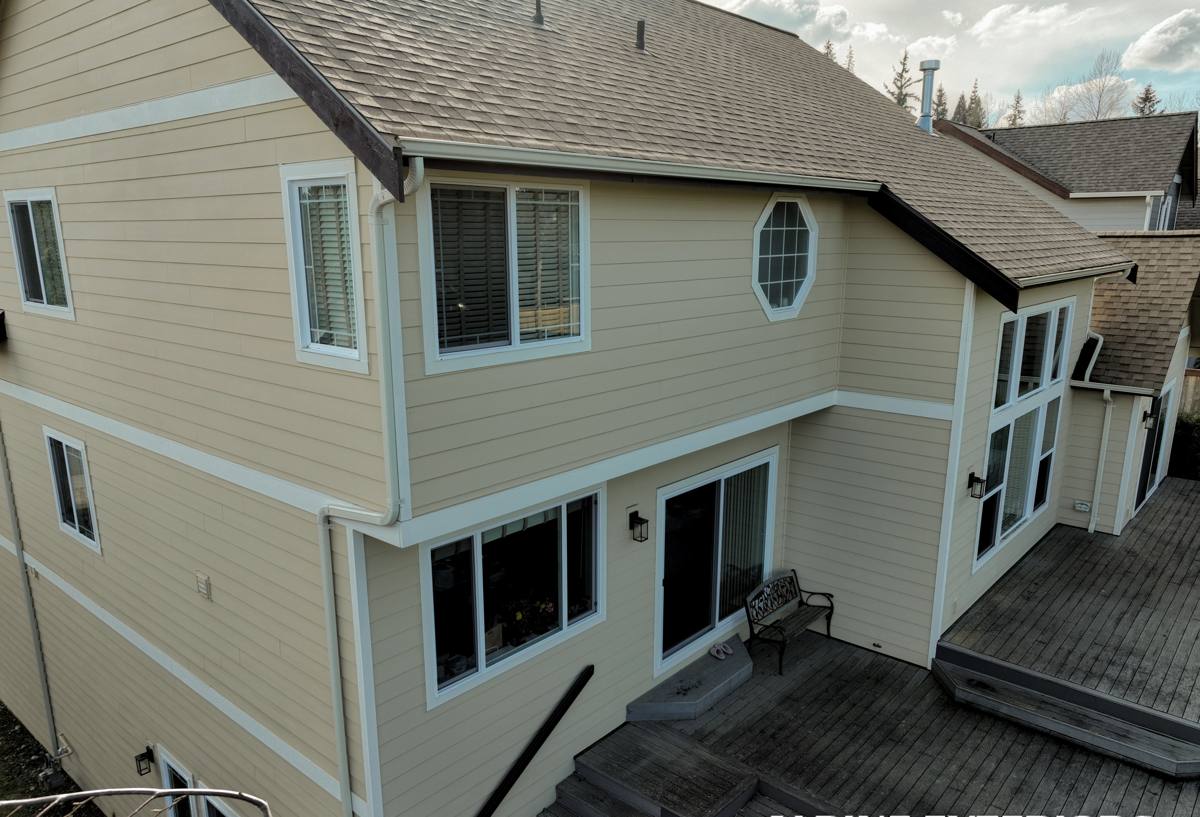
What Actually Damages Siding Out Here
Wind-Driven Rain and Hidden Moisture
Ordinary rainfall mostly runs down a wall and off. Wind-driven rain during a Gulf Coast storm behaves differently — it gets forced sideways and upward into laps, seams, and trim joints that were never designed to shed water moving in that direction. That's how moisture ends up behind siding rather than on top of it, and why a wall can look fine from the ground while rot or moisture damage is already established underneath. This is one of the most common root causes behind siding calls that started as "just a small crack" or "some peeling paint."
UV and Sun Exposure
Florida carries some of the highest UV exposure in the country, and a Venice home takes that load on most elevations for most of the year, with little seasonal relief. On painted or field-finished siding, UV breaks down the finish over time, leading to chalking, fading, and eventually cracking that lets moisture in. Factory-applied finishes hold up meaningfully better against this kind of sustained sun exposure than site-applied paint, which is part of why finish quality matters as much as the base material itself.
Salt Air and Corrosion
Being on the Gulf means salt content in the air, and that salt settles onto fasteners, trim, and any exposed metal continuously, not just during storms. Corroded fasteners lose their holding strength gradually and often without an obvious visible sign until a panel starts to shift or a seam opens up. On Venice properties, especially those closer to the water, checking fastener condition is a standard part of any real siding inspection, not an afterthought.
Hurricane Wind Loads and Fastener Stress
Hurricane-force wind doesn't just risk catastrophic failure during a storm — repeated wind loading over multiple storm seasons works fasteners loose, stresses seams and corner details, and can shift panels slightly out of alignment even when nothing fails outright. After an active storm season, it's common to find popped fasteners, slightly lifted panel edges, or trim that's pulled away at a joint, even on siding that otherwise looks intact.
Cosmetic Wear vs. Real Damage
Not every issue on aging siding needs the same response, and telling the difference is the actual job of a real inspection rather than a quick look from the driveway.
| Symptom | Usually Cosmetic | Often a Deeper Problem |
|---|---|---|
| Chalking or faded color | Yes — UV breakdown of the finish | Only if paired with cracking or soft spots |
| Hairline cracking at a joint or corner | Sometimes, if isolated and dry | Often — an entry point for wind-driven rain |
| Soft or spongy area on a panel | No | Yes — moisture damage or rot behind the surface |
| Rust staining near fasteners | Cosmetic if isolated and dry underneath | Can indicate fastener failure below the surface |
| Bulging or slightly bowed panel | Rarely | Usually — trapped moisture pushing the panel out |
| Gap or separation at trim or a butt joint | No | Yes — a direct path for water intrusion |
Cosmetic wear affects appearance and can generally be addressed on a normal maintenance schedule. Anything involving softness, bulging, or a gap at a seam should be treated as a moisture problem until an inspection proves otherwise, because in this climate that's usually exactly what it is.
How We Diagnose Siding Before Recommending Repair
A repair estimate that's actually worth something starts with a real inspection, not a guess from a photo or a walk-by. That typically includes:
- Probing suspect panels and trim for soft spots that indicate moisture damage, not just a visual look at the surface
- Checking fastener condition, especially on elevations facing the Gulf or open water directly
- Inspecting seams, butt joints, and corner details for gaps or separation that could be letting wind-driven rain in
- Looking behind accessible sections of damaged siding to see how far moisture has actually traveled, not just where it's visible on the surface
- Checking flashing at windows, doors, and roof-to-wall transitions, since a siding problem often starts as a flashing problem
- Assessing whether the existing material and finish are still performing as designed, or have simply reached the end of their useful life
We walk through what we find honestly, including what needs attention now, what can be monitored, and what's purely cosmetic, before recommending a scope of work.
Repair vs. Replace: How That Decision Actually Gets Made
Homeowners often assume any siding problem means a full re-side, or the opposite — that a patch will always be cheaper and hold up just as well. Neither assumption is reliable. The honest factors that actually drive this decision:
- How far the moisture has traveled. Damage isolated to a panel or two, caught early, is usually a straightforward repair. Moisture that's worked its way across multiple panels or into the sheathing behind the wall often isn't worth chasing piece by piece.
- Age and condition of the remaining siding. Siding near the end of its practical life may only have limited repair cycles left before replacement becomes the more sensible path, both financially and structurally.
- Whether the original installation was done to spec. Some homes weren't sided with the fastener spacing, flashing detail, or clearance a Gulf Coast property really needs, and repairing those spots in place just delays the same failure showing up again nearby.
- Material match availability. On a partial repair, matching the existing profile and color affects whether it's worth patching a section or addressing a full elevation at once.
We give a straight answer on which category a given repair falls into, including when full replacement is genuinely the better option, rather than defaulting to whichever job is bigger.
What a Correct Repair Involves
Matching Profile and Finish
On homes already sided with James Hardie fiber cement, repairs mean matching the existing plank exposure, profile, and ColorPlus finish so the repaired section doesn't stand out from the rest of the wall. Because the color is factory-applied rather than field-mixed, getting a genuine match matters, and we'll be upfront if an exact match on an older color isn't available before starting the work.
Fixing the Water Path, Not Just the Symptom
A soft panel or a stained seam is a symptom. A failed flashing detail, an open joint, or a gap that's been letting wind-driven rain behind the wall is the actual cause. A repair that swaps out the damaged panel without correcting what let water in tends to fail again in the same spot, usually faster the second time because the underlying path was never closed off.
Fasteners and Flashing Done to Spec
Any fasteners we replace during a repair are installed to the spacing and type Hardie's installation specifications call for, not a like-for-like swap with whatever was originally used if that original installation was part of the problem. The same goes for flashing at windows, doors, and trim, since that detail is what actually keeps this climate's wind-driven rain out of the wall assembly over the long run.
When the Existing Siding Isn't James Hardie
We only install James Hardie fiber cement, and that shapes how we handle repairs on homes currently sided in vinyl, LP SmartSide, or another product. We'll still assess the damage honestly and explain what's actually driving it, whether that's a maintenance issue specific to that material or simple age and weathering. On isolated, minor damage, a like-for-like patch is sometimes the practical answer in the near term. But when the damage points to a broader pattern — moisture behavior, finish breakdown, or fastener issues tied to the material itself — we'll say so plainly, and if replacement makes more sense than continuing to chase repairs on a material we don't stand behind, we'll walk through why Hardie is the system we'd put on the wall instead, without pressure either way.
Maintenance That Extends a Repair's Lifespan
- Rinse siding periodically to clear salt residue before it settles into seams and fastener heads
- Keep irrigation and sprinklers from hitting the wall directly, since repeated wetting in one spot accelerates every other issue on this list
- Check caulking at trim, windows, and butt joints once or twice a year, and recaulk before a gap opens into a real water path
- Walk the exterior after any significant storm and look for popped fasteners, lifted edges, or new gaps at seams
- Trim back landscaping that holds moisture against the wall or blocks a section from drying out between rain events
- Address soft spots or bulging right away rather than waiting for the next scheduled look — those are moisture signs, not cosmetic ones
Why It Matters That We Already Work Venice
A crew that mostly repairs siding well inland can still do competent work here, but Venice properties come with variables that show up more often on this stretch of the Gulf Coast than elsewhere in Sarasota County — direct salt exposure on Gulf-facing walls, wind load considerations tied to open-water exposure, and, depending on the property, canal-front or waterway conditions that add their own moisture pattern. Working this area regularly means we're not guessing at those conditions or learning them mid-project. We know what a Gulf-facing wall actually needs versus a sheltered elevation on the same house, and we've seen how Hardie siding installed to spec performs here over time versus siding that had corners cut on the original install.
That familiarity also means a more accurate first estimate, with less back-and-forth once work is underway, because the inspection already accounts for how this coastline actually behaves rather than applying a generic checklist written for a different climate.
Get an Honest Look at Your Siding
Whether you're dealing with a specific problem — a soft panel, a gap at a seam, storm damage from the last active season — or just want a straight read on where your siding stands, we're glad to walk the exterior and explain what we find plainly, including if the answer is "this doesn't need much." Reach out below for a free, no-pressure estimate.