 Sarasota Siding
 Siding Replacement Built for Ellenton's Gulf Coast Exposure
Ellenton sits in the humid, storm-exposed stretch of Florida's Gulf Coast, close enough to Tampa Bay and Sarasota to feel every summer squall line and every named storm that tracks up the peninsula. Homes here take a different kind of beating than siding was originally designed for up north: constant humidity, intense UV load nearly every day of the year, wind-driven rain that finds its way behind poorly flashed panels, and a steady drift of salt air off the coast that accelerates corrosion on anything metal or poorly sealed. Siding replacement in this area isn't a cosmetic upgrade — it's a structural decision about what's going to stand between your framing and that climate for the next several decades.
We work Ellenton and the surrounding Sarasota-Bradenton area regularly, and the failure patterns we see are consistent: siding that looked fine from the street but was letting moisture into the wall cavity for years, warped or delaminated panels on west- and south-facing walls that take the worst afternoon sun, and caulk joints that gave out long before the manufacturer's warranty did. A correct replacement addresses all of that, not just the visible surface.
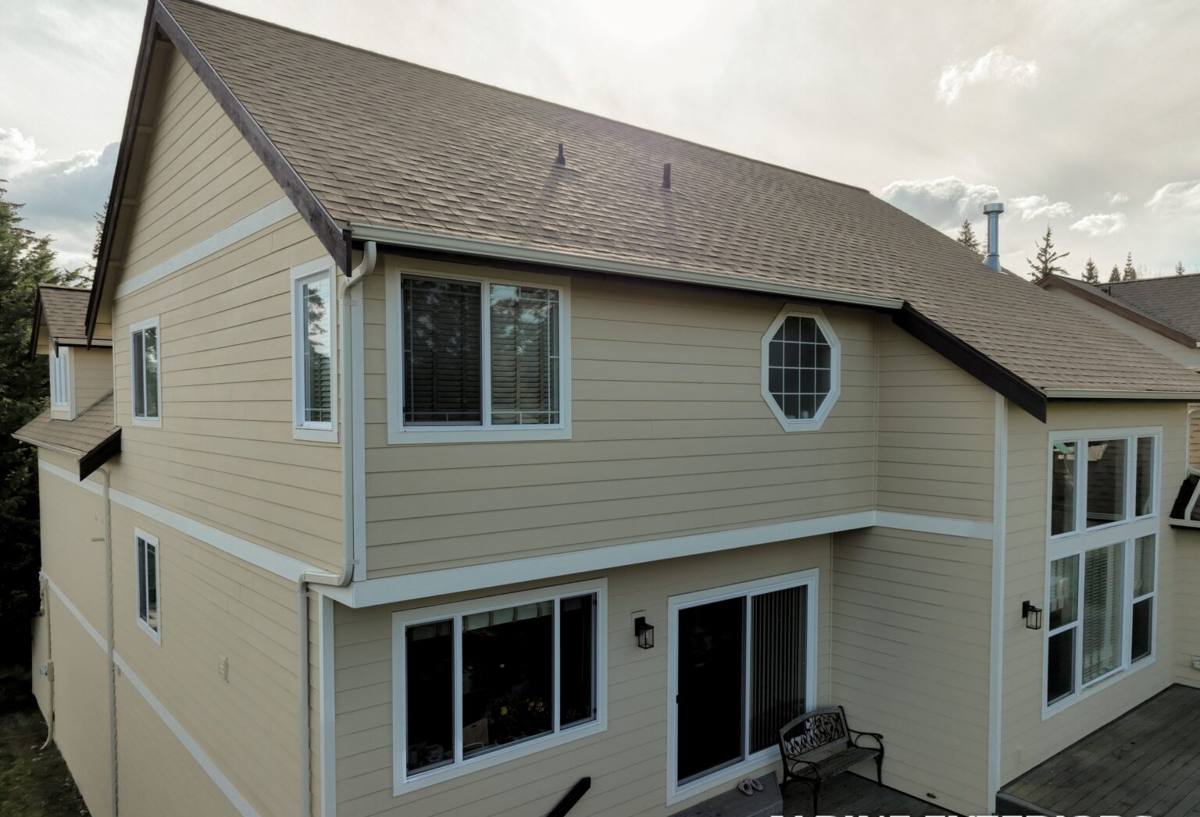
Why This Climate Is Harder on Siding Than People Expect
Heat and UV Load
Florida sun is not the same stress that siding manufacturers test against in cooler climates. Sustained high temperatures and UV exposure break down pigments, cause thermal expansion and contraction cycling, and soften or warp materials not engineered for it. Over a few Florida summers, a product rated for a broader national market can start showing chalking, fading, or panel distortion well ahead of schedule.
Wind-Driven Rain
Hurricane and tropical-storm-force wind doesn't just push rain sideways — it pressurizes it into every seam, lap, and penetration in the siding system. If the water-resistive barrier, flashing, and panel overlaps weren't installed correctly, wind-driven rain will find the gap. This is one of the most common causes of hidden wall damage we find on older Ellenton homes: not a single storm event, but years of small intrusions adding up behind the siding where nobody can see it.
Salt Air and Humidity
Even set back from the immediate coastline, this part of Florida carries enough salt in the air to accelerate corrosion on fasteners, trim, and any siding material that relies on painted or laminated surfaces to keep moisture out. Combined with year-round humidity, this is exactly the environment where moisture-sensitive siding materials struggle — trapped moisture behind or within the panel doesn't dry out the way it would in a drier climate, which is where rot, mold, and swelling take hold.
What a Correct Siding Replacement Actually Involves
Replacing siding correctly is not a matter of pulling old panels off and nailing up new ones. In a climate like this, most of what determines how long the job lasts happens before the new siding ever goes on.
- Full removal of old siding and inspection of the sheathing underneath for rot, delamination, or prior water damage
- Repair or replacement of any compromised sheathing and framing before covering it back up
- Installation of a code-compliant water-resistive barrier, properly lapped and sealed
- Correct flashing at every window, door, roofline, and penetration — the details that stop wind-driven rain from getting behind the cladding
- Proper fastener selection and spacing to hold up under high-wind conditions
- Correct panel gapping, caulking, and finishing per manufacturer specification, not shortcuts to save labor time
- Final inspection of seams, corners, and trim before the job is called complete
Skip any one of these steps and the new siding may look right for a season or two while the underlying problem — trapped moisture, an unsealed seam, an unflashed window — keeps working against the house.
Why We Only Install James Hardie Fiber Cement
We don't install vinyl, LP SmartSide, primed wood, or other fiber cement brands, and that's a deliberate standard, not a sales pitch. In a climate like Ellenton's, the material matters as much as the installation.
Vinyl siding can warp, soften, or discolor under sustained heat and direct sun, and it offers little resistance in wind events once a panel starts to lift. Wood-based and engineered wood products — even well-treated ones — are more vulnerable to the humidity and moisture cycling this region sees year-round; once moisture gets past the surface finish, those products are more prone to swelling, delamination, and rot than fiber cement. Other fiber cement brands exist, and some are reasonable products, but we've standardized on James Hardie specifically because of its factory-applied ColorPlus finish, its HZ5 formulation engineered for humid, high-moisture climates, and the consistency we get installation after installation across every home we work on in this region.
James Hardie fiber cement is non-combustible, holds up to wind-driven rain and salt air far better than wood-based alternatives, and doesn't rely on a field-applied paint job to keep its color and protection intact. It's also backed by a strong transferable limited warranty — the kind of coverage that matters when you're planning to own the home, or sell it, years down the line.
| Factor | James Hardie Fiber Cement | Vinyl / Wood-Based Alternatives |
|---|---|---|
| Heat & UV resistance | Engineered for sustained sun exposure; factory finish resists fading | Prone to warping, chalking, or fading under prolonged Florida sun |
| Wind-driven rain resistance | Dense fiber cement resists moisture intrusion when properly installed | More vulnerable to moisture entry at seams and laps |
| Salt air / humidity | Non-organic material, less susceptible to rot from trapped moisture | Wood-based products more prone to swelling and decay over time |
| Fire resistance | Non-combustible | Vinyl can melt/deform; wood-based products are combustible |
| Warranty structure | Strong transferable limited warranty | Varies widely; often shorter or non-transferable |
What Drives the Cost of a Siding Replacement in This Area
Every home is different, but a handful of factors consistently move the price up or down on jobs in the Ellenton area. We give straightforward, honest estimates rather than lowball numbers that grow once the crew is on site.
| Cost Factor | Why It Matters |
|---|---|
| Sheathing condition | Rot or water damage found once old siding comes off adds repair scope before new siding can go on |
| Home size and wall complexity | More corners, dormers, and trim details mean more labor and material |
| Siding profile and finish | Lap width, trim style, and color selection all affect material cost |
| Number of stories | Second-story and higher work requires more scaffolding, staging, and time |
| Existing moisture damage | Homes with a history of leaks or prior siding failures often need more extensive prep work |
Why Hiring a Crew That Already Works Ellenton Matters
Siding installation is detail work, and the details that matter in this region aren't the same ones that matter in a drier, milder climate. A crew that regularly works Ellenton and the surrounding Sarasota-Bradenton area already knows what to check for on this style of construction, how local wind and moisture exposure tends to show up in a wall cavity, and what flashing and fastening approach actually holds up here versus what merely meets a generic code minimum.
That local familiarity also shows up in smaller ways that matter: knowing which older Ellenton homes are more likely to have outdated or missing water-resistive barriers, understanding how afternoon sun exposure differs by orientation on a typical lot, and having already worked through the permitting and inspection process with the relevant local authorities. A crew that's done this work up and down the block isn't guessing — they're applying what they've already seen work, and what they've already seen fail.
Questions to Ask Any Siding Contractor Before You Hire
- Do you inspect and repair sheathing before installing new siding, or just cover what's there?
- What water-resistive barrier and flashing details do you use at windows, doors, and rooflines?
- Are you a licensed and insured contractor in the state of Florida?
- What siding material do you install, and why did you choose it?
- What does the manufacturer's warranty cover, and is it transferable if the home is sold?
- Can you walk me through your installation process step by step before work begins?
Signs It's Time to Replace, Not Repair
Not every siding issue calls for a full replacement, but there are signs that patching individual panels won't solve the underlying problem, especially in a climate this hard on building materials.
- Soft or spongy spots when you press on the siding, indicating moisture has reached the substrate
- Visible warping, buckling, or gaps between panels, especially on sun-exposed walls
- Peeling or bubbling paint that keeps coming back after repainting
- Rising energy bills with no other clear cause, which can point to compromised insulation behind failing siding
- Visible mold, mildew, or a persistent musty smell near exterior walls
- Siding that's past or near the end of its expected service life for the region
If more than one of these applies, a full replacement is usually more cost-effective long-term than repeated patch repairs, since it lets us address the sheathing and moisture barrier underneath rather than just the visible surface.
Our Process for an Ellenton Siding Replacement
- On-site inspection and honest assessment of your current siding and any underlying damage
- Clear, written estimate with material and labor broken out — no vague allowances
- Scheduling that accounts for regional weather patterns to minimize exposed-wall time
- Removal of old siding and full sheathing inspection before anything new goes up
- Installation of water-resistive barrier, flashing, and James Hardie fiber cement per manufacturer specification
- Final walkthrough so you can see the completed work and ask questions before we consider the job done
If you're weighing a siding replacement for a home in Ellenton, we're happy to take a look and give you a straight answer about what your siding actually needs — no pressure, no inflated scope. Reach out using the form below to schedule a free estimate.