 Sarasota Siding
 Siding Replacement Built for Lakewood Ranch's Climate
Lakewood Ranch sits inland from the Gulf, but "inland" in Sarasota County doesn't mean sheltered. Homes here still take the full brunt of Florida's climate: sustained summer heat that bakes exterior surfaces for months at a stretch, intense UV exposure nearly year-round, wind-driven rain during tropical systems, and enough proximity to the coast that salt-laden air still reaches inland communities on onshore winds. When we replace siding on a Lakewood Ranch home, we're not installing a generic product and hoping it holds up — we're specifying and installing a system engineered for exactly these conditions.
A lot of siding replacement work in this area gets done reactively, after a homeowner notices buckling, staining, soft spots, or paint that won't hold anymore. Our approach is different: we look at siding replacement as a chance to correct whatever let the old siding fail in the first place, not just swap old material for new and repeat the same problem in ten years.
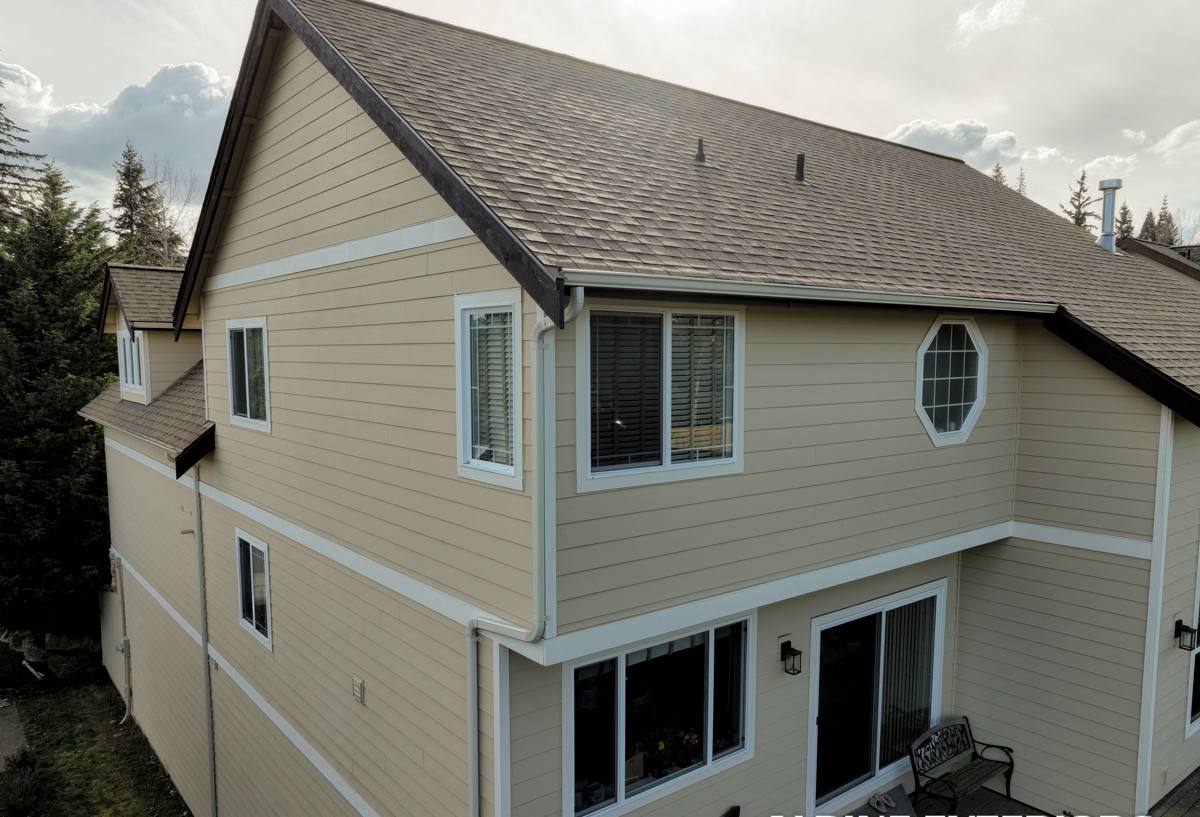
What Lakewood Ranch Homes Need From Their Siding
Most of the neighborhoods in and around Lakewood Ranch were built within the last two to three decades, with a mix of stucco, vinyl, and engineered wood products used across different builders and phases. Whatever your home currently has, the replacement needs to handle a specific combination of stresses:
- Heat cycling: Sarasota County siding faces direct sun for most of the day much of the year. Materials that expand and contract significantly with heat are prone to warping, gapping at seams, and fastener pull-through over time.
- Moisture intrusion: Wind-driven rain during summer storms and tropical systems pushes water sideways, not just down. Siding and the water-resistive barrier behind it both matter — a good product installed with poor flashing and moisture management still fails.
- UV degradation: Florida sun breaks down paint finishes and some composite materials faster than in northern climates. A finish that isn't factory-engineered for UV resistance will chalk, fade, or need repainting well ahead of schedule.
- Wind load: Sarasota County falls within a high-wind design zone. Siding attachment, fastening schedule, and the underlying substrate all need to meet the wind resistance the area actually requires, not just minimum code from a milder climate.
- Salt air corrosion: Lakewood Ranch is far enough inland to be less exposed than a barrier island home, but salt still travels on Gulf breezes. Fasteners, trim, and any exposed metal components need corrosion resistance.
Why We Install Only James Hardie Fiber Cement
We standardized on James Hardie fiber cement siding for every replacement job, including in Lakewood Ranch, because it's the product that consistently holds up to this specific list of stresses. Fiber cement doesn't expand and contract with heat the way vinyl or engineered wood products can, which means fewer warped panels and fewer gapped seams a few summers after installation. It's non-combustible, which matters for insurance conversations and peace of mind alike. And James Hardie's HZ5 product line is engineered specifically for high-humidity, storm-prone climates like Florida's — it's not a generic siding product retrofitted for the Gulf Coast, it's built for it from the start.
The factory-applied ColorPlus finish is also a meaningful difference in a market like Sarasota County. Field-painted siding is only as good as the paint job and the maintenance schedule that follows it. ColorPlus finish is baked on at the factory under controlled conditions, resists UV fading far better than a standard field-applied coat, and comes with its own finish warranty separate from the substrate warranty. For a homeowner in Lakewood Ranch looking at years of intense sun exposure, that's not a marginal upgrade — it's the difference between repainting in five years and not thinking about it for a couple decades.
We don't install vinyl, LP SmartSide, Cemplank, Allura, or primed wood siding. That's a deliberate standard, not a sales pitch — we've made the call that fiber cement is what we're willing to put our name behind in this climate, and we'd rather turn down work than install something we don't believe will hold up on a Sarasota County home.
How James Hardie Compares to Other Common Siding Materials
| Factor | James Hardie Fiber Cement | Vinyl | Engineered Wood |
|---|---|---|---|
| Heat expansion/contraction | Minimal | Significant | Moderate |
| Moisture resistance | Engineered for humid climates (HZ5) | Good, but seams can trap moisture | Vulnerable if coating is compromised |
| UV/fade resistance | Factory ColorPlus finish, long warranty | Fades and chalks over time | Depends entirely on maintenance |
| Fire resistance | Non-combustible | Combustible | Combustible |
| High-wind performance | Rated for high-wind zones when installed to spec | Can crack or blow off in high wind | Adequate with proper installation |
| Typical maintenance | Low — occasional wash and caulk check | Low, but degrades visually over time | Higher — coating upkeep required |
What a Correct Siding Replacement Actually Involves
Siding replacement is not just removing old panels and nailing up new ones. On a Lakewood Ranch home, the parts that determine whether the job lasts are mostly things you won't see once it's finished:
Tear-Off and Substrate Inspection
Once the old siding comes off, we inspect the sheathing underneath for water damage, rot, or soft spots — issues that are often invisible from the outside but explain why the old siding failed in the first place. Any compromised sheathing gets addressed before anything new goes up. Skipping this step is one of the most common reasons a siding replacement disappoints a homeowner a few years later.
Water-Resistive Barrier and Flashing
Given how much wind-driven rain this region sees, the house wrap and flashing details around windows, doors, and penetrations matter as much as the siding itself. Proper lapping, sealing, and flashing integration keep water from getting behind the siding even during a sideways summer storm.
Fastening Schedule for Wind Zones
James Hardie specifies fastener type, spacing, and placement based on wind zone and exposure. We follow manufacturer specifications for Sarasota County's wind requirements rather than a generic fastening pattern — this is one of the most common corners cut by crews unfamiliar with high-wind installation and it directly affects both performance and warranty validity.
Trim, Caulking, and Finish Details
Corner boards, trim around openings, and caulking at joints are where a lot of long-term problems start if done carelessly. We use compatible trim products and proper joint treatment so the finished job resists moisture intrusion at every seam, not just across the flat field of siding.
Our Process for a Lakewood Ranch Siding Replacement
- On-site assessment: We evaluate your current siding, look for signs of moisture damage or substrate issues, and discuss what's driving the replacement — age, storm damage, appearance, or ongoing maintenance frustration.
- Product and color selection: We walk through James Hardie's HZ5 lap, shingle, and panel options along with ColorPlus finish colors, matched to your home's style and any HOA guidelines common in Lakewood Ranch communities.
- Written estimate: A clear scope of work and cost breakdown before any work begins — no surprise change orders for things that should have been caught upfront.
- Tear-off and substrate repair: Old siding removed, sheathing inspected and repaired as needed before anything new is installed.
- Installation to manufacturer and wind-zone spec: Water-resistive barrier, flashing, and fastening completed to James Hardie's specifications for our wind zone.
- Final walkthrough: We review the finished job with you and confirm trim, caulking, and finish details meet our standard before we consider the job complete.
Why Local Experience in Lakewood Ranch Matters
A crew that regularly works Lakewood Ranch and the broader Sarasota County area understands the wind zone requirements, the humidity behavior of different products in this specific climate, and the kind of HOA and architectural expectations common in the area's planned communities. That familiarity shows up in fewer surprises during the job and fewer callbacks after it — flashing details that account for our storm patterns, fastening schedules that meet local wind requirements, and color and style choices that fit the neighborhood rather than looking out of place.
It also means faster response if something needs attention after installation, whether that's a warranty question or storm-related follow-up. A contractor with a local presence isn't scheduling around a multi-hour drive to get back to your property.
Signs Your Lakewood Ranch Home May Need Siding Replacement
- Visible warping, buckling, or gaps between panels, especially after temperature swings
- Soft spots or give when pressing on siding near the bottom edges or corners
- Paint that won't hold, or repeated repainting needed more often than every several years
- Staining or discoloration that suggests water tracking behind the siding
- Visible storm damage — cracked, dented, or missing sections after wind events
- Rising energy bills that may point to compromised insulation or air sealing behind old siding
Get a Free Estimate
If your Lakewood Ranch home's siding is showing its age or you're planning ahead of the next storm season, we're happy to take a look and walk you through what a James Hardie replacement would involve for your specific home. There's no pressure and no obligation — just an honest assessment and a clear estimate using the form below.