 Sarasota Siding
 Custom Decks Built for Venice's Coastal Conditions
Venice sits right on the Gulf, which is exactly why an outdoor deck here works harder than one built inland. Between hurricane-season wind loads, near-constant UV exposure, wind-driven rain, and salt-laden air rolling off the water, a deck in this part of Sarasota County is under load almost every day of the year — not just during a storm. A deck that looks fine going up can start failing within a couple of seasons if the framing, fasteners, and decking weren't chosen and installed with those conditions in mind.
This page walks through what actually matters when building a custom deck for a Venice property: the material trade-offs, the structural details that keep a deck safe and code-compliant, how our process works from first visit to final walkthrough, and what upkeep looks like once it's finished.
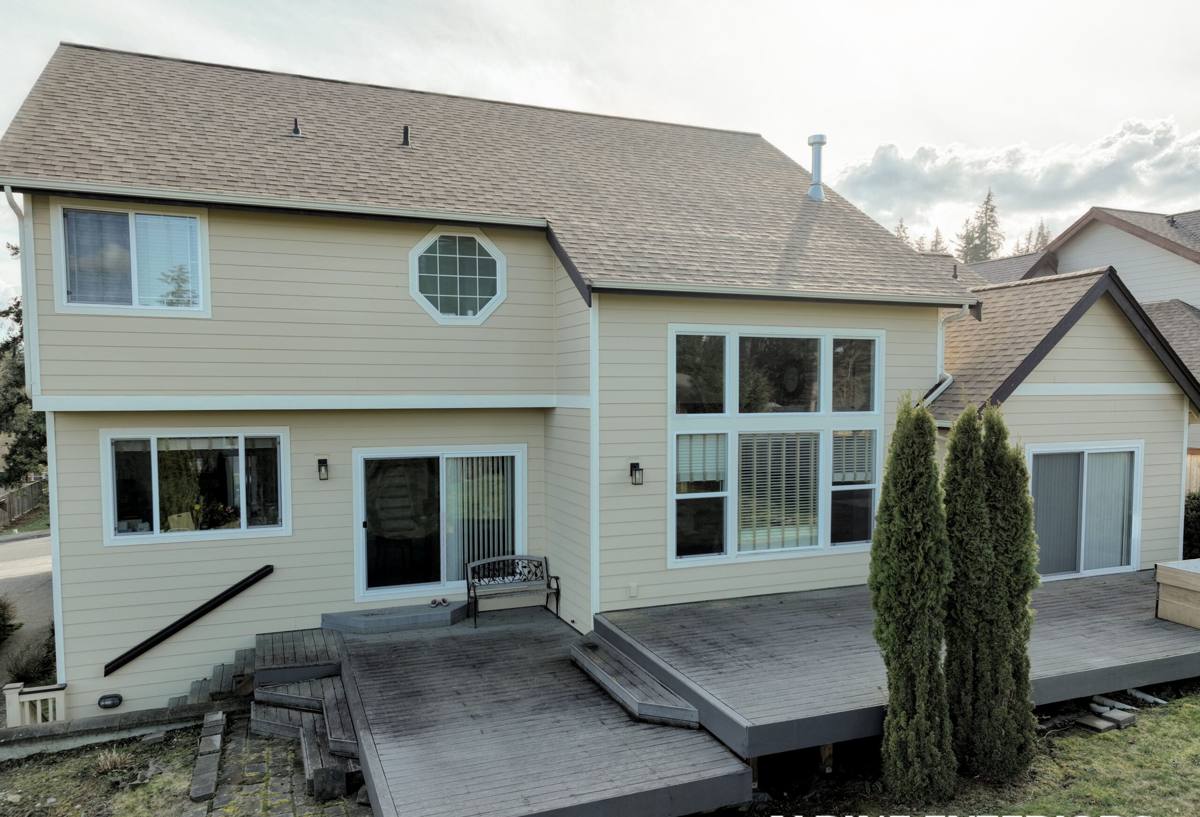
What Venice's Climate Actually Does to a Deck
Wind
Sarasota County sits in a high-wind design zone under the Florida Building Code, and a deck built for Venice needs to meet those wind-load requirements the same way the house it's attached to does. That means the framing, the ledger connection, and the footings all need to be engineered to resist uplift and lateral load — not just carry weight. A deck that was only designed to hold people standing on it, with no thought given to wind uplift, is a liability the first time a serious storm rolls through.
UV Exposure
Florida sun is intense year-round, not just in summer. Constant UV breaks down the surface of unprotected wood, fades color-treated products, and accelerates the breakdown of lower-grade composite decking that wasn't formulated with adequate UV stabilizers. This shows up as graying, checking, splintering, or chalky fading, usually starting on the sections of the deck that get the most direct afternoon sun.
Wind-Driven Rain
It's not just how much rain falls — it's the angle it comes in at during a coastal storm. Wind-driven rain gets pushed sideways and upward into places a straight-down rain never reaches: under ledger boards, behind fascia, into fastener holes and board end grain. If flashing and gaps weren't detailed correctly at installation, this is where hidden rot and hardware corrosion start, often well before anything is visible on the surface.
Salt Air
Being close to the Gulf and the Intracoastal means the air itself carries salt, even away from direct waterfront. Salt accelerates corrosion in fasteners, brackets, and any exposed metal hardware. A deck built with standard interior-grade screws or connectors will show rust and weakening well before one built with hardware rated for coastal or marine exposure.
Choosing the Right Decking Material for a Venice Property
There's no single "best" decking material — there's a best fit for how a homeowner wants to use the deck, how much upkeep they're willing to do, and what budget they're working with. Here's how the common options actually compare under Venice conditions:
| Material | How It Handles Salt Air & UV | Maintenance | Typical Lifespan Here |
|---|---|---|---|
| Pressure-treated wood | Needs sealing/staining to resist UV graying and moisture cycling | Annual cleaning, re-sealing every 1-2 years | Shorter without upkeep, longer with consistent care |
| Composite decking | Good UV and moisture resistance with quality capped boards | Periodic washing; no staining or sealing | Long-lasting when installed with proper ventilation and gapping |
| PVC/cellular decking | Excellent moisture and salt resistance; won't absorb water | Lowest upkeep of the three | Long-lasting, higher upfront cost |
| Tropical hardwoods | Naturally dense, but still needs oiling to prevent surface checking in constant sun | Regular oiling to maintain appearance | Durable structurally, appearance upkeep is ongoing |
Our standard is to steer homeowners toward whichever material actually fits their maintenance appetite and budget honestly — not the one with the highest margin. If a homeowner wants real wood and understands the upkeep involved, we'll build it right. If they want to stain it once and forget it, we'll say so up front and point them toward composite or PVC instead.
Fasteners and Hardware
Whatever decking material gets chosen, the hardware underneath matters just as much. In a salt-air environment, we use coastal-rated or stainless fasteners and connectors rather than standard galvanized hardware, which corrodes faster this close to the Gulf. Hidden fastener systems also help reduce the number of exposed metal points where corrosion and water intrusion typically start.
What a Correctly Built Deck Actually Involves
Framing and Structural Sizing
Joist spacing, beam sizing, and post spacing all need to be sized for the actual load the deck will carry, plus the wind uplift requirements for our zone — not just whatever spacing is fastest to frame. This is where a lot of shortcut decks fail years down the line: undersized framing that was fine on day one but wasn't built with a margin for wind and long-term load.
Ledger Attachment and Flashing
Where a deck attaches to the house is the single most common failure point on any deck, anywhere — and it's worse in a wind-driven rain climate like ours. The ledger board needs to be properly through-bolted (not just lag-screwed) and flashed so water is directed away from the house band board rather than trapped behind the ledger. Skipping or rushing this step is invisible at completion and expensive to fix later.
Footings and Elevation
Footing depth and post-to-footing connections need to account for local soil conditions and, for many Venice properties, proximity to the water table. Proper elevation and drainage around footings also help prevent standing water from sitting against posts and hardware, which speeds up both wood rot and metal corrosion.
Railings and Stairs
Railing height, baluster spacing, and stair geometry are all governed by code minimums for a reason — they're the parts of a deck most tied to safety. We build these to code as a floor, not a suggestion, regardless of what a homeowner may have seen done differently elsewhere.
Permits and Wind-Load Compliance in Sarasota County
Most custom deck projects in Venice require a permit through Sarasota County, and the design needs to meet Florida Building Code wind-load requirements for our coastal zone. This isn't paperwork for its own sake — it's what ensures the framing, connections, and footings are actually sized to hold up in a hurricane-force wind event, not just under normal everyday use. We handle the permitting process as part of the project rather than leaving it for the homeowner to sort out, and we build to pass inspection the first time, not just to look finished.
Our Process, Start to Finish
1. Site Visit and Design
We walk the property, look at how the space will actually be used, and talk through material options honestly, including trade-offs on maintenance and budget. We take into account sun exposure, drainage, and how the deck ties into the existing structure.
2. Engineering and Permitting
Framing and footing plans are sized to meet Florida Building Code wind and load requirements for our area, and we submit for the required Sarasota County permit before any work begins.
3. Framing and Structural Work
This is where the ledger attachment, flashing, footings, and framing all get built to the plan — the part of the job that isn't visible once decking goes down, but determines how long the deck actually lasts.
4. Decking, Railings, and Finish Work
Decking, railings, stairs, and any fascia or trim go on last, using the fasteners and hardware appropriate to the material and to our coastal exposure.
5. Final Walkthrough and Inspection
We walk the finished deck with the homeowner, confirm it passes required inspections, and go over basic care specific to whatever material was installed.
Maintaining a Deck in a Salt Air, High-UV Environment
Even a well-built deck needs some ongoing attention in this climate. A basic seasonal routine goes a long way toward protecting the investment:
- Rinse off salt residue and debris regularly, especially after storms or high-wind days
- Check fastener heads and metal connectors periodically for early signs of rust
- Keep gaps between boards clear of leaves and debris so water and air can move underneath
- Re-seal or re-stain wood decking on the schedule appropriate to the product used
- Inspect the ledger board area and any flashing yearly for signs of moisture intrusion
- Trim back nearby vegetation that traps moisture against the deck surface or framing
Questions Worth Asking Before Hiring a Deck Contractor
Not every contractor building decks in this area is used to building for Gulf-coast conditions specifically. A few questions help separate a crew that understands local requirements from one that doesn't:
- Do they pull the required Sarasota County permit, or ask the homeowner to skip it?
- Can they explain how the ledger will be flashed, not just how it will be attached?
- Do they use coastal-rated or stainless fasteners as standard, or only on request?
- Can they speak specifically to how the deck design meets local wind-load requirements?
- Do they offer honest maintenance trade-offs between materials, rather than pushing one product?
Why Local Experience in Venice Matters
A deck built by a crew that regularly works Venice and the surrounding Sarasota County coastline isn't guessing at wind zones, soil behavior near the water, or how fast salt air corrodes standard hardware — it's routine. That experience shows up in the details that aren't visible after the job is done: how the ledger is flashed, what fasteners go into the framing, how footings are sized for what's actually underground here. Those are the choices that decide whether a deck is still solid in ten years or needs early repair.
We build custom decks for Venice homeowners with those conditions treated as the standard, not an afterthought — matching the material, hardware, and structural detail to what this coastline actually demands.
Get a Free, No-Pressure Estimate
If you're planning a new deck or replacing an existing one in Venice, we're happy to walk the property, talk through material options honestly, and put together a straightforward estimate — no pressure, no upsell. Use the form below to get started.