 Sarasota Siding
 Building a Deck That Can Actually Handle a Bee Ridge Summer
A deck in Bee Ridge lives a harder life than the same deck would in most of the country. It sits under intense, nearly year-round Florida sun that breaks down finishes and dries out wood fibers. It gets soaked by fast-moving afternoon storms, then baked dry again a few hours later — a cycle that swells and shrinks lumber over and over. Sarasota County sees hurricane-force wind events, and even on calm days, air moving in off the Gulf carries enough salt to accelerate corrosion on anything metal. None of this is unique to Bee Ridge, but it's the reality every deck on this side of the state has to be built for, not around.
Most deck problems we get called out to fix didn't start as big failures. They started as a slightly undersized ledger connection, a fastener that wasn't rated for coastal exposure, or decking installed without enough gap for water to drain and airflow to reach the underside. In this climate, those small shortcuts show up early — cupped boards, rust streaks, soft spots around posts, a railing that's gone wobbly in two or three years instead of twenty.
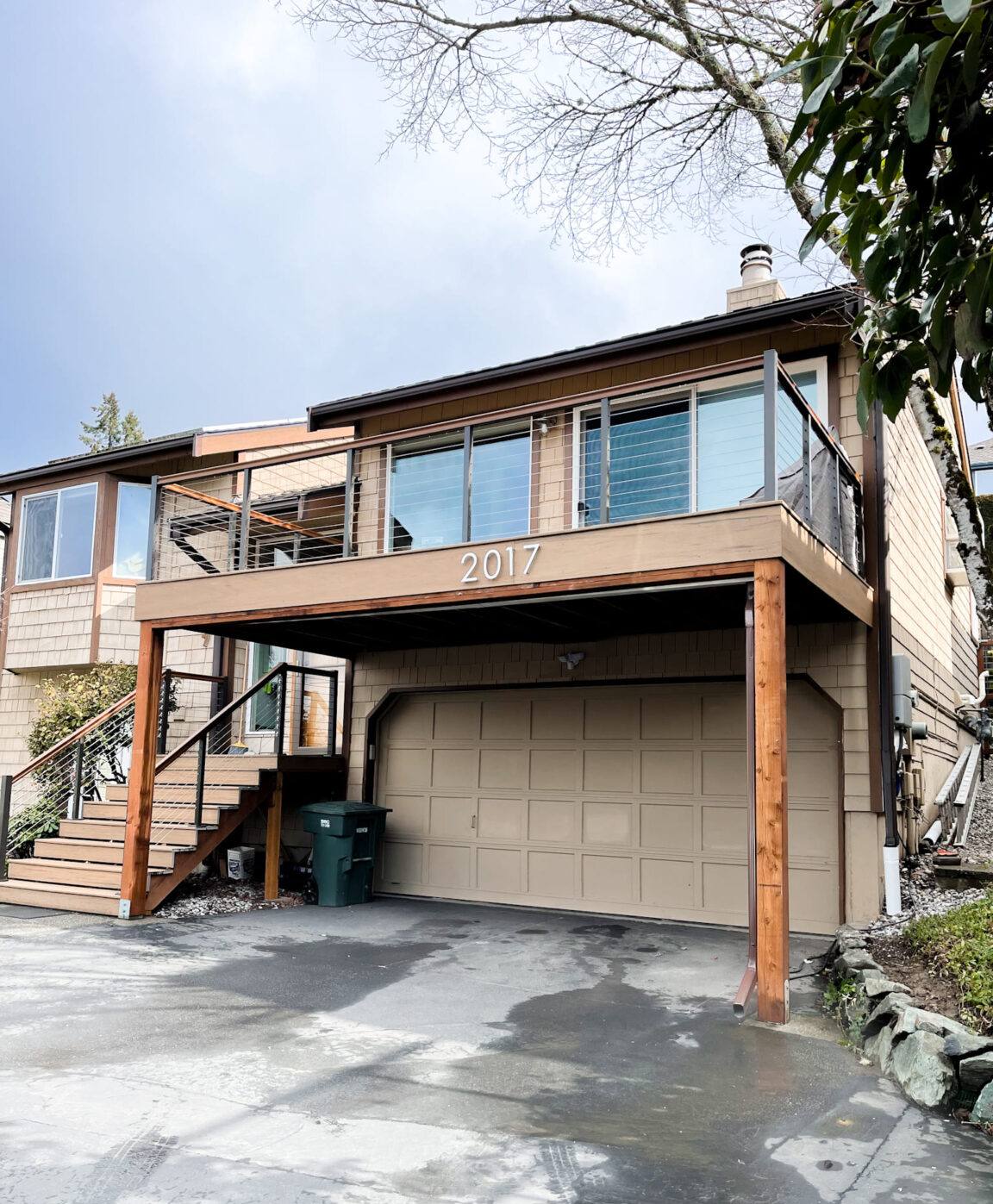
What Bee Ridge Properties Typically Need From a Deck
Bee Ridge is an established, largely residential part of Sarasota County, with a mix of home ages and a good amount of mature tree canopy on many lots. That canopy is a blessing for shade and a headache for decks: leaf litter collects between boards, shaded areas stay damp longer after rain, and reduced airflow under a low deck gives mildew and wood rot more time to work. Homes near canals, retention ponds, or low-lying yards add another wrinkle — deck framing close to grade or seasonally wet soil needs extra attention to drainage and ground clearance.
None of that means a deck in Bee Ridge has to be high-maintenance. It means the design has to account for shade, moisture, and airflow from day one — not as an afterthought once boards start staying damp.
Choosing the Right Decking Material for This Climate
There's no single "best" decking material — there's a best material for your budget, your amount of shade, and how much upkeep you're willing to do. Here's how the common options actually perform under Sarasota County conditions:
| Material | Upfront Cost | Maintenance | Heat Underfoot | How It Handles This Climate |
|---|---|---|---|---|
| Pressure-treated pine | Lowest | Needs sealing every 1–2 years | Moderate | Affordable and strong, but prone to cupping and checking if not sealed and drained properly |
| Tropical hardwood | High | Regular oiling to hold color | Low to moderate | Naturally dense and rot-resistant, but installation is unforgiving — pre-drilling and proper fasteners are non-negotiable |
| Capped composite | Mid to high | Occasional washing | Higher on dark colors | Resists moisture and salt air well; won't splinter or rot, but darker boards can get hot in full sun |
| PVC decking | Highest | Lowest | Varies by color | Fully synthetic, handles humidity and salt exposure with minimal upkeep; premium price reflects that |
We don't push one material on every job. A shaded, low-traffic deck can do perfectly well in treated pine if it's maintained. A full-sun deck near a canal is usually better served by composite or PVC, where moisture resistance matters more than upfront cost. We'll walk through the real trade-offs for your specific lot before you commit to anything.
A Word on "Maintenance-Free" Claims
No decking material is truly maintenance-free in coastal Florida. Composite and PVC cut down on sealing and staining, but they still need periodic washing to keep salt film, pollen, and mildew from building up. We'd rather tell you that upfront than have you surprised by it later.
The Structural Work Nobody Sees — But It's What Matters Most
The decking surface is the part homeowners notice. The framing underneath is what actually determines whether the deck survives a Florida storm season or ends up on our repair list.
Footings and Framing
Footings need to be sized and set to local code, not guessed at based on what "looks about right." Post spacing and joist sizing have to account for Florida's wind uplift requirements, not just the weight of people standing on the deck. Where a deck attaches to the house, that ledger board connection needs proper flashing so water can't work its way into the rim joist — this is one of the most common failure points we see on older decks, and it's almost invisible until the wood underneath is already soft.
Fasteners and Hardware
Standard hardware corrodes fast this close to the Gulf. Structural connections should use stainless steel or coated fasteners and hardware rated for coastal or salt-air exposure, along with hurricane ties or straps at the connections that matter most for wind resistance. It costs more than off-the-shelf hardware. It's also the difference between a deck that's still solid in ten years and one that starts showing rust streaks and loose connections in two or three.
Permits, Wind Load, and Sarasota County Requirements
New decks and most deck rebuilds in Sarasota County require a permit, and the framing has to meet Florida Building Code wind load standards for our area — this isn't optional paperwork, it's what keeps a deck attached to the house instead of becoming debris in a storm. Depending on your lot, setback rules, flood zone status, and proximity to water can also affect what's allowed and how the structure needs to be built. We handle the permitting and inspection process as part of the job, but it's worth knowing upfront that a legitimate deck build in this area always involves a permit — if a contractor is offering to skip that step, that's a red flag, not a shortcut worth taking.
How We Build a Deck, Start to Finish
Design and Permitting
We start with a site visit to look at grade, drainage, shade, and how the deck will tie into the house. From there we put together a design and material plan, pull the necessary permit, and schedule the work around Sarasota's weather patterns rather than fighting them.
Build and Walkthrough
Footings and framing go in first and get inspected before anything else happens — that inspection matters, and we don't shortcut it. Decking, railings, and any stairs follow, with attention to board spacing for drainage and airflow. Once it's done, we walk the finished deck with you, cover basic care for whatever material you chose, and make sure everything meets both code and your expectations before we consider the job finished.
What a Correctly Built Bee Ridge Deck Includes
- Footings sized and set to Florida Building Code, not eyeballed
- Properly flashed ledger board connection where the deck meets the house
- Stainless or coated, corrosion-rated fasteners throughout
- Hurricane ties or straps at critical structural connections
- Board spacing that allows water to drain and air to reach the underside
- A decking material matched to your sun exposure and maintenance preference
- A pulled permit and passed inspections at every required stage
Keeping a Bee Ridge Deck Looking Good for the Long Haul
Whatever material you choose, a little seasonal attention goes a long way here. Wood decks need re-sealing on a regular schedule — skipping a year in this sun and humidity shows up fast as graying, checking, or cupped boards. Composite and PVC need less, but not zero: a wash a few times a year clears off pollen, salt film, and the mildew that shaded, humid spots are prone to. After any major storm, it's worth a quick visual check of fasteners and railings for looseness or rust before it becomes a bigger repair. None of this is complicated, but it's the difference between a deck that ages gracefully and one that needs premature repairs.
Why Hiring a Crew That Already Works in Bee Ridge Matters
A deck builder who works this specific area regularly already knows how local soil drains, what Sarasota County's inspectors look for, and how tree canopy and lot layout in this part of the county tend to affect drainage and design. That familiarity means fewer surprises during permitting, fewer redesigns mid-project, and a build that's suited to your actual property instead of a one-size-fits-all template. It also means a shorter response time if you ever need a post-storm inspection or a repair down the road — you're not waiting on a crew that has to drive across the county or learn the area from scratch.
If you're planning a new deck or thinking about replacing one that's showing its age, we're happy to come take a look and give you a straightforward, no-pressure estimate. There's no cost and no obligation — just an honest read on what your Bee Ridge property needs. Use the form below to get started.