 Sarasota Siding
 Why Rosemary District Decks Wear Out Faster Than the Manual Says
Rosemary District sits close to downtown Sarasota and the bay, which means the same deck that might last two decades in a drier inland climate gets worked hard here. The combination of hurricane-force wind events, near-constant UV exposure, wind-driven rain that finds its way under flashing and fasteners, and salt-laden air off the water accelerates almost every failure mode a deck can have. Fasteners corrode faster, wood checks and silvers faster, and any weak point in the original build — an under-flashed ledger, undersized footings, the wrong hardware — shows up years before it would somewhere without that combination of heat, salt, and storms.
A lot of the decks we're asked to look at in this part of Sarasota were built to a reasonable standard for a different climate, or built years ago before code and hardware standards caught up with what coastal Florida actually demands. Replacement isn't just about swapping tired boards — it's a chance to fix the structural and material decisions that were working against the house from day one.
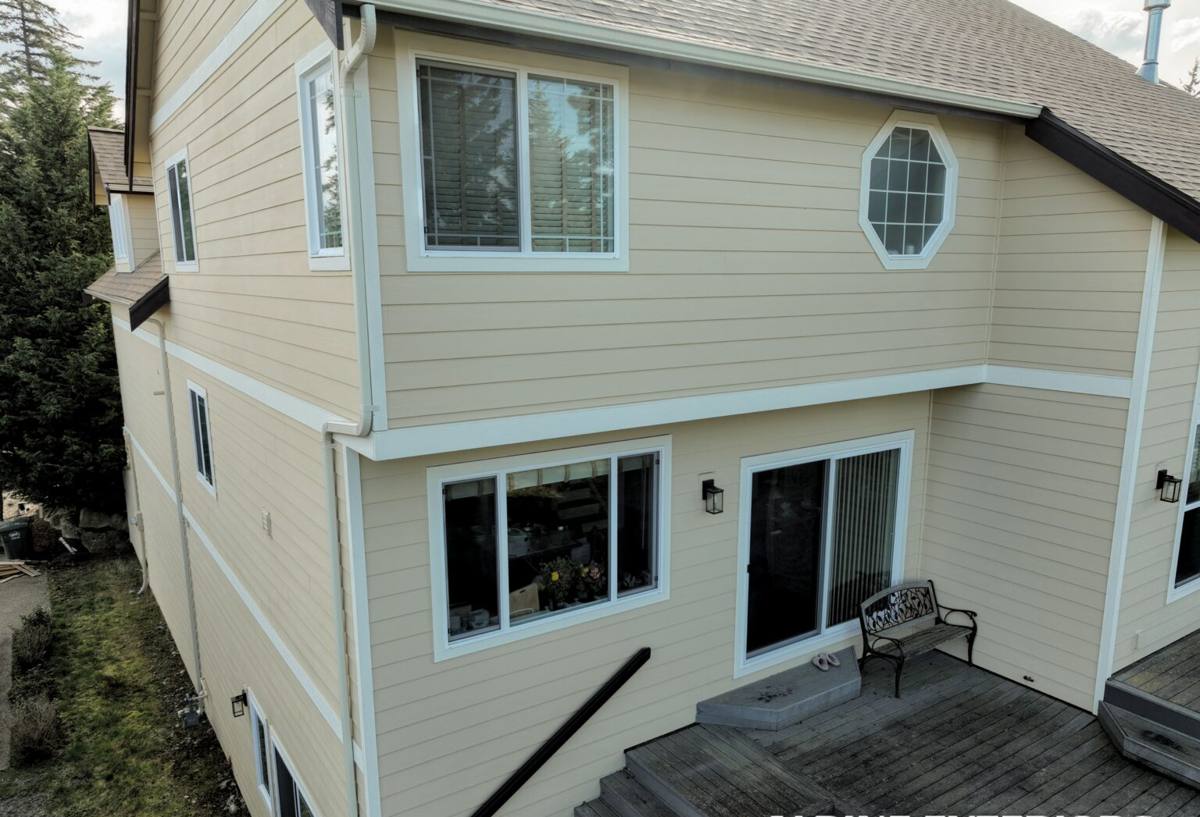
Signs You're Looking at Replacement, Not Repair
Not every deck problem means starting over. But there's a point where patching boards is just delaying a bigger, more expensive failure. Here's how we tell the difference on a site visit:
- Soft, spongy, or bouncy sections of decking, especially near the house or stair landing
- Rust streaking from joist hangers, bolts, or ledger fasteners
- Visible gaps, cupping, or splitting across more than a few boards, not just one or two
- A ledger board that's separating from the house rim joist, or shows soft/dark wood behind the flashing
- Posts or footings that shift, rock, or show cracking at grade
- Railings that flex noticeably under hand pressure
If it's isolated board rot with a sound frame underneath, repair can make sense. If the framing, ledger connection, or footings are in question, replacement is the honest answer — patching a deck with a compromised structure just moves the risk further down the road, and in a wind event that's exactly where you don't want unknowns.
What a Correct Deck Replacement Actually Involves
The Ledger Connection
Most deck failures in coastal wind events start at the ledger — the board that ties the deck to the house. It needs proper flashing to keep wind-driven rain out of the rim joist, and it needs fasteners and hardware rated for the load and for exterior/coastal exposure. This is the single most important detail on an attached deck, and it's the one most often shortcut in older or lower-bid work.
Footings and Framing
Footing depth and post spacing need to account for both vertical load and uplift — wind wants to lift a deck as much as gravity wants to pull it down, and Sarasota's wind exposure means that's a real design factor, not a formality. Joist hangers, post bases, and structural screws should be stainless steel or a coating rated for coastal/salt-air exposure; standard galvanized hardware corrodes faster here than most manufacturers' literature assumes.
Decking and Railing
Once the frame is right, the decking and railing are where appearance and long-term maintenance get decided. That's a material choice, covered below, and it should be made with this specific climate in mind, not a generic recommendation.
Choosing Decking Material for Rosemary District's Climate
There's no single "best" decking material — there's a best fit for your budget, maintenance appetite, and how close you are to the water and afternoon sun. Here's how the common options actually perform under Sarasota's UV and salt exposure:
| Material | UV/Fade Behavior | Salt Air Tolerance | Maintenance |
|---|---|---|---|
| Pressure-treated pine | Grays and checks without regular sealing | Fair — needs sealed fasteners and coating upkeep | Annual cleaning/sealing recommended |
| Tropical hardwood (e.g. ipe-type) | Fades to gray if unsealed, but stable | Good — dense wood resists moisture intrusion | Periodic oiling if color is to be maintained |
| Capped composite | Stable, minimal fading with quality lines | Very good | Occasional washing, no sealing |
| Cellular PVC | Very stable | Excellent — inert to salt and moisture | Occasional washing, no sealing |
We don't push one product on every homeowner. Capped composite and PVC cost more up front but remove the sealing/staining cycle almost entirely, which matters if you don't want a recurring maintenance chore in a climate that's hard on finishes. Wood costs less initially and can look excellent, but it only stays that way with upkeep — that's a fair trade-off, not a flaw, as long as you go in knowing which side of it you're choosing.
Permits and Code in Sarasota County
Attached decks in Sarasota County typically require a permit, inspection of the framing before decking goes down, and hardware/connection details that meet current wind-load requirements for this coastal zone. If your existing deck was built without a permit, or built under an older code cycle, replacement is the moment to bring it current — it protects you at resale and, more importantly, it means the structure has actually been checked against today's wind standards rather than whatever standard applied when it went up. We pull permits and coordinate inspections as part of the job; it's not an optional extra.
Our Deck Replacement Process
- On-site assessment — we check the ledger, framing, footings, and existing decking to confirm replacement is the right call and identify any hidden damage behind the visible boards
- Design and material selection — size, layout, railing style, and decking material chosen against your budget and maintenance preference
- Permitting — drawings and permit application handled before demolition starts
- Demolition and disposal — full removal of the old deck, including any compromised framing
- Framing rebuild — new footings/posts as needed, corrosion-resistant hardware throughout, correctly flashed ledger connection
- Decking and railing installation — per manufacturer spacing and fastening specs for the chosen material
- Final inspection and walkthrough — county sign-off, then a walkthrough with you before we consider the job done
Why a Crew That Already Works This Neighborhood Matters
Rosemary District has its own mix of older homes and newer construction, and that mix means older ledger connections and framing details that don't match what's typical in a newer build a few miles inland. A crew that's already worked decks in this part of Sarasota has a feel for what tends to be hiding behind the boards here — the kind of ledger flashing that was common a few decades ago, the footing depths that were typical before current wind standards, the fastener corrosion pattern that shows up faster this close to the bay. That's not something you can fully substitute with a generic deck-building background; it's a function of having actually opened up decks in this specific area and seen what's really there.
It also matters for permitting — knowing the county's inspection process and what they expect to see at framing inspection keeps the job moving instead of stalling on a callback.
Maintaining a New Deck in This Climate
Whatever material you choose, a few habits go a long way toward getting the lifespan you're paying for:
- Rinse salt residue and debris off the deck surface periodically, especially after storms
- Keep gutters and downspouts clear so runoff doesn't pool against the ledger or posts
- Inspect fasteners and hardware annually for early rust or loosening
- Reseal wood decking on the schedule the product actually needs, not just when it looks faded
- Trim back vegetation that keeps decking damp or shaded for long stretches
What Affects the Cost
| Factor | Why It Matters |
|---|---|
| Deck size and footprint shape | More linear footage of framing, decking, and railing |
| Height off grade | Taller decks need more substantial posts, footings, and often stairs/railing code compliance |
| Decking material | Wood, composite, and PVC carry different material costs and install labor |
| Extent of hidden framing damage | Rot found at demo can add scope beyond the original estimate |
| Permit and inspection requirements | Built into a proper job, not an add-on, but it's part of the cost of doing it right |
Broad ranges only make sense once we've actually looked at your deck — a straightforward wood replacement and a large multi-level composite rebuild aren't in the same conversation, and we'd rather give you an honest number after a site visit than a guess that doesn't hold up.
If your Rosemary District deck is showing its age — soft spots, rusting hardware, a ledger you're not sure about — we're happy to take a look and give you a straight answer on repair versus replacement. Fill out the form below for a free, no-pressure estimate.