 Sarasota Siding
 Building a Deck That's Actually Made for Palmer Ranch
Palmer Ranch is one of the more attractive places in Sarasota County to add outdoor living space. Lot sizes, lake and preserve views, and a mix of established and newer construction give homeowners here real options for how a deck can extend the way they use their property. But a deck built the same way you'd build one in a drier, cooler climate won't hold up long under Gulf Coast conditions. Between intense year-round UV, wind-driven rain, salt-laden air, and the occasional hurricane-force wind event, this region is genuinely hard on exterior wood and hardware. A custom deck for a Palmer Ranch home needs to be designed and built with all of that in mind from the start, not patched later.
This page covers what actually matters for a deck project in this specific area: the climate factors at play, what a correctly built deck involves, the material and design decisions worth thinking through, and how we approach the work from first visit to final walkthrough.
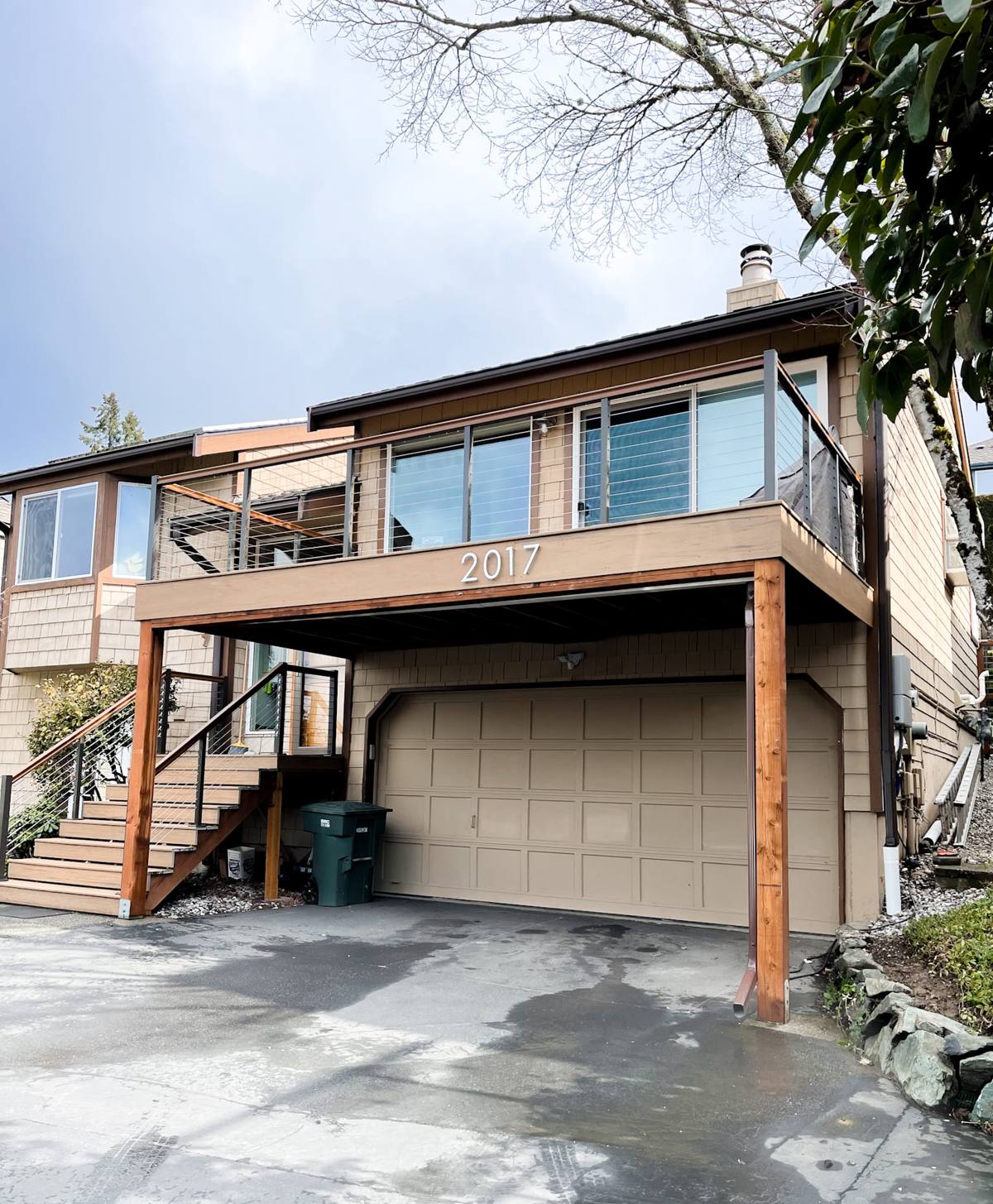
What Sarasota's Climate Does to an Outdoor Deck
Sun and UV Exposure
Florida gets strong, direct sun essentially year-round, and it's harder on exterior materials than most people expect. Untreated or poorly finished wood grays, cracks, and splinters faster here than in most parts of the country. Composite and PVC decking have improved a lot, but not all products handle UV equally — cheaper composites can fade or chalk within a few years, while quality capped products are engineered specifically to resist it.
Wind-Driven Rain and Humidity
Afternoon storms in this region don't just fall straight down — wind pushes rain sideways and up under rail caps, into fastener holes, and along ledger boards where a deck attaches to the house. Combined with the area's humidity, any spot where water can sit or get trapped becomes a starting point for wood rot or hardware corrosion. Drainage and flashing details matter more here than in drier climates.
Salt Air and Corrosion
Even well inland from the coast, Sarasota County air carries enough salt to accelerate corrosion on standard fasteners, brackets, and hardware. This shows up as rust streaks on deck boards, weakened connections at joist hangers, and premature failure of hardware that would last decades in a non-coastal climate. The fix isn't complicated — it's using the right grade of hardware from day one — but it's a detail that's easy to cut corners on if a crew isn't used to building in this environment.
Hurricane-Force Wind
Sarasota County sits squarely in an area that has to be built for hurricane wind loads, and an elevated deck is essentially a structure that wind can get under, catch, and lift. Post spacing, footing depth, and the connections between beams, joists, and the house all need to be sized for actual wind conditions here — not the minimum you'd see in a builder's generic plan set.
Choosing a Decking Material for a Palmer Ranch Home
There's no single "best" decking material — the right choice depends on budget, how much upkeep you want to take on, and how the deck will be used. Here's an honest comparison of the options we install most often in this area.
| Material | Upfront Cost | Maintenance | How It Handles This Climate |
|---|---|---|---|
| Pressure-treated wood | Lowest | Annual cleaning/sealing recommended | Affordable and repairable, but needs consistent upkeep to resist UV graying and moisture damage |
| Tropical hardwood | High | Periodic oiling to maintain color | Naturally dense and rot-resistant, but installation is unforgiving — pre-drilling and fastener choice matter a lot |
| Capped composite | Mid-High | Occasional washing, no sealing | Strong UV and moisture resistance when it's a genuine capped product, not a low-grade composite |
| PVC decking | High | Lowest of any option | Fully synthetic, doesn't absorb moisture, handles humidity and salt air well |
Our general standard: we don't install uncapped, low-grade composite decking, because in this climate it tends to fade, stain, and hold moisture in ways that create warranty headaches down the road. If budget is the main driver, we'd rather steer a homeowner toward well-built pressure-treated wood with a clear maintenance plan than a composite product that looks good for two years and disappoints after five.
What Goes Into a Properly Built Custom Deck
The decking surface is the part everyone sees, but it's the structure underneath that determines whether the deck is still solid in ten or twenty years. A correctly built deck in this area includes:
- A ledger board (where applicable) properly flashed and lag-bolted or through-bolted into the home's structural framing — never just nailed to siding or fascia
- Footings sized and set to local frost and load requirements, deep enough to resist uplift in high wind
- Joist hangers, post bases, and structural connectors rated for exterior/coastal use, not standard interior-grade hardware
- Stainless steel or coated fasteners appropriate for treated lumber and salt air exposure
- Proper joist spacing for the decking material chosen — composite and PVC often require tighter spacing than wood
- Railing posts anchored through the frame, not just surface-mounted to the decking boards
- Gaps and drainage paths that let water move off the structure instead of pooling against ledger boards or posts
None of this is exotic — it's standard good practice. But it's exactly the kind of detail that gets skipped by crews focused on speed over longevity, and the failures don't usually show up until years later, when they're expensive to fix.
Design Choices Worth Thinking Through in This Neighborhood
Pools, Lanais, and Screened Areas
Many Palmer Ranch properties already have a pool, screened lanai, or covered patio, and a custom deck often needs to tie into or work alongside one of those. That affects elevation, how the deck meets existing pavers or slab, and whether railing is needed for code or safety around water.
Ponds, Preserves, and Golf Course Frontage
A fair number of homes in this community back up to ponds, preserve areas, or golf course frontage, which makes an open, view-oriented deck layout worth considering — but also means more direct sun and weather exposure on that side of the house, which feeds back into material choice.
HOA Considerations
Palmer Ranch includes a number of separate community and HOA associations, each with its own architectural review process and standards for color, height, and materials. We factor this into the design conversation early so the plans we submit for permitting match what the community will actually approve, avoiding delays.
Permits, Codes, and Wind Load Requirements
A structural deck attached to a home in unincorporated Sarasota County requires a building permit, and the plans need to reflect current Florida Building Code wind load requirements for this area. This isn't optional paperwork — it's what protects you if there's ever a claim, a resale inspection, or an insurance question down the road. We handle the permit drawings and inspection scheduling as part of the job, so you're not the one tracking down inspectors or resubmitting rejected plans.
Our Process, Start to Finish
- On-site visit: we look at the house, the lot, drainage, and how you actually want to use the space before talking materials.
- Design and material selection: we lay out options with honest pros, cons, and cost differences — no upselling toward whatever has the best margin.
- Permit drawings and submission: we prepare and submit plans that meet Sarasota County requirements and, where applicable, HOA standards.
- Construction: footings, framing, decking, and railing, built to the structural details outlined above.
- Inspection and walkthrough: we schedule required inspections and walk the finished deck with you before calling the job done.
Keeping a Deck in Good Shape After It's Built
Whatever material you choose, a little regular attention goes a long way in this climate. A simple seasonal checklist:
- Rinse off salt residue, pollen, and debris every few weeks, more often near the coast
- Check fastener heads and railing connections for early rust or looseness once or twice a year
- Clear leaves and debris from between boards so moisture doesn't sit trapped underneath
- Reseal or oil wood decking on the manufacturer's recommended schedule, don't wait until it looks gray
- After any major storm, do a quick visual check of posts, footings, and railing before heavy use
Why Local Experience in Palmer Ranch Matters
A deck built by a crew that hasn't worked much in coastal Southwest Florida tends to make the same mistakes: standard-grade hardware that corrodes early, decking spec'd without accounting for real UV exposure, or footing depths pulled from a generic plan set instead of this area's actual wind requirements. Working regularly in Sarasota County and communities like Palmer Ranch means we already know the permitting process, the county's inspection expectations, and which materials genuinely hold up here versus which ones just look good in a showroom.
If you're considering a custom deck for your Palmer Ranch home, we're happy to come take a look, talk through honest material and design options, and put together a free, no-pressure estimate — no obligation either way.