 Sarasota Siding
 Why Deck Replacement Is Different in Downtown Sarasota
A deck in Downtown Sarasota lives a harder life than the same structure would a few states north. It sits under some of the most intense year-round UV in the country, takes on wind-driven rain whenever a storm moves through, and — being close to Sarasota Bay and the Gulf — deals with salt-laden air working on its fasteners and hardware even on days with no weather event at all. None of that shows up all at once. It shows up as boards that gray and split years before they should, railings that develop a little more play each season, and hardware that rusts from the inside out long before the surface tells you anything is wrong.
Replacement is a different job than repair. It's a chance to correct whatever the original build got wrong — undersized framing, the wrong fastener grade, poor drainage underneath — rather than patching around those problems again. This page covers what actually wears out decks in this part of Sarasota County, what a correct replacement involves from the ground up, and why it matters to hire a crew that already works Downtown Sarasota rather than one learning the area on your project.
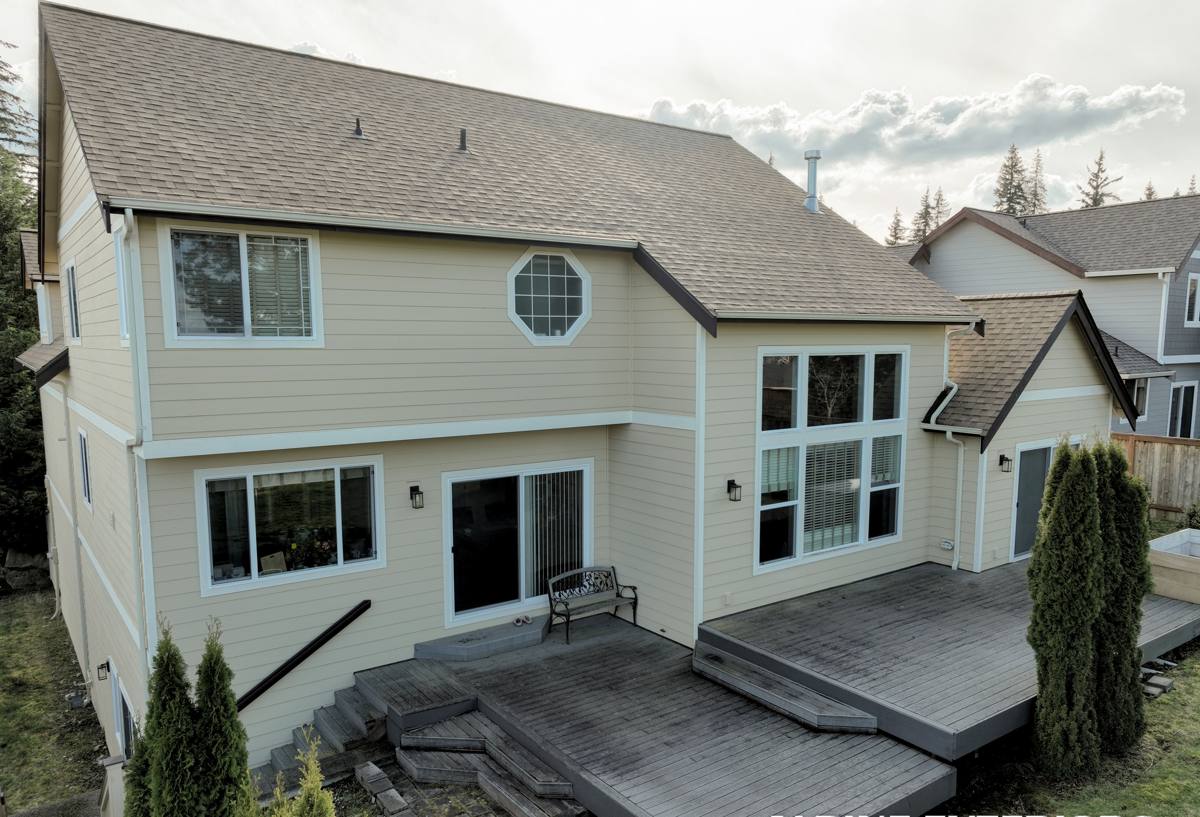
What Actually Wears Out a Deck Here
UV and Sun Load
Florida's UV exposure is among the highest in the country, and a deck surface takes that load directly, most of the year, often with little tree cover or structure to shade it. On wood, that breaks down surface fibers and finishes, leading to graying, splitting, and checking well ahead of a normal service life. On composite and PVC decking, UV can fade color over time and, on lower-grade boards, degrade the surface layer that protects the material underneath.
Wind-Driven Rain and Storm Loads
Hurricane-force wind is a real design condition for this region, not a rare exception. During a storm, wind doesn't just push rain downward — it drives it sideways and upward, forcing moisture under boards and into joints that ordinary rainfall never reaches. That moisture finds its way to framing, ledger connections, and fastener points that a calmer climate would keep mostly dry, which is a big part of why decks built to lighter standards elsewhere don't hold up as well here.
Salt Air and Corroding Hardware
Downtown Sarasota isn't a barrier island, but it's close enough to the Bay and the Gulf that salt-laden air still reaches structures throughout the area, especially anything with metal exposed to open air. Corrosion in fasteners, joist hangers, and railing brackets typically starts well before it's visible from above. A board that's begun to lift slightly, or a railing with a bit more flex than it used to, is often a hardware problem before it's a wood problem.
Heat, Humidity, and Ground Moisture
Year-round warmth and humidity keep wood and framing damp longer after every rain than they would in a drier climate, which accelerates rot in untreated or poorly ventilated framing. Combined with the region's flat drainage and, in some yards, a higher water table, the substructure underneath an older deck is often carrying more moisture exposure than the visible decking ever suggests.
Signs It's Time to Replace Rather Than Repair
Not every tired-looking deck needs a full replacement, but certain signs point toward rebuilding rather than patching:
- Soft, spongy, or springy sections in multiple areas of the decking, not just one isolated board
- Visible movement, rot, or corrosion at the ledger board — the connection point to the house — since this is the most safety-critical part of the structure
- Support posts that have shifted, settled, or show rot near ground contact
- Widespread hardware corrosion rather than a few isolated rusted fasteners
- A deck that was never permitted or built to current wind load and connection standards
- Repeated repairs to the same areas that keep recurring within a year or two
When damage is scattered across the structure rather than isolated to a repairable section, or when the original framing wasn't built to hold up against this region's wind and moisture exposure, replacement is usually the more honest recommendation — chasing repairs on a structure that's fundamentally undersized just delays the same failure and spends money along the way.
What a Correct Deck Replacement Involves
Starting With the Framing, Not the Surface
A deck is only as good as what's underneath the boards you walk on. A proper replacement means engineered joist spacing sized for the actual load and span, a ledger connection flashed and fastened to resist both structural load and wind-driven moisture, and support posts set on footings appropriate for local soil conditions. Skipping ahead to surface material selection before the framing is right is how a deck ends up needing early repair regardless of how nice the boards look.
Fastener and Hardware Grade
Standard-grade fasteners and hangers corrode faster in this climate, even away from direct waterfront exposure. Stainless steel or coastal-rated hardware costs more upfront but holds up meaningfully longer, and it's one of the clearest places where cutting corners on a new build shows up as a problem within a few years instead of a couple decades.
Drainage and Ventilation Underneath
Poor airflow and standing water underneath a deck accelerate every other problem on this list — rot, corrosion, and mold all move faster in stagnant, damp conditions. A correct replacement accounts for grading, spacing, and ventilation underneath the structure so moisture has somewhere to go instead of sitting against the framing.
Attachment and Wind Resistance
Railings, stairs, and the ledger connection all need to be attached to standards that account for real hurricane-season wind, not the minimum that would pass in a milder climate. This is a detail that's easy to underbuild and expensive to find out was wrong after the fact.
Choosing a Decking Material for This Climate
Every decking material has real trade-offs here — none of them are maintenance-free, and the right choice depends on how much upkeep you want to do versus what you're willing to spend upfront.
| Material | UV / Sun Behavior | Salt Air / Moisture | Maintenance |
|---|---|---|---|
| Pressure-treated wood | Grays and checks without regular refinishing | Needs sealing to resist rot and moisture | Highest — regular cleaning and refinishing |
| Cedar or other natural wood | Fades and weathers faster in intense sun | Prone to moisture damage without upkeep | High — refinishing on a shorter interval here |
| Composite decking | Fade-resistant, though quality varies by product line | Handles moisture well; hardware is still the weak point | Low — periodic cleaning, no refinishing |
| PVC decking | Strong UV resistance in most product lines | Doesn't absorb moisture; very stable in humidity | Low — cleaning only |
| Aluminum decking | Doesn't fade or degrade from UV | Excellent corrosion resistance when properly coated | Very low, but a different look and feel underfoot |
We'll walk through these trade-offs honestly based on your budget, how the deck will be used, and how much upkeep you actually want to take on, rather than steering everyone toward the same product.
How Our Replacement Process Works
- On-site assessment. We look at the existing structure, ground conditions, drainage, and how the deck connects to the house before recommending a scope.
- Design and material selection. We go over decking, railing, and hardware options with honest trade-offs for this climate, not just a catalog of choices.
- Permitting. Deck replacement in Sarasota County typically requires a permit, and we handle that process rather than leaving it to the homeowner.
- Demolition and disposal. The old structure comes out completely, including any hidden framing issues a surface-level look wouldn't have caught.
- Framing and structural work. Ledger connection, joists, posts, and footings are built to current code and this region's wind and moisture demands.
- Decking, railing, and finish work. Surface material and railings go in with fastener grades matched to the exposure the deck will actually see.
- Final walkthrough and inspection. We review the finished deck with you and make sure any required final inspection is completed and closed out.
Permitting and Code Considerations Locally
Deck replacement in Downtown Sarasota generally falls under Sarasota County or City of Sarasota permitting requirements, and inspections typically cover the ledger connection, framing, and railing attachment before the work is considered complete. Skipping permitting on a full replacement isn't a shortcut worth taking — it can create real problems later with insurance, a future sale, or simply confirming the structure was actually built to hold up. We handle the permitting process as a standard part of the job rather than treating it as optional paperwork.
A Practical Pre-Build Checklist
- Confirm whether the existing footings and posts can be reused or need full replacement
- Decide on decking material based on maintenance tolerance, not just upfront cost
- Ask what fastener and hardware grade is included in the quote, specifically
- Confirm permitting is included and who's responsible for scheduling inspections
- Ask how drainage and ventilation underneath the new deck will be handled
- Get a clear timeline, including how weather delays during storm season are handled
Maintenance That Protects the Investment
A new deck's lifespan depends heavily on upkeep after the build is done, and this climate shortens the interval on nearly every maintenance task compared to a milder region:
- Rinse the surface periodically to clear salt residue and organic buildup before it works into the material
- Keep gaps between boards clear of debris so water and airflow move through as designed
- Check railing posts and visible hardware a couple of times a year, especially heading into and coming out of storm season
- Reseal or refinish wood decking on a schedule shorter than manufacturer defaults, since sun exposure here accelerates breakdown
- Address any soft spots, movement, or new gaps right away rather than waiting for a scheduled inspection
Why It Matters That We Already Work Downtown Sarasota
A crew that occasionally works this area can still build a competent deck, but one that works Downtown Sarasota regularly isn't guessing at the details that come up again and again on properties here — the permitting process with the county and city, the fastener grade that actually holds up against this area's combined UV and salt exposure, and the framing standards that hold up through a real hurricane season rather than a mild one. That familiarity shows up in a more accurate first estimate and fewer surprises once the work is underway, because the plan accounted for how this environment actually behaves from the start.
If your deck is showing its age or you're planning a new one, we're glad to walk the site, give you a straight assessment of repair versus replacement, and explain the material and structural trade-offs plainly. Reach out below for a free, no-pressure estimate.