 Sarasota Siding
 Why Siding Choice Matters More in Ellenton
Homes in the Ellenton area sit in one of the more demanding climates in the country for exterior building materials. Between hurricane-force wind events, months of intense subtropical UV exposure, wind-driven rain that gets forced sideways into wall assemblies, and salt-laden air moving in off the Gulf, siding here is working harder than siding almost anywhere else in the state. A product that performs fine in a mild inland climate can fail early on a home exposed to this combination of stresses.
That's the lens we use on every Ellenton project: not "what looks good on day one," but "what still looks good and still protects the wall assembly in year fifteen." Fiber cement, installed correctly, is the material that holds up to that test. We install James Hardie fiber cement exclusively — no vinyl, no LP SmartSide, no Cemplank, no Allura, no primed wood — and we'll explain why below.
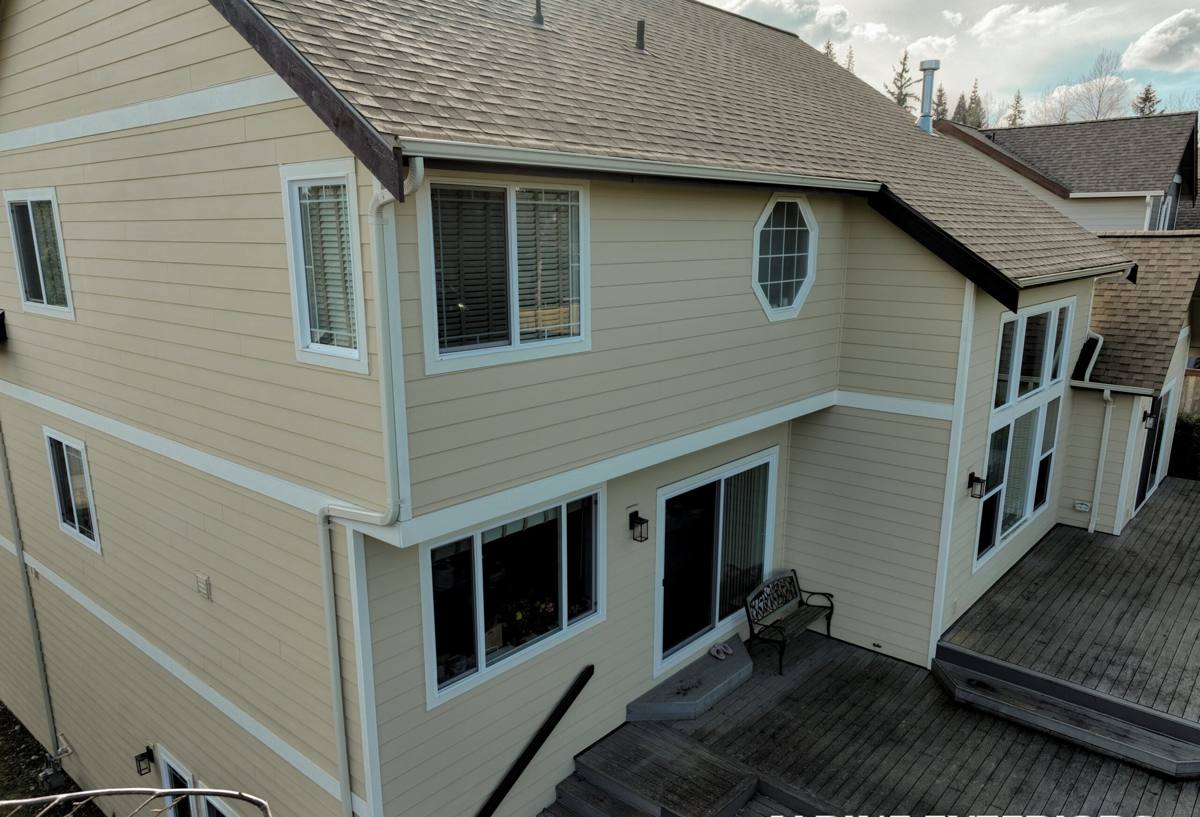
What This Climate Actually Does to Siding
Wind and Wind-Driven Debris
Tropical storm and hurricane wind events don't just push on siding — they drive rain and debris into it at an angle, testing every seam, joint, and fastener. Siding with weak impact resistance or poor fastening tolerances is where storm damage shows up first, and it's often the first thing an insurance adjuster looks at after a named storm.
UV Exposure
Florida gets some of the highest annual UV exposure in the continental U.S. Painted and coated products absorb that energy for years on end, and lower-grade finishes chalk, fade, and break down faster than most homeowners expect. Color consistency across a wall, especially on south- and west-facing elevations, is a real test of a finish system.
Wind-Driven Rain and Moisture
Sarasota-area storms rarely deliver rain straight down. Wind pushes it sideways and upward under laps, around trim, and into any gap the installer left. Siding that swells, delaminates, or holds moisture against the wall sheathing creates the conditions for rot and mold behind the cladding — a problem you don't see until it's expensive.
Salt Air
Even well inland of the immediate coastline, Gulf air carries salt that accelerates corrosion on fasteners, trim, and any metal components in the wall assembly. Materials and fastener specs that aren't rated for a coastal-adjacent environment corrode faster than the siding itself.
Why We Only Install James Hardie
We get asked regularly why we don't offer vinyl or LP SmartSide as a lower-cost option. The honest answer is that we've drawn a line on what we're willing to put our name on in this climate.
Vinyl siding softens, warps, and can distort under sustained high heat, and it's more brittle in wind-driven debris impacts than fiber cement — problems that show up more, not less, in a hot, storm-prone market like this one. LP SmartSide is a treated engineered wood product; wood-based siding depends on its edges, cuts, and seals staying intact to keep moisture out, and that margin for error is thinner in a climate with this much wind-driven rain. Other fiber cement brands like Cemplank and Allura are reasonable products on paper, but we've standardized our crews, our fastening specs, and our warranty process around one manufacturer so there's no ambiguity about what's correct for this climate and no gap in accountability if something needs to be addressed under warranty.
James Hardie fiber cement is non-combustible, dimensionally stable in heat and humidity, and available in HZ5 formulations engineered specifically for high-humidity, storm-prone climates like Florida's Gulf Coast. The factory-applied ColorPlus finish is baked on and warranted separately from the substrate, which matters directly for UV performance — it's a fundamentally different approach than field-applied paint.
What Correct Fiber Cement Installation Involves
Fiber cement siding is only as good as its installation. Most of the failures we get called out to inspect on other companies' work trace back to installation shortcuts, not the product itself. On an Ellenton project, our crews follow James Hardie's published fastening and clearance specifications exactly — not "close enough."
- Correct fastener type, length, and spacing for the specific HZ product and wind zone
- Proper house wrap and weather-resistive barrier detailing behind the siding, lapped correctly
- Minimum clearance maintained between the bottom of the siding and roofing, decks, and grade
- Flashing installed at every horizontal joint, window, door, and penetration — not just caulk
- Butt joints sealed or flashed per spec, never just butted and painted over
- Field-cut edges primed before installation to protect the cut edge from moisture
- Caulk used only where specified, with the correct sealant — not as a substitute for flashing
Every one of these details is invisible once the job is finished and the paint looks good. That's exactly why they matter — a cosmetically fine installation with the wrong fastener spacing or missing flashing will fail from the inside out, usually well after the crew that did the work is gone.
Our Process on Ellenton Homes
Assessment
We start with a full exterior walkthrough: current siding condition, sheathing condition where accessible, trim and flashing detail, and any areas already showing moisture intrusion or wind damage. Ellenton homes vary in age and construction type, so we don't quote off a formula — we look at the actual wall assembly.
Preparation and Removal
Old siding comes off cleanly, and we inspect the sheathing underneath before anything new goes up. If we find rot, water damage, or compromised sheathing, we address it before installing new siding over it — covering a problem doesn't make it go away.
Installation
New house wrap, flashing, and James Hardie fiber cement go on to manufacturer spec, with fastening and clearances set for our wind zone. We don't cut corners on the details that don't show — that's the whole point of doing this correctly.
Final Inspection
Before we consider a job finished, we walk the full exterior again, checking joints, caulk lines, and clearances, and we make sure the homeowner understands the warranty coverage on both the siding and the ColorPlus finish.
Cost Factors on a Fiber Cement Project
| Factor | Why It Affects Cost |
|---|---|
| Home size and wall complexity | More corners, dormers, and trim details mean more cutting, fitting, and flashing work |
| Current siding removal | Tear-off and disposal of old siding adds labor beyond a straightforward install |
| Sheathing repair | Rot or moisture damage found underneath the old siding needs to be fixed before new siding goes on |
| Product line and profile | Lap width, panel style, and trim selections within the James Hardie lineup vary in material cost |
| Color and finish | Factory-applied ColorPlus finishes carry a different cost structure than primed-for-paint options |
| Access and site conditions | Lot layout, landscaping, and story height affect scaffolding and labor time |
We won't quote a number without seeing the home, but we'll walk you through exactly what's driving your estimate line by line so there are no surprises.
Signs Your Current Siding May Be Failing
Given how hard this climate is on exterior materials, it's worth knowing what to watch for — especially on a home that's had vinyl, wood-based siding, or an older fiber cement installation for a decade or more.
- Soft spots or visible warping, especially near the bottom courses or around window and door trim
- Paint or finish that's chalking, fading unevenly, or peeling in sheets
- Visible gaps at seams, corners, or trim where caulk has shrunk or pulled away
- Staining or dark streaking that suggests water is tracking behind the siding
- Siding that flexes, feels hollow, or sounds different when tapped compared to surrounding panels
- A musty smell near exterior walls inside the home, which can indicate moisture behind the siding
Any one of these on its own isn't necessarily an emergency, but they're worth having looked at before the next storm season rather than after.
Why Local Experience in This Area Matters
A crew that already works in and around Ellenton knows the practical realities that don't show up in a manufacturer's install manual: how the local wind exposure varies by lot and elevation, what building department inspectors here typically check for, and how salt air and humidity actually behave on homes in this specific stretch of the Gulf Coast versus siding specs written for a national average. That local pattern recognition is part of what separates a correctly installed fiber cement wall from one that looks right for a season or two and then starts showing problems.
If you're planning a siding project in Ellenton — whether you're replacing storm-damaged siding, dealing with an aging installation, or building new — we're happy to take a look and give you a straightforward, no-pressure estimate. There's no cost or obligation to have us come out and tell you honestly what your home needs.