 Sarasota Siding
 Ellenton Roofs Work Harder Than Most
Sitting just off the I-75 corridor between Bradenton and Sarasota, Ellenton catches the same Gulf Coast weather that batters the rest of the region, with a few local wrinkles that matter when it comes to roofs. Homes here see the full seasonal cycle: intense summer thunderstorms that dump wind-driven rain sideways into roof edges and valleys, tropical systems that can bring sustained hurricane-force gusts, and year-round UV exposure that quietly bakes shingles and sealants long after the storm has passed. Add in the salt-laden air moving inland off the Gulf, which accelerates corrosion on fasteners, flashing, and vents, and you have a climate that punishes any weak point in a roof system faster than most parts of the country.
That combination is exactly why storm damage repair in this area isn't just about patching what's visibly broken. A roof that took a hit from wind or hail often has hidden damage — lifted shingle tabs, compromised underlayment, or flashing that's been worked loose — that won't show up as a leak until the next heavy rain finds it. Repairing it correctly means understanding how Ellenton's weather actually stresses a roof, not just covering the obvious hole.
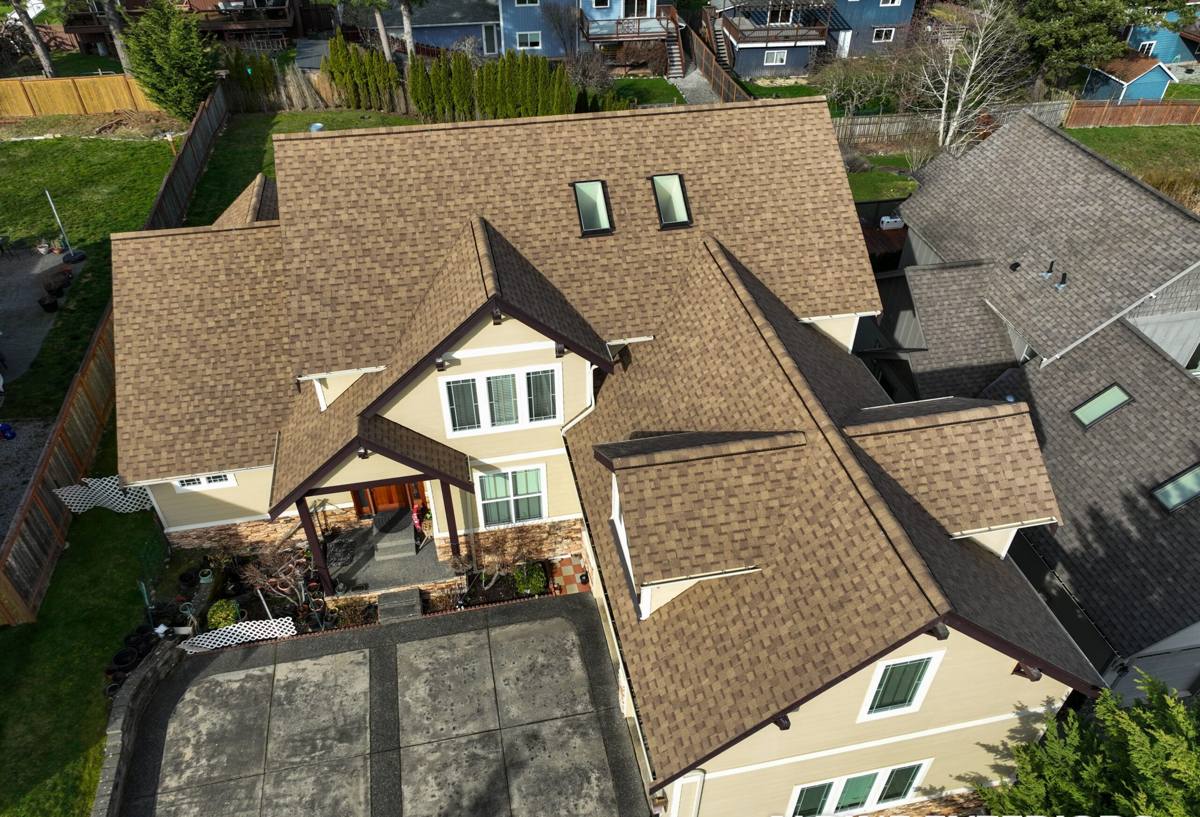
How Storms Actually Damage a Roof Here
Wind is the biggest factor. Sustained gusts create uplift at roof edges, ridges, and corners — the same physics that can peel a shingle off in a strong afternoon storm can, in a tropical system, strip entire sections. Wind-driven rain is the second piece: once wind lifts an edge even slightly, rain gets pushed under the shingle line and behind flashing, sometimes traveling several feet before it finds a path into the attic or wall cavity. Hail is less frequent here than in some parts of the country, but when it happens it bruises shingles and can crack tile, weakening the material even where the surface still looks intact.
Then there's the slower damage: UV breakdown of shingle granules and sealant strips, and salt-air corrosion on metal flashing, nails, and vent boots. Neither of those is a single "storm event," but both make a roof more vulnerable to the next one. A roof that's five or six years past its prime UV-wise will sustain worse damage in the same storm than a well-maintained one.
Signs Your Roof May Have Storm Damage
- Shingles that look curled, lifted at the edges, or missing granules in patches
- Visible gaps where shingles or tiles are missing, cracked, or slipped out of alignment
- Water stains on interior ceilings or walls, especially near exterior corners
- Granules collecting in gutters or at the base of downspouts after a storm
- Soft spots or sagging when walking the attic decking (if safely accessible)
- Flashing around chimneys, vents, or skylights that looks bent, lifted, or separated
- A musty smell in upper rooms or closets that wasn't there before
Some of these are obvious from the ground; others require someone on the roof or in the attic to catch. That's part of why a proper inspection after any significant wind or rain event matters, even when nothing looks wrong from the driveway.
What a Correct Storm Damage Repair Actually Involves
Not all "repairs" are equal. A quick patch over a visible hole can stop a leak temporarily, but if the underlayment underneath is already saturated, or the decking has started to soften, the leak comes back — often in a different spot. A repair that's actually going to hold needs to address the full assembly, not just the top layer.
Shingle and Tile Work
Damaged shingles or tiles need to come out cleanly, without tearing the surrounding material, and be replaced with product that matches as closely as possible in profile and color so the repair doesn't stand out as a patch. Fasteners matter here too — proper nail placement and count is what keeps the new material from becoming the next piece the wind lifts.
Underlayment and Decking
If wind-driven rain got underneath the roofing material, the underlayment beneath it may be compromised even if the shingles above look salvageable. Underlayment that's torn, saturated, or no longer sealing properly needs to be replaced in that section. If water reached the wood decking and it's gone soft, that decking has to be cut out and replaced — patching over soft decking is one of the most common shortcuts that leads to a callback.
Flashing and Penetrations
Chimneys, vent stacks, skylights, and roof-to-wall transitions are where most leaks actually originate, even after a storm that looked like it hit the open field of shingles hardest. Flashing needs to be re-seated, resealed, or replaced — not just caulked over, which is a short-term fix that fails within a season or two in this heat and UV exposure.
Our Storm Damage Repair Process
We keep the process straightforward, because homeowners dealing with storm damage usually want clear answers fast, not a drawn-out sales process.
- Inspection. We get on the roof (and in the attic where relevant) to assess the full extent of damage — not just what's visible from the ground.
- Documentation. We photograph and document findings clearly enough to support an insurance claim if you're pursuing one, including damage that isn't obvious to the untrained eye.
- Honest scope. We tell you what actually needs repair versus what can wait, and we explain why — no inflating the scope to pad an invoice.
- Repair. We do the work to match your existing roofing material as closely as possible, sealing and flashing to hold up against the next storm, not just the next dry week.
- Follow-up. We stand behind the repair and are reachable if anything comes up after the next heavy rain tests it.
Storm Damage Severity and What It Typically Takes to Fix
| Damage Type | What It Looks Like | Typical Repair Approach |
|---|---|---|
| Isolated wind lift | A handful of shingles/tiles loose or missing | Spot replacement, resealing tabs, fastener check on surrounding material |
| Wind-driven rain intrusion | Interior stains, no obvious exterior gap | Flashing and underlayment inspection at likely entry points, targeted section repair |
| Hail bruising | Soft dents, granule loss, cracked tile | Replacement of affected shingles/tiles; broader section replacement if bruising is widespread |
| Decking damage | Soft spots, sagging, visible rot from attic | Cut-out and replacement of decking before any new roofing material goes down |
| Widespread material failure | Large sections stripped or aged past repair | Full or partial re-roof rather than patch repair |
Repair vs. Replace: What Actually Drives That Decision
Homeowners often ask whether a storm-damaged roof should be repaired or replaced outright. The honest answer depends on a few factors, not a blanket rule.
| Factor | Why It Matters |
|---|---|
| Age of the existing roof | A roof already near the end of its service life may not be worth patching if it's likely to need replacement within a couple years anyway |
| Extent of damage | Isolated damage on an otherwise sound roof favors repair; widespread damage across multiple sections often costs more to patch piecemeal than to replace |
| Underlying deck condition | Extensive decking replacement changes the math, since much of the labor is the same either way |
| Material availability | Discontinued shingle or tile profiles can make an exact match impossible, which sometimes tips the decision toward replacing a full slope for a consistent appearance |
| Insurance coverage | What your policy covers and how the claim is scoped can influence whether repair or replacement makes more financial sense |
We'll walk through these factors with you honestly rather than defaulting to whichever option is bigger.
Why Local Experience Matters for This Kind of Work
Storm damage repair isn't just a technical skill — it's a judgment call about what actually needs fixing versus what's cosmetic, and that judgment gets sharper the more you've seen how this specific area's weather behaves on this specific type of roofing. A crew that regularly works in and around Ellenton has already seen how wind moves through the neighborhood layouts here, which roof orientations tend to take the worst of it, and which materials and installation details hold up versus which ones become repeat callbacks.
There's also a practical, responsiveness side to this. After a storm rolls through the Sarasota and Manatee County area, demand for roof repair spikes fast, and crews unfamiliar with the area or juggling jobs across a wide radius can take much longer to get to you. Working locally means we can typically get eyes on your roof sooner, which matters when there's an active leak.
Protecting the Repair Going Forward
A good storm repair is only half the equation — the other half is reducing how much damage the next storm can do. A few habits go a long way in this climate:
- Have gutters cleaned regularly so wind-driven rain has somewhere to go instead of backing up under the roof edge
- Trim back any tree limbs that could scrape shingles or snap onto the roof in high wind
- Schedule a roof check after any named storm or unusually severe thunderstorm, even if nothing looks obviously wrong
- Keep an eye on attic ventilation, since poor airflow accelerates heat and moisture damage from the inside
- Address small issues — a lifted shingle corner, a loose vent boot — before they become entry points during the next storm
Get a Free, No-Pressure Storm Damage Inspection
If your Ellenton home has been through a recent storm, or you're just not sure whether last season's weather left damage you haven't noticed yet, we're glad to take a look. There's no pressure and no obligation — just a straightforward assessment of what your roof actually needs, explained in plain terms. Fill out the form below to request a free estimate.