 Sarasota Siding
 Board & Batten in Fruitville: A Look That Has to Do More Than Look Good
Fruitville sits inland enough from the Gulf to feel a little removed from the beach, but not far enough to escape what Sarasota County's climate does to a house. Board and batten has become one of the most requested siding profiles out here — it reads as modern farmhouse on newer builds, coastal cottage on older ranch-style homes, and it dresses up a gable or a porch accent without overwhelming the rest of the elevation. The vertical lines and shadow reveal from the battens give a house real depth that flat lap siding doesn't.
The problem is that board and batten is also one of the least forgiving profiles when it's installed wrong. Every batten strip creates a seam, and every seam is a place water can find its way behind the siding if the installer doesn't respect it. In a climate that throws hurricane-force wind, wind-driven rain, near-constant UV, and salt-laden air at a house year-round, those seams either get built correctly the first time or they become the reason a homeowner is dealing with rot, streaking, or fastener failure a few years down the road.
What Sarasota's Climate Actually Demands From This Siding
Wind Load
Fruitville homes need siding and fastening schedules rated for the wind exposure Sarasota County sees, especially during hurricane season. Board and batten has more individual pieces than a standard lap profile, which means more fastener points, more butt joints, and more opportunities for a panel to work loose if it wasn't nailed to spec in the first place. A batten that lifts in high wind doesn't just look bad — it opens the wall assembly behind it to wind-driven rain.
UV Exposure
Florida sun is relentless on painted wood and low-grade composite trim. Battens and panels that aren't factory-finished with a UV-stable coating chalk, fade unevenly, and need repainting far sooner than most homeowners expect — and board and batten shows uneven fading more visibly than lap siding because of the contrast between the flat panel and the raised batten.
Salt Air and Wind-Driven Rain
Even inland communities like Fruitville pull in salt-laden air off the Gulf, which accelerates corrosion on the wrong fastener type and degrades caulk and sealant faster than it would in a drier inland climate. Combine that with wind-driven rain that gets pushed sideways and upward under normal roof overhangs, and every horizontal batten joint becomes a potential entry point if it isn't flashed and lapped correctly.
Why We Only Install James Hardie for This Profile
We don't install vinyl board and batten, LP SmartSide, primed spruce, or cedar battens on Fruitville homes, and it's not a marketing position — it's a maintenance and moisture-behavior decision. Vinyl board and batten flexes and can visibly buckle in high heat, and it doesn't hold up structurally in wind-borne debris events the way fiber cement does. Wood and engineered wood battens need consistent repainting and are far more vulnerable to moisture intrusion at the seams, which is exactly where board and batten is most exposed. Primed spruce in particular still needs a full paint job after install and again on a regular cycle — an extra cost and maintenance burden that fiber cement with a factory finish avoids from day one.
James Hardie fiber cement is non-combustible, dimensionally stable in heat and humidity swings, and available in HZ5 formulations engineered for high-moisture, high-humidity climate zones like ours. The ColorPlus factory finish is baked on and warrantied against fading and chipping in a way field-applied paint never will be. For a profile like board and batten, where the finish and the seams are the whole visual story, that stability matters more than it does on almost any other siding style.
The Panel and Batten Systems We Use
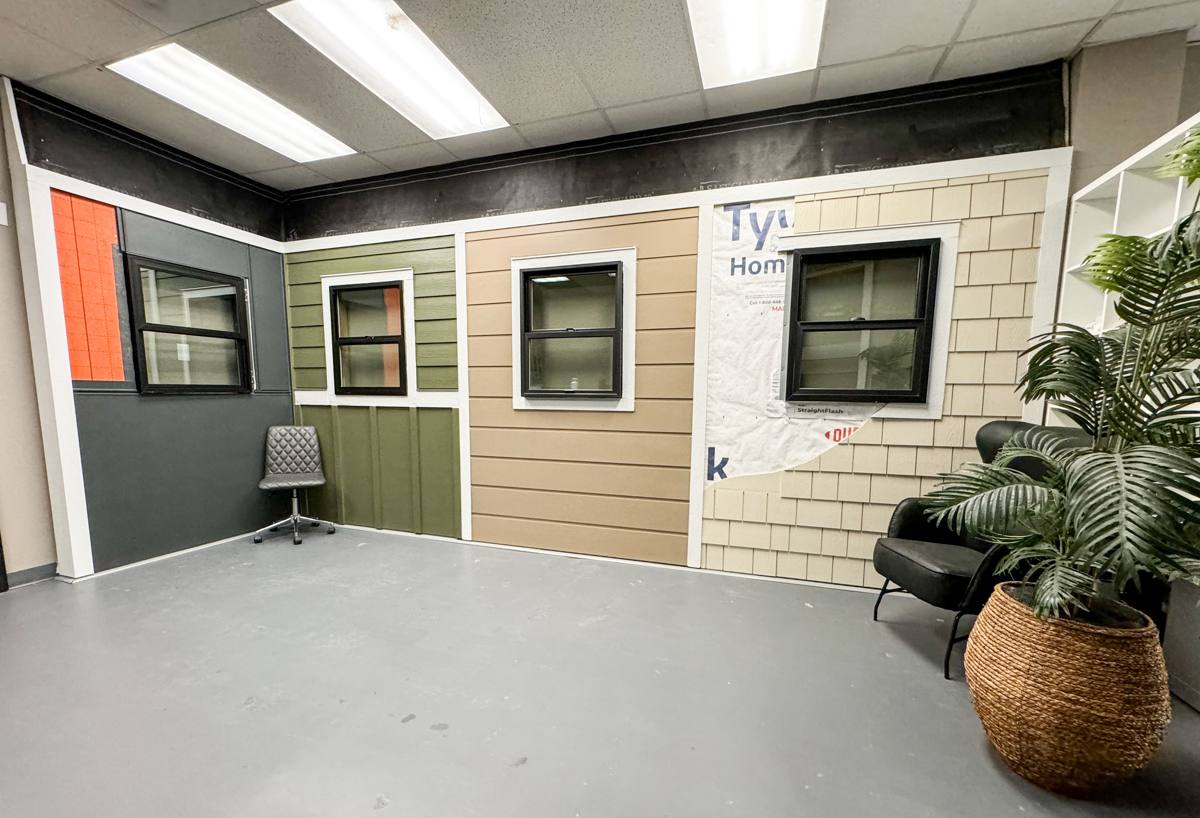
Depending on the home's architecture, we use Hardie panel siding — typically a smooth or Sierra Premium woodgrain texture — with true batten strips installed over the panel joints, or a full board and batten reveal system depending on the look the homeowner wants. Both are engineered as a system, not a mix of unrelated materials, which is a big part of what makes the finished wall assembly perform correctly.
What a Correct Board & Batten Installation Actually Involves
This is the part most homeowners never see, and it's the part that determines whether the siding lasts fifteen years or thirty.
Weather-Resistive Barrier and Flashing
Every board and batten job starts with a continuous weather-resistive barrier behind the panels, with flashing integrated at every window, door, and roofline penetration before a single panel goes up. Panel joints get correctly lapped or flashed rather than just butted and caulked — caulk is a backup layer here, never the primary defense against water.
Fastening and Batten Spacing
Fastener type, spacing, and embedment all need to match Hardie's published fastening requirements for our wind exposure — this isn't a place to use whatever nail is already in the gun. Batten strips need consistent spacing over the panel seams and enough clearance to allow the assembly to move slightly without binding, which prevents the cracking and popped fasteners that show up on rushed jobs.
Corners, Trim, and Penetrations
Outside corners, window and door trim, and any wall penetration (hose bibs, light fixtures, vents) are where most siding failures actually start. These need proper flashing and sealant details, not just trim nailed over a gap and caulked shut.
Mistakes We See Corrected Most Often
On board and batten specifically, the most common issues we run into on inspections and tear-offs around Sarasota County are:
- Battens face-nailed directly through the panel without accounting for expansion, leading to cracked panels at fastener points
- Butt joints caulked instead of flashed, which fails within a few storm seasons
- Standard fasteners used in a salt-air environment instead of corrosion-resistant hardware
- No rainscreen or drainage gap behind the battens, trapping moisture against the WRB
- Missing or undersized kickout flashing at roof-to-wall intersections, sending water directly behind the siding
What Drives the Cost of a Board & Batten Project
Board and batten typically costs somewhat more than a straight lap siding job on the same wall, mainly because of the extra material and labor in the batten strips themselves. The table below covers the main factors that move a Fruitville project's price up or down.
| Factor | Why It Matters |
|---|---|
| Full elevation vs. accent area | Board and batten used only on a gable or entry costs far less than covering an entire home |
| Existing siding removal | Tear-off, disposal, and any sheathing repair add time and cost before new siding goes on |
| Trim and corner detail complexity | More windows, dormers, and roof-to-wall transitions mean more flashing and trim work |
| Color and finish selection | ColorPlus factory colors vs. field-painted finishes affect both upfront cost and long-term maintenance |
| Substrate condition | Rotted or water-damaged sheathing found during tear-off needs to be repaired before siding is installed |
How We Handle a Fruitville Board & Batten Project
Our process on these jobs stays consistent whether it's a full-home re-side or a single accent wall:
- On-site inspection of the existing wall assembly, sheathing, and any moisture or wind damage
- Product and ColorPlus color selection based on the home's architecture and HOA guidelines where applicable
- Removal of old siding and repair of any compromised sheathing before new material goes on
- Installation of a continuous weather-resistive barrier and flashing at every penetration
- Panel and batten installation to Hardie's fastening specifications for our wind exposure
- Final trim, caulking, and a walk-through with the homeowner before we consider the job done
Why Hiring a Crew That Already Works in Fruitville Matters
Board and batten installed to spec in a dry, low-wind climate can get away with shortcuts that simply don't survive a Sarasota County summer. A crew that regularly works this area already knows what wind exposure to fasten for, what kind of hardware holds up against salt air over time, and how local permitting and wind-load requirements apply to an exterior re-side. That's not something a crew that mostly works inland, drier markets picks up quickly — and on a profile as seam-heavy as board and batten, that experience shows up in how the house performs during the next big storm, not just how it looks the week it's finished.
If you're considering board and batten for a home in Fruitville, we're happy to come take a look, walk you through what your specific elevation needs, and put together a straightforward, no-pressure estimate — just fill out the form below.