 Sarasota Siding
 Siding in Gulf Gate Estates Has to Work Harder Than Siding Almost Anywhere Else
Gulf Gate Estates is an established residential neighborhood on the west side of Sarasota County, and like most of the area it sits close enough to the Gulf that "coastal exposure" isn't a marketing phrase — it's a daily condition. Homes here deal with a combination that few inland markets ever see at the same time: sustained hurricane-force wind loads during storm season, intense year-round UV that never really lets up even in winter, wind-driven rain that gets pushed sideways into wall assemblies during squalls, and a steady drift of salt air that corrodes anything not built to resist it. Any one of those on its own is manageable. All four, hitting the same wall system every year for decades, is what separates siding that lasts from siding that fails early.
This is a page about one job in one neighborhood: replacing or installing James Hardie fiber cement siding on a Gulf Gate Estates home. We're not going to give you a generic rundown of siding materials. We're going to explain what this specific climate does to a wall over time, what a correct Hardie installation actually involves, and why the crew doing the work matters as much as the product itself.
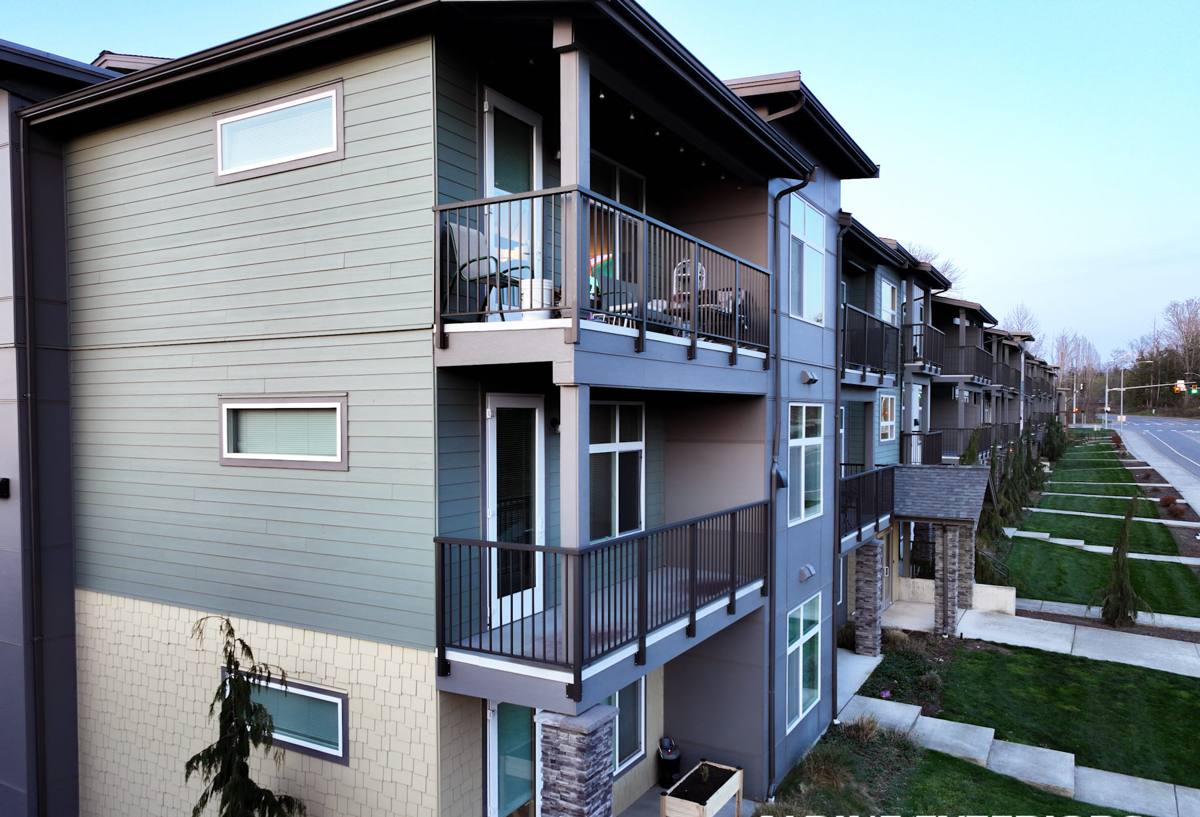
What This Climate Actually Does to Siding
Wind
Sarasota County sits in a wind-borne debris region under the Florida Building Code, which means siding, fasteners, and the way panels are fastened to the wall all have to be engineered — not just installed by feel. Wind doesn't just push on a wall; it creates uplift and pressure differentials at corners, eaves, and openings, which is exactly where poorly installed siding fails first. Panels that are under-fastened, over-driven, or nailed at the wrong spacing can work loose over a few storm seasons even if they look fine the day they go up.
UV
Florida sun breaks down pigments and surface coatings faster than almost anywhere in the continental U.S. Paint fades, chalks, and eventually cracks, and once a coating fails, the substrate underneath is exposed to moisture cycling. This is a slow failure — it shows up as color loss and hairline cracking years before anyone thinks of it as a "siding problem."
Wind-Driven Rain
A normal rainstorm falls straight down. A Gulf Coast squall pushes water horizontally into every seam, joint, and penetration in a wall. Siding systems that aren't detailed correctly — missing flashing, caulked seams instead of properly lapped joints, gaps at trim — let that water behind the cladding, where it has nowhere to go and no reason to dry quickly in Florida's humidity.
Salt Air
Even set back from the water, Gulf Gate Estates gets enough salt-laden air to accelerate corrosion on fasteners, flashing, and any metal trim components. Siding materials and hardware that aren't rated for coastal exposure corrode faster here than the same products would forty or fifty miles inland.
Why We Install James Hardie and Nothing Else
We standardized on James Hardie fiber cement siding for every job we take on, including here in Gulf Gate Estates, for reasons that come directly from the climate problems above. Hardie's HZ5 product line is engineered specifically for climates like ours — hot, humid, and hurricane-exposed — with a formulation designed to resist moisture-related expansion and contraction better than standard fiber cement or wood-based products. It's non-combustible, which matters in a state where lightning-driven brush and structure fires are a real risk, and it holds paint and factory finishes far longer than wood or wood-composite alternatives because the substrate itself doesn't absorb and release moisture the way organic materials do.
We don't install LP SmartSide, vinyl, Cemplank, Allura, primed spruce, or cedar. That's not because those products have no legitimate use anywhere — it's because after weighing how each performs specifically in a hurricane-and-salt-air climate over a 30-plus year ownership horizon, we decided we could only stand behind one system. Vinyl softens, warps, and becomes brittle under sustained Florida UV. Wood and wood-composite products carry ongoing moisture and maintenance burdens that are hard to justify in a climate this humid. Other fiber cement brands may be reasonable products, but we've built our entire installation process, fastening details, and warranty relationship around one manufacturer's system, and we'd rather be excellent at one thing than average at five.
Signs a Gulf Gate Estates Home Needs New Siding
A lot of siding problems in this area develop slowly enough that homeowners get used to them before recognizing they're actually damage. Worth checking for:
- Visible cracking, chalking, or fading paint that doesn't come back after washing
- Soft spots or slight give when you press on wood or wood-composite siding, especially near the bottom courses and around windows
- Gaps opening up at seams, corners, or trim boards
- Bubbling or peeling paint in specific spots, which often means moisture is trapped behind the siding at that location
- Rust streaks below nail heads or metal trim — a sign fasteners or flashing are corroding
- Visible warping, cupping, or panels that no longer sit flat against the wall
- A musty smell or discoloration on interior walls that back up to exterior siding — often the first sign water has been getting behind the cladding
Any one of these is worth a look. Several at once usually means the wall assembly has been taking on moisture for a while, and it's worth having someone assess what's happening behind the siding, not just on the surface.
What a Correct James Hardie Installation Involves
Hardie siding is only as good as the installation behind it. The material is engineered to perform in this climate, but a rushed or generic install can undercut that engineering entirely — moisture management and fastening details matter more with fiber cement than with almost any other cladding, because the failure modes (trapped moisture, fastener corrosion, wind uplift at improperly nailed panels) are all things a correct install is specifically designed to prevent.
| Detail | Correct Installation | Common Shortcut |
|---|---|---|
| Starter strip | Level, properly gapped starter course set to manufacturer spec | Skipped or eyeballed, leading to uneven first course |
| Flashing at windows/doors | Integrated water-resistive barrier and flashing tied into each opening | Caulk used in place of proper flashing |
| Fastener spacing | Manufacturer-specified spacing and nail placement rated for local wind zone | Wider spacing or wrong fastener type to save time |
| Panel clearance | Correct gap from grade, roofline, and adjoining surfaces to allow drainage and airflow | Panels installed tight to grade or roof, trapping moisture |
| Joint treatment | Properly lapped or flashed joints per Hardie's installation guide | Butt joints sealed with caulk alone, which fails over time |
| Coastal fasteners | Corrosion-resistant fasteners rated for coastal exposure | Standard fasteners not rated for salt air |
None of these shortcuts are visible on the day the job finishes. They show up two, five, or ten years later as the exact problems listed in the section above — and by then, the fix isn't a repair, it's a re-do.
ColorPlus Finish and Getting the Look Right for Your Home
James Hardie's ColorPlus Technology is a factory-applied finish baked onto the panel under controlled conditions, rather than field-painted after installation. In a climate that fades and chalks conventional paint quickly, that matters: the finish resists fading better than a job-site paint job, and touch-up product is available that's formulated to match rather than requiring a full repaint down the road. Gulf Gate Estates has a mix of home styles from different eras, and Hardie's lap siding, board-and-batten, and shingle-style panel options cover most of what you'd want to match — whether you're restoring a home closer to its original look or updating the exterior entirely. We'll walk through color and profile options as part of the estimate, based on what suits your specific house rather than a one-size answer.
How Our Process Works
For a Gulf Gate Estates project, the process generally runs like this:
- On-site assessment. We look at the current siding, check for moisture or structural issues behind it, and measure the home.
- Written estimate. You get a clear scope of work and pricing before anything is scheduled — no vague verbal quotes.
- Product and color selection. We go through Hardie's HZ5 lines, panel profiles, and ColorPlus finish options together.
- Permitting. Siding replacement in Sarasota County typically requires a permit; we handle that process rather than leaving it to you.
- Tear-off and prep. Old siding comes off, the wall is inspected for hidden damage, and any needed repairs happen before new siding goes up — not after.
- Installation to manufacturer spec. Starter strips, flashing, fastener spacing, and clearances are done to Hardie's published installation requirements, not shortcuts.
- Final walkthrough. We go over the finished job with you before calling it done.
What Drives Cost on a Gulf Gate Estates Job
Every home is different, so we don't publish blanket pricing, but these are the factors that actually move the number on a real estimate:
| Factor | Why It Matters |
|---|---|
| Home size and wall complexity | More corners, gables, and cutouts mean more material waste and labor time |
| Current siding condition | Hidden rot or moisture damage found during tear-off adds repair scope |
| Panel profile and finish choice | Lap, shingle-style, and board-and-batten profiles differ in material and labor cost |
| Trim and accessory work | Fascia, soffit, and trim replacement alongside siding adds to the scope |
| Access and site conditions | Landscaping, tight lot lines, or multi-story sections affect labor time |
| Permitting requirements | Scope and documentation required by Sarasota County can affect timeline and cost |
Why It Matters That We Already Work in This Neighborhood
A crew that's worked in Gulf Gate Estates before isn't guessing at what the local climate does to a wall system — they've already seen it firsthand on homes nearby. That translates into practical things: knowing what to expect from Sarasota County's permitting process, recognizing early moisture or fastener corrosion when it's still cheap to fix, and understanding how sun exposure and prevailing wind direction vary from one side of a lot to another. It also means fewer surprises mid-project. A contractor who only occasionally works this area is more likely to treat every job as a generic install; a contractor who works here regularly treats the climate as part of the design, not an afterthought.
After Installation: What Upkeep Actually Looks Like
One of the real advantages of correctly installed Hardie siding in this climate is how little it demands afterward compared to wood or vinyl alternatives. A periodic rinse to clear salt residue and pollen, prompt caulk inspection at trim joints once a year, and keeping an eye on anything that looks like the shortcuts described above are really all it takes. There's no repainting cycle every few years, no soft spots to worry about, and no warping from humidity swings — provided the installation was done correctly the first time.
If your Gulf Gate Estates home is due for new siding, or you're just not sure whether what's on the walls now is past its useful life, we're happy to take a look and give you a straightforward, no-pressure estimate. Use the form below to get started.