 Sarasota Siding
 Why Lakewood Ranch Puts Exterior Siding to the Test
Lakewood Ranch sits inland from the Gulf but that doesn't mean the community gets a pass on Florida's punishing exterior conditions. Homes here still take on hurricane-force wind gusts during tropical systems, wind-driven rain that gets pushed sideways into wall assemblies, and some of the most intense year-round UV exposure in the continental United States. Add in the humid, subtropical air that moves across Sarasota and Manatee counties and the salt-tinged breeze that reaches inland from Sarasota Bay and the Gulf on windy days, and you have a combination that ages cheap or improperly installed siding fast.
Most homeowners don't think about siding until it starts failing — fading unevenly, buckling at the seams, or showing soft spots where moisture has worked its way behind the surface. In a community like Lakewood Ranch, where curb appeal and consistent architectural standards matter, that kind of visible deterioration shows up faster than it would in a milder climate.
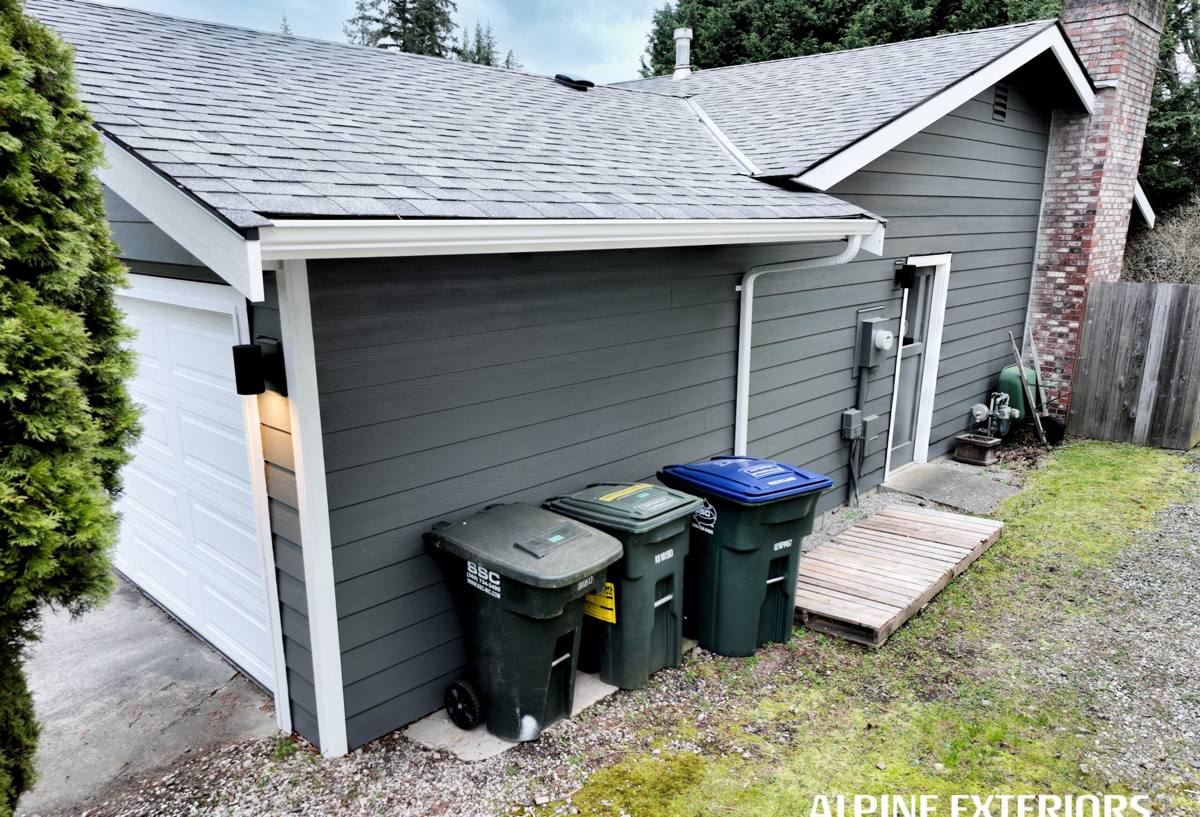
What Local Homes Actually Need From Their Siding
Wind and Impact Resistance
Lakewood Ranch isn't a coastal flood zone, but it's still squarely in hurricane country. Siding needs to stay fastened and intact through sustained high winds and the debris that comes with them, not just look good on a calm day. Fastening pattern, panel engagement, and the underlying wall prep all matter more than the surface finish.
UV and Color Stability
Florida sun is relentless, and siding that isn't engineered for it will chalk, fade, or warp within a few years. Uneven fading on the sun-facing side of a house is one of the most common complaints we hear about lower-grade siding products in this region.
Moisture Management
Wind-driven rain during summer storms and tropical systems doesn't just hit the surface of a wall — it gets forced behind panels, into seams, and around penetrations like windows and light fixtures. Siding that traps that moisture instead of letting it drain and dry leads to rot in the wall sheathing behind it, which is a far more expensive problem than the siding itself.
Why We Install James Hardie's Florida-Engineered Line
James Hardie makes climate-specific product formulations, and the HZ10 line is engineered for the exact conditions Gulf Coast Florida sees: high humidity, heavy rain exposure, and intense UV. It's a non-combustible fiber cement product, which matters in a state where wildfire and ember exposure during dry stretches is a real, if less-discussed, risk alongside hurricanes.
The ColorPlus factory-applied finish is baked on under controlled conditions rather than sprayed on-site, which gives it stronger color retention and resistance to peeling than field-applied paint. That matters in Lakewood Ranch specifically because so many streets and sections have consistent architectural color palettes — a finish that fades unevenly stands out immediately against neighboring homes.
Fiber cement also doesn't expand and contract with heat and humidity the way vinyl does, and it doesn't absorb and hold water the way engineered wood products can. That combination of dimensional stability and moisture resistance is exactly what a Sarasota County exterior needs to hold up over decades, not just years.
Navigating Lakewood Ranch's HOA and Architectural Standards
Lakewood Ranch is a large, deed-restricted master-planned community, and most of its neighborhoods and villages have architectural review requirements for exterior changes, including siding replacement. Approved color palettes, material standards, and submission processes vary by section, and skipping that step — or hiring a crew unfamiliar with how it works — can delay a project or force rework after the fact.
Because we've worked on homes throughout the Lakewood Ranch area, we build the HOA review timeline into the project schedule from the start rather than treating it as an afterthought. That means color selections and product specifications get documented in a form that's easy to submit for approval, and we don't order material or start demolition until that approval is in hand.
What a Correct James Hardie Installation Actually Involves
The siding material is only part of the equation. A huge share of long-term siding failures — on any brand — trace back to installation mistakes, not the product itself. A correct James Hardie install in this climate involves:
- A properly prepared water-resistive barrier and flashing system behind the siding, so any moisture that does get past the surface has a way to drain out
- Correct fastener type, spacing, and embedment depth — under- or over-driven nails are one of the most common causes of premature panel failure
- Proper gapping at butt joints, corners, and around windows and doors to allow for material movement without trapping water
- Factory-cut or field-cut edges properly sealed per Hardie's published installation guidelines, since exposed raw edges absorb moisture
- Correct clearance between the bottom of the siding and grade, decking, or roofing to keep the material out of standing water and splash-back
Every one of these steps is spelled out in James Hardie's installation instructions, and following them to the letter is what keeps the manufacturer's warranty valid. Skipping or rushing any of them is how a good product ends up with a bad reputation.
Our Process on a Lakewood Ranch Project
- On-site assessment — we inspect the existing siding and wall assembly, check for hidden moisture or wood rot, and evaluate what's driving the replacement decision
- Product and color selection — we walk through HardiePlank lap siding, HardiePanel vertical siding, and trim options, matched to the home's style and any HOA-approved palette
- HOA documentation — where applicable, we prepare the material and color specs needed for architectural review submission before ordering material
- Tear-off and wall prep — removing old siding, inspecting and repairing sheathing, and installing a proper water-resistive barrier
- Installation to manufacturer spec — correct fastening, flashing, and gapping, with attention to every window, door, and penetration
- Final walkthrough — checking seams, caulking, trim, and touch-up before we consider the job finished
James Hardie Compared to Other Siding Options in This Climate
We only install James Hardie, and we're upfront about why. Here's how it stacks up against the other materials commonly proposed for homes in this region:
| Factor | James Hardie Fiber Cement | Vinyl | LP SmartSide / Engineered Wood |
|---|---|---|---|
| UV / color fade resistance | Strong — factory ColorPlus finish | Moderate — can chalk and fade | Depends on paint quality, needs repainting |
| Wind performance | Engineered for high-wind regions | Can crack or blow off in gusts | Solid if installed correctly |
| Moisture behavior | Won't rot; manages water when installed correctly | Doesn't rot but can trap moisture behind it | Wood-based core is vulnerable if the finish fails |
| Combustibility | Non-combustible | Combustible | Combustible |
| Long-term maintenance | Low — occasional wash and caulk check | Low but prone to visible aging | Higher — finish upkeep is critical |
Vinyl and engineered wood products aren't inherently bad materials, and each has scenarios where they make sense. But for the combination of hurricane wind exposure, intense UV, and humidity that Lakewood Ranch homes deal with year-round, we've made James Hardie our standard because it holds up to all three without asking the homeowner to compromise on one to get the others.
What Ongoing Maintenance Looks Like
One of the practical advantages of fiber cement in this climate is how little it asks of homeowners afterward. Reasonable upkeep includes:
- Rinsing the exterior periodically to clear salt residue, pollen, and general grime
- Checking caulking at trim joints and penetrations annually, especially after hurricane season
- Walking the exterior after major storms to look for impact damage or loosened panels
- Keeping irrigation heads and sprinklers from spraying directly on the siding, which can cause mineral staining over time
That's a shorter list than most siding materials require, and it's one reason the total cost of ownership over 20-30 years tends to favor Hardie even when the upfront installed cost is higher than vinyl.
Why Local Installation Experience Matters
Siding installation quality varies enormously by crew, and the manufacturer's product warranty only protects you if the installation follows spec. A crew that's worked on homes throughout the Lakewood Ranch area already understands the HOA submission process, has a feel for which colors and product lines tend to get approved without back-and-forth, and knows how local wind and moisture conditions should shape flashing and fastening decisions. That local familiarity shows up in fewer surprises during the project and a finished job that's built for what this specific area actually deals with, not a generic install.
If you're weighing a siding replacement on a Lakewood Ranch home, we're happy to walk the property, look at what's there now, and talk through options with no pressure and no obligation. A free estimate gives you real numbers and a clear picture of what correct James Hardie installation looks like for your home.