 Sarasota Siding
 Building Decks for Laurel Park Homes
Laurel Park is one of Sarasota's older, closer-in neighborhoods — narrow lots, mature oak canopy, and a mix of historic bungalows and updated homes just a short walk from downtown. Decks and outdoor living additions in this kind of neighborhood face a different set of problems than a deck out on open, newly cleared land. Tree cover means more moisture sitting on the deck surface after rain, more leaf and pollen debris collecting between boards, and less direct sun to dry things out on shadier lots. At the same time, Laurel Park still sits well within Sarasota County's coastal climate zone, so salt-laden air, hurricane-force wind exposure, and intense UV are all still part of the equation even a few miles from the water.
A deck built for this neighborhood needs to balance two things that can pull in opposite directions: the shade and tree cover that make Laurel Park pleasant to sit outside in, and the moisture retention that shade creates. Get the framing, fastening, and drainage details right and a deck here will hold up for decades. Get them wrong and you'll be dealing with soft boards, rusted fasteners, or a structure that fails a wind load it should have handled.
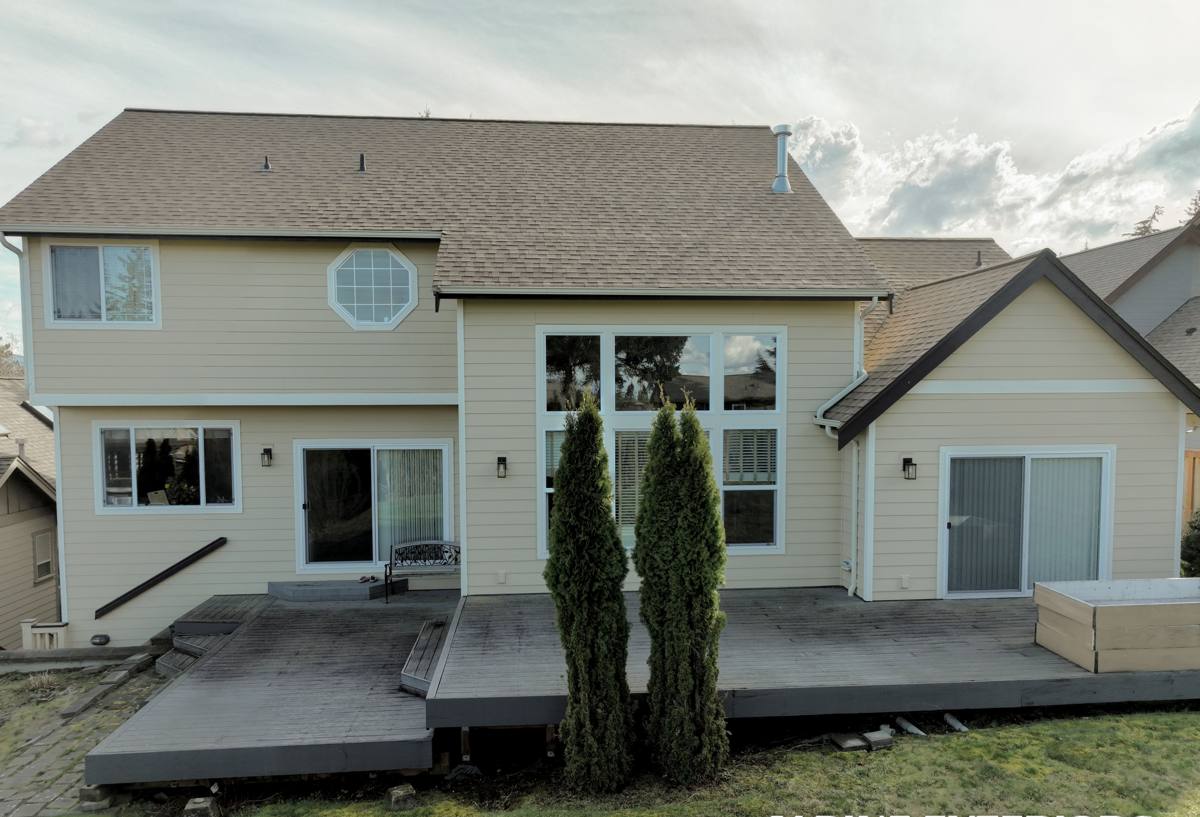
What Sarasota's Climate Does to a Deck
Every deck we build in Sarasota County has to answer to the same four stresses, and Laurel Park's older-neighborhood setting changes how much each one matters:
- Wind-driven rain and moisture: Tree canopy in Laurel Park slows evaporation after storms, so decking, ledger boards, and joists stay damp longer than they would on an open lot — a real factor in board selection and gap spacing.
- Intense year-round UV: Even shaded decks get dappled, shifting sun through the day, which fades and dries wood unevenly and stresses finishes differently across the same deck surface.
- Salt air: Sarasota's proximity to the Gulf means airborne salt reaches inland neighborhoods like Laurel Park too, accelerating corrosion on any fastener, bracket, or connector that isn't rated for it.
- Hurricane-force wind: Florida Building Code wind and uplift requirements apply the same whether a lot is beachfront or a few miles inland — ledger attachment, post connections, and railing anchoring all have to meet code, not just look finished.
None of these problems are unique to Laurel Park, but the combination of shade, older housing stock, and tight lots means the moisture and access challenges show up more here than on a newer subdivision deck.
Framing and Fasteners: Where Decks Actually Fail
Almost every deck failure we get called out to inspect in this climate traces back to the framing and fastening, not the decking boards on top. The boards are what homeowners notice first, but the structure underneath is what determines whether the deck is safe.
Ledger attachment
The ledger board — where the deck ties into the house — is the single most important connection on an attached deck. In an older Laurel Park home, that means confirming what the rim joist or wall framing actually is before we ever drill into it, flashing it correctly so water can't get behind it and into the house structure, and using through-bolts rather than lag screws wherever code and framing allow. A poorly flashed ledger is a slow, hidden leak — and on an older home, the framing behind it may already have less margin for error.
Posts, footings, and hardware
Post-to-beam and post-to-footing connections carry the uplift and lateral loads that hurricane-force wind puts on a structure. We use stainless or coated hardware rated for coastal exposure — not because every fastener needs to be marine-grade, but because standard galvanized hardware corrodes faster than homeowners expect once salt air gets into the picture, even a few miles inland. Footings are sized and set to Florida Building Code depth and bearing requirements for Sarasota County, not just "what the last deck around here used."
Joist spacing and blocking
Tighter joist spacing and proper blocking matter more under composite decking (which has more flex and thermal movement than wood) and matter more anywhere shade keeps the frame damp longer. We spec joist spacing to the decking manufacturer's requirements, not a generic 16-inch default, and we don't shortcut blocking at butt joints or stair stringers.
Choosing Decking Material for a Shaded, Coastal Lot
There's no single "best" decking material — there's a best material for a given lot, budget, and maintenance appetite. On a shady Laurel Park lot, moisture retention and mold/mildew resistance matter more than they would on an open, sun-baked lot where the deck dries out fast.
| Material | How it handles shade & moisture | Maintenance | Rough lifespan |
|---|---|---|---|
| Pressure-treated pine | Absorbs and releases moisture readily; needs airflow and gaps to dry out under canopy | Annual cleaning, periodic sealing/staining | 10–15 years with upkeep |
| Composite decking | Doesn't rot, but can develop surface mildew in deep shade if not cleaned | Occasional washing, no sealing/staining | 25+ years, varies by product warranty |
| Tropical hardwood | Naturally dense and rot-resistant, handles shade well | Periodic oiling to maintain color and seal surface | 20–25+ years with upkeep |
| PVC decking | Fully synthetic, unaffected by damp shade | Occasional washing | 25+ years, varies by product warranty |
We'll talk through these trade-offs honestly on-site rather than pushing one product line. A shaded lot under oak canopy is a legitimate reason to lean toward composite or PVC over wood — not because wood is a bad material, but because the extra cleaning and drying time wood needs is a real ongoing cost that some homeowners would rather not take on.
Fastener and hardware standard
Whatever decking material a homeowner chooses, we hold the same standard on hardware: coastal-rated fasteners and connectors throughout, hidden fastener systems installed to the manufacturer's spacing (not stretched to save material), and structural hardware that matches the load path the framing was designed for. This is a professional standard we apply regardless of budget tier — it's not an upsell, it's the baseline for a deck that's going to sit under salt air and hurricane wind exposure for the next 20+ years.
Working on Laurel Park's Older, Tighter Lots
Laurel Park's narrow lots and mature trees change how a deck project actually gets built on-site, separate from the engineering:
- Material staging and equipment access is tighter than on a newer subdivision lot — we plan delivery and layout around what a given driveway and side yard can actually handle.
- Root systems from mature trees can be close to where footings need to go, so footing placement sometimes has to shift or get engineered around root protection rather than following a default layout.
- Older homes may have additions, repairs, or framing quirks from past decades that aren't obvious until we open things up — we account for surprises in how we scope and quote the ledger and framing work.
- Overhead canopy limits how much direct sun a finished deck gets, which we factor into material and finish recommendations rather than assuming full-sun conditions.
None of this makes a Laurel Park deck harder to build well — it just means the crew doing it needs to actually plan for these conditions instead of running the same playbook they'd use on an open lot across town.
Our Process, Start to Finish
- On-site assessment: We walk the lot, look at tree placement, house framing, sun/shade pattern, and existing drainage before recommending anything.
- Design and material selection: We talk through decking material, footprint, and railing options against your budget and how you'll actually use the space.
- Permitting and engineering: Sarasota County and Florida Building Code requirements — including wind load and, where applicable, flood zone considerations — are handled before construction starts, not treated as an afterthought.
- Framing and structural work: Ledger, footings, posts, beams, and joists go in to code, with coastal-rated hardware throughout.
- Decking, railing, and finish work: Boards or panels installed to manufacturer spacing, railing anchored and inspected, finish work completed.
- Final walkthrough: We go over care and maintenance for the specific material installed, and answer questions before we consider the job done.
Pre-project checklist we cover with every homeowner
- Confirm lot survey and setback lines before finalizing footprint
- Identify existing tree root zones near planned footing locations
- Assess the house framing at the proposed ledger location
- Discuss shade pattern and how it affects material choice
- Review permit and inspection timeline for Sarasota County
- Confirm railing height and spacing requirements for the finished elevation
Maintenance Realities for a Shaded Coastal Deck
Whatever material goes on a Laurel Park deck, plan on some routine upkeep — the marketing on "zero maintenance" composite and PVC products undersells what shade and salt air actually do to an outdoor structure. Wood decking under canopy needs regular cleaning to prevent mildew buildup and periodic sealing to keep moisture from getting into the grain. Composite and PVC don't rot, but they can still grow surface mildew in deep, damp shade and benefit from an occasional wash. Metal hardware, even coastal-rated hardware, should get a visual check after major storms — hurricane-force wind events are exactly when a marginal connection gets found out.
Why Hire a Crew That Already Works This Neighborhood
A deck built without accounting for Sarasota's wind, UV, salt air, and wind-driven rain is a deck that ages fast and can fail when it matters most. A crew that already understands how those conditions interact with Laurel Park's shade, tree roots, tight lots, and older home framing will make better calls at every stage — from where footings go, to what hardware gets specified, to which decking material actually makes sense for a given lot's sun pattern. That local familiarity isn't a marketing point, it's fewer surprises and fewer callbacks over the life of the deck.
If you're considering a new deck, a rebuild, or repairs to an existing one in Laurel Park, we're happy to come take a look and give you a straight assessment — no pressure, no upsell script. Reach out using the form below for a free estimate.