 Sarasota Siding
 Metal Roofing in Laurel Park: Built for the Neighborhood It's Going On
Laurel Park is one of Sarasota's older, more established neighborhoods, with a mix of bungalows, cottages, and mid-century homes tucked under mature tree canopy just south of downtown. Roofs in this part of Sarasota County take a different kind of beating than a roof out in open new construction — shade and moisture from overhanging trees, tight lot lines that limit staging and access, and, in many cases, an original roof structure that was never designed around today's wind codes. When a homeowner here asks about metal roofing, the right answer depends as much on the house and the lot as it does on the panel they pick.
This page is about metal roofing specifically for Laurel Park properties — what the climate demands, what a correct installation looks like on this kind of home, and why local experience on these particular streets matters more than a generic install crew might admit.
What Sarasota's Climate Actually Does to a Roof
Every roofing decision in this area comes back to the same four stressors, and metal roofing responds to them differently than shingles do:
- Hurricane-force wind: Wind doesn't just push down on a roof, it gets underneath edges and panels and tries to peel them up. Fastening pattern and edge detail matter more than the metal itself.
- Intense, year-round UV: Florida sun degrades coatings and sealants faster than in most of the country. Paint system quality is not a cosmetic choice — it's a durability choice.
- Wind-driven rain: During tropical storms, rain doesn't just fall, it's driven sideways and upward under laps and flashings. A roof that only sheds water when it falls straight down will leak in a real storm.
- Salt air: Sarasota sits close enough to the Gulf that airborne salt accelerates corrosion on fasteners, panel edges, and any exposed steel — even well inland from the water.
Metal roofing, done correctly, holds up well against all four of these — but "done correctly" is doing a lot of work in that sentence, and it's where a lot of installations fall short.
Why Laurel Park Homes Are a Different Job Than New Construction
Older homes in neighborhoods like Laurel Park bring a few recurring realities we plan around:
Roof decks and structure
Original decking on an older home may be thinner, spaced differently, or have some soft spots from decades of Florida humidity. Before any panel goes down, the deck needs to be inspected and, where necessary, repaired or resheathed — not just covered over.
Tree canopy and debris
Mature oaks are part of what makes Laurel Park attractive, but overhanging limbs mean more organic debris, more shade (which keeps roof surfaces damp longer after rain), and a higher chance of impact damage during storms. We factor limb clearance and debris channels into the layout, not just the panel choice.
Tight lots and access
Narrow lots, close-set neighbors, and mature landscaping mean staging materials and running equipment takes more planning than on a wide-open suburban lot. We scope this during the estimate so there are no surprises on install day.
Architectural character
Bungalow and cottage rooflines often have more hips, valleys, and dormers than a simple gable roof. Metal roofing can look excellent on these homes, but it demands more precise flashing and trim work at every transition.
Choosing a Metal Roofing System That Fits the House
"Metal roofing" isn't one product — it's a category, and the right choice depends on the roof's pitch, the home's style, and the homeowner's budget and priorities.
| System | Best fit | Trade-offs |
|---|---|---|
| Standing seam (concealed fasteners) | Most homes, especially where long-term wind and water performance matter most | Higher upfront cost; cleaner look, no exposed screw heads to maintain |
| Exposed-fastener panels | Budget-conscious projects, some outbuildings or additions | Lower cost, but fasteners and washers age and need periodic checking |
| Stone-coated steel tile/shake profiles | Homes where the owner wants a traditional look with metal's durability | More installation detail at laps and fasteners; higher material cost |
| Aluminum panels | Homes closer to the water or with salt air exposure concerns | Naturally corrosion-resistant; typically a higher material cost than steel |
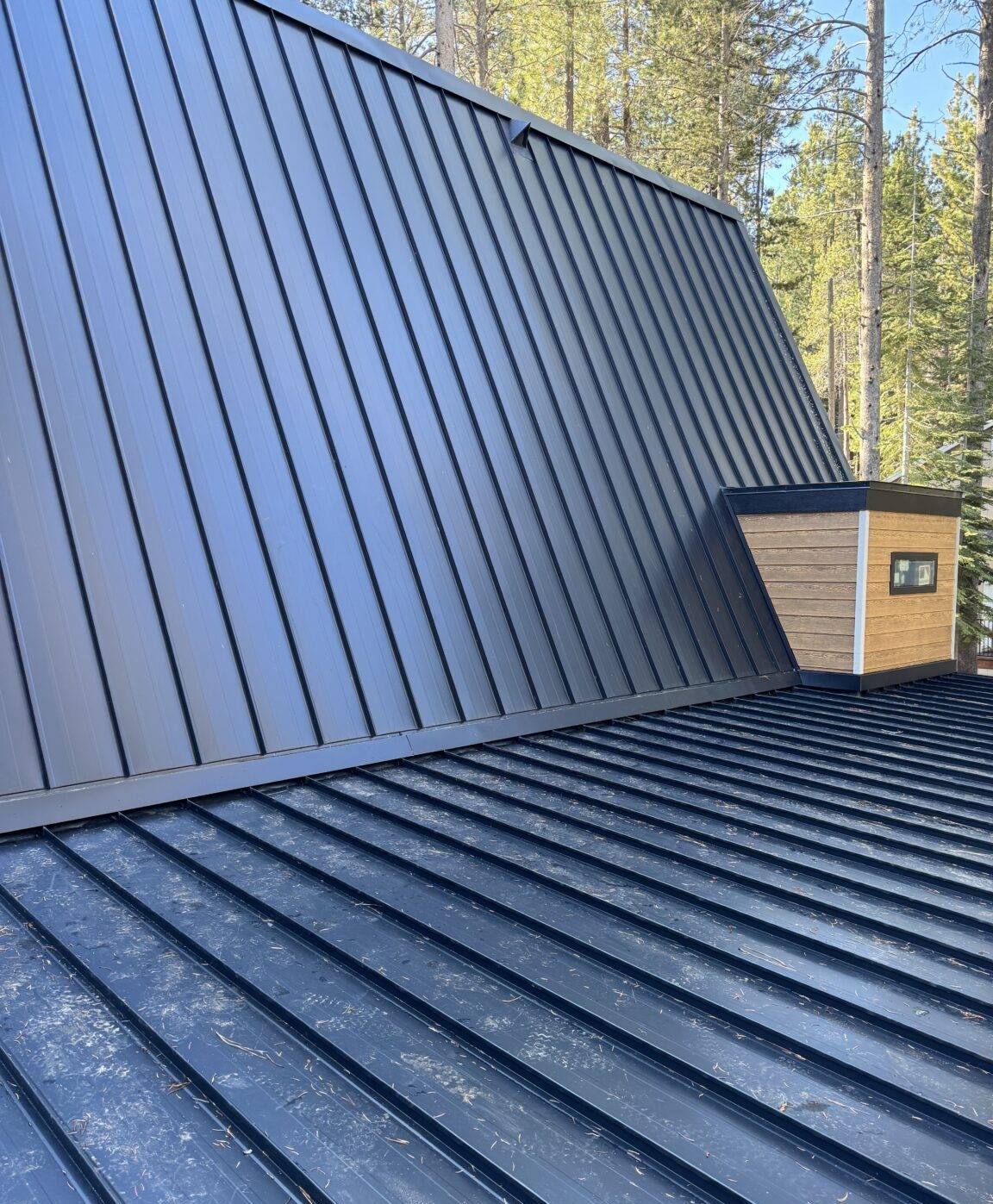
For most Laurel Park homes, we lean toward standing seam because the concealed fastener system removes the single biggest long-term weak point — exposed screws working loose or their washers hardening in the sun. That said, budget and roof design sometimes make an exposed-fastener or stone-coated option the more sensible call, and we'll say so honestly during the estimate rather than upselling a system the house doesn't need.
Gauge and coating matter as much as panel style
A heavier gauge steel resists hail and debris impact better. A quality Kynar-based (PVDF) paint finish holds color and chalk resistance far longer under constant Florida UV than a lower-grade coating — this is one of the few places where paying more up front reliably pays off over the life of the roof.
What a Correct Installation Actually Involves
The panel is maybe a third of what determines whether a metal roof performs. The rest is in details that aren't visible once the job is done:
- Deck inspection and repair before anything is installed, especially important on older Laurel Park framing.
- A high-temp, self-adhering underlayment at eaves, valleys, and penetrations, so the roof still sheds water even if wind gets under a panel edge.
- Proper clip or fastener spacing engineered to Sarasota County's wind load requirements, not a generic national spec.
- Closed or properly vented ridge details that keep wind-driven rain out without trapping heat and moisture in the attic.
- Custom-formed flashing at every hip, valley, wall transition, and penetration — this is where most metal roof leaks actually originate, not in the field of the panel.
- Fastener and trim material matched to the panel metal to avoid galvanic corrosion, which shows up faster in salt air environments.
Our Process, Start to Finish
- On-site assessment: We look at the existing roof, decking condition, roofline complexity, tree coverage, and access before quoting anything.
- System recommendation: We walk through panel and coating options honestly, including what we would and wouldn't recommend for that specific house.
- Permitting: Sarasota County and City of Sarasota permitting requirements apply to roof replacements, and we handle the paperwork and inspections as part of the job.
- Tear-off and deck repair: Old roofing comes off, decking is inspected, and any soft or damaged sheathing is replaced before underlayment goes down.
- Underlayment and flashing: The waterproofing layer and all flashing details go in first — this is the step that determines whether the roof actually keeps water out.
- Panel installation: Panels are installed to spec for wind uplift resistance, with attention to seams, laps, and terminations.
- Final walkthrough and cleanup: We inspect the completed roof with the homeowner and make sure the site — driveway, landscaping, gutters — is left clean.
What Drives the Cost of a Metal Roof Here
| Factor | Why it matters |
|---|---|
| Roof complexity (hips, valleys, dormers) | More cuts, seams, and custom flashing means more labor hours |
| Panel system and gauge | Standing seam and heavier gauges cost more than basic exposed-fastener panels |
| Coating grade | PVDF/Kynar finishes cost more up front but resist Florida UV far longer |
| Deck condition | Older Laurel Park homes sometimes need sheathing repair before install |
| Access and site constraints | Tight lots and tree canopy can add staging and protection time |
We won't quote a job without seeing the roof — anyone who gives a firm number over the phone is guessing. What we can say honestly is that metal roofing generally costs more up front than asphalt shingles, and typically earns that difference back through a much longer service life and lower long-term maintenance in this climate.
Maintaining a Metal Roof in Laurel Park's Conditions
- Clear leaf and debris buildup from valleys and gutters, especially under tree canopy, a couple of times a year.
- After any major storm, do a visual check for lifted panels, dented sections, or debris impact.
- Keep an eye on sealant and flashing points every year or two — these age faster than the panel itself under constant UV.
- Trim back tree limbs that hang directly over the roofline to reduce abrasion and debris load.
- Have fastener and flashing points checked periodically if the system uses exposed fasteners.
Why Local Experience in Laurel Park Matters
A crew that regularly works this neighborhood already knows the practical realities: the access constraints of tight, tree-lined lots, the age and quirks of the housing stock, and the local permitting process through Sarasota County and the City of Sarasota. That familiarity shows up in fewer surprises during the job — not a marketing line, just the practical value of having done this kind of house on this kind of street before.
It also means a crew that's still local and reachable years later if a flashing point needs a look after a storm, rather than an outfit that did one job in the area and moved on.
If you're weighing metal roofing for a Laurel Park home, we're happy to take a look and walk through what makes sense for your roof, your budget, and this neighborhood's conditions. Use the form below to request a free, no-pressure estimate.