 Sarasota Siding
 Why Siding Fails Faster in the Ellenton Area
Homes in and around Ellenton sit in one of the harder climates in the country to keep a house's exterior looking good and performing well. This part of the Gulf Coast gets a combination of stressors that most of the country never deals with at the same time: hurricane-force wind gusts during storm season, intense UV exposure nearly every month of the year, wind-driven rain that gets pushed sideways into wall assemblies, and salt-laden air drifting in off the Gulf. Any one of those on its own is manageable. All four, year after year, is what actually wears siding out.
Ellenton's location a bit inland from the immediate coast doesn't fully protect it. Salt air travels further than most homeowners assume, especially when it's riding on prevailing onshore winds, and the humidity here keeps siding surfaces damp longer after rain than in drier climates. That combination of moisture and salt accelerates corrosion of fasteners and trim, and it speeds up the breakdown of caulk and paint films that are supposed to be keeping water out in the first place.
That's the backdrop for why siding repair in this area is a different job than siding repair in, say, the Midwest or the mountain West. A repair that only patches the visible damage without accounting for what caused it tends to fail again within a year or two.
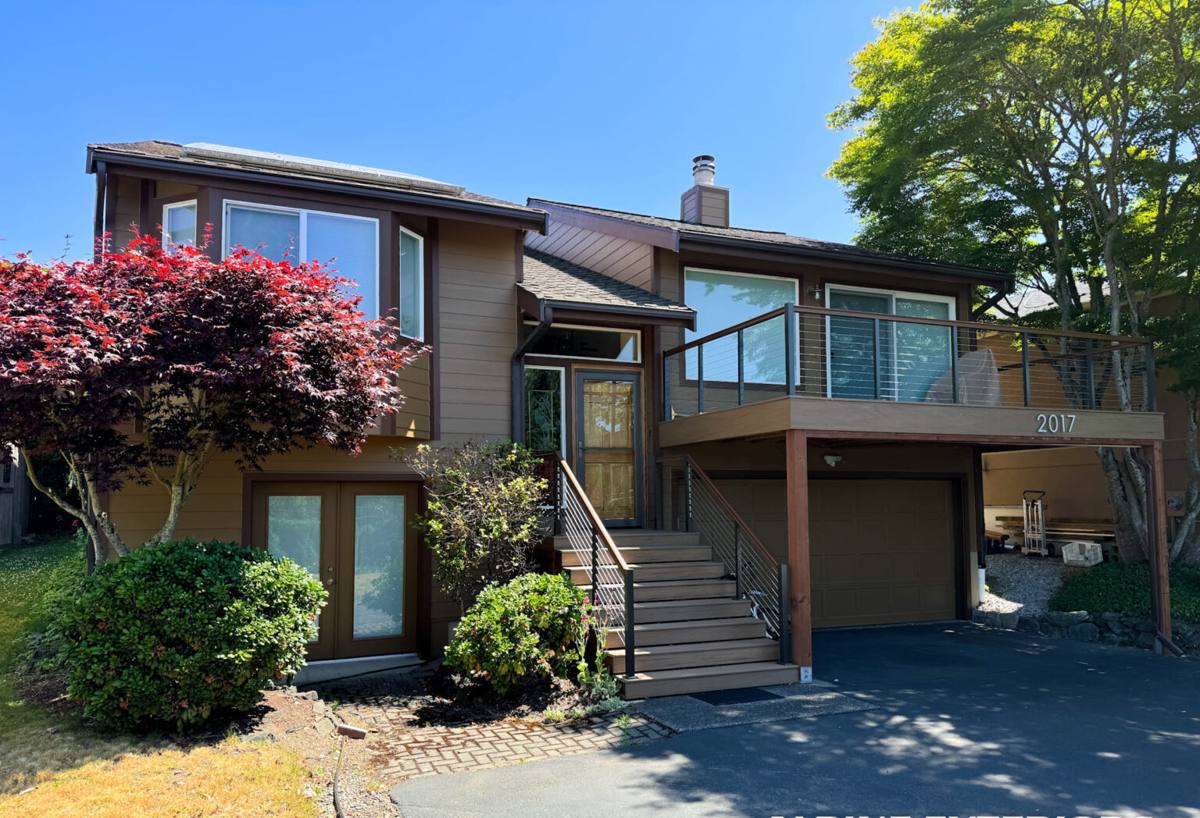
The Damage Patterns We See Most in This Area
Not every siding problem looks the same, and the right fix depends on correctly identifying which of these is actually happening.
Wind and impact damage
Gusts during tropical systems and even routine summer thunderstorms can crack, chip, or pull siding panels loose, especially at corners and edges where wind pressure concentrates. Flying debris — branches, palm fronds, loose yard items — adds impact damage on top of that.
Sun-driven deterioration
Florida's UV load is relentless. On lower-quality or poorly maintained siding, this shows up as fading, chalking (a powdery residue on the surface), and brittleness that makes panels crack more easily under normal thermal movement or minor impact.
Moisture intrusion
Wind-driven rain doesn't fall straight down — it gets pushed into seams, laps, and penetrations (light fixtures, hose bibs, vents) that were never designed to handle water coming from that angle. Once moisture gets behind the siding, it can sit against the wall sheathing for a long time in our humidity, leading to rot, mold, and soft spots that aren't visible until the siding is pulled back.
Fastener and trim corrosion
Salt air accelerates corrosion of nails, screws, and metal trim pieces. Rust streaks bleeding down from fastener heads, or trim that's visibly pitted or crumbling, are both signs that hardware needs to be addressed as part of the repair — not just the siding itself.
What a Correct Repair Actually Involves
A siding repair done right is not just "cut out the bad piece, nail in a new one." It starts with figuring out why that section failed in the first place, because replacing a panel without fixing the underlying cause just resets the clock on the same problem.
Diagnosing the real problem
Before any siding comes off, a proper inspection checks the flashing, house wrap or building paper, and the condition of the sheathing underneath the damaged area. If water has been getting in, the source of the leak — not just the stained or cracked siding covering it — has to be corrected, or the repair won't hold.
Matching the existing material
Siding profiles, exposure widths, and finishes vary between manufacturers and even between product generations from the same manufacturer. A patch that doesn't match butts up visibly against the original siding and can create a seam where water collects. Matching is easiest when the existing siding is a well-documented product with a consistent factory finish, and much harder on older or discontinued materials.
Repair vs. replace
Not every damaged section is worth repairing individually. If damage is isolated to one or two areas and the rest of the siding is sound, a targeted repair makes sense. If the damage is symptomatic of a broader problem — widespread moisture behind the siding, systemic fastener corrosion, or siding that's simply reached the end of its service life — patching individual spots is a short-term fix that costs more in the long run than addressing the wall as a whole.
| Factor | Favors Repair | Favors Full Replacement |
|---|---|---|
| Extent of damage | Isolated to one or two areas | Spread across multiple elevations |
| Underlying moisture | None found behind adjacent siding | Rot or soft sheathing found in multiple spots |
| Age of existing siding | Still well within expected service life | Nearing or past typical lifespan |
| Material match | Product still available or closely matchable | Discontinued profile or badly faded/mismatched finish |
| Fastener/trim condition | Hardware sound, minor surface rust only | Widespread corrosion at fasteners and trim |
Our Repair Process
- Inspection: We assess the damaged area and check adjacent sections, flashing, and penetrations for signs the problem extends further than what's visible from the ground.
- Diagnosis: We identify whether the cause is wind/impact, sun-driven material failure, or moisture intrusion, since each requires a different fix beyond just replacing the panel.
- Scope and estimate: We give you a straight answer on whether a targeted repair is the right call or whether the damage pattern points toward replacing a larger section, and explain why.
- Repair: Damaged material is removed, any compromised flashing or sheathing is corrected, and new material is installed to the manufacturer's fastening and clearance specifications — not just "close enough."
- Finish and seal: Joints, penetrations, and trim are properly sealed against wind-driven rain, and paint or caulk work is finished to blend as closely as possible with the surrounding siding.
Why the Siding Material Matters for How It Repairs
What your home is sided with has a real effect on how repairable it is down the road. This is one of the reasons we install exclusively James Hardie fiber cement siding on the homes we side from the ground up: it's a non-combustible, engineered product built specifically for climates like ours, with HZ product lines formulated to hold up against high humidity, heavy rain, and intense sun. Its ColorPlus factory finish is baked on and resists fading and chalking far better than field-applied paint, which matters directly for repair work — new material matches old material much more consistently when the color system is factory-controlled and well documented, rather than a paint job that's drifted from its original shade over years of Florida sun.
We do repair siding of other materials, and we'll always give you an honest assessment of what a patch can realistically achieve on the product you already have. But when damage is extensive enough that you're weighing a larger repair against replacement, we'll tell you plainly if the existing material is fighting you — vinyl that's brittle with age and prone to cracking on reinstall, or older fiber cement with a chalky, hard-to-match finish — and what switching to Hardie would mean for durability and long-term maintenance.
Why It Matters to Hire a Crew That Already Works in Ellenton
Siding repair looks straightforward from the outside, but doing it correctly in this climate takes local knowledge that isn't obvious from a general contracting background. A crew that regularly works in the greater Sarasota area knows how wind-driven rain actually behaves against these homes, understands the wind and building code requirements that apply to exterior work in hurricane-prone areas, and has already seen how different siding products age in this specific mix of sun, humidity, and salt air. That translates into fewer surprises once the old siding comes off and fewer repairs that need to be redone in a year or two.
It also means a contractor who can speak accurately to what's realistic for your specific situation — whether that's a clean, well-matched patch or an honest recommendation that a larger section be addressed at once — instead of a generic answer that doesn't account for how homes actually hold up along this stretch of Florida's Gulf Coast.
Signs You Need a Siding Repair Now, Not Later
- Visible cracks, splits, or holes in siding panels, especially after a storm
- Panels that are loose, buckled, or pulling away from the wall
- Soft or spongy spots when you press on the siding near the base of the wall
- Rust streaks running down from nail heads or trim
- Peeling paint or a chalky residue that wipes off on your hand
- Discoloration, staining, or a musty smell on the interior wall behind the siding
- Gaps or separated caulking around windows, doors, or other penetrations
Any of these left unaddressed through another hurricane season or another summer of intense UV tends to get worse, not better. Small, isolated repairs are almost always less disruptive and less costly than what the same problem turns into after a year of additional wind, rain, and sun exposure.
After the Repair: Keeping It From Happening Again
A good repair should also leave you with a clear idea of what to watch for going forward. We'll point out anything nearby that's showing early wear so you can keep an eye on it, and we're straightforward about realistic maintenance expectations for whatever material is on your home — periodic caulk inspection around penetrations, keeping gutters and downspouts directing water away from siding rather than onto it, and a simple annual walk-around after storm season to catch small issues before they become bigger ones.
If you've got damaged, aging, or storm-worn siding on a home in Ellenton, we're happy to take a look and give you a straight, no-pressure assessment of what it needs. Fill out the form below for a free estimate.